













هذا التقرير متاح أيضًا بـ العربية
Israel’s evolving security doctrine after Oct. 7 is based on replacing deterrence with ferocious offense, and shifting from a posture of stillness to rapid initiative at any sign of threat. Israeli Chief of Staff Eyal Zamir summed up this shift by saying the army had “fundamentally changed its defensive doctrine: We initiate, we strike, and we eliminate any threat to the state.”
This rapid-response approach, which has become an obsession shaping the army’s structure and deployment, has once again drawn attention to Unit 888, the multidimensional unit known as the “Ghosts,” as the clearest instrument embodying this model in practice.
As the unit’s operational activity has become clearer, it is now evident that it plays key roles in the hottest combat zones. Its activity was documented in Jabalia camp in the northern Gaza Strip during the implementation of the “Generals’ Plan,” where it was targeted by the Palestinian resistance. The Israeli army also announced that it was the main force behind the occupation of Beaufort Castle and the crossing of the Litani River as part of its operations in southern Lebanon.
Yet the first blows the unit suffered came before all of that. On Oct. 7, 2023, its commander, Col. Roi Levy, was killed in the Battle of Re’im near the Gaza border during the first hours of the collapse. The irony is that the very tool originally designed for rapid response and preemptive detection was among the first to collapse and fail to respond that day, only to emerge from the experiment unveiled in 2019 as a pillar of the new doctrine.
The obsession with rapid response
The new Israeli security model is built on a central assumption: that the failure of Oct. 7 was, at its core, a failure of response speed before it was an intelligence failure. From that premise, “rapid response” has become something close to an institutional obsession, centered on round-the-clock high alert, intelligence vigilance that refuses to ignore any warning sign no matter how minor or marginal it may seem, and a permanent offensive readiness that is supposed to deny the adversary any chance to repeat the surprise attack.
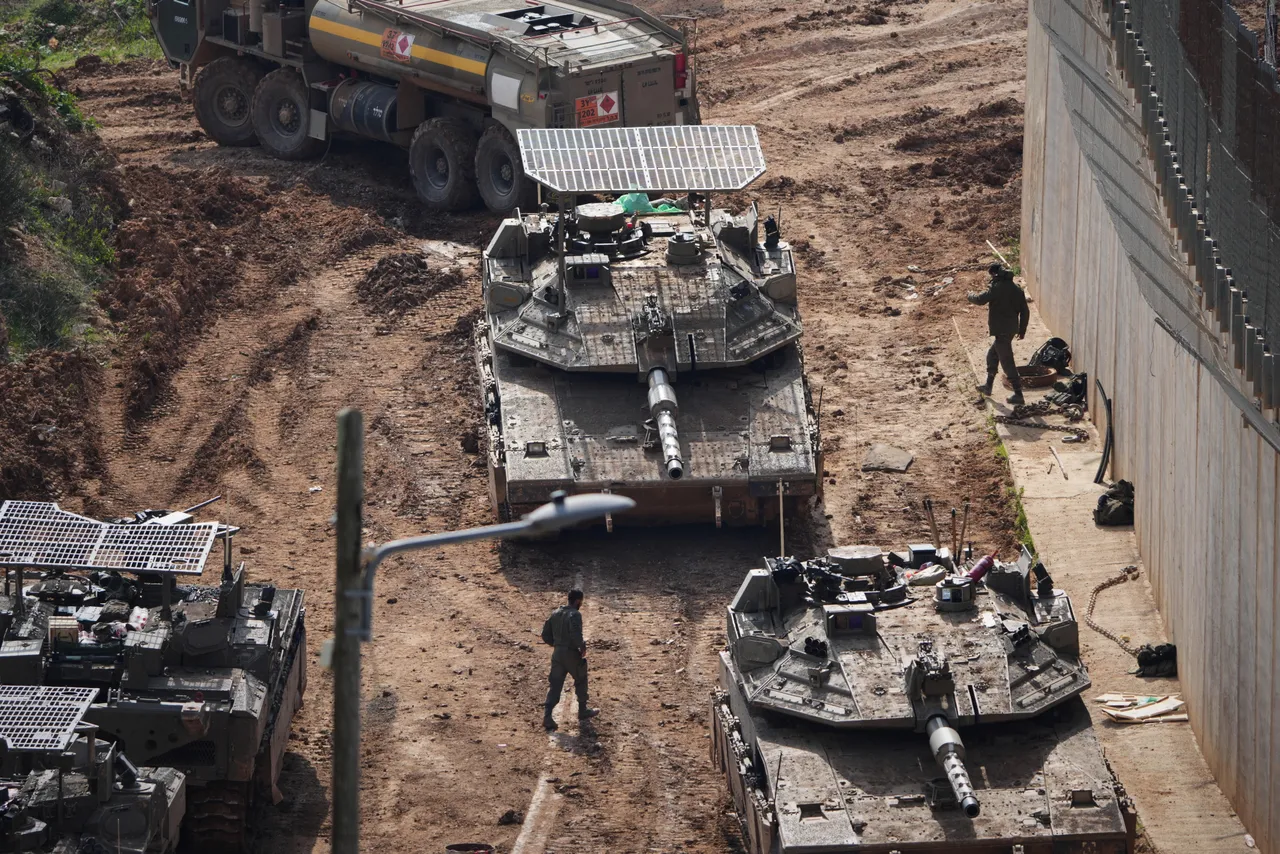
This challenge grows sharper as the army’s deployment expands across territory in the Gaza Strip, southern Lebanon and southern Syria. Every expansion in deployment means a broader field of threats and security challenges around the clock, requiring constant operational readiness to deal with developments.
In this situation, Israel’s deeper fear is that any slackening within the army, or any shortfall in the efficiency of deployed units, could become a vulnerability that turns them into easy targets in the future, especially if new rules of engagement take shape or resistance forces in these arenas launch phases of operational attrition.
This climate makes the need urgent for units with high operational capacity capable of dealing with an unfamiliar pattern of open-ended, extended combat. It is also important to note the limits of this strategy’s own staying power. The strategy took shape under the force of the shock of Oct. 7 and has not yet undergone serious debate within Israeli security circles, because waves of open war continue and Benjamin Netanyahu’s government is seeking to evade the consequences of failure and any review of it.
As a result, the wager on permanent offense remains based more on an untested assumption than on the outcome of a deep reassessment.
From “Tenufa” to the combat unit: The origin of the idea
The multidimensional unit cannot be understood apart from the context that produced it: the “Tenufa” plan launched by former Chief of Staff Aviv Kochavi in February 2020 as a multiyear force-building program for 2020-24. The plan was built around a central idea: increasing “lethality” in both quantity and precision through three interlocking capabilities enhancing the ability to detect the enemy, enhancing the ability to destroy it, and conducting multi-arm operations that combine the firepower of the largest possible number of units at the same time. The declared goal was to shorten wars and reach what was called “decisive victory” through early, rapid escalation with dense firepower.
At the heart of this philosophy was an old operational problem in the Israeli occupation army. Its structure is based on separate branches; armored units, for example, do not have organic infantry or close air support within them, making coordination in complex operations slow and time-consuming.
It was precisely from this gap that the need emerged for a unit combining the pace of rapid technological development with field capability in a single structure, designed from the outset to serve as a live laboratory that invents tactics and technologies, with whatever succeeds later generalized across the rest of the army.
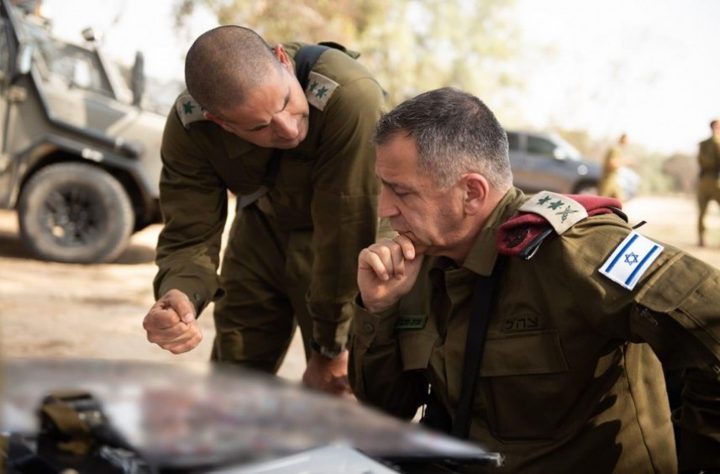
The unit multidimensional unit was among the earliest tangible fruits of the “Tenufa” plan. It was announced in early 2020 and integrated into its structure elements from elite infantry, armor, intelligence, the air force and communications, while recruiting fighters from special units such as Maglan, Yahalom and Duvdevan.
Why “multidimensional”?
The unit’s value lies in the operational meaning of its name. “Multidimensionality” is the design principle intended to make the unit as self-sufficient as possible, so that it does not need to request support from outside. It is a deliberate solution to challenges that have long slowed the response of the conventional army.
The first challenge: dispersed forces: In the traditional structure, coordination among infantry, air power and intelligence takes a long time because orders must pass through separate chains of command. The unit’s solution is the immediate integration of branches within a single small structure. Its formation includes fighters from infantry, engineering and artillery, in addition to pilots and intelligence and cyber experts, all working as one team on the ground.
More importantly, these branches are subject to a single commander and a single “operational language,” so decisions are unified within the formation instead of being distributed across chains of command exchanging requests. That removes the original source of slowness and enables a rapid response.
The second challenge: the hidden enemy and complex arenas: Combat in fortified urban areas, tunnels and difficult geographic environments, as in Gaza and southern Lebanon, strips conventional forces of much of their superiority. For that reason, the unit was designed as a flexible, cross-branch force relying on artificial intelligence and drone networks to detect and eliminate targets immediately.
Its philosophy is based on accelerating what is known as the “detect-and-kill cycle” through a broad mix of weapons ranging from high-altitude fighter jets such as the F-16, down to helicopters and fixed-wing drones such as the Skylark, all the way to quadcopters and small vertical drones that enter tunnels to detect targets from inside, alongside automatic rifles and sniper rifles.
It also integrates the entire ground level, including armored weapons, combat engineering, mechanized infantry and forces operating underground.
This structure operates through a very small number of specialized platoons, each devoted to a specific task such as reconnaissance, fire direction or strikes, within an approach described by a senior Israeli officer as “data-layered warfare” that is, turning live aerial footage and pattern recognition into lethal action within minutes.
The unit’s place in the organizational structure offers a key to understanding its role. Unlike most units, it is not subordinate to a specific geographic command, but reports directly to the Maneuvering Corps in the Ground Forces General Command. This elevated position makes it a strategic asset deployed wherever needed, rather than a force tied to a single front.
At an earlier stage, it was attached to Division 99, a “multiarena infantry division” designed specifically to integrate ground forces with the air force and other assets. It was then separated from it to remain directly subordinate to the Maneuvering Corps, preserving its flexibility and ability to move between fronts.
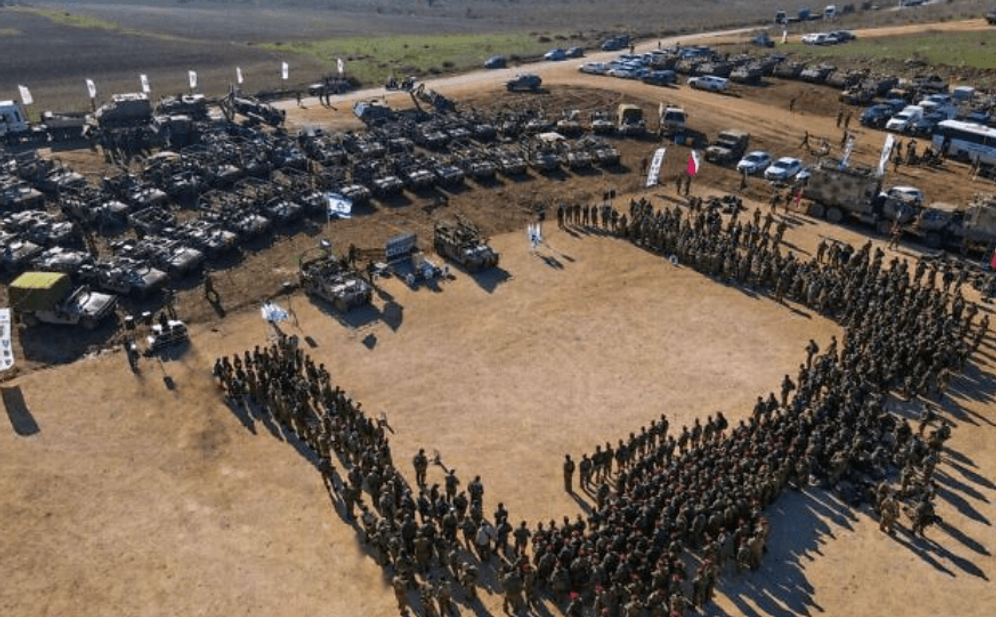
Its offensive role is evident in the divisions it fought with. In Gaza, it was engaged from the first day of the ground maneuver with brigades from Division 162 (armored), then was reassigned to operate under Division 252 reserve, then Division 99. It operated in the Netzarim corridor and was integrated into the “Generals’ Plan” campaign in Jabalia in October 2024.
In southern Lebanon, it fought within Division 36 in the operation to occupy the edge of Beaufort Castle and cross the Litani River. What is striking about this distribution is that the unit often moves ahead of armored units to detect threats, gather intelligence and eliminate cells before the main force arrives. That role embodies its function as an advanced reconnaissance-offensive spearhead, not a rear support force.
Between concept and reality: The wager and the test
The unit’s function goes beyond direct combat to serving as a “testing ground” for the war of the future. It is the experimental model by which the success of new tactics and technologies is measured, and every combat method that proves effective with it is later generalized across the rest of the army’s regular divisions to update their offensive and defensive systems.
That explains the growing investment in it, which peaked with the formation of an elite reserve drone strike unit unveiled at the end of last May, made up of veterans of the multidimensional unit and serving within Division 162.
Yet the field test reveals the most important gap. Despite the scale of the supposed display of this force’s capabilities, that has not translated into a qualitative and tangible impact on the ground, and it has suffered painful blows from the resistance in confronting it. From the first day, alongside the fall of the Gaza Division in the Battle of Re’im, the unit’s commander, Col. Roi Levy, was killed. He had assumed command only a few weeks before the war, along with three of its officers: training platoon commander Yotam Ben Best, coordination officer Yonatan Gutin and officer Itay Nahias.
In the northern Strip, the army announced on Oct. 29, 2024, the killing of five members of the unit in the Jabalia clashes, including two company commanders — Capt. Yehonatan Kirin and Maj. Hod Shraibman — along with three of its soldiers, Nissim Meital, Aviv Gilboa and Naor Haimov, while an officer was seriously wounded. These are declared losses in a unit presented as the pinnacle of precise warfare with low human cost, yet it is still paying a qualitative price, particularly among its leadership ranks.
Even so, it remains the main instrument relied upon to deal with the current security model of the Israeli occupation army, in the absence of a ready alternative to the doctrine of permanent offense. Here the paradox is complete: The army is betting on a unit that compresses the time and distance between detection and killing as the operational translation of a strategy that replaces deterrence with ferocious offense.
That same strategy, like the unit that embodies it, remains a wager driven more by the shock of failure than by the outcome of a decisive test. It will remain suspended until the momentum breaks and the equations begin to change. The question then will be: How long can this model endure if new rules of engagement take shape, or if resistance forces enter phases of prolonged attrition that strip “rapid response” of its meaning?