















هذا التقرير متاح أيضًا بـ العربية
Unlike traditional schools of history in the Arab and Islamic world, which largely relied on narration, storytelling, and chronicling events through the reigns of kings and rulers, new approaches emerged in the early 20th century under the influence of modern ideologies. Drawing on Western interpretations of historical change, these schools produced Marxist, liberal and other readings of history.
Among these emerging approaches was the Islamic interpretation of history, championed by many writers and historians, most notably Dr. Imad al-Din Khalil, whose distinctive methodology has significantly influenced Islamic historiography and attracted scholarly interest.
Khalil’s intellectual project moved beyond the conventional narration of historical events, seeking instead to identify the broader patterns and civilizational laws that shape the course of history. In a region marked by intense political, partisan, and intellectual divisions, his writings reached a broad readership, particularly among those who viewed Islam as a comprehensive civilizational framework capable of confronting the forces of Westernization and imported ideological currents, which they saw as being reinforced by military intervention and extensive media promotion.
The beginnings and academic journey
Dr Imad al-Din Khalil Omar al-Taie was born in Mosul in 1941. He graduated with honors from the Department of History at the College of Arts, University of Baghdad, in 1962, before obtaining a master’s degree in Islamic history from the same university in 1965. He then continued his academic journey at Ain Shams University in Cairo, where he earned a doctorate in Islamic history in 1968.
Khalil went on to teach at several Iraqi and Arab universities, working as a professor and lecturer until his retirement in 2011. Over his long academic career, he produced some of his most significant works on history, literature, and thought, developing an approach to rereading history through the universal patterns and laws he drew from the Quran.
The cognitive methodology for reading history
Dr. Imad al-Din Khalil’s view of history rests on core foundations that go beyond the familiar informational mode, emphasizing divine laws and the interaction of civilizational factors, which collectively underpin his trustworthy interpretive framework.
Khalil was keen to connect thought with reality, emphasizing in his studies that political and military transformations are preceded by intellectual and psychological changes that pave the way for them, drawing inspiration from the Quranic thesis of civilizational change.
His writings were also distinguished by subjecting historical accounts to internal and external criticism, examining texts and chains of transmission, and verifying the extent to which a narrative coheres with the logic of its age and the environment in which it arose.
Imad al-Din Khalil did not treat the past as static. Rather, he viewed Islamic history as a fertile field of experiences that can be summoned to address the problems of the present and rebuild contemporary consciousness for Arab and Muslim people.
In this way, according to several researchers and followers of his project, his theses helped push historical studies in many Arab universities away from mere compilation and recording and toward analysis, deconstruction, and foresight.
A new approach in confronting traditionalism and Westernization
Dr. Imad al-Din Khalil launched his project by critiquing the prevailing methods of writing Islamic history, which he saw as either disconnected from civilizational trajectories or overly Westernized, thus underscoring his effort to develop a distinctive interpretive approach rooted in Islamic thought.
On that basis, Khalil developed a method built on three main pillars. The first was the philosophy of universal patterns, which represents the cornerstone of his intellectual project. For him, history is a purposeful movement governed by fixed and constant divine laws that operate with a degree of regularity resembling physical laws, and the rise and fall of states is tied to the extent to which societies align with these laws or clash with them.
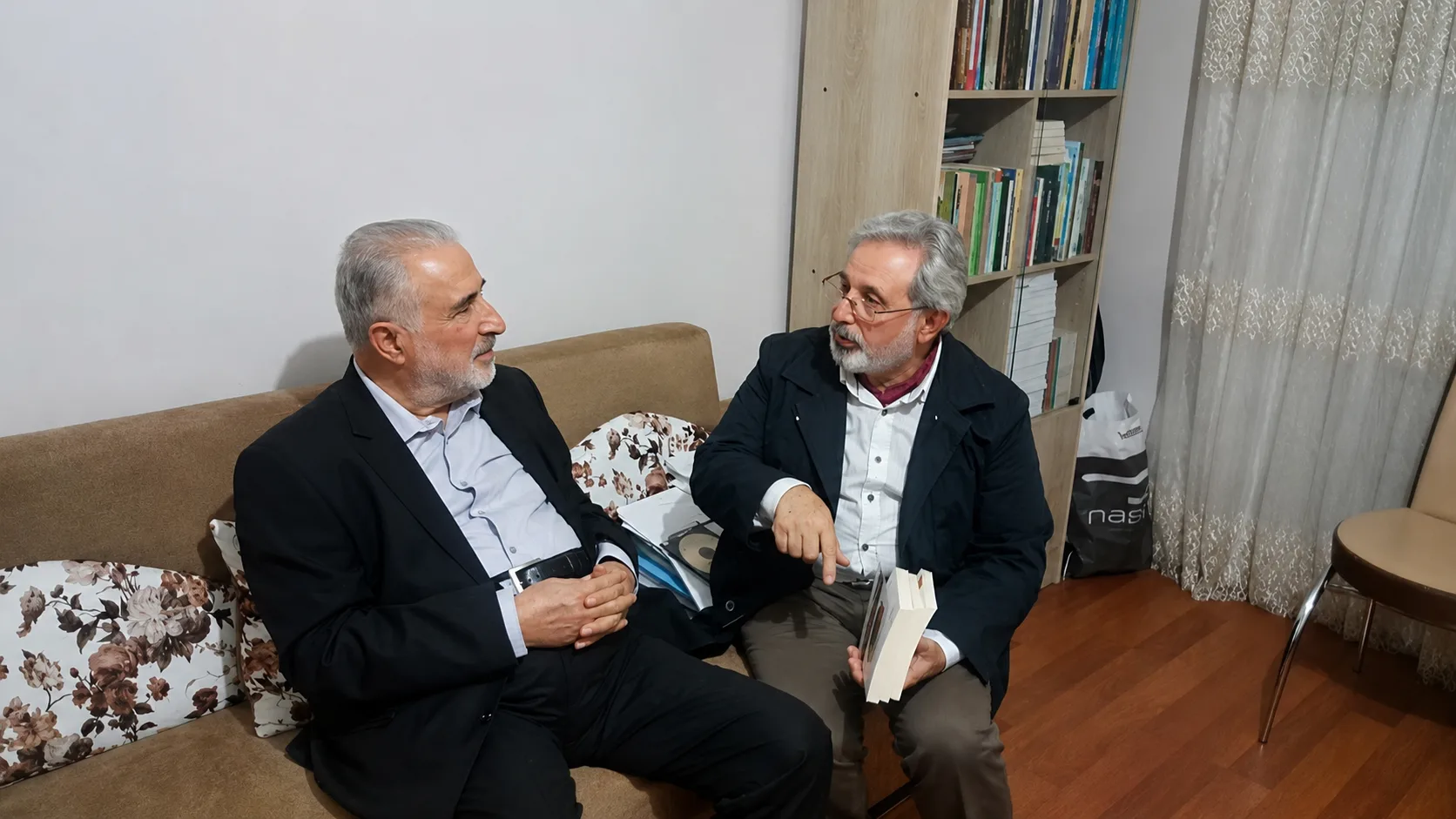
The second was the agency of the vicegerent human being. In contrast to materialist theses that erase the role of human beings and make them hostage to surrounding economic conditions, Imad al-Din Khalil held that the human being is the primary driver of history by virtue of being God’s vicegerent on earth and possessing effective free will, linking a society’s external reality to its psychological and intellectual structure.
The third was the thesis of comprehensive history. He rejected confining history to political and military events and the world of kings and battles. Instead, he called for studying history in its broad cultural, social, economic, intellectual, and scientific dimensions, as an integrated fabric whose political transformations cannot be understood without examining its intellectual and social movement.
A reading of his most prominent historical and intellectual works
Imad al-Din Khalil enriched the historical and intellectual library with dozens of works that made qualitative additions to Islamic studies. Among the most important is “The Islamic Interpretation of History,” which provides the theoretical grounding for his method. In it, he discussed the major Western theories of interpreting history, such as Marxism and positivism, as well as the theories of Oswald Spengler and Arnold Toynbee, drawing objective scholarly comparisons before concluding that the Islamic conception is superior because it encompasses all material, spiritual, and psychological factors and does not fall into the trap of monocausal explanation.
And in his book “A Study of the Prophetic Biography,” he reread the Prophet’s biography not as a set of abstract chronological events, but as an applied model for state-building and social change according to gradual patterns, highlighting how the first Islamic leadership dealt with real-world conditions, political alliances, and economic necessities with advanced historical awareness.
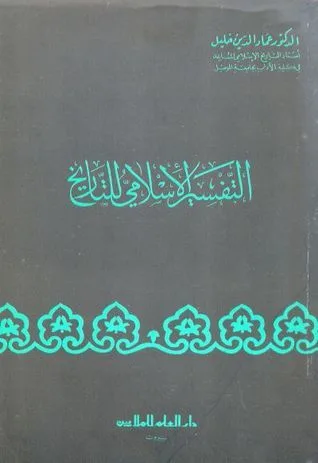
In his book “Features of the Islamic Transformation in the Caliphate of Umar ibn Abd al-Aziz,” he presented a model of righteous governance that could confront corruption and despotism, emphasizing intellectual revival and social justice as the foundation of reform.
In his famous work “Imad al-Din Zengi,” he offered a historical study shedding light on how Islamic forces in the Arab and Islamic East were able to overcome political fragmentation and military weakness to confront the Crusader invasion, clarifying the importance of internal construction — such as founding schools, endowments, and establishing justice — as a prerequisite for military victory and political stability.
Academic efforts to illuminate the “dark ages”
Perhaps Dr. Khalil’s most prominent contribution was his work on periods traditionally described as ‘dark’ in Islamic history—periods that coincided with the decline and fragmentation of the Abbasid central state. His reinterpretation of this era aims to inspire respect and confidence in his innovative approach to Islamic history.
His writings on this period were a pioneering academic effort to show that the fall or weakening of the center did not necessarily mean the halt of the civilizational wheel. Those regional emirates, such as the Artuqids, Zengids, and Hamdanids, fostered remarkable intellectual, urban, and economic dynamism, which he documented in extensive studies tracing the environments of the capitals of those emirates and states, which became vibrant centers of civilization.
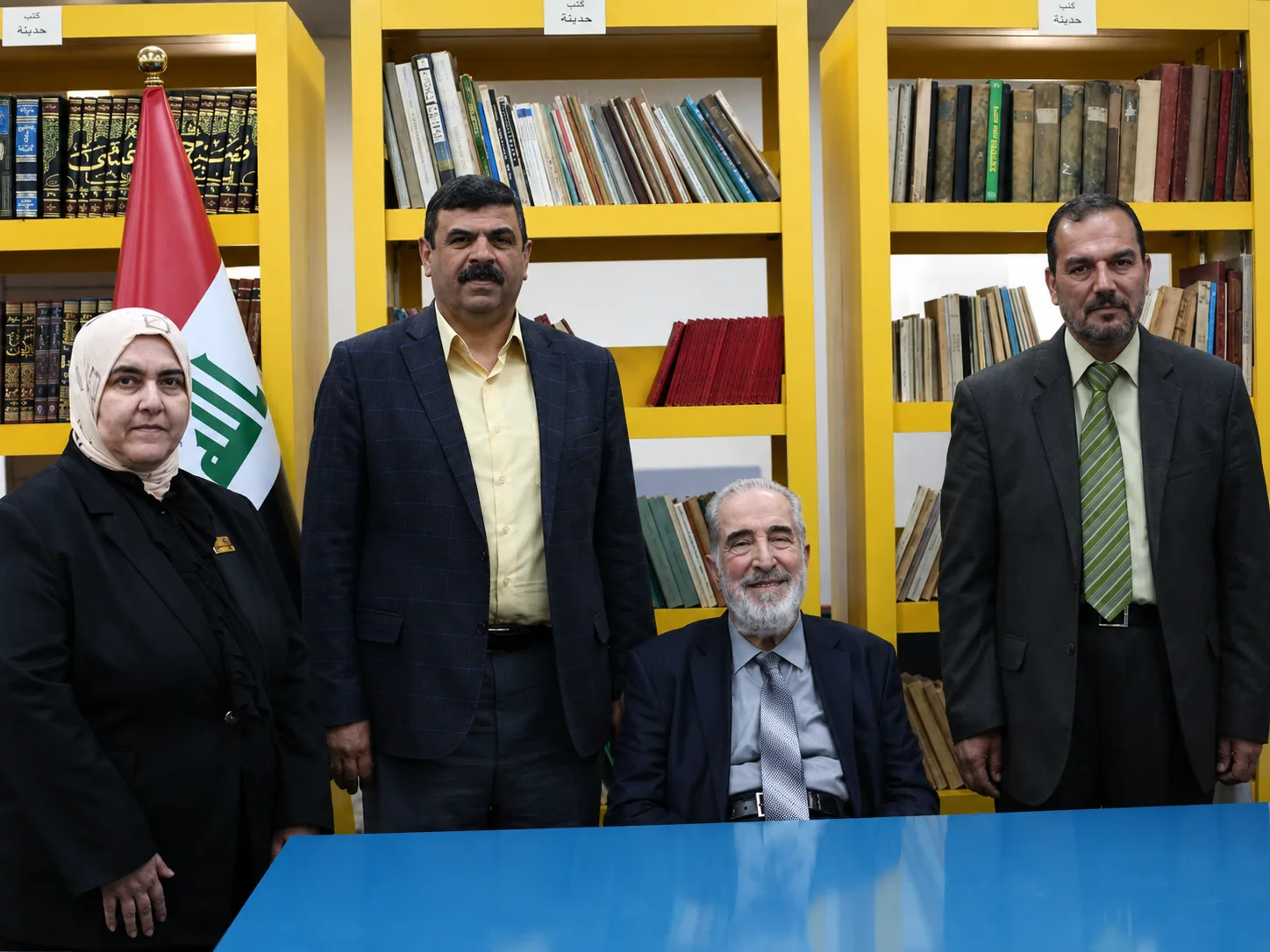
In a related context, the idea of confronting foreign invasion occupied an important place and served as a central axis in his intellectual output. Khalil traced the military, social, and psychological mechanisms that enabled the Islamic world to confront the fiercest two existential challenges of the Middle Ages: the Crusader advance from the West and the Mongol onslaught from the East.
This vision is especially clear in his book “The Islamic Resistance to the Crusader Invasion,” as well as in his methodological work “An Introduction to Islamic History.”
His method in these and other works was not limited to recounting battle facts. Rather, he emphasized the philosophy of “challenge and response,” showing how the fronts of confrontation with the Mongols and Crusaders became catalysts that awakened the latent forces within society and ultimately led to containing and defeating the invading powers — and even later assimilating some of them — thereby politically and civilizationally reordering the region on more cohesive foundations.
Literature and history: artistic and aesthetic deployment
Dr. Imad al-Din Khalil devoted special attention to Islamic literature, presenting a creative project that combined theoretical grounding with practical application in the novel, theater, poetry, and criticism, moving beyond direct preaching to use art in the service of ideas and history.
On the novelistic side, his novel “The Hurricane and the Minaret” stands out. In it, he narrated chapters of the political and intellectual conflict in modern Iraqi history through a portrayal of the events in Mosul in 1959, when armed communist crowds swept through the city after the failure of Col. Abdul Wahab al-Shawaf’s revolt against the rule of Abdul Karim Qasim, wreaking havoc and leaving repercussions on behavioral and social life.
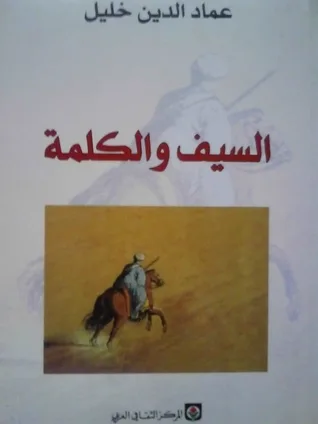
He also addressed the historic fall of Baghdad to the Mongols in his novel “The Sword and the Word,” affirming the inevitability of the idea’s triumph and the word’s steadfastness in the face of brute force.
His output was not limited to the novel. It also extended to playwriting through works such as “The Captives,” “A Miracle on the West Bank,” and “The Sun and Filth,” as well as various poetic works, in which he focused on the issues of freedom, individual responsibility in change, rejection of cultural dependency, and the centrality of the Palestinian cause in the lives of Arabs and Muslims, through texts and dramatic dialogues with deep intellectual dimensions.
Khalil reinforced this narrative and theatrical production with solid critical and theoretical work through several books, most notably “An Introduction to the Theory of Islamic Literature,” in which he formulated the artistic and aesthetic principles of literature committed to human concerns from a civilizational perspective, demonstrating the ability of literature rooted in an Islamic frame of reference to possess mature tools of expression capable of deconstructing reality and rereading history.
“Plain yet profound” and the features of his linguistic style
Despite the depth of Dr. Imad al-Din Khalil’s intellectual and historical theses, his writings were marked by linguistic qualities that made them accessible to readers and the broader educated public without compromising scholarly rigor. He avoided complexity, obscurity, rugged verbal constructions, and ornamental rhetorical flourishes. In his work, the eloquence and depth of the idea replaced artificial linguistic embellishment, and his phrasing came across as clear, fluid, and direct, conveying the intended meaning without ambiguity.
His writings were also marked by objectivity, scholarly integrity, and a commitment to rational judgment, discussing opposing views through evidence and proof rather than ideological agitation, according to the testimony of many of his contemporaries and students of his thought. Through rigorous historical criticism, he offered a solid scholarly alternative that refuted deficient readings and politicized Orientalist treatments, using textual examination to dismantle narratives and preconceived, agenda-driven positions.
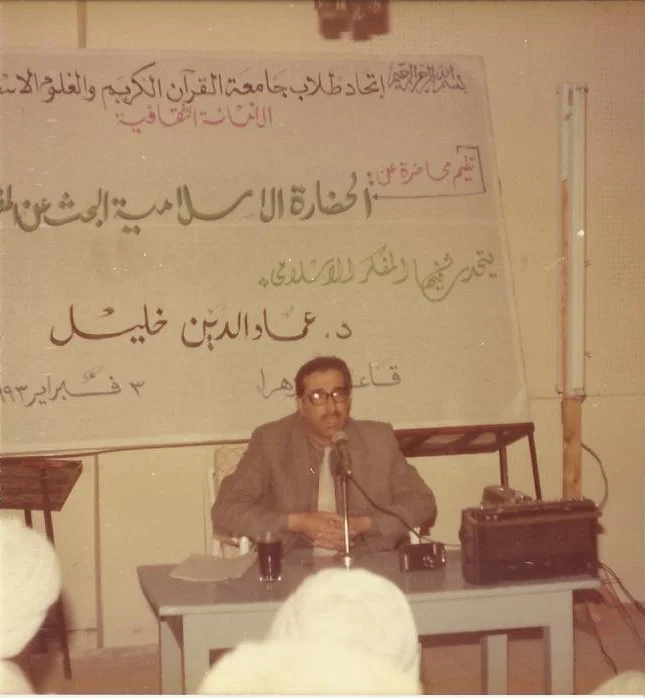
The true value of Dr. Imad al-Din Khalil’s historical project lies in his transformation of history from a consumed subject of the past into a living tool for raising awareness in the present and anticipating the future, grounded in the logic of civilizational patterns. Through his historical studies, he moved beyond the conventional informational mode confined to recording and compilation toward pattern-based analysis, helping lay the groundwork for a generation of researchers who treat history as a living science and a driver of transformation.
Thus, through his decades-long body of work, Imad al-Din Khalil offered an integrated intellectual reference point, showing that a nation’s awareness of its history and the patterns of its rise is the first and essential step toward restoring its pioneering role and achieving its hoped-for civilizational witness.
