






“Afrasiab said: Your words do not depart from the path of sound judgment, except that whoever raises the lion’s fierce cub must beware of it, once its fangs emerge, and guard against the danger.”
— Shahnameh, by Ferdowsi, translated by al-Fath ibn Ali al-Bundari
One explanation for the hostility between the United States and Iran, from the establishment of the Islamic Republic in 1979 to the war now under way, begins with the 1953 coup. In Operation Ajax, the United States helped overthrow nationalist Prime Minister Mohammad Mossadegh and restore the Pahlavi dynasty to power. Many Iranians came to resent the US role in a coup that gave the shah still greater, more arbitrary powers.
The American historian Stephen Kinzer is among those who regard the coup as decisive. In the introduction to All the Shah’s Men: An American Coup and the Roots of Middle East Terror, he wrote: “Had the United States not sent its agents to depose Mossadegh in 1953, Iran would have continued on its path toward full democracy and, in the decades that followed, would have become the first democratic state in the Islamic Middle East, perhaps even a model for other countries in the region and beyond. That would have changed the course of history completely — not only for Iran, the Middle East, and the United States, but for the entire world.”
The coup was pivotal, but it was not the last American decision to shape Iran’s future. At the turn of the 1970s, President Richard Nixon and his adviser Henry Kissinger, later secretary of state, changed Washington’s relationship with the shah. They encouraged his appetite for weapons on a scale that neither the Ford nor the Carter administration subsequently managed to reverse or contain.
After the coup, US arms sales to Iran had been tied to the country’s ability to pay for and use the weapons. Nixon abandoned that restraint. American documents and later studies suggest that the decision contributed to economic and social pressures that weakened the shah during the two-year revolution that brought a government fiercely hostile to the West, and particularly the US, to power.
This instalment in the series examines that later chapter of the relationship. It does not discount the importance of Operation Ajax, but asks how the arms and oil policies pursued under Nixon and Kissinger helped create the conditions for Khomeini’s rise.
Twitchell and the shah who “wanted everything”
In The Oil Kings: How the U.S., Iran, and Saudi Arabia Changed the Balance of Power in the Middle East, historian Andrew Scott Cooper argues that US officials watched Iran closely during the first 15 years after the coup.
Presidents Dwight Eisenhower, John F. Kennedy and Lyndon Johnson were troubled by the shah’s preference for military spending over economic development and infrastructure. Poor Iranians saw little improvement in their lives, while the shah sought a larger regional role. Successive administrations feared that these pressures could provoke another social upheaval.
American liberals were particularly sceptical of the shah. At a closed meeting of the Senate Foreign Relations Committee in June 1961, Senator Frank Church warned: “I think the shah’s survival in Iran would be a miracle. Everything I know from history tells me that this shah will not last long, nor will his regime. And if he falls … bang! We fall with him.”
His colleague Hubert Humphrey agreed. Referring to the Pahlavi family and its entourage, he said: “They are dead, but they do not know it. I do not care what kind of revolution it will be; someone will get them, and they will be out. It is only a matter of time.”

Military spending under the shah accounted for no less than 23 per cent of the budget and often reached a third. After Kennedy’s assassination, the Johnson administration made a concerted effort to curb that spending.
US envoys in Tehran doubted the shah’s judgment. In a 1966 memorandum, National Security Adviser Walt Rostow told the president that “most of the officials who met with the shah this week see him as a fool for spending this way, and the U.S. Agency for International Development expects a growing deficit in Iran’s balance of payments if he continues to foot both the development and rearmament bills at once.”
Washington imposed financial limits intended to prevent military purchases from draining Iran’s civilian economy. This approach became known as the Twitchell Doctrine, after General Hamilton Twitchell, who headed the US military mission to Iran.
Its central aim was to align procurement with training, so Iran bought only equipment its forces could operate and maintain. Ambassador Armin Meyer described his efforts to resist the shah’s demands: “If we had left matters to the shah during my tenure, he would have stopped at nothing. He wanted everything … I was always trying to dissuade him from buying military hardware.”
A second restraint: oil
Regulating arms sales also gave Washington leverage over the shah. As Cooper argues, supplying weapons without restraint risked strengthening him enough to pursue a foreign policy independent of the US.
Meyer recalled the annual scrutiny imposed on Iranian purchases: “The Iranians were forced to submit to an annual economic review, and it was humiliating for them to do so before they could purchase $50 million worth of military equipment. The shah was somewhat irritated at having to accept that review, but he understood, in any case, that it was necessary in order to obtain the materiel and remain in our camp; his eyes were always fixed on his northern borders and the source of Soviet troublemaking.”
The Twitchell Doctrine was not always applied strictly. Between 1964 and 1968, Mehdi Samii, then governor of Iran’s central bank, persuaded the Johnson administration that the improving economy justified more defence spending. A memorandum of understanding increased military grants by about $20 million. Even so, another constraint limited the shah’s spending: the arrangement governing Iran’s oil.
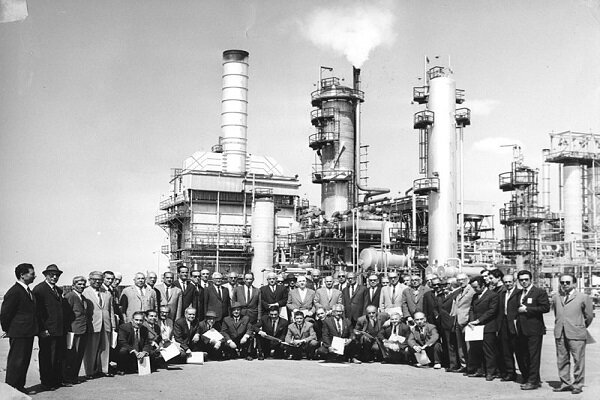
After Operation Ajax, the Eisenhower administration established a consortium of Western oil companies in 1954 and linked it to the Iranian government through the “Consortium Agreement”. British Petroleum received a 40 per cent stake, Royal Dutch Shell 14 per cent, five American companies 8 per cent each, and a French company 6 per cent. Consortium members shared their profits with the Iranian state under the formula then customary in the Middle East.
The companies, however, retained control over crude prices and decisions to increase or reduce production. Oil was the shah’s greatest source of power, yet he did not control those decisions. Iranian economist Jahangir Amuzegar described the ruling family as standing on two oily legs. At the height of the 1973 oil crisis, the shah would overturn the arrangement after Nixon had opened the way for him to do so.
“Protect Me”
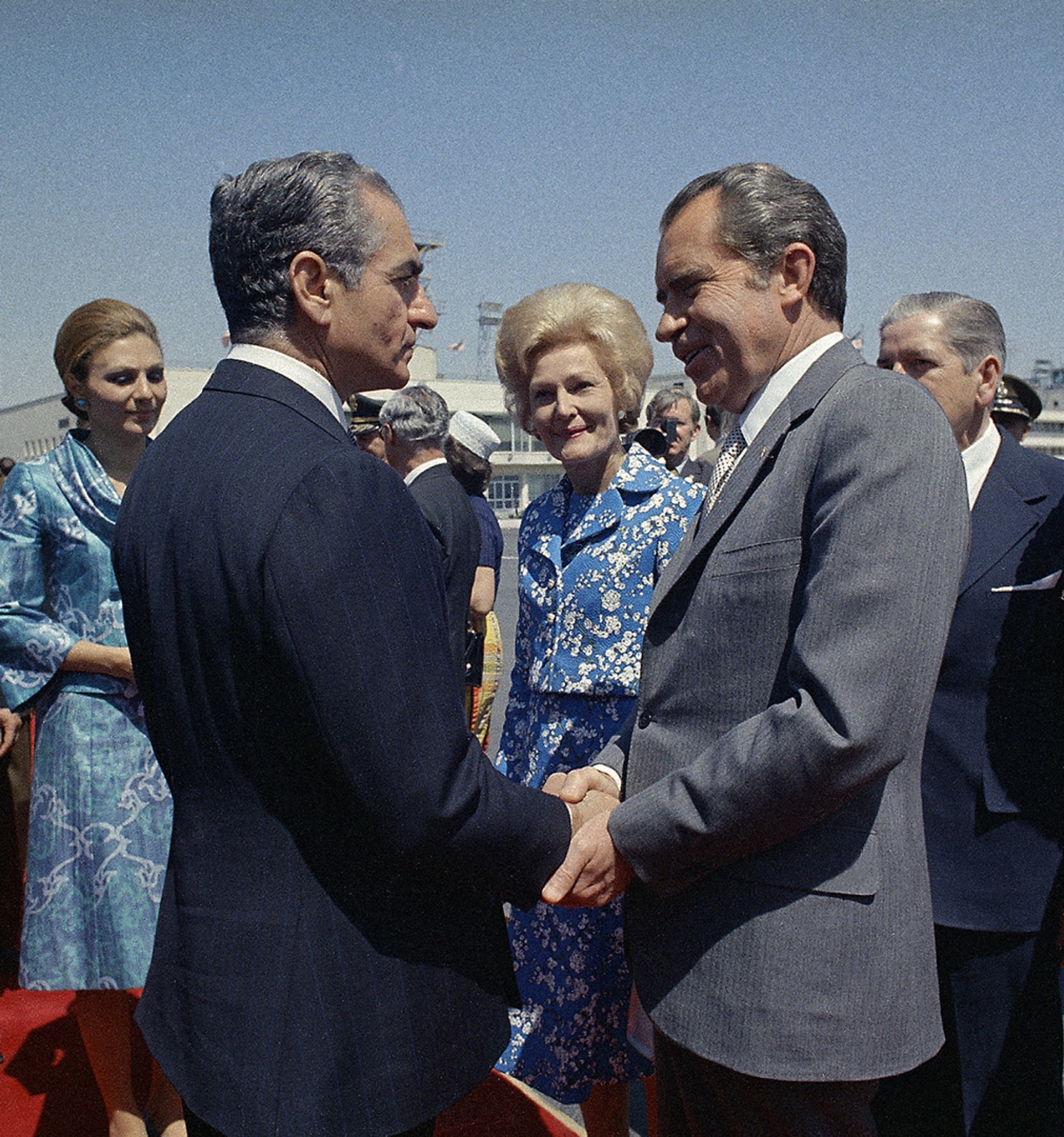
Nixon became president promising to extricate the United States from the Vietnam War. As the war continued, he looked to allies to carry more of the military burden. At a private meeting with the shah at one of the shah’s palaces in 1972, Nixon agreed to sell Iran some of the most advanced weapons in the US arsenal, including F-14 and F-15 fighter jets and laser-guided bombs. He then leaned towards the shah and said: “Protect me.”
The agreement reflected the Nixon Doctrine, announced in 1969, and the policy of treating Iran and Saudi Arabia as twin pillars of US interests in the region. With the Vietnam War limiting Washington’s ability to deploy forces abroad, Nixon pressed allies to assume more responsibility during the Cold War.
He regarded Iran as better placed than Saudi Arabia to protect US interests in the Gulf. Washington also entrusted the shah with roles relating to the Kurdish issue and opposition to communism in Oman, Iraq and Yemen.
Nixon appealed to the shah’s ambition to revive Persia’s regional power. The shah took on the role of regional policeman, while US arms deals with Iran rose from $103 million in 1970 to $552 million in 1972, then reached $3.91 billion in 1974.
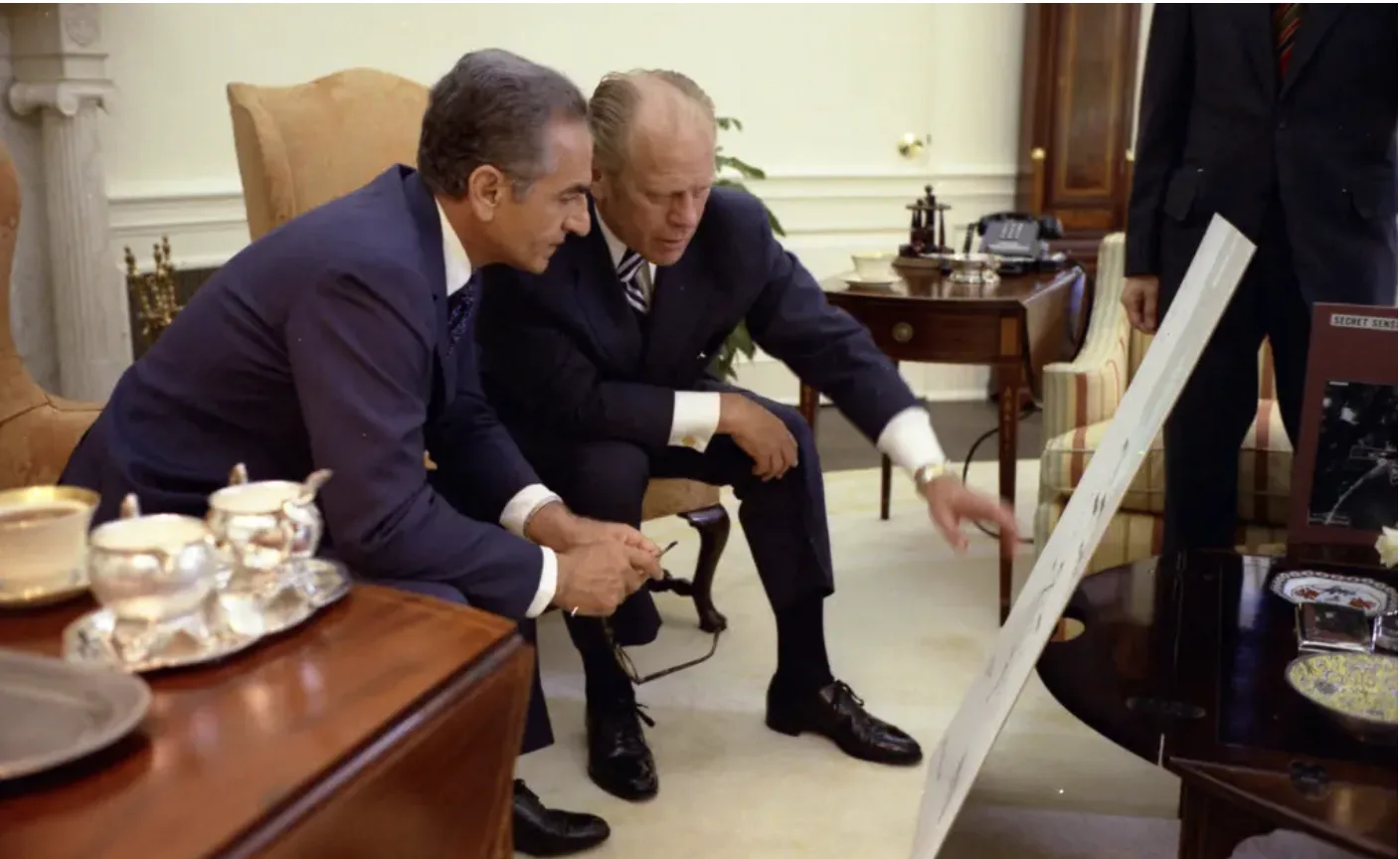
The policy continued after Nixon left office. Kissinger remained in government under President Gerald Ford, and the relationship with Iran changed little. Defence Secretary James Schlesinger raised concerns about the large number of Americans needed in Iran to operate the weapons and train Iranian personnel. Ford dismissed him and appointed Donald Rumsfeld in his place.
The Nixon administration had assumed that the shah understood his dependence on US support and would put Washington’s priorities ahead of his own. Douglas MacArthur II, Nixon’s first ambassador to Iran from 1969 to 1972, captured that attitude: “The CIA felt it had something like property rights in Iran because of its role in restoring the shah.”
The gap in Washington’s understanding
Cooper argues that the administration underestimated the risks of its approach. Nixon had no close adviser with a strong grasp of the oil economy or the consequences of growing US dependence on Middle Eastern oil, and he delegated much of the region’s policy to Kissinger.
Cooper recounts a White House meeting described in the diary of Federal Reserve Chairman Arthur Burns. Kissinger and George Shultz attended, but Burns saw little specialist knowledge around the table: “Kissinger is a brilliant political analyst, but, by his own admission, he is ignorant of economics, and Shultz is merely an economic amateur no less confused than he is. I was the only one with even the slightest knowledge of the subject, but I am not a real expert on some aspects of that knotty international problem. What a way to arrive at decisions! No one from the State Department, no technical experts to help us!”
Nixon also recognised the limits of Kissinger’s economic expertise. When he appointed Peter Peterson as his special assistant for international economic affairs, he warned him: “Economics is an area about which Kissinger knows nothing!”
The two advisers clashed. On one occasion, Kissinger told Peterson: “Peterson, this is merely a secondary economic consideration.” Peterson replied: “Henry, there is nothing new in what you are saying; you see every economic consideration as secondary.”
Nixon later wrote in his memoirs: “I believed we needed someone with economic expertise at the State Department, and I saw that Henry had no rival in geopolitical affairs, but economics was not his field.” Yet the administration continued to make decisions about Iran’s arms purchases and oil wealth without adequately reckoning with their economic consequences.
A march of folly
Kissinger made his final visit to Iran as secretary of state in August 1976. Three days before he arrived, a Senate committee chaired by Humphrey issued a report opposing US arms sales to Iran. It concluded that sales had gone too far: Iran’s military had become so dependent on American technical support that it could no longer wage war without receiving that support daily.
Humphrey also warned that tens of thousands of Americans living in Iran could be taken hostage if relations between Washington and Tehran deteriorated.
Kissinger called the report a disaster. He was angry with the Democrats and with Republicans he believed had influenced its findings. Among them was Treasury Secretary William Simon, who had repeatedly described the shah as dangerous and unstable and argued that he should not receive foreign weapons. When Simon’s remarks reached the press and threatened to cause a dispute with Tehran, Kissinger called Iranian Foreign Minister Ardeshir Zahedi to apologise and rebuke his colleague. During the call, Zahedi described Kissinger as “obsequious and sycophantic.”

US intelligence also failed to establish the significance of the shah’s illness. Cooper recounts that, after a report about cancer appeared in Newsweek in 1975, the shah told Ambassador Richard Helms: “I read in Newsweek that I have cancer. Have you ever seen anyone who looks healthier than I do now?” Helms believed him.
Cooper contrasts that response with Washington’s handling of French President Georges Pompidou’s Waldenstrom disease. After learning of his illness, the National Security Council studied how his condition and medication might affect US-French relations. Nixon and senior officials then adjusted their dealings with Paris.
There was no comparable response in the shah’s case. Washington made no contingency plans, did not direct its intelligence agencies to investigate his condition and did not slow the transfer of advanced weapons to Iran. It continued what Cooper calls its “march of folly in Iran.”
Helms, a former CIA director, was also personally loyal to the shah. He did not speak to the shah’s opponents in Iran and instructed embassy diplomats to avoid them, lest such contacts offend him. As a result, the embassy had few relationships with forces that might take power if the shah fell.
Warnings ignored
The Defence Department did have an assessment of the risks in US-Iranian relations. RAND analyst David Ronfeldt examined arms sales and asked two questions he believed officials at the State Department and in the intelligence agencies had neglected: How had the relationship reached this point, and where was it heading?
Ronfeldt concluded that the US had surrendered leverage over its ally and created a “super client”: a shah increasingly able to set the terms of the relationship himself.
He criticised the Nixon Doctrine for turning the shah and other Third World dictators into regional enforcers of US policy:
“In recent years, the US government can be accused of preferring dictatorial rule, if not imposing it on dependent states.
The assumption underlying this approach was that dictators are somehow more compliant with US interests, but that view appears mistaken in Iran’s case. Investments worth several billion dollars in Iran have made the United States a potential hostage to the shah’s ambitions, with the added risk of being drawn into a war the shah chooses to fight, on his terms and at any time.”
By “super client”, Ronfeldt meant that the shah was no longer simply carrying out Washington’s wishes. Since the 1973 oil crisis, he had taken steps contrary to US interests. Nixon, meanwhile, had become consumed by his domestic scandal, leaving the shah more room to expand his influence and consolidate control over Iran’s oil industry.
The shah was drawing substantial support from the relationship while becoming harder for Washington to direct. The US turned to Saudi Arabia, setting the stage for a confrontation over oil policy that would peak in 1977. A later article in this series will examine that episode.
The rot beneath the Peacock Throne
At his trial, Mohammad Mossadegh told the judges: “My only crime is that I nationalized the Iranian oil industry and freed this land from the web of colonialism and the political and economic influence of the greatest empire on Earth in this country.”
The shah would later challenge Western oil companies himself. During the oil crisis, he used OPEC to shift pricing decisions towards its member governments. Responding to Western complaints about higher prices, he declared: “The industrial world must realize that the era of your splendid development, your even more splendid incomes, and your wealth built on cheap oil is over. You must find new sources of energy, and you must tighten your belts. If you want to live, you must now toil.”
As the 1977 oil crisis put him under pressure, the shah likened Saudi oil minister Ahmed Zaki Yamani to Judas Iscariot, calling him a betrayer and an agent of imperialism.
The shah saw himself as a national hero in the mould of Mossadegh, but believed he would succeed where Mossadegh had failed. Despite the warnings about his rule, the CIA expected him to remain in power for at least another decade. An August 1978 report, issued only months before his fall, said Iran was “not in a revolutionary or even a pre-revolutionary situation.”
Meanwhile, arms purchases consumed a growing share of state resources. Oil revenues that were supposed to fund the shah’s White Revolution programmes, launched in 1963, also enriched him and his family. According to historian James Gelvin in Modern Middle East, the shah had amassed more than $1 billion from oil revenues by 1976. His relatives held an estimated $5 billion to $20 billion, while the family’s charitable foundation controlled another $3 billion.
That concentration of wealth, together with arms spending that continued through difficult economic years, weakened the regime. Austerity measures imposed in 1977 to tackle inflation added to the pressure. They followed a fall in oil prices after Saudi Arabia increased supplies of cheaper oil in protest at the shah’s efforts to raise prices within OPEC. By then, Washington had abandoned the restraint on arms sales embodied in the Twitchell Doctrine.
Khomeini inherited an arsenal of American weapons described here as the most advanced in the Middle East. Later crises, including the hostage crisis and the severing of diplomatic relations, caused shortages. Even so, that arsenal helped the Islamic Republic withstand Iraq’s eight-year war against it. In this account, Iraq acted as America’s proxy. The war transformed both the new regime and the wider region.
