






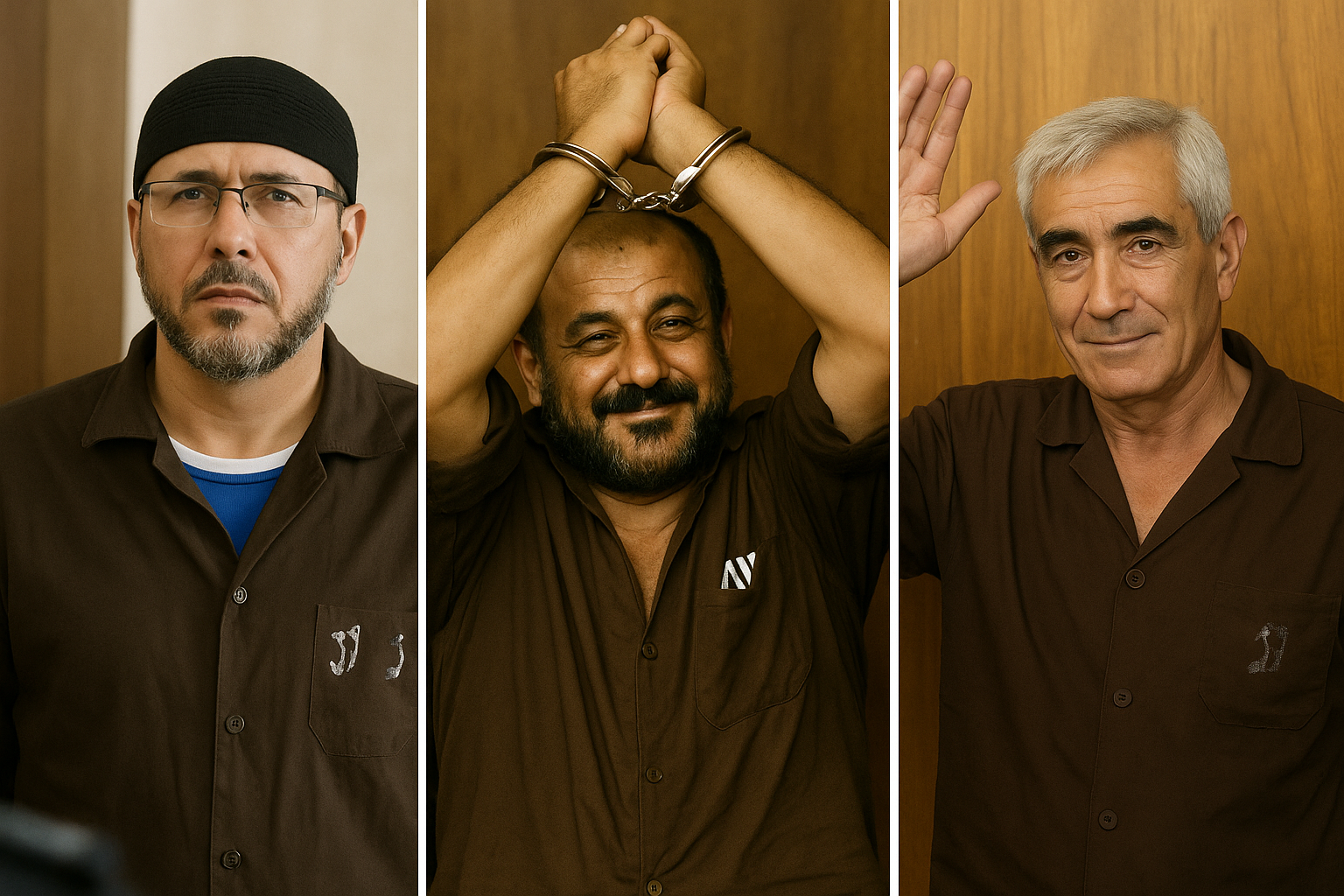
Since the start of Israel’s genocidal war on Gaza, Israeli authorities have imposed increasingly harsh conditions on Palestinian prisoners, stripping them of basic rights. Leaders of the prisoner movement have faced prolonged isolation, repeated assaults and denial of medical care.
Far-right National Security Minister Itamar Ben-Gvir has overseen an intensification of these measures. The treatment of prisoner leaders has raised fears that they could suffer lasting physical and psychological harm before any release through a prisoner exchange. Israel’s refusal to include prominent figures from the movement in the first phase of the deal, alongside what appears to be deliberate stalling, has kept them in detention.
The cases below point to more than a general deterioration in prison conditions. For leaders, some of whom have spent more than two decades behind bars, the combination of abuse and worsening health raises fears of “slow executions”.
Prisoner leaders at risk
The Popular Front for the Liberation of Palestine has warned that the life of its imprisoned secretary-general, Ahmed Saadat, is in imminent danger. Saadat is being held in isolation in Megiddo Prison. The Front said he was brutally assaulted during his latest transfer and has been denied family visits and legal rights, further damaging his health.
The Front called his treatment a “deliberate crime” and said it formed part of a policy aimed at destroying prisoner leaders physically and psychologically. It also said Ahed Abu Ghulmeh, a member of its political bureau and the official responsible for its prison branch, had been transferred to Gilboa Prison under harsh conditions. The transfer was part of a wider campaign that, the Front said, exhausts prisoners and weakens their cohesion.
The Prisoners Media Office reported that Abbas al-Sayyid, who has been serving 35 life sentences since 2002, is held in solitary confinement in Ramon Prison under harsh conditions. It said repeated torture and medical neglect had left him with widespread skin infections and severe vision loss.
Abdullah Barghouti has reportedly been beaten repeatedly, attacked with dogs and had caustic substances poured over his body. He has fallen into comas without receiving adequate medical care.
Hassan Salameh, isolated for months, has suffered a severe decline in his health, including impaired vision, tooth loss and extreme weight loss. His weight has fallen to 62 kilograms. Muhannad Shreim has lost nearly 45 kilograms and struggles to move or speak.
Muammar Shahrour has rheumatism but is being denied treatment. He is held in a cold, damp cell and is reportedly beaten and deprived of food daily, adding to his physical and psychological suffering.
Mohammed al-Natsheh, 67, fell into a coma after suffering internal bleeding and kidney failure following what was described as severe torture after his arrest in March 2025. He was transferred to Hadassah Hospital, but neither his family nor his lawyer was allowed to visit him or obtain information about his condition. The restrictions have raised suspicions that the authorities are concealing the treatment he received.
According to his wife, al-Natsheh was taken to the Ofer interrogation centre immediately after his arrest and subjected to prolonged questioning before being moved to hospital unconscious. She said: “My husband is an elderly man, 67 years old, and suffers from chronic health problems. I do not understand how the occupation allows itself to subject him to this kind of torture, as if they wanted to destroy him, not interrogate him.”
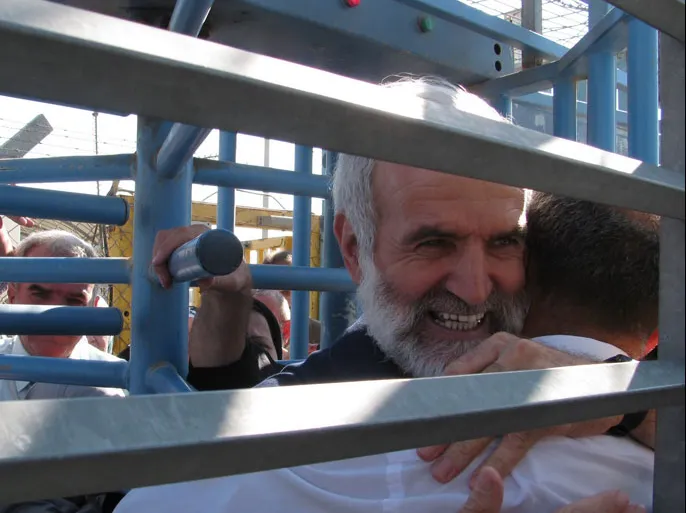
The Commission of Detainees and Ex-Detainees Affairs and the Palestinian Prisoner’s Society said Marwan Barghouti, a member of Fatah’s Central Committee, had been repeatedly assaulted in Megiddo Prison. They reported severe blows to his head, ears and chest, causing serious injuries, including internal bleeding in his right ear and acute infections. He was also denied medical care, they said.
Fatah’s Central Committee described Barghouti’s treatment as “an attempt at political liquidation by decision of the Israeli government,” citing the repeated denial of treatment and legal visits.
Sentenced prisoners are not the only ones affected. Zaher al-Shishtari, 60, has been held in administrative detention for more than eight months. He has multiple sclerosis, diabetes and facial nerve paralysis. His family says he can no longer move independently, is in severe pain and relies entirely on other prisoners for his daily needs. They say he has received no medical intervention, and no decision has been made to release him on humanitarian grounds.
Life inside the prisons
In his first account after his release, former prisoner Wael al-Jaghoub told NoonPost that detention conditions had deteriorated sharply since 7 October 2023. He said Israeli authorities had declared an “open war” inside the prisons, reversing previous gains in prisoners’ conditions. He identified four policies that now shape daily life.
The first, he said, is systematic starvation. Prison authorities have sharply reduced food portions, leaving prisoners without enough to sustain themselves. They no longer receive basic items such as sugar and salt, and their meals amount to little more than token rations. Al-Jaghoub said the effects were visible in their emaciated bodies.
The second is the denial of medical care. According to al-Jaghoub, treatment has been cut off even for prisoners with chronic or serious illnesses. He said some had died as a result, while others remained at risk of death without care.
The third is daily intimidation and abuse: repeated beatings, violent searches and humiliation. Al-Jaghoub said prison units raid cells and that all prisoners now bear injuries, including wounds, bruises and fractures.
The fourth is psychological abuse. Al-Jaghoub described racist insults and deliberate humiliation intended to undermine prisoners’ morale and dignity. He said those arrested after 7 October, particularly people from Gaza, faced still harsher torture and abuse, with no improvement in their conditions or access to legal measures.
Al-Jaghoub said the four policies together constituted a war crime. Other released prisoners have likewise said that detention since 7 October has become markedly harsher. They describe guards acting according to their own “private law”, with little restraint on how they treat prisoners.
The Commission of Detainees and Ex-Detainees Affairs said its legal teams had recently visited Gaza detainees in the lower section of Nitzan-Ramla Prison for the first time. Known as the “Rakevet” section, it is considered one of the harshest detention sites and holds people whom Israeli authorities classify as “elite” or “unlawful combatants”.
According to the commission, the visit took place under close security surveillance. Lawyers entered through an abandoned gate resembling an old warehouse and descended a narrow staircase that, they said, smelled of mould and was crawling with cockroaches. They were closely monitored and barred from passing information to or from prisoners. After repeated attempts to communicate, they managed to explain that they were legal representatives there to assess the detainees’ conditions.
The lawyers said the prisoners showed signs of exhaustion and fear. Many had been cut off entirely from the outside world, while their families did not know where they were held or what condition they were in. The commission said prison authorities had systematically withheld that information.
Grave abuses
Alaa al-Sakkafi, director of Al-Dameer Foundation for Human Rights, told NoonPost in an earlier interview that the organisation had documented grave abuses through testimony and legal statements from prisoners still held in Israeli prisons and from those recently released. He said many of the acts could amount to war crimes or crimes against humanity.
Al-Dameer documented raids in which special units used police dogs, sprayed detainees with substances including pepper spray, and beat them with thick batons and rifle butts. Al-Sakkafi said the assaults violated international standards for the protection of prisoners.
The organisation has also documented deaths linked to torture. Al-Sakkafi said its figures understated the actual number of prisoners who had died. He described deaths following torture during interrogation or inhumane detention conditions as an unprecedented escalation, occurring without effective international oversight or legal accountability.
The Palestinian Prisoner’s Society has likewise said that conditions for prominent prisoners worsened at the start of the war on Gaza. It cited solitary confinement, beatings and denial of treatment as parts of a wider policy of repression.
According to the society, 66 prisoners and detainees have died, including one child and at least 40 people from Gaza. The figure followed the announcement that administrative detainee Mohi al-Din Fahmi Said Najm, 60, from Jenin, had died at Israel’s Soroka Hospital. The society attributed his death to medical neglect and torture.
Following Najm’s death, the Commission of Detainees and Ex-Detainees Affairs and the Palestinian Prisoner’s Society warned that deaths could rise further while thousands remained in what they described as catastrophic conditions. They cited systematic torture, deliberate starvation, physical, psychological and sexual assaults, denial of treatment and the spread of serious and contagious diseases, particularly scabies. The two organisations said these practices could amount to crimes against humanity and called for urgent international intervention.
Fears of death before release
The accounts of assaults, isolation and untreated illness have intensified fears that leaders of the prisoner movement may die in custody before they can be released. Together, the cases point to a pattern of physical and psychological harm extending across several prisons.
They also recall the death of Islamic Jihad leader Khader Adnan in custody after a prolonged hunger strike. His case has become a warning of the danger facing prisoners whose health deteriorates behind bars without intervention.
Israel’s refusal to include prisoner leaders in the first phase of the exchange deal has sharpened concern about the time they remain in custody. The apparent calculation is that these figures occupy an important place in the Palestinian national movement and that their release could affect Palestinian politics, both internally and internationally. The cases alone, however, do not establish that their exclusion was intended to expose them to further harm.
The harm reaches beyond the prisoners themselves. For many Palestinians, these leaders represent a living part of their national history and symbols of endurance and resistance. The international community’s failure to act, in this reading, gives tacit cover to abuses taking place largely beyond public view.