













هذا التقرير متاح أيضًا بـ العربية
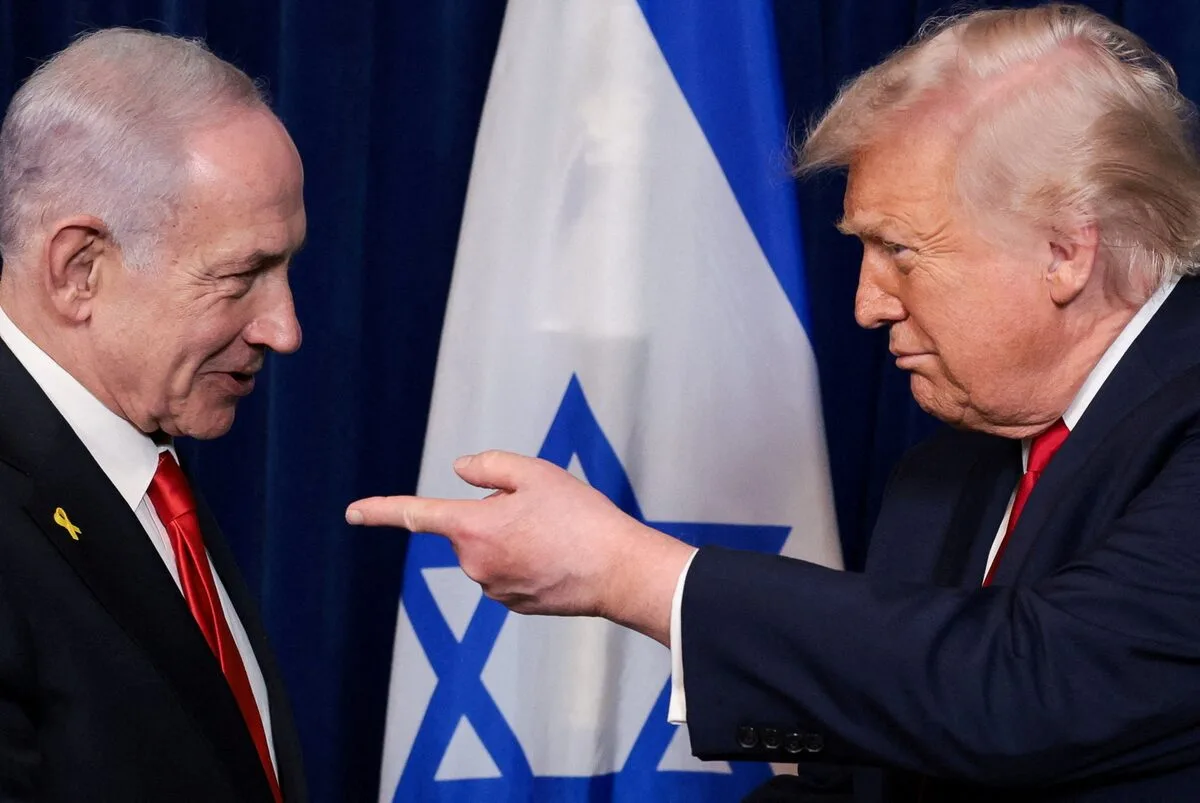
The relationship between Donald Trump and Benjamin Netanyahu has never been as straightforward as their allies suggest. Cancelled diplomatic visits, public disagreements and Israel’s exclusion from key negotiations with Tehran and its allies have fuelled speculation about a rift between the two leaders.
Trump sought a pardon for Netanyahu amid his trial in Israel, but has yet to endorse him in the coming election. Some observers believe figures in the Trump administration would prefer to deal with a different Israeli leader, giving Washington more room to pursue foreign policy goals they see as obstructed by Netanyahu’s right-wing government.
Their differences raise questions for both leaders as elections approach: where do their Middle East priorities diverge, what political costs does their alliance carry, and how are Republicans and Democrats responding?
Diverging goals in the Middle East
Trump and Netanyahu share broad goals in the Middle East, but differ over strategy and what they hope to achieve in the near term. Washington and Tel Aviv launched their latest military assault on Tehran simultaneously at the end of February. At first, they appeared united in confronting Iran’s nuclear programme. Tensions soon became visible, despite efforts to play them down.
Netanyahu’s approach reflects the militarisation of Israeli society and its hostility towards its neighbours. He wants a decisive military victory over Tehran, extending beyond the destruction of Iran’s nuclear and missile capabilities and the fall of its government to the end of its regional allies’ and proxies’ influence. Media accounts have also linked his military decisions to a desire to remain in power and delay a trial that could end his political career. In the meantime, he seeks to shift the costs of confrontation onto other countries in the region and onto Washington, allowing Israel to secure lasting strategic gains without paying a price that could damage his prospects in the Israeli election scheduled for late October.
Trump, by contrast, has approached the conflict in terms of deals and quick gains. He sought strikes that, as with his operation in Venezuela, would allow him to present himself as willing to take action others had avoided. But having set his sights on toppling Iran’s government and destroying its nuclear and missile capabilities, he has faced a problem with global energy security. The Strait of Hormuz has moved to the top of his administration’s agenda, alongside the question of what agreement Washington might reach to ease the growing pressure on the US economy.
Several US reports have described mounting tensions between Trump and Netanyahu as the confrontation with Tehran continues without a clear end in sight and elections approach for both men. According to Axios and ABC News, Trump called Netanyahu “a crazy man” a few months after hostilities began. The reported remark followed Netanyahu’s threat to bomb Beirut and his refusal to support Washington’s efforts to de-escalate and reach a quick diplomatic settlement — one that could give Trump a campaign achievement without severe economic and political consequences.
Netanyahu has announced a plan to end Israel’s reliance on US military aid—which has totaled approximately $174 billion since 1948—but will Israel be able to do without it?pic.twitter.com/Zb1MVAcWlF
— (@NoonPost) January 12, 2026
Lepner, of the Atlantic Council’s Scowcroft Middle East Security Initiative, told Newsweek that the leaders’ differing agendas and methods could eventually bring them into conflict. He said Netanyahu’s refusal to compromise was creating problems for Trump with his own supporters, prompting the president to put more pressure on Netanyahu to advance stalled diplomacy, whether with Tehran or in Gaza.
In Gaza, Trump’s ambitions appear more limited. His administration is concentrating on the Peace Council, through which it hopes to present itself as a force for peace and reconstruction in the Middle East. It appears willing to work with the concessions Hamas has offered on governance, its stated intention to hand over weapons and a civilian governing arrangement intended to bring humanitarian relief and international reconstruction to Gaza.
Netanyahu, meanwhile, appears unwilling to accept even a limited near-term settlement. Continued control of the territory and an enduring enemy would preserve the flow of military support and Israel’s freedom to act in the region — advantages he appears to value more than Trump’s proposed deal.
Netanyahu’s rejection of the Peace Council plan, which Trump had presented as a historic breakthrough to end Israel’s genocidal war in Gaza, exposed how differently the two men view their political needs before their respective elections. Axios described the disagreement in terms of their differing “basic needs”.
Election pressures
Disagreements over Iran and Gaza have strained Trump and Netanyahu’s relationship in recent months. Both face elections, and each appears to have a different view of which approach to the wars will best serve him at the ballot box.
In the US, public anger over the war with Iran poses a risk to Republicans. Some of Trump’s supporters are disappointed that he has not fulfilled his promises to end prolonged wars and pursue an “America First” policy. Americans are also facing higher costs for fuel, food and basic services. Republicans fear that discontent over a war many voters see as serving no US interest could cost them control of Congress and impede their agenda for the following two years.
A Pew Research Center poll described as having been conducted in July found that the proportion of Americans with an unfavourable view of Israel had risen from 43 per cent in 2022 to 62 per cent in 2026. Another Pew poll, described as having been conducted in March, put Netanyahu’s favourability rating among Americans at 27 per cent, down from 32 per cent the previous year.
Between the ballot boxes in Washington and Tel Aviv, Middle East conflicts are being transformed into electoral assets: Trump seeks a de-escalation that serves his election prospects, while Netanyahu clings to an escalation that postpones his political reckoning.
Read the full article here.
: https://t.co/EUtx3xxtbr pic.twitter.com/hWPDHrsbpP
—(@NoonPost) September 16, 2026
In Israel, polls suggest declining confidence in Trump and in the support he will offer the country. Only 28 per cent of respondents agreed that Israel was among his top priorities. Other polls suggest his popularity among Israelis reached a low after he signed a memorandum of understanding with Tehran in the summer, an agreement that was later abandoned.
In an interview with The Jerusalem Post in early July, Yisrael Beiteinu leader Avigdor Lieberman said Netanyahu had damaged the longstanding US–Israel relationship. Netanyahu had become a burden to Trump before the US midterms, Lieberman argued, leading the president to try to avoid him.
Dan Shapiro, a former US ambassador to Israel, told Al-Monitor that clashes with Netanyahu were familiar to US presidents. Iran had long been a principal source of disagreement. Even after Netanyahu found a president willing to strike Iran’s nuclear programme, Shapiro said, he quickly became a political burden to Trump, making their relationship toxic and costly.
Yossi Mekelberg, a senior consulting fellow in Chatham House’s Middle East and North Africa programme, told Newsweek that the US should avoid backing Netanyahu in the Israeli election. Given the political problems facing Netanyahu’s government at home and abroad, he argued, an endorsement would not serve Washington’s interests. Mekelberg said Netanyahu’s rejection of the Peace Council plan made the Trump administration look weak and lacking in vision just before the November elections.
Despite signs of strain between the leaders, figures in the US administration have sought to emphasise their agreement. Steve Witkoff, Trump’s Middle East envoy and a figure close to Netanyahu’s government, said that Trump’s concern about averting a humanitarian crisis in Gaza did not indicate a difference of opinion with Netanyahu. His insistence on their unity is also consistent with the priority some in the administration place on advancing Israel’s interests in the region.
White House National Security Council spokesperson James Hewitt said that Trump had no intention of abandoning Israel and that the country had never had a better friend than the president.
Trump’s record offers little reason to assume that personal irritation with Netanyahu would change Washington’s commitment to Israeli security and interests. His first term delivered major gains sought by the Israeli right, including US recognition of Israeli sovereignty over the Golan Heights and East Jerusalem, alongside attempts to annex the West Bank and normalise Israel’s relations with Arab and Muslim-majority countries.
Israeli political analyst Nimrod Flashenberg said Netanyahu’s supporters had been alarmed by the possibility that Trump might turn against his government and withdraw support they had assumed was unlimited. But a personal rupture, he added, would not necessarily mean Washington abandoning Israel. The relationship has been entrenched for decades and is sustained by voters, supporters and donors as well as the presidency.
Divisions within MAGA
Democrats are generally more critical of Israeli policy, but Republicans are divided over Netanyahu too. Some 45 per cent expressed some confidence in the Israeli prime minister, while 44 per cent said they had none. That divide could matter in elections for a party that has long counted on firm support for Israel among its voters.
In a Pew poll conducted in April, 57 per cent of Republicans aged 18 to 49 held an unfavourable view of Israel, up from 50 per cent the previous year. A Gallup poll found that Republican support for Israel had fallen by 10 points since the start of the century, although it remained high at 70 per cent.
Within Trump’s “Make America Great Again” movement, his administration’s relationship with Netanyahu’s government has drawn particular criticism. Figures who once defended Trump have become outspoken opponents of his support for Netanyahu and his adoption of the Israeli government’s agenda.
They include Georgia Republican Marjorie Taylor Greene, Kentucky Representative Thomas Massie, Trump’s former adviser Steve Bannon and broadcaster Tucker Carlson. Their criticism is attracting an audience and challenging the conservative right’s longstanding commitment to close relations with Israel.
MAGA critics of Trump object to prolonged wars that impose costs on Americans and to unconditional support for Israel while health, education and basic services at home remain under strain. They contrast Netanyahu’s policy of military escalation and expansion with the containment and “peace through strength” diplomacy they associate with their movement.
Some conservative MAGA figures have also raised the safety of Palestinian Christians alongside their “America First” message. Their concern draws in part on the movement’s evangelical constituency and its response to settler violence and racism in the West Bank, which Netanyahu’s government has enabled.
Carlson has hosted Palestinian Christians, including pastor Munther Isaac, on his podcast. He has also spoken with visitors to the Holy Land, including Sister Agapia Sifanopoulos, about settler attacks on Christians and their holy sites, which they describe as racist crimes and ethnic cleansing backed by Israel’s far-right government.
For most of these critics, the principal objection is to the regional policies pursued by Netanyahu’s government. Challenges to the legitimacy of the Israeli state itself remain far less common in the US; those who make them often face accusations of antisemitism and incitement.
Massie has attacked Netanyahu and his supporters in Congress, arguing that the Israeli prime minister is seeking congressional backing to shore up his position at home and restore his declining international legitimacy.
Bannon, another former Trump ally, has said Netanyahu’s attempts to draw Washington into further Middle East wars are alienating even some of MAGA’s staunchest supporters of Israel. Those figures, he argued, increasingly see Netanyahu as helping to ignite a devastating regional war.
Since the US war with Iran began, right-wing media outlets, including Fox News, Newsmax and The Daily Wire, have carried accusations that Trump has yielded to Netanyahu, allowing him to influence White House decisions and the use of US resources in the Middle East. The Hill argued that “Netanyahu, not Trump, will leave the deepest mark on the future of the Republican Party.”
These Republican divisions coincide with the growing influence of the Democratic Party’s progressive wing, which has sharply criticised Israel and what it describes as its genocidal policies in the Middle East. The shift is particularly consequential in swing states such as Michigan, where Abdul El-Sayed won the Democratic Senate primary against Haley Stevens, who had strong backing from AIPAC and other pro-Israel lobbying groups.
Democrats challenge Trump over Netanyahu
Democrats have been more united in their criticism of Netanyahu’s government, although the party’s establishment and progressive wing differ in their demands. Establishment figures have criticised Israeli policy in Gaza and the West Bank and called for guarantees to halt violations and improve humanitarian conditions. Progressives have called for a complete halt to military aid and accountability for what they describe as genocide.
Democratic lawmakers have pointed to the West Bank, which is not governed by Hamas, in their criticism of Netanyahu’s government. They have repeatedly raised settler attacks and accused the Trump administration of enabling settlers to obtain weapons and giving the Israeli government a green light for ethnic cleansing there.
In a letter reported by The Guardian, 19 Democratic lawmakers warned that Netanyahu’s government intended to annex the West Bank and commit further abuses against civilians. They accused Trump of supporting the attacks, pointing in particular to his decision to lift Biden-era sanctions on West Bank settler leaders.
Establishment Democrats have been more cautious in their criticism of Israel’s war in Gaza. Their demands have focused on protecting civilians, allowing humanitarian aid and restricting arms sales where weapons “could be used” in indiscriminate attacks. Democratic lawmaker Chris Van Hollen, who has acted as a bridge between progressives and the party establishment, criticised the latest $2.8bn arms deal agreed by Trump for Israel. He said it lacked guarantees to protect civilians and risked widening the conflict amid unprecedented humanitarian devastation in Gaza.
On Iran, Van Hollen accused Trump of being manipulated by Netanyahu, who, he said, had found “a president stupid enough” to advance his expansionist ambitions. Van Hollen argued that the consequences threatened stability, US national security and US interests. His criticism came amid growing calls from Democrats to remove Trump from office over the war with Iran.
Congress has also increased pressure over what lawmakers in both parties have called Trump’s “illegal” war. The House of Representatives has voted three times on measures invoking the 1973 War Powers Act to restrict his authority and require an end to the military operation against Tehran. The latest vote, on 15 September, passed by 220 votes to 204.
The Senate passed a War Powers measure by 50 votes to 48 in June, but a September measure failed by 49 votes to 50. The narrow margins show the depth of disagreement in Congress and the political pressure Trump faces over the war.
Democrats’ criticism of Netanyahu also puts pressure on a president closely associated with him. Netanyahu has had strained relationships with Democratic presidents, including Barack Obama and Joe Biden. Politico once called him “the Israeli Republican”, reflecting his closer alignment with the US conservative right than with a Democratic electorate moving leftward.
Focusing criticism on Netanyahu offers Democrats a way to challenge Trump and seek electoral gains as US attitudes towards Israel change. But treating Netanyahu and his government as the sole problem also carries a political consequence: it can cast him as the figure damaging Israel’s interests and reputation while leaving the wider Israeli colonial system, and the actions of both governing and opposition institutions, outside the frame of criticism. That approach, critics argue, risks whitewashing abuses that extend beyond Netanyahu’s tenure.
