







The Syrian government has announced a series of settlements with businessmen through its National Committee for Combating Illicit Gains. It says funds, companies and other assets recovered under the agreements have been transferred to state bodies for management and investment.
Under the announced process, ownership is transferred through legal procedures before state institutions, chiefly the Syrian Development Fund and the sovereign fund, take responsibility for the assets. Tracing what happens next requires information about changes to ownership records, the bodies managing each asset, its value and the returns it generates.
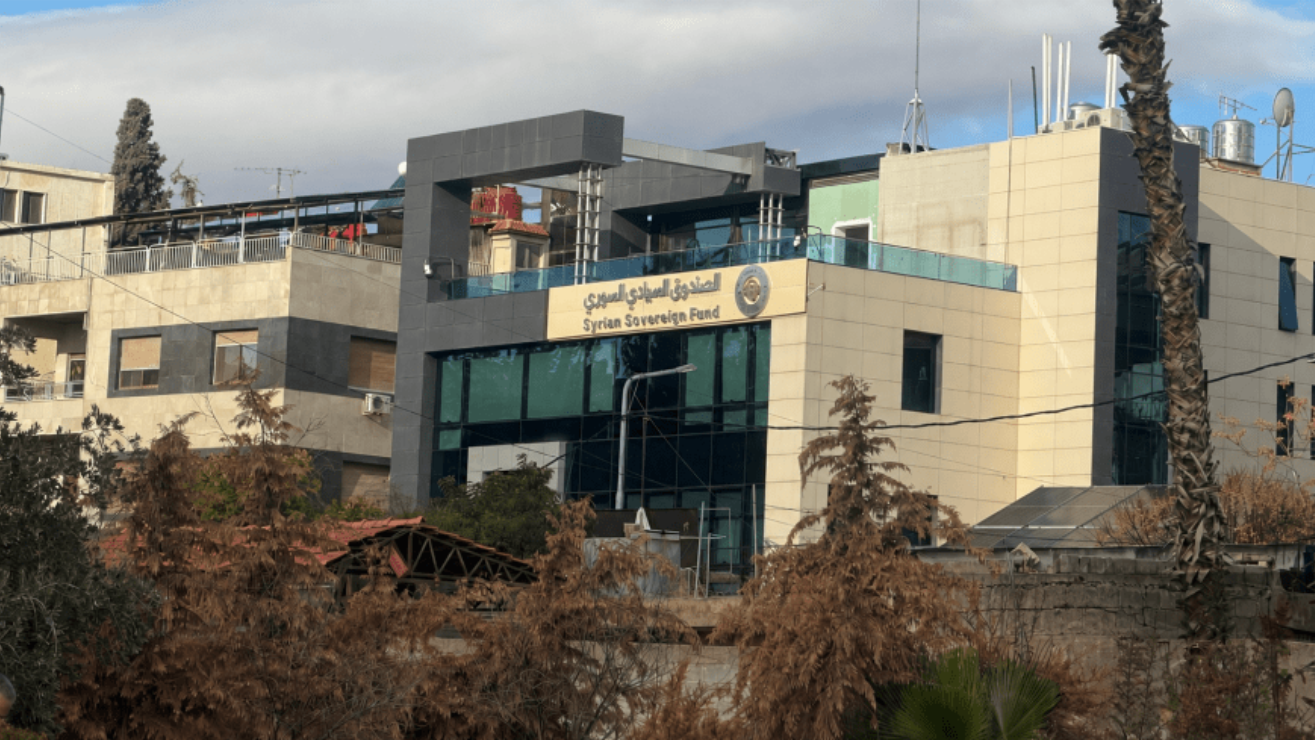
The settlement with businessman Samer Foz offers a case study. The committee announced that it had secured the transfer of 32 companies, along with assets in the industrial, commercial, service and banking sectors. It said the assets and sums collected had been transferred to the Syrian Development Fund through the sovereign fund for management and investment.
The announcement did not, however, provide a complete list of the 32 companies. Nor did it give the estimated value of each asset, identify the names under which ownership is now registered or specify which companies and bodies are managing the assets. Foz’s case shows both what can be traced about recovered assets and what remains beyond public scrutiny.
From settlement to the Development Fund
Foz’s agreement was reached under the voluntary disclosure programme launched by the National Committee for Combating Illicit Gains and Recovering Funds and Assets.
Speaking to SANA on 26 February, the committee’s chairman, Basel al-Suwaidan, said financial settlements do not provide immunity from criminal prosecution or affect the rights of others. They address the financial proceeds of illicit gains, he said, while other judicial processes continue under the applicable laws.
Al-Suwaidan also explained the 80 per cent figure cited in some settlements. He said it followed legal and financial scrutiny that considered the market value of assets, the degree of cooperation and the accuracy of disclosures, as well as the public interest.
In Foz’s case, al-Suwaidan said the settlement covered 32 companies and assets across the industrial, commercial, service and banking sectors. The companies, assets and sums collected were transferred to the Development Fund through the sovereign fund, he said, to be managed and invested in a way that supports the national economy and preserves their productive value.
In a March interview with Al Majalla, al-Suwaidan gave a fuller account of the assets. He cited companies in steel, cement, iron, aviation, food, engineering and concrete, along with hotels, restaurants and tourism facilities. He also mentioned stakes and shares in mining and phosphate companies, as well as holdings in Syria International Islamic Bank, Bank of Syria and the Gulf, and other banks.
All the assets and sums collected had been transferred to the Development Fund through the sovereign fund for management and investment, he said, and would not be put up for sale.
Reuters reported in July 2025 that Foz had surrendered about 80 per cent of his business assets, estimated at between $800m and $1bn. They included a sugar refinery, an iron smelting plant and other factories.
The Syrian Development Fund describes itself as a national economic institution established by Presidential Decree No 112 of 2025. It has financial and administrative independence and reports directly to the presidency. According to the fund, its work includes managing resources efficiently and transparently and supporting Syria’s economic and social recovery.
Under a section on governance and transparency, the fund’s website says it prepares detailed periodic financial reports and conducts internal audits of investment and financing activities. It also says an external auditor examines its annual accounts, while public annual reports set out its resources, principal areas of spending and contracts. The website states that an updated electronic database of projects has been established to allow internal and external oversight.
The fund’s report for the first quarter of 2026, however, focused on donations, pledges and funds received during that period. It did not provide information about companies or other assets transferred to it through illicit-gains settlements, including Foz’s.
The report lists various receipts and financial flows, among them $2,962,109 collected from Al Baraka Syria Bank. The published figures do not establish any connection between that amount and Foz’s settlement.
What happened to ownership?
Noon Post sought information about the assets and the steps taken after the settlement from the National Committee for Combating Illicit Gains, the Syrian Development Fund and the Ministry of Economy. It received no substantive answers to its inquiries.
A source at the sovereign fund, whose name Noon Post is withholding, said the waivers under the settlement had been processed through the approved legal procedures in the property and commercial registries. These included amendments to company documents and the legal registration of Foz’s relinquishment of his shares.
The source said Foz had assured the other partners that there would be no objections. The source added that the legal process was not yet complete: further steps were needed to clear ownership registered in Foz’s name and transfer it to the fund.
The announcement that assets had been transferred to the fund therefore does not establish that the legal procedures for every asset had reached the same stage.
What the authorities have disclosed
Noon Post asked the Ministry of Economy for the names of the companies covered by the settlement and for details of any subsequent changes to their ownership or legal structure. A ministry communications official said it was not connected to the National Committee for Combating Illicit Gains and could not answer.
The committee had not responded to Noon Post’s request for a complete list of companies and assets by the time this report was prepared. Noon Post also contacted the Syrian Development Fund using the number on its website but received no answer about the status of assets the committee said had been transferred to it.
Without a complete official list, Noon Post could not match all the assets described by the committee chairman against information available from public sources.
What is known about Foz’s companies?
Earlier reporting on Foz’s business network offers some indication of the scale and range of interests associated with him. US and European sanctions lists identify companies and individuals linked to Foz or his network. Being named on those lists, however, does not establish that a company was among the 32 covered by the settlement. That would require official documents, ownership records or information from the bodies handling the agreement.
One prominent part of the network is Aman Group, an investment group with businesses in several sectors. Companies linked to it include the commodities trader Foz for Trade, Al Muhaimin for Transport and Contracting, Mina Sugar and the pharmaceutical company Minapharm.
Foz was also linked to Aman Damascus, a property company involved in the Marota City project with Damascus Cham Holding. He held a stake in Aman Damascus alongside Aman Group.
In industry, Emaar Industries is among the companies linked to his investments. His wider business network also included names in tourism and hospitality, among them the Four Seasons Hotel Damascus.

Companies linked to the wider network
The network extends beyond businesses directly associated with Foz. It includes companies linked to family members and former partners, among them his brother Amer Foz’s District 6, Easy Life and Asas Steel, as well as industrial projects in Adra.
Fly Aman appears in the aviation sector. It is linked to Khaldoun al-Zoubi within a wider set of business relationships associated with Aman Group and Foz.
Some of these businesses operated in sectors that al-Suwaidan said were covered by the settlement, including aviation. He also said the agreement encompassed shares in Syria International Islamic Bank, Bank of Syria and the Gulf, and other banks. Sectoral overlap alone does not show that a particular company was among the 32 transferred.
The available information maps parts of Foz’s business network, but it cannot serve as a definitive list of the settlement’s assets. The committee previously said valuations remained under financial review and would be announced after legal procedures were completed. Until fuller ownership, management and valuation records are made public, the path of the assets after their announced transfer to the state — and whether their value is being preserved — remains difficult to trace.
