













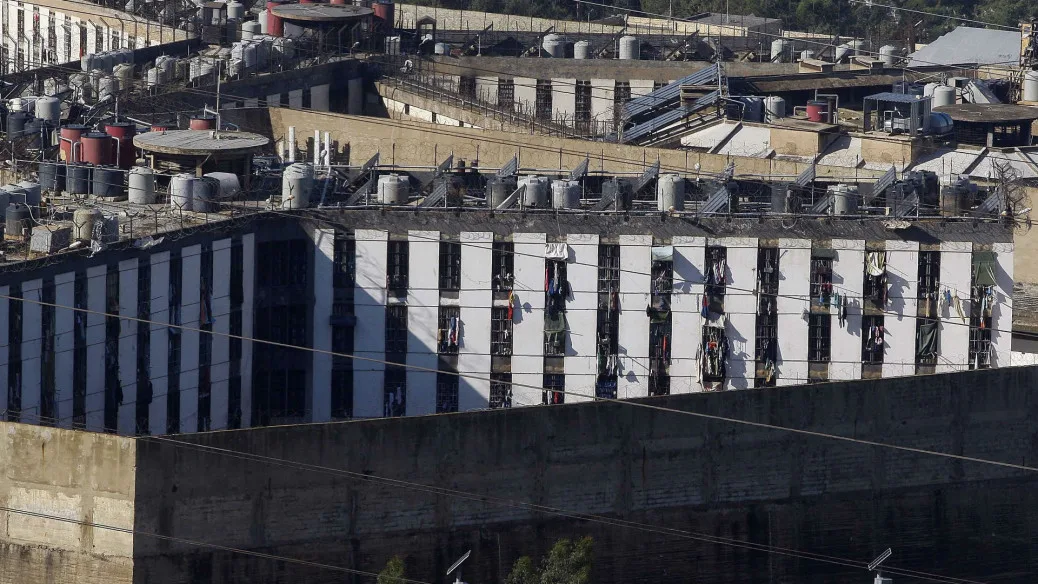
Administrative and judicial delays in Syrian detainees’ cases in Lebanon can cost years of freedom to people who should never have been behind bars. The problem extends beyond prolonged detention and overcrowded prisons: some cases expose failures in the administration of justice itself.
Human rights findings and accounts from Lebanese lawyers describe slow trials and complicated procedures. Individual cases show what these failures mean for detainees. In July 2026, Lebanese lawyer Mohammad Sablouh posted accounts on his Facebook page of two recent cases in which Syrians had suffered judicial injustice in Lebanon.
In the first case, Syrian national Qassem al-Wadi was arrested in Lebanon on the basis of a red notice issued at the request of the Greek judiciary. He spent more than 10 months in detention at Beirut’s Palace of Justice, during which the Lebanese authorities were unable to hand him over to Greece. He was eventually transferred there at his family’s expense. According to Sablouh, the Greek judiciary acquitted him within a month and a half, after which he returned to his family in Syria.
In the second case, a young Syrian man spent a further 24 months in a Lebanese prison after his release was ordered because he was never notified of the decision. He returned to his family in Syria on 19 July 2026, Sablouh confirmed to Noon Post.
On 29 September 2025, 14-year-old Syrian boy Mohannad Mohammad al-Ahmad died while detained in a prison for boys in the Al-Warwar area of Baabda, east of Beirut.
According to the Syrian Detainees News Agency in Lebanon (SDNAL), al-Ahmad had been detained for three months without being able to contact his family. The agency quoted his father as saying that his son was “killed by others” inside the prison for minors.
Although the circumstances differ, these cases raise questions about how the Lebanese judiciary handles Syrian detainees’ cases. They also raise the question of whether some delays go beyond the ordinary complexities of judicial proceedings and themselves prolong detention.
When extradition procedures take months to advance, or someone spends another two years in prison despite a release order, procedural failures become part of the punishment. For those awaiting a ruling, that punishment begins before the court has reached a decision.
The law exists, but who enforces it?
From the moment of arrest, detainees should have clear legal safeguards: the right to know why they have been arrested, to contact their family and a lawyer, and to defend themselves. Temporary detention should not become an indefinite stay behind bars.
Yet the accounts gathered by Noon Post reveal a stark gap between the law and detainees’ experiences. Sablouh said Articles 32, 47 and 102 of the Code of Criminal Procedure set clear limits on arrest and detention and guarantee the right to contact family members and seek a lawyer’s assistance. He said these safeguards apply to Lebanese and Syrian detainees alike.
He said the lack of judicial oversight of how these provisions are enforced, and the failure to hold judicial police officers accountable for violating detainees’ rights, allow what he describes as chaos and an absence of justice.
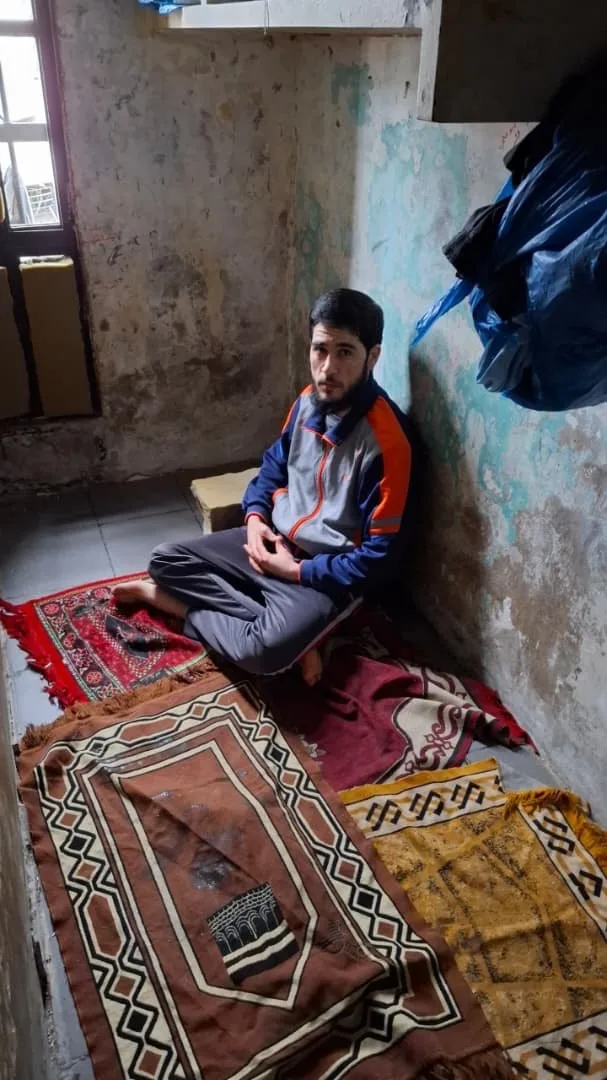
Lebanese lawyer Nabil Halabi said Syrian detainees face additional obstacles in securing legal representation and protecting their rights: they may be unable to afford a lawyer and unfamiliar with Lebanese law.
Alone before the Lebanese judiciary
Even before they enter prison, Syrian detainees in Lebanon may lack the support that anyone facing judicial proceedings should be able to rely on. Their families may be in Syria, they may lack legal residency in Lebanon, and their relatives may be unable to afford a lawyer or pay bail. Detainees themselves may be unfamiliar with Lebanese law and unsure whom to approach or how to follow up on their cases.
Sablouh told Noon Post that neglect in Lebanese prisons affects Lebanese and Syrians alike. But Lebanese detainees often have family members in the country who can enquire about their detention, appoint a lawyer and approach the Bar Association.
By contrast, many Syrian detainees’ families live in Syria or face residency problems in Lebanon that prevent them from making enquiries about their sons. According to Sablouh, Syrian detainees are left waiting for proceedings to advance, while their cases may remain stalled for years unless someone follows them up.
Their vulnerability extends beyond the absence of family support. Halabi said the severe financial hardship facing most Syrians in Lebanon may prevent them from hiring a lawyer or paying bail. Legal assistance for those unable to afford it remains scarce.
Al-Mulhim added that Syrian detainees’ unfamiliarity with Lebanese laws and judicial procedures makes them, in his words, one of the “vulnerable groups” who need legal protection against abuse.
Activist and former Roumieh prison detainee Diaa al-Din Janah described conditions inside the prison to Noon Post. He spoke of detainees who did not learn why they had been arrested until they appeared before an investigating judge, dozens who had spent years without trial, and others whose hearings had been postponed for months.
According to Janah, dozens of detainees remain behind bars after completing their sentences because they cannot pay fines or bail. He said many prisoners “do not have a single dollar”, leaving their release dependent on money they do not have.
The obstacles extend beyond fines and bail. Prisoners without money struggle to obtain legal representation, and Janah also described cases in which some lawyers had defrauded prisoners.
Postponement as an undeclared punishment
A detainee need not receive a prison sentence to lose weeks or months of freedom. A postponed hearing can prolong their detention even though they have not been convicted.
Sablouh said some hearings are postponed for as long as seven months. A detainee may wait a long time for a trial date, only for the hearing to be postponed again.
He told Noon Post that overcrowding in prisons is linked to the judiciary’s failure to carry out its duties, citing people in Baabda prison who have spent years waiting for their cases to come to trial.
Janah gave a similar account. He said he knows “dozens of detainees who have remained without trial for 10 years”. He also described detainees who attend hearings only to have their trials postponed for eight or nine months, with another postponement at the next hearing.
These accounts describe practices at odds with Lebanese law. Article 47 of the Code of Criminal Procedure guarantees suspects the right to the “prompt hearing of their statement and freedom from procrastination.”
In a report issued on 16 August 2024, Lebanon’s National Human Rights Commission said its monitoring of detention conditions had identified detainees held beyond legal time limits. Some had spent months in detention without the investigation record being finalised.
Lebanon’s Justice Ministry had not responded to Noon Post’s questions about these incidents by the time of publication.
Detained without knowing the charge
In some cases, the problem begins at arrest: detainees do not know why they are being held. Accounts gathered by Noon Post from people working in human rights and the legal system describe Syrian detainees being held without knowing the charge against them or the details of their cases.
Halabi said one of the main problems facing Syrian detainees is that they do not know the reason for their arrest, particularly in security-related cases. Once their cases are referred to the judiciary, they face the additional difficulty of navigating unfamiliar Lebanese laws and procedures.
Janah told Noon Post that detainees he met in Roumieh prison did not know why they had been arrested. Some learnt the charge against them only when they appeared before an investigating judge. He also said some detainees faced accusations arising from their participation in the Syrian revolution.
The failure to provide this information is particularly serious given the safeguards required by Lebanese law. Under Article 47 of the Code of Criminal Procedure, suspects must be told the capacity in which they are being questioned, the suspicions against them and the evidence supporting those suspicions. They also have the right to contact a lawyer and a family member.
Yet the National Human Rights Commission’s 2024 report documented cases in which detainees were not informed of these rights, and others in which they were not allowed to contact family members or a lawyer until the investigation had ended. It also recorded a case in which a detainee was “unaware of the crime of which he was accused.”

From the judiciary to the embassy: Where can Syrian detainees turn?
Despite the complexities of the judicial process, Syrian detainees should have somewhere to turn for assistance and a means of following up on their cases in the country where they live.
Lawyer and international criminal law adviser Mohammad Harbaliya told Noon Post that the Lebanese judiciary should be the first institution Syrians approach when facing a legal problem in Lebanon, as it is supposed to act impartially and fairly. They can also seek assistance from the office of the UN High Commissioner for Refugees in Lebanon, particularly in cases of arbitrary detention.
According to Harbaliya, the political shift in Syria has made it possible for Syrians to seek assistance from their embassy again. He said the Syrian Embassy in Lebanon can now, within its legal powers, follow up on citizens’ complaints and make representations to the Lebanese authorities through the Foreign Ministry. These can include requests for clarification or objections in cases of bias or a failure to respond.
Syria’s Justice Ministry had not responded to Noon Post’s questions about these procedures by the time this report was prepared.
According to Harbaliya, the 1963 Vienna Convention on Consular Relations allows the embassy, in coordination with the Lebanese authorities, to send representatives to detention facilities and prisons to assess detainees’ conditions, speak with them and arrange legal representation.
Harbaliya said detainees should, at a minimum, know their rights: to be told why they are being held, to seek a lawyer’s assistance, to contact their family, and to request a medical examination to document signs of beating or mistreatment. Relatives can also contact the Syrian Embassy if they believe a detainee has been wronged or that the authorities have failed to respond to their case.
