









“On that day the Lord made a covenant with Abram, saying, ‘To your offspring I give this land, from the River of Egypt to the great river, the Euphrates.’” (Gen. 15:18).
After Israel’s victory in the 1967 war, the late Israeli defence minister Moshe Dayan said: “If we possess the Torah and regard ourselves as the people of the Torah, then we must also possess the land of the Torah.” He was referring to the verse above.
Dayan’s statement illustrates the relationship at the centre of this article: the use of religious texts to support territorial claims. Following Israel’s occupation of Sinai and the West Bank, he invoked what he understood to be the Torah’s description of the Promised Land to justify occupation and settlement.
The “Israeli Bible” website, founded in 2018, promotes a similar reading of the biblical text. It describes its purpose this way: “In the years since the modern rebirth of the State of Israel, the Jewish state has been at the forefront of the world’s attention. Today, there are countless attempts to distort and destroy the State of Israel. There is also an ever-growing movement of Bible-believing Zionists who stand with the nation of Israel as an expression of their commitment to the eternal word of God.”
The website publishes thousands of articles and explanations about the Bible and Jewish holidays. It also offers readings of the original Hebrew from a traditional Jewish perspective, with particular emphasis on the “Land of Israel” and its connection to the idea of “Greater Israel.”
For the website and other proponents of versions of this idea — including Jewish Zionists, evangelical Zionists and some Arab supporters — the verse in Genesis is central to claims that the land promised to Abraham’s descendants includes Egypt. According to the website, the biblical boundaries of the “Land of Israel” run from the Mediterranean coast to the Arabian Gulf. It says the territory reached its greatest extent under King Solomon, according to the biblical narrative, and encompassed parts of present-day Egypt, Jordan and Syria.
The idea predates the internet. The website presents it through digital maps and other online material, but it also appears in early Zionist writing. Despite his atheism, Theodor Herzl invoked a state extending from the Nile to the Euphrates in his memoirs.
What such boundaries mean, however, has long been disputed. One question concerns the “River of Egypt” in the promise to Abraham: the Hebrew expression differs from the word generally used for the Nile elsewhere in the Bible.
Some researchers and commentators identify the river as Wadi El Arish, a small seasonal watercourse between Sinai and historic Palestine, rather than the Nile. Another interpretation holds that the area inhabited by Abraham, Isaac and Jacob extended no further than the region between Shechem, Nablus and Beersheba. On that reading, the wider boundaries in Genesis describe a theoretical maximum never realised, even at the height of the ancient Israelite kingdoms.
This theological and linguistic dispute matters to Egypt’s place in conceptions of “Greater Israel”. Even among believers in the biblical text, Egypt’s inclusion is contested. Yet one interpretation has been used to support political claims within the Zionist movement since its emergence in the late 19th century.
This article examines how that interpretation has been used politically and how Zionists have viewed Egypt and Sinai. In her book “Egypt, Israel, and the Nile Basin States,” Egyptian historian Zubaida Atta writes that, from the beginning of the 20th century, Zionist thinkers treated Sinai as a territory open to reconfiguration and an important part of their project’s sphere of influence. Terms such as “Egyptian Palestine” and “Palestinian South,” used in some early Zionist writing, likewise reflected attempts to imagine boundaries that symbolically incorporated Sinai into “Greater Israel.”
How did these ideas appear in practice? Why did they persist after the Egypt-Israel peace treaty? And to what extent do they figure in political calculations today?
Herzl’s plans for Sinai
In “Secret Negotiations Between the Arabs and Israel,” journalist and historian Mohamed Hassanein Heikal discusses correspondence between Herzl and the British foreign secretary, the Marquess of Lansdowne. In one letter, Herzl wrote:
“There are now waves of immigration pouring in from Eastern Europe, and if you do not quickly open the door for them to go to Palestine, you will find their men, women and children, with their belongings, before you in London’s East End. Some of them have already come here, and we do not want too many of them here lest you be forced to stop granting them political asylum. It would therefore be best for England to move at once to solve this problem. The solution is in its hands, for it possesses in the southeastern Mediterranean territories empty of population, specifically in the coastal area between El Arish and the Sinai Peninsula.”
One of Herzl’s proposals concerned “Egyptian Palestine,” an imagined region bounded by the Mediterranean to the north, the Ottoman border to the east, Wadi El Arish to the south and the Suez Canal to the west. It overlapped substantially with present-day Sinai. Zionists at the time regarded the area as marginal, sparsely populated and potentially available for settlement. Some also placed it within their understanding of the biblical “Land of Israel.” Its location between Palestine and Sinai added to its appeal.
Herzl also considered a temporary role for the territory if permanent settlement proved impossible. He wanted it to serve as a “transit zone” where Jewish immigrants could stay until negotiations with the Ottoman sultan allowed them to move to Palestine.

Herzl took steps to advance the proposal. In 1902, he approached British colonial secretary Joseph Chamberlain with a Jewish settlement project covering Cyprus, where a Jewish settlement already existed, as well as El Arish and Sinai. Chamberlain, described in accounts of the proposal as antisemitic and opposed to immigration to Britain by Eastern European Jews, was receptive. Herzl proposed an “Eastern Jewish Company” with £5m in capital to colonise the three areas.
Cyprus was dropped after Chamberlain told Herzl that Britain would not expel Muslims or Greeks to make way for Jewish settlers, according to researcher Joseph Massad.
Herzl then travelled to Egypt, met Khedive Abbas Hilmi II and visited El Arish and its surrounding valleys. He proposed leasing about 630 square miles around El Arish for an initial Jewish settlement, with the Zionist Organisation taking a 99-year lease under direct British protection. According to Heikal, the khedive raised no major objection, and their discussions focused largely on the project’s expected financial return.
A more consequential objection came from Britain’s representative in Egypt, Lord Cromer. British engineers led by irrigation engineer William Garstin estimated that the settlement would need Nile water diverted through tunnels beneath the Suez Canal. They feared that this could affect Egyptian agriculture and cotton production, which supplied Lancashire’s mills. Cromer concluded that the scheme was impractical, calling it “the pursuit of an unrealizable dream.”
Politics also mattered. Cromer was in dispute with Abbas Hilmi II amid growing regional tensions. He believed the proposal could inflame national and religious sentiment in Egypt, where newspapers had begun to discuss Zionism. Rashid Rida’s Al-Manar was among the early publications warning about the movement’s plans in Palestine.
As Herzl’s Sinai proposal faltered, Britain offered to support Jewish settlement in East Africa under what became known as the Uganda Scheme. At the Sixth Zionist Congress in 1903, the offer prompted a fierce dispute, including physical altercations between supporters and opponents. The Zionist theorist David Trietsch, who envisaged a “Greater Palestine” encompassing Cyprus, Sinai and El Arish, was among its prominent critics.
For Trietsch and others who shared his view, East Africa lay outside the territory they sought. Although the Sinai proposal failed, the peninsula remained part of some Zionists’ thinking and returned to political debate after Israel’s establishment.
A land broker and a disputed border
Herzl’s dealings with Britain, the Ottoman authorities and the Egyptian khedive took place amid uncertainty over who controlled the region. Britain exercised de facto power in Egypt, nominal Ottoman sovereignty remained, and Palestine was directly governed by the Ottoman Empire. The overlapping claims created opportunities for Zionists seeking land.
The Ottomans regarded the boundary as a line from El Arish to Suez, leaving most of Sinai under their authority and giving them access towards the Suez Canal. Their position drew on an imperial decree issued in 1892 when Abbas Hilmi II became khedive. Britain argued for a line further east, from Rafah to the Gulf of Aqaba, placing most of Sinai within Egypt; it relied on Cromer’s notes concerning the same decree.
Egyptian authorities established guard posts in Sinai, citing the protection of pilgrimage routes. The border dispute between Britain and the Ottoman Empire escalated into the Aqaba crisis of 1906, which ended with the Ottoman-Egyptian Boundary Agreement. The agreement established Sinai’s place within Egypt amid the wider British-Ottoman struggle.
Alexander Knyazevich’s settlement proposal emerged in this setting. A British Jew serving as Britain’s vice-consul in Gaza, he worked near a particularly sensitive part of the disputed border. He was also a barley merchant, shipping agent and land broker with extensive ties to Bedouin communities and other residents of Gaza and El Arish. His commercial interests brought him into contact with Zionist organisations looking for land.
Knyazevich knew influential members of Gaza’s Jewish community. He offered to help Zionists in Jaffa negotiate with tribal leaders for land east of Rafah. His cooperation with Musa Arwas, from a prominent Jewish family in Gaza, gave the proposal greater momentum. A mission surveyed the proposed settlement area in 1906, but the Aqaba crisis interrupted the effort.
About a year later, members of the Jaffa-based “Anglo-Palestinian Jews Club” revived the idea. As British citizens with consular protection in Gaza, they believed they faced few obstacles to establishing a settlement, particularly with Britain controlling Egypt across the newly drawn border. Knyazevich wrote to the club in 1907:
“Your desire to form a kind of colony for British Jews in or near Gaza is entirely appropriate, in the right place and at the right time, and it is exactly what Gaza needs to develop its trade and business. I sincerely urge you to show courage and strength and begin at once. I promise you whatever assistance I can provide, and since the majority of the colonists will be British subjects, I have the right to protect them. I only wish you could begin immediately to carry out your intentions.”
Researcher Dotan Halevy, whose paper, “Marginal Diplomacy: Alexander Knyazevich and the Consular Agency in Gaza, 1905-1914,” is the main source for this account, writes that Knyazevich came close to securing about 50,000 dunams for Zionist parties. He borrowed substantial sums to buy land from Bedouins and sought to persuade those involved that the British governor of Sinai had guaranteed the deal and that British authorities would not object.
By 1910, the project appeared close to proceeding. British authorities in Egypt then reconsidered the implications of allowing a Zionist settlement in Sinai, while the Zionist press presented the scheme as a continuation of Herzl’s efforts and discussions at the 1903 congress.
After The Times drew attention to the proposal, Britain risked appearing to facilitate Zionist expansion on the edge of Ottoman territory. In 1911, Gaza notables petitioned Istanbul, complaining in part about local authorities’ cooperation with Zionist plans. Knyazevich was expanding his land purchases in Gaza and El Arish at the same time.
Concerned about relations with the Ottoman Empire and anger in Egypt and Palestine, Britain intervened. It determined that some land Knyazevich had bought from tribal leaders belonged to the state and could not be sold. When he tried to bypass the ruling, Lord Kitchener, then Britain’s consul-general in Egypt, insisted in 1913 that the transactions stop and that Knyazevich be compensated for his losses.
The project ended. The following year’s outbreak of the First World War and the Ottoman Empire’s subsequent decline brought a far larger change. British control expanded, creating new opportunities for the Zionist movement.
Egypt and the emerging Israeli state
After the First World War, Britain extended its control across much of the Arab East, while Jewish settlement in Palestine expanded. Zionist efforts encountered growing British restrictions in the 1930s and during the Second World War, when Britain also needed support from Arab and Muslim populations.
With Zionist efforts focused on Palestine, Egypt became somewhat less central to the movement’s plans. Its borders had also become more firmly established after independence in 1922 and the creation of the Kingdom of Egypt. Britain nevertheless retained four reservations concerning imperial communications, Sudan, defence against external aggression, and foreign interests and minorities.
The Egyptian monarchy and parliament, in which the Wafd Party held sway for long periods, treated Sinai as part of the state. Development there remained limited compared with Egypt’s major urban centres, but the peninsula was no longer regarded as territory readily available for an outside settlement project.
Meanwhile, the Zionist movement confronted British restrictions on immigration and settlement, particularly the White Papers. By the late 1930s and early 1940s, armed Zionist organisations were fighting the British Mandate authorities. Israel declared statehood in 1948.
Egyptian troops crossed Sinai to fight in Palestine that year. They returned after Egypt’s defeat, which had profound political consequences and contributed to the crisis of the monarchy. The monarchy fell in 1952 and was replaced by officers, some of whom had fought in Palestine. They included Gamal Abdel Nasser, who had been besieged in Fallujah. Egypt now faced an established Israeli state rather than a movement seeking one.
According to Ilan Pappé in “The Idea of Israel,” David Ben-Gurion, Israel’s first prime minister, considered a campaign to occupy Egypt permanently or annex large parts of it prohibitively difficult and costly.

In Ben-Gurion’s view, Egypt’s population, its position as the largest Arab country and its regional influence called for a different Israeli approach. With his adviser Eliyahu Sasson, he developed what became known as the “Periphery Doctrine” or “Alliance of the Periphery,” discussed previously. It sought alliances with non-Arab states opposed to Abdel Nasser’s Arab nationalism, notably Turkey, Pahlavi Iran and Ethiopia. Israel also cultivated ties with minorities in Arab countries, including Maronites in Lebanon and Kurds in Iraq, to weaken the circle of Arab states around it.
The creation of the United Arab Republic by Egypt and Syria in 1958 heightened Israeli and Turkish concerns. Both regarded the union as a shared threat and sought closer coordination among the peripheral states.
The policy sought more than containment. As an analysis published in Foreign Policy argues, Israel also hoped such alliances would eventually persuade Arab states that eliminating it was impossible and encourage them to accept political settlements, even if that took decades.
How the Israeli left viewed Sinai
Ben-Gurion’s government briefly sought to extend Israeli control over Sinai. After Israel invaded the peninsula in 1956 alongside Britain and France, in what became known as the Tripartite Aggression, he declared the establishment of the “Third Kingdom of Israel.” He described it as a historic day for the Jewish nation following the “return to Mount Sinai.”
His language drew on a biblical conception of the peninsula, even though later Israeli governments would treat Sinai differently from the West Bank.
The Israeli army began preparing for civilian settlements in Sinai, but US and Soviet pressure forced Israel to withdraw. Israel nevertheless gained restrictions on Egyptian military deployment in the peninsula for a time, UN supervision of the area and freedom of navigation through the straits that Egypt had closed to it.
In 1967, Israel occupied all of Sinai, as well as the Syrian Golan Heights, the West Bank and East Jerusalem. It subsequently withdrew from Sinai under the peace treaty with Egypt, although Taba did not return to Egyptian sovereignty until 1989, following international arbitration.

Sinai’s eventual return to Egypt distinguished it from the West Bank and Golan Heights, all three having been occupied in the same war. The occupation had forced Israel to decide what to do with territories that some Zionists had long imagined as part of the “Land of Israel” but that also presented substantial political and demographic challenges.
Yigal Allon, a minister in the Labour government, proposed an unofficial plan for the occupied territories. He wanted secure borders with Jordan while limiting the number of Palestinians under direct Israeli rule to preserve the state’s Jewish character. He also asserted what he considered the Jewish people’s “historic right” to “Eretz Israel.”
Allon proposed Israeli sovereignty over the Jordan Valley, extending from the Jordan River to the eastern slopes of the mountains around Nablus and Jenin, as well as Jerusalem and Hebron. He envisaged the rest of the West Bank returning to Jordanian administration, separated from Israeli-controlled areas by a corridor connecting it to Jordan.
In the south, he proposed annexing Gaza, which Egypt had administered before the war, and returning most of Sinai to Egypt. Israel would retain the southeastern coastal strip from Eilat to Sharm el-Sheikh.
The government never formally adopted the Allon Plan, and it drew considerable criticism. Asked about Sharm el-Sheikh amid the debate, Dayan said it was “more important than peace with Egypt.”
Some elements of the plan nevertheless appeared in subsequent Israeli policy. Governments pursued a separate settlement with Egypt, while settlement patterns aligned with parts of Allon’s proposal. The plan remained an influential expression of the Israeli left’s approach until the 1977 election ended its long hold on power. The incoming right had a different view of the West Bank, though it too would negotiate over Sinai.
Why Begin gave up Sinai
Menachem Begin was a former leader of the Irgun, which British authorities designated a terrorist organisation; he had been wanted by them before later receiving a Nobel Peace Prize. His election victory in 1977 brought Revisionist Zionism, founded by Ze’ev Jabotinsky, to the centre of government.
Begin called the West Bank “Judea and Samaria,” the biblical name that Benjamin Netanyahu continues to use. He considered it an inseparable part of the “Land of Israel” and did not regard relinquishing it as an acceptable political option.
Sinai held a different place in his thinking. Egypt’s continued resistance had demonstrated the difficulty of holding the peninsula indefinitely. After its defeat in June 1967, Egypt fought the War of Attrition and rebuilt its forces for the conflict that culminated in the October 1973 war, known in Israel as the Yom Kippur War.
Begin was therefore prepared to relinquish Sinai. Rafah, however, remained a sensitive issue in the negotiations: Israel wanted to retain control of it to isolate Gaza and prevent the strip from again posing what it regarded as a direct threat.
As historian Avi Shlaim argues in “The Iron Wall,” Begin regarded the West Bank as “liberated land” and a historical extension of the “Land of Israel,” while accepting the possibility of returning Sinai in exchange for peace with Egypt.
A US State Department memorandum written during the Camp David negotiations likewise linked Begin’s position on the West Bank and Gaza to a deeply held Likud belief that both belonged to the “Land of Israel.” It distinguished them from Sinai.
Norwegian researcher Jørgen Jensehaugen makes a similar distinction in his paper, “Terra Morata: The West Bank in Menachem Begin’s Worldview.” He writes that Begin saw the West Bank as sacred land restored after a long absence, but Sinai as territory occupied during a modern military campaign.
Begin’s willingness to negotiate over Sinai gave him room to pursue what he saw as Israel’s interests despite his ideological commitments. On the peninsula’s place in the “Land of Israel,” his position came closer to that of the Labour Party than his position on the West Bank did.
Israel ultimately judged the political and strategic benefits of peace with Egypt to outweigh the cost of retaining Sinai and continuing the conflict with Cairo. The separate agreement gave Israel greater freedom of action elsewhere in the region. Its invasion of Lebanon without direct Egyptian intervention demonstrated one consequence of that shift.
Egypt’s departure from military confrontation with Israel helped change the wider conflict, alongside the defeat of other parties or their entry into political settlements. What had been a broader Arab-Israeli confrontation increasingly centred on Palestinians and Israelis and, later, more heavily on Gaza.
The agreement also involved economic trade-offs. Israel surrendered oilfields it had exploited for about 15 years, which had supplied between 20 and 30 per cent of its oil needs. The US pledged to guarantee Israel’s oil supplies for 15 years, while the agreements with Egypt allowed Israel to buy Egyptian oil at market prices.
Camp David also strengthened US-Israeli relations, bringing substantial American military and economic aid and reinforcing Israel’s place within the US security framework.
British documents cited in a BBC report offer another perspective on Israel’s security calculations. A 1986 assessment concluded that the peace arrangements had “effectively demilitarized the Sinai Peninsula.” It said a potential Egyptian attack would have to move along three logistical routes across about 80 miles of exposed desert, without adequate air defences or fortifications. Given the expected Israeli air superiority in eastern Sinai, the assessment considered surprise difficult and an immediate Egyptian military threat unlikely.
That assessment dates from 1986. Egyptian deployments and capabilities in Sinai, and the security balance along the border, have since changed.
The Golan Heights provide a further comparison. During US-mediated negotiations in the late 1990s, Israel and Syria came close at one stage to an agreement that would have returned the occupied heights to Syria.
British producer Norma Percy’s documentary, “Israel and the Arabs: Elusive Peace,” includes accounts from senior politicians and negotiators: Madeleine Albright of the US; Ariel Sharon and Ehud Barak of Israel; and Farouk al-Sharaa and Bouthaina Shaaban of Syria. Their testimony describes how close the negotiations came to an agreement over the Golan.
The death of Syrian president Hafez Assad, followed by changes after the attacks of 11 September 2001, altered regional calculations and the course of negotiations. The Golan remained unresolved. Syria’s revolution and the war that followed further changed the balance of power, alongside the growing presence of Iran and Hezbollah in Syria.
In 2019, US President Donald Trump recognised Israeli sovereignty over the occupied heights, giving US backing to an annexation that had been rejected internationally for decades.
The differing outcomes for Sinai and the Golan cannot readily be explained by a clear ideological distinction between the two within interpretations of the “Land of Israel.” Political circumstances and assessments of the cost of occupation or withdrawal mattered. Peace with Egypt offered Israel substantial benefits. Developments in Syria and the wider region led Israeli leaders to a different calculation over the Golan, increasingly linked to their confrontation with Iran and Hezbollah.
Egypt’s value to Israel after 2011
Three decades of peace with Egypt had benefited Israel when the 2011 uprising raised questions about the relationship’s future and brought Sinai back into Israeli security calculations.
As protests against Hosni Mubarak grew, Israeli officials were particularly concerned that Islamist forces might gain power. Their fears drew on the examples of Iran’s 1979 revolution and Hamas’ victory in the 2006 Palestinian elections.
An assessment published at the time by the Washington Institute for Near East Policy argued that Israel chiefly valued an Egypt “whose behavior could be predicted”: a government that upheld the peace treaty and secured the border, whatever its political form.
The revolutionary movement subsequently lost ground, while institutions of the previous state regained much of their influence. Abdel Fattah el-Sisi came to power in 2014, and Egyptian-Israeli relations entered a period that restored much of the predictability Israel had sought.
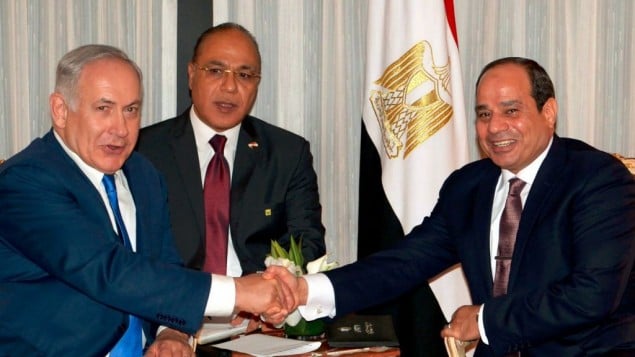
During the first decade of el-Sisi’s presidency, he and Netanyahu developed a cooperative relationship. Security coordination rose to unprecedented levels, driven in part by their shared interest in the Egyptian campaign against the Islamic State group in Sinai.
Egypt, in turn, received exceptional permission to deploy troops and equipment in Zone C beyond the peace treaty’s restrictions. An analysis by Israel’s Institute for National Security Studies described Israel’s acceptance of these deployments as a practical arrangement: an Egyptian military capable of controlling Sinai and addressing threats before they reached Israel served Israeli security interests.
A stable Egypt exercising control over Sinai thus appeared more useful to Israel than a fragmented state unable to secure the border. That assessment of Egypt’s predictability began to change, even though its military and regional importance remained.
Following the 2023 Al-Aqsa Flood attack, tensions grew over what Israel regarded as Egyptian violations of the peace treaty’s restrictions on military deployments in eastern Sinai.
Reports put the number of Egyptian troops in northern Sinai at about 40,000 and described deployments of tanks, armoured vehicles and air defence systems. These came amid Egyptian concern about the Gaza war and proposals, repeatedly raised in Israeli and American statements, to displace Palestinians. Israel asked the US to press Egypt to return its Sinai deployments to what Israel considered the agreed limits.
The tensions prompted calls within Israel to prepare for a possible future confrontation with Egypt. Some on the right went further, arguing that relinquishing Sinai had been a historic mistake.
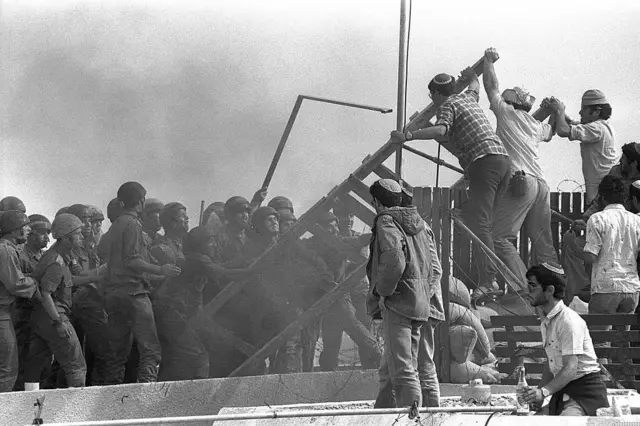
Sinai retains a place in part of the Israeli right’s political imagination. The evacuation of Yamit, the peninsula’s largest Israeli settlement, left a lasting mark. Some former residents later established a settlement called “Elei Sinai,” or “Trees of Sinai,” and many opposed similar evacuations in the West Bank or Gaza. That opposition resurfaced during violent protests against Ariel Sharon’s disengagement plan for Gaza.
The rhetoric of parts of the Israeli right has not always translated into government policy. In recent years, however, Sinai has featured again in political discussion, including proposals concerning the Gaza war, displacement and borders.
In July 2024, Amichai Eliyahu, the heritage minister from Itamar Ben-Gvir’s Otzma Yehudit party, posted a tweet promoting T-shirts bearing a map that included the West Bank, Gaza and Sinai. They carried the slogan “Occupy Now.” The post illustrates how Sinai remains present in some right-wing rhetoric, including among those who view it as a possible destination for displaced Gazans.
That possibility has also appeared in discussions of the “Sinai option.” Reports said Netanyahu proposed to the US administration in 2014 that part of Sinai be assigned to Palestinians in Gaza in exchange for arrangements concerning West Bank settlements. His office denied it at the time. Haaretz later reported, citing former US officials, that he had raised the idea with Barack Obama’s administration.
The proposal has since recurred under the name “the Sinai option.” President el-Sisi has publicly rejected the displacement of Palestinians into Sinai on more than one occasion. He has said that, if Israel wants to move Gaza’s residents, it could send them to the Negev Desert.
Ideology and political reality
Israeli coverage has increasingly discussed the possibility of Egyptian preparations for war. Relations have not returned to their earlier level of cooperation, and security coordination has reportedly fallen to its lowest level since the peace treaty was signed. The two sides have also relied more on a channel involving US President Donald Trump for some communications. The question is how plausible a war would be for either country.
For Egypt, starting a war would be extremely costly. Its military experience and economic pressures make direct confrontation a serious gamble. Cairo might nevertheless face a war imposed upon it, despite the potential losses, including US aid associated with the Camp David framework and its standing in Western capitals as a mediator between Israelis and Palestinians.
Israel has greater military and economic latitude and has shown that it can fight on several fronts at once. Even so, the question at the centre of this article remains: does any conception of the “Land of Israel” that includes Egypt amount to a political or military objective, or does it remain an ideological claim?
Egypt occupies a symbolic place in some visions of “Greater Israel”, but incorporating it does not appear to be a realistic strategic objective in the foreseeable future. Demographic and geopolitical constraints are substantial.
Egypt’s population, military and diplomatic weight distinguish it from territories Israel occupied in earlier wars. Western governments also regard its stability as consequential. Beyond the Suez Canal, Egypt has a regional diplomatic role, hosts large numbers of refugees and has a northern coastline along irregular migration routes towards Europe.
Egypt’s stability therefore figures in European security thinking. A major economic crisis or war that threatened the Egyptian state would concern European capitals. That concern helps explain EU economic support for Cairo, including a package worth about €7.4bn in 2024.
Egypt also has diplomatic standing that makes it difficult to portray as a “rogue” state in the manner of Israeli rhetoric about Iran. Destabilising Egypt would carry substantial security and regional costs for Israel, even if Israel retained a military advantage.
Israeli governments of both left and right have occupied Sinai, but political calculations eventually outweighed the case for retaining it. They accepted withdrawal when an agreement with Egypt better served what they regarded as Israel’s interests.
Ideas about reoccupying Sinai, displacing Gazans there and treating Egypt as a potential military adversary nevertheless persist in one strand of Israeli right-wing discourse. Such rhetoric can coexist with policies that point in another direction, and may gain attention when fighting around Gaza or tensions along the Sinai border intensify.
Claims about “Greater Israel” extending towards Syria, Iraq and Jordan have likewise persisted in Israeli discourse. In 2025, the idea was raised by Netanyahu himself, despite the political, military and geographic obstacles to realising it.
An idea need not be immediately achievable to endure. It can remain in texts, maps and political rhetoric, ready to be invoked again if leaders see an opportunity in a changed balance of power.