






هذا التقرير متاح أيضًا بـ العربية
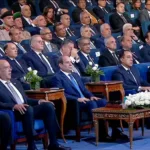
On 14 October 2026, Egyptian President Abdel Fattah el-Sisi sprang a political surprise during a speech at an Armed Forces educational symposium marking the 53rd anniversary of the October victories. He rejected calls to amend the constitution to extend his presidential term, firmly opposing any changes to it: “There is a Constitution for this state, a Constitution we approved for this state, and no one will touch it … no one will touch it.”
Just three days later, Sisi reaffirmed that position in remarks that, despite the doubts surrounding them, were welcomed by sections of the Egyptian public. He indicated that his presidential term would end in 2030, again stressing that the Egyptian constitution “will not be touched” by anyone. He described the matter as “settled,” in a message that appeared to be an early attempt to close the debate over another constitutional amendment that would allow him to remain in power.
Sisi went beyond ruling out an extension. He also rejected suggestions that his refusal to amend the constitution might pave the way for one of his sons or another family member to inherit power: “No one should grandstand and say he is preparing one of his relatives or family members … the state is too important for that kind of talk.”
These apparently unequivocal statements brought relief to some Egyptians who hope for a transfer of power and an end to the recurring debate over whether the president will stay in office beyond 2030. The fact that Sisi himself gave the assurance twice in quick succession made the political message clearer.
– Egyptian President Abdel Fattah el-Sisi announced that his presidential term will end in 2030, stressing that the matter is “completely settled” and that the Egyptian Constitution “will not be touched.”
– During a graduation ceremony at the Military Academy in the New Administrative Capital, Sisi revealed a plan to prepare potential leaders for Egypt’s presidency through a 30-month qualification program at the academy.
– He explained that a committee overseen by the speaker of parliament, and including intellectuals, politicians, and the ministers of higher education and justice, would set the criteria for selecting candidates and draft legislation regulating the training program.
– He indicated that the number of candidates for the program could range from 200 to 1,000 people, ages 40 to 50, provided they hold doctorates from prominent Egyptian and foreign universities.
– He stressed that candidates would be selected on the basis of competence, merit, and ability, far from favoritism and patronage, affirming that the program would not replace citizens’ right to choose their leaders.
– He said leadership preparation would not be limited to the presidency, but would extend to ministries, governorates, and vital institutions, with the aim of qualifying people capable of bearing responsibility for running the state.
– Sisi’s remarks came after reports circulated about the possibility of amending the Constitution in 2027 in a way that would allow him to run for a new presidential term after his third term ends in 2030.
— NoonPost (@NoonPost) October 18, 2026
But developments in Egypt before and after those statements raised new political questions. The measures and decisions being implemented, along with systematic restrictions on the public sphere, are at odds in both form and substance with the course expected of a president who intends to leave power in less than four years.
This raises a more uncomfortable question: do these developments reflect a genuine desire by Sisi to leave the political scene, along with his sons, as he explicitly declared? Or are events moving in the opposite direction, reviving fears of arrangements that could preserve the current form of power, or even bring back the prospect of an extension that some thought had been consigned to the past?
From Matsda2sh to Mada Masr: moving in the opposite direction
On 20 August 2026, Minister of State for Information Diaa Rashwan announced a proposal for an annual meeting every December to discuss Egypt’s media and press freedoms. Speaking during a session he described as a “necessary venting,” Rashwan said the proposal followed presidential directives to allow a wider range of views and create more space for debate and dissent. At the time, it appeared to signal a new period of media openness.
About a month later, Rashwan held a meeting with the editors-in-chief of several licensed websites. He proposed creating a “unified entity” that the websites would join as institutions, providing a professional and legal framework to protect journalists working in digital media. Some in human rights and media circles welcomed the proposal as a possible step towards strengthening institutional protections for online journalism and easing pressure on its journalists.
But those signs of a thaw were contradicted on 28 September, when Egyptians woke to news that the entire six-person editorial team of the Matsda2sh platform had been arrested and detained. The charges drew objections on human rights grounds, and critics saw the case as part of a recurring pattern of prosecutions targeting independent journalists. The platform has operated openly since 2018, in full view of the relevant authorities throughout that period. The arrests revived doubts about the authorities’ commitment to media and political openness.
Sisi’s subsequent statements rejecting constitutional amendments and stressing that “no one will touch” the constitution, alongside his denial that he might be preparing one of his sons or close associates to take power, nevertheless seemed to many to offer positive signals about the future of the public sphere and a possible change in how politics was managed. Together with the earlier media proposals, they reinforced hopes that the country might be heading towards greater openness after years of restrictions and pressure.
That atmosphere did not last long. Before the public had time to absorb the Matsda2sh case, another, even bleaker development followed. On 19 October, Mada Masr editor-in-chief Lina Attalah received a summons to appear before the Supreme State Security Prosecution in Case No. 9072 of 2026. The reasons for the summons were not announced at the time. She appeared before prosecutors on 21 October and was questioned for nearly six hours before being released on bail of 100,000 Egyptian pounds. The next day, however, she discovered to her surprise that she had been referred to trial on charges of founding, managing and operating a website without a licence. A hearing was set for 27 October.
– Human Rights Watch called on the Egyptian authorities to drop the case against Lina Attalah, editor-in-chief of Mada Masr, stressing that journalists should not face criminal prosecution because of their work.
– The organization described the accelerated prosecution of Attalah as an escalation against independent media in Egypt, and called for an end to the repeated harassment of media outlets and the dropping of charges linked to the exercise of freedom of expression.
– It said imposing licensing conditions and then ignoring Mada Masr’s attempts to meet them was an effort to undermine the platform, stressing that such practices violate international human rights law.
– The organization joined an appeal launched by more than 100 civil society groups calling for Mada Masr to be granted a license to operate, at a time when the platform says it has received no response to its application submitted in 2023.
— NoonPost (@NoonPost) October 27, 2026
The biggest surprise came at the trial. Hossam Bahgat, executive director of the Egyptian Initiative for Personal Rights, attended the hearing and reported a series of procedural violations that he said affected fair trial guarantees and the integrity of the judicial process. The court fined Attalah 3 million Egyptian pounds and ordered Mada Masr’s closure and the confiscation of its contents. Attalah also discovered, to her surprise, that she had been sentenced in absentia in 2024 to one year in prison on charges of publishing false news.
Perhaps the most controversial aspect of the case was the speed of the proceedings: no more than 10 days passed between the summons for questioning and the verdict. Lawyers who attended with Attalah also raised concerns about the conduct of the trial. These included barring members of the Journalists Syndicate from attending in their legal capacity and imposing the maximum penalty under the law without responding to the defence’s requests for an adjournment to review the case file.
Adding to the uncertainty and suspicion, the website submitted documents proving that it had made a separate application for a licence to establish the outlet as far back as 2018. That application remained pending before the Supreme Council for Media Regulation, prompting the outlet to turn to the administrative courts. They also denied it a licence and upheld the council’s obstruction on the grounds that the paperwork was incomplete. This inflexibility leaves considerable room for speculation and suspicion that the obstruction was deliberate.
The media under siege
When a president announces his intention to leave office in less than four years, and sections of the public welcome that announcement as confirmation of respect for the constitution and the rules governing the transfer of power, expectations of greater political and media openness naturally follow. So do hopes for more freedom of opinion and expression.
Yet the continued tightening of control over the public sphere and pressure on independent voices are fundamentally at odds with the course expected of a president who says he intends to leave power on the constitutionally mandated date. This raises another question: what is driving the authorities to keep tightening their grip on the media despite talk of a presidential transition in 2030?
Former Journalists Syndicate chief Mamdouh al-Wali believes the Egyptian authorities have become intolerant of even the faintest remaining dissenting voices. This is despite what he describes as a vast media apparatus through which they dominate much of the media landscape, using institutions, companies and bodies that are either supervised by the state or linked to it.
Al-Wali explains that this apparatus is led by the United Media Services Company, which includes 17 satellite channels, 12 news websites and newspapers, and seven radio stations. It also includes the National Media Authority, which owns 15 satellite channels and 10 radio networks comprising an even larger number of stations, and the National Press Authority, which oversees eight press institutions encompassing more than 50 newspapers, magazines, websites and an online radio station.
In al-Wali’s assessment, this dominance extends beyond state-owned or state-linked media institutions to influence the editorial content of parts of the private media, including newspapers and websites. He also points to the role of some Gulf media outlets — satellite channels, newspapers and news platforms — in supporting the official Egyptian narrative and reinforcing its presence in the public sphere.
– Egypt’s Supreme State Security Prosecution renewed the detention of the six journalists from the Matsda2sh platform for 15 days during a remote session held from Badr prison, without new investigations or confronting them with evidence, according to a statement by the platform.
– Matsda2sh said the investigation sessions since its journalists were detained in September had not included the presentation of evidence for the accusations against them, including “foreign funding” and “joining a terrorist group.”
– The journalists complained of being prevented from communicating with other detainees and from receiving books, in addition to their families being barred from bringing in winter clothes and not being allowed to buy them inside the prison, according to the statement.
– The platform called for the immediate release of its journalists and for their rights to be guaranteed in detention, while holding the Egyptian authorities responsible for their safety and demanding disclosure of the evidence and legal basis for their continued detention.
— NoonPost (@NoonPost) October 27, 2026
By contrast, al-Wali points to continuing measures against what remains of the independent media. These range from blocking websites, as has happened to hundreds of sites since 2017, to security and judicial proceedings, imprisonment and the closure of press institutions. He sees these practices as part of a policy aimed at limiting dissent and warning anyone who tries to depart from the prevailing media discourse.
The former syndicate chief identifies what he sees as a revealing paradox: despite the scale of the pro-government media apparatus and its enormous financial, technical and human resources, it remains acutely sensitive to the existence of a small number of independent websites.
That paradox again raises questions about the next political phase. If the authorities have such a broad media presence, why does controversy over restrictions on a handful of poorly resourced independent platforms persist while the presidency speaks of respecting the constitution and the current term ending in 2030?
Guardianship over the people
Some of Sisi’s proposals made his statements about leaving politics at the end of his current presidential term difficult to interpret. These concerned how presidential candidates would be selected and the extent of the role the military could play in determining who was qualified to lead the state in the next phase. They raised questions about whether such ideas were consistent with the freedom to stand for office and citizens’ right to choose their president under constitutional and legal rules.
The problem is particularly clear in Sisi’s remarks about the need for prospective presidential candidates to enrol at the Military Academy for as long as 30 months. The academy would then assess their suitability for the post before those who passed were put before the public to choose from. Such a model rides roughshod over the constitution.
Sisi went further. In the same remarks, he said it was unacceptable, in his view, for anyone who could string words together or speak and deliver speeches well to assume responsibility, stressing that this would not happen. Critics interpreted these remarks as a signal that candidates could face additional criteria beyond the existing constitutional and legal requirements, perhaps allowing different arrangements for selecting the next political leadership.
This raises the most sensitive issue: under the existing constitutional system, eligibility to stand for president is supposed to be governed by clear, publicly declared legal conditions, while the final political choice remains an inherent right of citizens at the ballot box. Making prior assessment by an unelected institution mandatory would raise questions about the limits of institutional powers, equal opportunities for candidates and the role left to voters in deciding who holds power.
Will Sisi really leave office?
These questions become more complicated as some voices continue to call for a review of constitutional restrictions on presidential tenure. Their argument is that the constitution is not a sacred text and can still be amended if that is what the public wants. This overlaps with Sisi’s implicit suggestion that it is necessary to respond to the people’s wishes, despite his repeated insistence that he rejects any changes to the constitution, leaving that possibility open.
Taken together, these developments leave the question of whether Sisi will step down at the end of his current term open to differing political interpretations. Talk of leaving power is difficult to reconcile with practices that reflect continued tight control over politics, restrictions on the public sphere and proposals that could place the people’s right to choose who governs them under institutional guardianship.
This paradox brings the debate back to its starting point, with an answer that only the coming years will provide: will Sisi leave office in 2030, or could these measures help create a political climate that allows the current governing arrangements to continue — either through a new constitutional route that keeps him in office, or through a transfer of power to another figure who would ensure that the same approach continued?
