










هذا التقرير متاح أيضًا بـ العربية
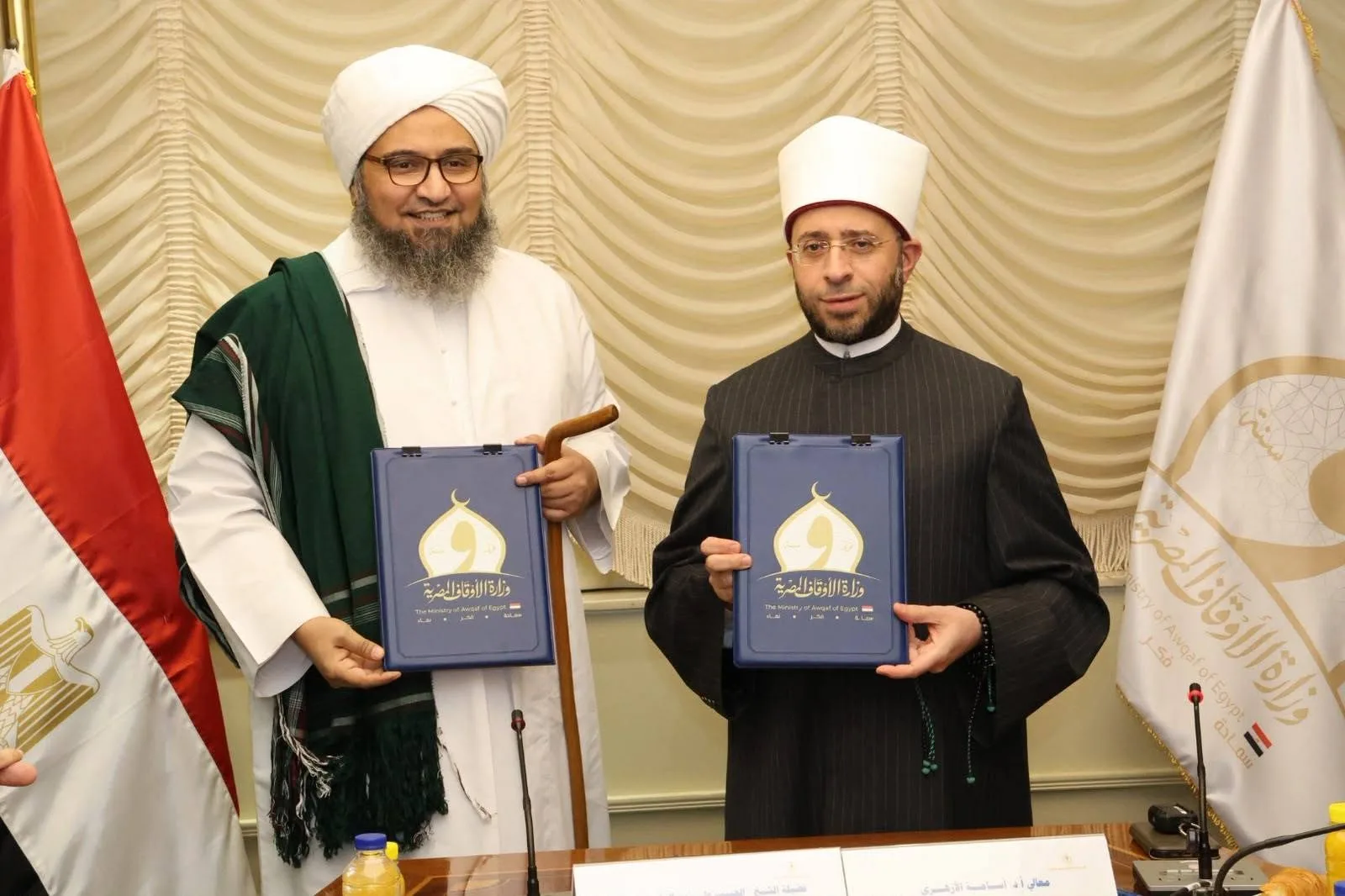
Egypt’s Ministry of Endowments signed a cooperation protocol with the Abu Dhabi-based Tabah Foundation in October 2026, formalising a relationship built over years of the foundation’s activities and its founder Habib Ali al-Jifri’s ties with Egyptian religious figures and institutions.
Al-Jifri’s relationship with Egypt dates back to the 1990s, when Egyptians met him during the Hajj season and invited him to visit the country. His presence gradually grew from the start of the millennium, before he was deported in late 2001. He was subsequently barred from entering Egypt on several occasions. The circumstances remain the subject of accounts and speculation whose accuracy is still unclear.
Al-Jifri later put that episode behind him and became increasingly active in Egypt, particularly after the events of 2011. Over time, his role expanded beyond religious media appearances to research collaboration and institutional partnerships with numerous Egyptian official, religious and academic bodies.
This report examines Tabah’s projects in Egypt and traces how it consolidated its presence: from building relationships with scholars, researchers, and academic and religious institutions to participating in intellectual events and training programmes, and ultimately establishing official partnerships with the Ministry of Endowments.
Al-Jifri and Egypt: From deportation to a presidential welcome
According to al-Jifri’s own account, his relationship with Egypt’s religious establishment began in the 1990s through repeated visits and study under several Egyptian scholars. He says he studied under Sheikh Mohammed Metwally al-Shaarawy and Ismail bin Sadiq al-Adawi, and received scholarly certification from Sheikh Mohammed Zaki Eddin Ibrahim.
Al-Jifri was deported from Egypt in late 2001. In an interview published in the Egyptian magazine Al-Musawwar in July 2002, after his departure, he spoke of his ties with Egyptian scholars and stressed the affinity between the approach he had been taught in Yemen and that of Al-Azhar. He also said that before his deportation, he had met Ahmed al-Tayeb, then serving as grand mufti, and Mohammed Sayed Tantawi, then sheikh of Al-Azhar.
After an absence of about seven years, al-Jifri returned to Egypt in early 2009, where he met Tantawi, al-Tayeb and Ali Gomaa. He recounts that during this visit, he presented al-Tayeb with research prepared by the Tabah Foundation, which he had headed since 2005.
Al-Jifri’s public presence in Egypt expanded after the January revolution. Before 2011, it had been confined to religious lessons and Sufi activities; he subsequently became a prominent participant in television programmes and discussions of intellectual issues, politics and identity. He also continued to appear alongside Al-Azhar’s grand imam at conferences convened by the latter.
Tabah, meanwhile, continued to organise events on religious and intellectual issues concerning Egyptian society. In January 2011, it organised seminars on Muslim-Coptic relations in cooperation with Zayed University and the General Authority of Islamic Affairs and Endowments in Abu Dhabi. That year, al-Jifri also took part in an international conference on Sufism chaired by Al-Azhar’s grand imam.
In December 2012, Tabah organised a lecture in Egypt on reducing biases in the issuing of fatwas, attended by the country’s then-grand mufti, Ali Gomaa. In May 2013, it held a seminar on the rationality of Islamic heritage in the context of contemporary thought, with Gomaa and other Egyptian academics participating.
Tabah’s activities during this period show that its early presence in Egypt centred on engagement with official religious elites and discussion of jurisprudential issues at events attended by Gomaa, the then-grand mufti.
Al-Jifri opposed the Arab Spring uprisings. He also clearly aligned himself with the Egyptian army and its commander in the events that followed 2013, while making a point of declaring his support for Al-Azhar. He consistently treated Ali Gomaa and Ahmed al-Tayeb with the utmost respect and reverence, both in their presence and when speaking about them.
Establishing Tabah’s presence in Egypt, 2016–2023
In 2016, Tabah showed signs of expanding its network beyond its Abu Dhabi headquarters, seeking a role in religious and intellectual debates across the Islamic world while building ties with official bodies. That year, it took part in the Ahl al-Sunna wal-Jama’a conference in the Chechen capital, Grozny, attended by Al-Azhar Grand Imam Ahmed al-Tayeb and scholars from several countries.
In December 2016, Tabah hosted Egypt’s ambassador to the UAE, Wael Gad, who was briefed on its role in developing contemporary Islamic discourse. It also received diplomatic delegations from the European Union and Finland and Canada to learn about its work in developing contemporary religious discourse.
A major milestone came in 2018, when Tabah opened new headquarters in Cairo’s Mokattam district and launched its cultural salon with a seminar on renewing religious discourse, attended by Osama al-Azhari. The Cairo headquarters gave the foundation a permanent venue for its activities, marking a shift from the visits and occasional events that had previously characterised its presence.
Tabah then began expanding its cooperation with Egyptian institutions through research and intellectual activities. In 2018, it worked with the Al-Ahram Center for Political and Strategic Studies to discuss the findings of a survey of millennials’ attitudes towards religion and religious scholars in 18 countries. Participants included Diaa Rashwan and Osama al-Azhari.
During the same period, al-Jifri chaired a workshop in cooperation with Egypt’s Dar al-Ifta and participated in media events, alongside his lectures and visits to Egyptian universities, including Helwan University and Port Said University.
In 2019 and 2020, Tabah expanded its discussions of intellectual and social issues concerning young people’s relationship with religion and changes in Egyptian society. It continued to organise its cultural salon and youth forums in Cairo, working with researchers, academics and officials from Egyptian institutions, including the Al-Ahram Center for Political and Strategic Studies, Dar al-Ifta and the Al-Azhar Observatory.
These events addressed identity crises, atheism, societal violence, the causes of extremism and the situation of Egyptian women. Tabah also devoted considerable attention to critiques of Sayyid Qutb’s ideas on religious superiority, jahiliyyah, the concept of ruling by other than what God has revealed, and approaches to those who disagree within Islam.
These subjects reveal two strands in Tabah’s activities: engagement with contemporary social and intellectual issues, and a focus on critiquing religious and intellectual concepts associated with political Islam.
In 2021 and 2022, Tabah markedly expanded its activities and the range of its intellectual and social discussions. It addressed contentious subjects such as gender identity, gender and sex reassignment, alongside approaches to religious texts, jurisprudential cognitive integration, the concept of loyalty and disavowal, religious extremism and fanaticism.
This range continued in 2023, when Tabah examined intellectual shifts among young people after 2011, “LGBTQ” movements and how to address them from an Islamic perspective, and young people’s current interests and psychological challenges. Its activities also covered the concept of the “believing vanguard” in takfiri discourse, ways to curb doctrinal rigidity, and what it described as the rise of extremist currents acting in the name of Islam in the Arab world.
From expanding activities to formal partnership, 2024–2026
The period from 2016 to 2023 was pivotal to Tabah’s presence in Egypt. It opened an office in Cairo and expanded its outreach to young people and academic and religious circles. This phase also illustrates the nature of its project, combining discussion of contemporary social issues with criticism of the literature of political Islam.
The period from 2024 to 2026 marked a further stage. Tabah’s relationships with some Egyptian bodies progressed from participation in events to publicly announced training cooperation with the Ministry of Endowments, followed by a formal protocol. It also offered training programmes and collaborated with local and international universities and research centres, while al-Jifri attended official events also attended by el-Sissi.
In 2024, Tabah organised a training programme for students at Cairo University’s Faculty of Economics and Political Science on Islamic approaches to studying the social sciences. Other events addressed ethical perspectives on international relations, cultural diversity, and the philosophy of jihad and its rulings in light of the war on Gaza, among other intellectual and social issues.
The most notable development, however, was a training course Tabah organised in the second half of 2024 for imams affiliated with Egypt’s Ministry of Endowments. It covered the ideas of New Atheism and ways to confront them, with contributions from al-Jifri, Ahmed Mamdouh, secretary of fatwas at Dar al-Ifta, and researchers from the Al-Ahram Center for Political and Strategic Studies. The course is particularly significant because it indicates that contact with the ministry did not begin with the October 2026 protocol: publicly announced training cooperation preceded it.
In late 2024, Tabah signed a cooperation protocol with the Ribat al-Ilm Foundation, headed by Al-Azhar scholar Sheikh Mohammed Yahya al-Kattani. It aimed to coordinate educational and teaching activities, train personnel and develop religious discourse. Al-Jifri also met Al-Azhar Grand Imam Ahmed al-Tayeb and took part in a symposium on heritage and modernity alongside Osama al-Azhari.
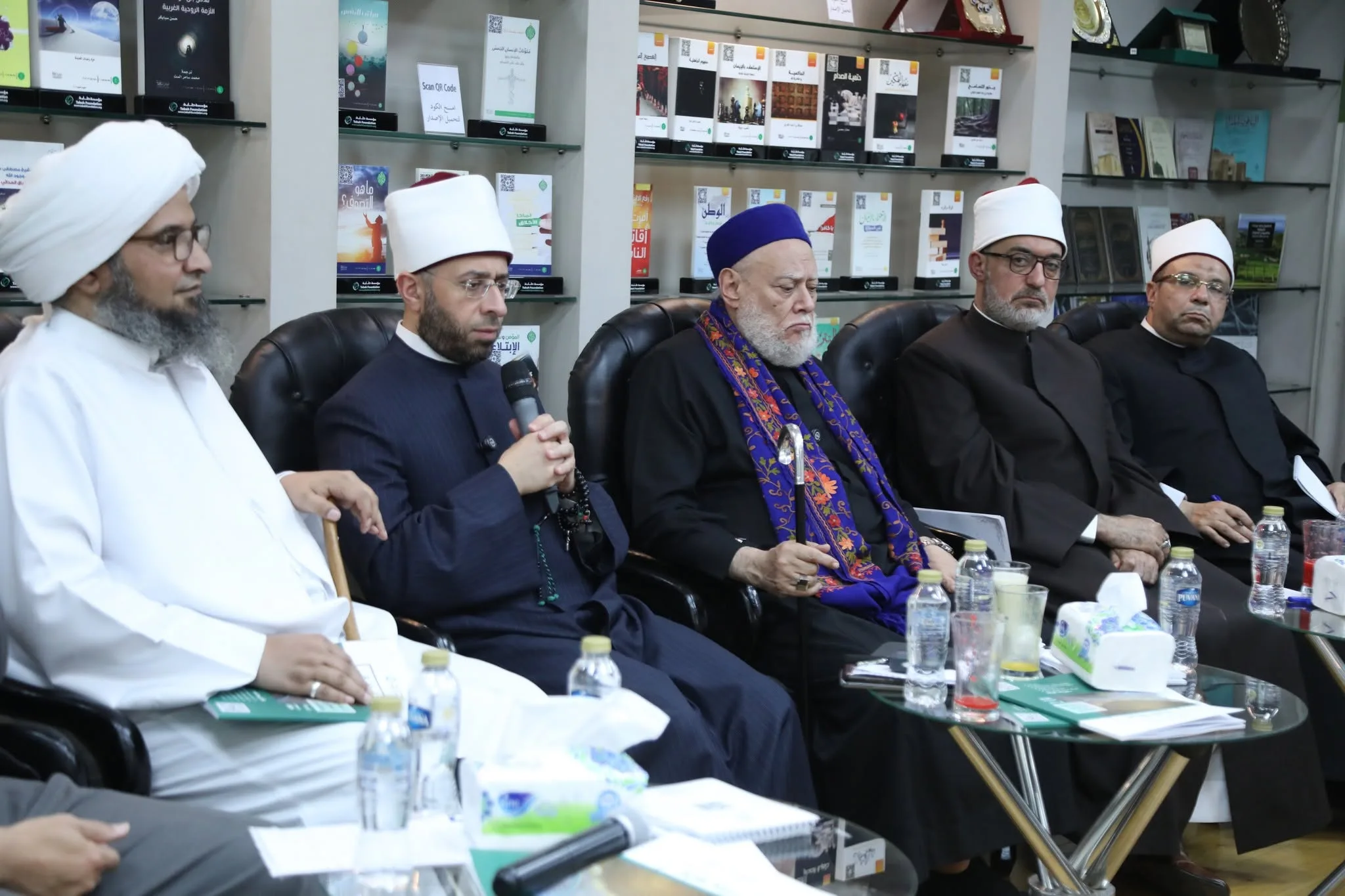
Throughout 2025, Tabah continued to organise seminars, conduct research, run programmes for young people, publish intellectual material and cooperate with religious, academic and diplomatic bodies. It also organised training programmes involving students from Egyptian universities and signed a cooperation protocol with the Yemeni embassy in Cairo, before taking part in an Arab think tank forum at the Arab League on the use of artificial intelligence in decision-making.
Its most prominent event was a symposium on developments in Syria after liberation, alongside questions of extremism, identity and the relationship between society and the state. Al-Jifri also participated in Dar al-Ifta’s activities at the 2025 Cairo International Book Fair, and Tabah announced the launch of Tabah Magazine in the presence of Egyptian religious and academic figures.
Tabah continued these activities in 2026 and established a film club to discuss Egyptian films. In January, it also organised a major training programme titled “The Sayings of Extremist Organizations and Their Seven Premises,” with researchers from several centres, including the Al-Azhar Observatory for Combating Extremism, the Center for Strategic Studies and Values Development, and the African Center for Research and Strategic Studies. Students from Cairo University’s Faculty of Economics and Political Science also participated.
عقدت مؤسسة طابة حفل إطلاق مشروع مقولات التنظيمات المتطرفة، وهو مشروع يرصد نحو ٣٠٠٠ مقولة من ٤٠١ كتابٍ لأكثر من ٦٢ كاتبًا. ضمن منصة رقمية غير مفتوحة للجمهور ومخصصة للباحثين. بحضور معالي وزير الأوقاف الأستاذ الدكتور أسامة الأزهري ورئيس مجلس أمناء مؤسسة طابة الحبيب علي الجفري https://t.co/Qjg79u598J
— Tabah Foundation (@tabahfoundation) January 1, 2026
The Tabah protocol: Training imams or creating a parallel track to Al-Azhar?
Since the launch of the call to renew religious discourse in 2015, debate has widened over which bodies should be responsible and what curricula preachers need. Approaches to religious discourse and imam training have shifted in recent years.
These shifts were most clearly reflected in disagreements and public debates between el-Sissi and Al-Azhar Grand Imam Ahmed al-Tayeb over “renewing religious discourse” in November 2018 and January 2020. El-Sissi responded by mandating training for preachers and imams through the Military Academy in the New Administrative Capital, then forming a scholarly council headed by Endowments Minister Osama al-Azhari in December 2025 without Al-Azhar’s participation.
The Ministry of Endowments signed its cooperation protocol with Tabah in October 2026 amid an escalating dispute with Al-Azhar over authority to issue fatwas. Al-Azhar has complained for years of what it describes as the “encroachment” of the ministry and Dar al-Ifta on its prerogatives.
The signing ceremony was attended by Endowments Minister Osama al-Azhari, a member of Tabah’s board of trustees who has long appeared regularly alongside al-Jifri. The protocol provided for exchanging expertise and knowledge, organising lectures and training programmes, holding conferences and scholarly seminars on religious and social issues, strengthening scientific and intellectual cooperation, and training those working in the religious sector.
The ministry did not explain why it had chosen Tabah specifically, but their relationship offers a possible explanation. Training cooperation in 2024 preceded the protocol, and the ministry’s leadership has longstanding ties to the foundation. Its declared priorities in training imams, combating extremism and renewing religious discourse align with Tabah’s programmes. The state has also adopted a policy of developing imam training.
The protocol has drawn differing responses. Some have questioned the rationale for turning to an external body when Al-Azhar has an established scholarly and institutional legacy, encompassing the Council of Senior Scholars, the Islamic Research Academy and Al-Azhar University. Others regard it as a natural form of cooperation with no intention of bypassing Al-Azhar.
It has also raised questions about Tabah’s role in developing Egypt’s religious discourse: whether cooperation is limited to exchanging expertise and providing training, or lays the groundwork for an independent programme of work. Some also question why the Ministry of Endowments, in a country of Egypt’s size and with Al-Azhar’s history, would sign an agreement with a 21-year-old institution to prepare and train Egyptian imams.
Mohamed Ibrahim al-Ashmawy, a professor of Hadith at Al-Azhar University, said the Ministry of Endowments was a longstanding Egyptian religious institution with extensive experience in preaching. He said Egyptian institutions had used their expertise to help build similar bodies across the Arab and Islamic worlds. He called on Egyptian institutions to pioneer, lead and inspire, rather than enter partnerships with small private entities or bodies whose activities and orientation were unclear.
In his criticism of the agreement, Sheikh Essam Talima questioned its usefulness given the training programmes previously announced by the Egyptian state, including imam training through the Military Academy. He also questioned al-Jifri’s scholarly and intellectual background and his suitability for advisory or training roles in renewing Egypt’s religious discourse. Talima criticised what he regarded as Tabah’s lack of research and tangible achievements.
The announcement omitted key details, including the agreement’s full text and duration, the programmes to be implemented, the trainers’ names and selection criteria, and the financial commitments. Al-Azhar has so far issued no public position on the protocol. The announcement did not clarify whether Al-Azhar helped draft it or was consulted, referring only to approvals from the “competent authorities.”
Why doesn’t Osama al-Azhari publish the terms of the agreement?
How much will al-Jifri receive from the Endowments Ministry’s loose money?
In Egyptian pounds or in dollars? https://t.co/JQ9uNkQlZD
— سليم عزوز (@selimazouz1) October 2, 2026
Critics therefore regard the protocol as another step in marginalising Al-Azhar, the constitutional authority on religious affairs. They point to its absence from the signing ceremony, the announcement’s silence on its role, and its strained relationship with the Ministry of Endowments.
Tabah’s project in Egypt: An intellectual agenda and institutional influence
Tabah presents itself as a non-profit institution that seeks to revitalise contemporary Islamic discourse and produce studies, recommendations and projects for opinion leaders and decision-makers. Its public activities and intellectual agenda in Egypt overlap with the state’s priorities under President Abdel Fattah el-Sissi, particularly in renewing religious discourse, deconstructing the discourse of political Islam and jihadist groups, offering young people intellectual alternatives that steer them away from activist Islamist currents, and promoting religious discourse that reinforces the current political order.
Tabah can be said to have gained the regime’s trust over the past several years while building a network of relationships through prominent Egyptian figures and personnel, including those from Al-Azhar. This has enabled it to progress from occasional activities to cooperation with Egyptian institutions, followed by a formal framework for cooperation with the Ministry of Endowments.
Al-Jifri has repeatedly appeared at official events attended by el-Sissi, who has praised him. He is also a regular guest on Egyptian satellite channels and openly defends the regime’s policies. In August 2025, he defended it against accusations that it was blocking aid from entering Gaza.
Tabah’s public activities in Egypt follow three main strands, targeting different sections of society. The first addresses contemporary intellectual problems and questions of religion and identity. The second concerns spiritual refinement, human development and social relations. The third, the broadest in scope, critiques and deconstructs concepts, ideas and figures associated with the discourse of political Islam and jihadism.
Three initiatives established by Tabah in Egypt put these strands into practice. The “Sual Initiative” addresses intellectual and religious questions; the “Tazkiyah and Imarah Initiative” focuses on spiritual and behavioural matters; and the “Sanad Initiative” critiques Islamist and jihadist discourse. The three initiatives have hundreds of thousands of followers on social media.
Tabah’s activities extend beyond university-age young people to children and adolescents, with religious content, programmes and events tailored to them. It also launched its magazine as a platform for intellectual material contributed by Egyptian scholars, academics and official figures.
Tabah’s presence in Egypt relies heavily on Egyptian personnel and figures from Al-Azhar, the Ministry of Endowments and Dar al-Ifta to manage its events and organise its programmes and research activities. The foundation has also become a meeting place for different currents and figures within Egypt’s religious and intellectual circles. Al-Jifri’s brothers, including Sheikh Mohammed al-Jifri and Sheikh Abdullah al-Jifri, also appear repeatedly at Tabah in Egypt.
Tabah in Egypt: An extension of the UAE’s religious agenda?
Although Tabah is headquartered in Abu Dhabi, its publicly announced activities reveal an extensive presence in Egypt, which appears to be its main field of activity. Critics argue that Tabah is a religious arm of the UAE and that its involvement in Egypt could create parallel channels to Al-Azhar for managing religious discourse.
Understanding these concerns requires tracing al-Jifri’s activities and his ties to official Emirati institutions. His presence in the UAE began in 2002 with preaching tours organised by the Ministry of Justice, Islamic Affairs and Endowments. In 2005, aged about 33 or 34, he founded Tabah in Abu Dhabi with the aim of reformulating contemporary Islamic discourse.
A 2020 study by researcher Mohammed Ammasha, titled “The UAE-Sponsored Islams: Mapping the Terrain,” placed Tabah within a network of institutions that received various forms of Emirati support. The study linked its growing activities to the UAE’s religious policy, aimed at confronting political Islam and promoting religious discourse that prioritises political stability and obedience to rulers.
The scale of Tabah’s activities in Egypt raises questions about its sources of funding. It has consistently published free books, research papers and online magazines, organised hundreds of events in Egypt, and established numerous initiatives under its umbrella.
Media coverage and official reports offer further indications of Emirati support for Tabah. The Guardian described the foundation as backed by Abu Dhabi in a 2016 report. The US State Department’s 2017 report on religious freedom in the UAE also highlighted Tabah’s role in Emirati efforts to promote moderation and counter extremism.
In a study published by the Arab Center Washington DC in 2020, researcher Khalil al-Anani argued that Abu Dhabi supported religious figures and institutions, including al-Jifri and Tabah, as part of a broader effort to promote a religious model focused on spiritual dimensions while countering the influence of political Islamist currents.
While Tabah’s activities align with the Egyptian regime’s priorities of reforming religious discourse and confronting activist Islam, fundamental questions remain about the extent of its ties to Emirati policies and its future role in Egypt’s religious landscape.
