





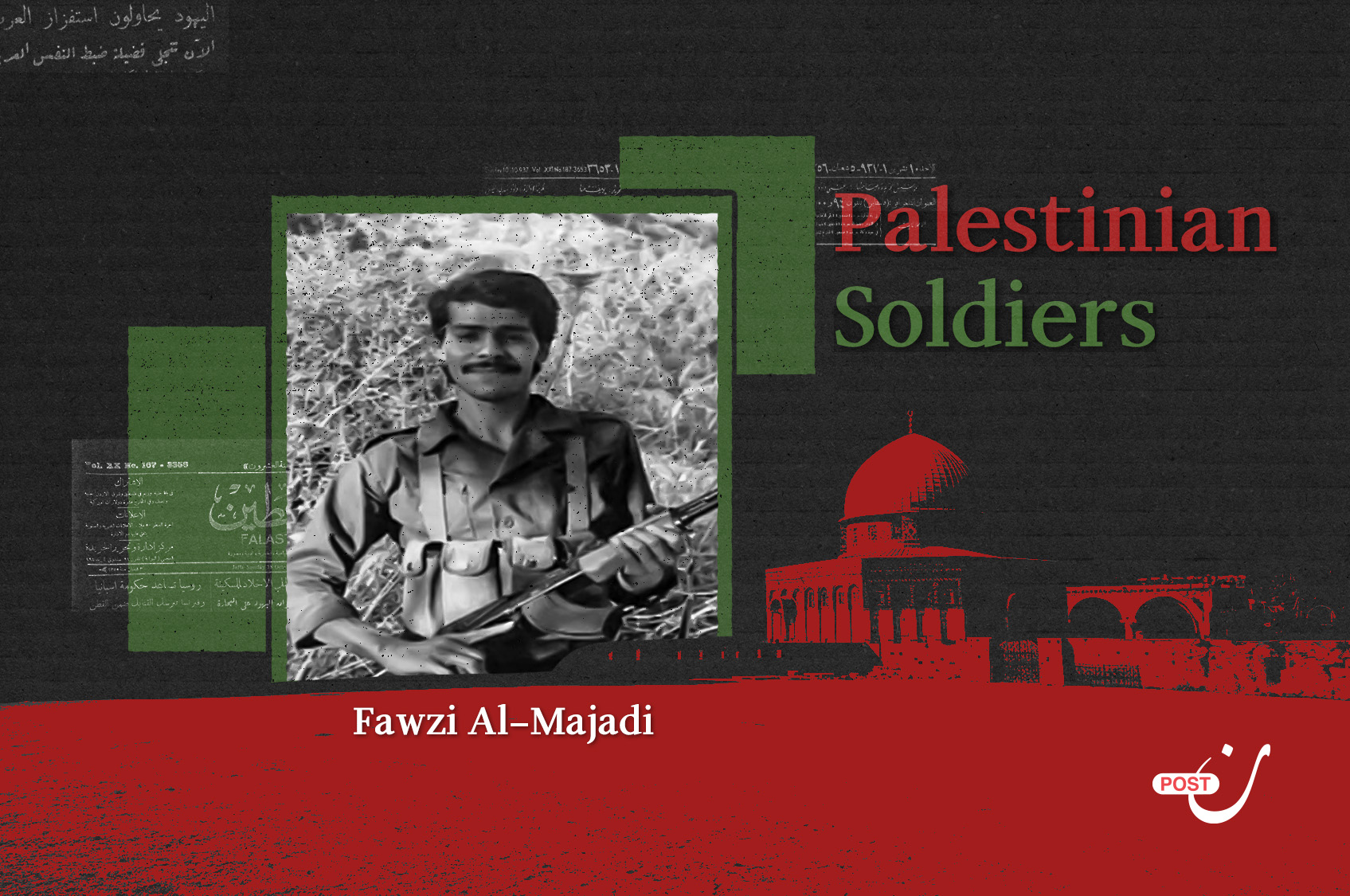
On May 22, 1965, the Al-Majadi family welcomed a newborn they named Fawzi Abdul Rasoul, who was raised within the Arab tribe of Al-Sulbah one of the founding pillars of modern Kuwait and its coastal prosperity along the Arabian Gulf.
Barely two years after Fawzi’s birth, the Arab world suffered a major blow in the aftermath of the 1967 Six-Day War, which followed the Nakba of 1948.
Arab armies were defeated by Israel, and vast swathes of Palestinian, Egyptian, Syrian, and Lebanese lands fell under occupation including the West Bank, Gaza Strip, Egypt’s Sinai Peninsula, and Syria’s Golan Heights.
Israeli crimes against the local population only intensified, eventually igniting the Palestinian Intifada in 1987. On December 8 of that year, a popular uprising erupted after decades of oppression. It quickly evolved into a full-scale national movement encompassing all sectors of Palestinian society. Its primary weapon: stones.
Fawzi Al-Majadi
News of the Intifada reached the wider Arab world, including Fawzi Abdul Rasoul Al-Majadi, who closely followed developments in Palestine. According to his sister, he was deeply moved by the uprising and had adorned his room with slogans and posters supporting the Palestinian resistance.
Fawzi joined Kuwait’s Ministry of Interior early in his career, initially serving as a non-commissioned officer before shifting to a civilian role in the ministry’s financial department. Yet, he never intended to remain in government service for long his heart was set elsewhere.
He was deeply committed to supporting his Palestinian brethren. He had long been aware of their suffering and the brutal crimes inflicted upon them, aided by Western powers and met with silence by Arab leaders more concerned with preserving their seats of power than defending Palestine.
From a young age, Al-Majadi carried the burden of liberation, believing firmly in the Palestinian right to independence, to their stolen land, and to justice by any means necessary. He opposed the rush toward peace deals and advocated instead for armed resistance against the Israeli occupation.
Joining the Resistance
As the children of the Intifada faced bullets with stones, official Arab interest in the Palestinian cause waned. That same year, Palestine was conspicuously absent from the agenda of the Arab League summit held in Jordan. The Arab stance mirrored global indifference.
Many young Arabs felt compelled to act. Among them was Fawzi Al-Majadi, who joined the Democratic Front for the Liberation of Palestine (DFLP) a Marxist Palestinian political and military faction that is part of the Palestine Liberation Organization (PLO).
Fawzi first arrived in Palestine in 1988, but the visit was short-lived. His family urged him to return to Kuwait, especially as internal clashes erupted between DFLP members and Israeli forces in Lebanon, prompting most of the group’s fighters to relocate to Tunisia.
He returned home to Kuwait and reunited with his tribe, Al-Sulbah. But he could not reconcile a normal life with the continued massacre of Palestinians, whose blood stained the land while the world watched in silence.
In early 1989, Al-Majadi made his way back to Palestine. He rejoined the DFLP, which oversaw his training in various weapons over a three-month period in Naameh, south of Beirut. There, he received his nom de guerre: “Philip.”
Upon completing his military training, he formally requested to carry out a martyrdom operation inside the occupied Palestinian territories at a time when such missions against Israeli forces were on the rise.
The DFLP primarily limited its operations to targets within occupied territory, believing that attacks abroad harmed the Palestinian cause by branding fighters as terrorists rather than freedom fighters.
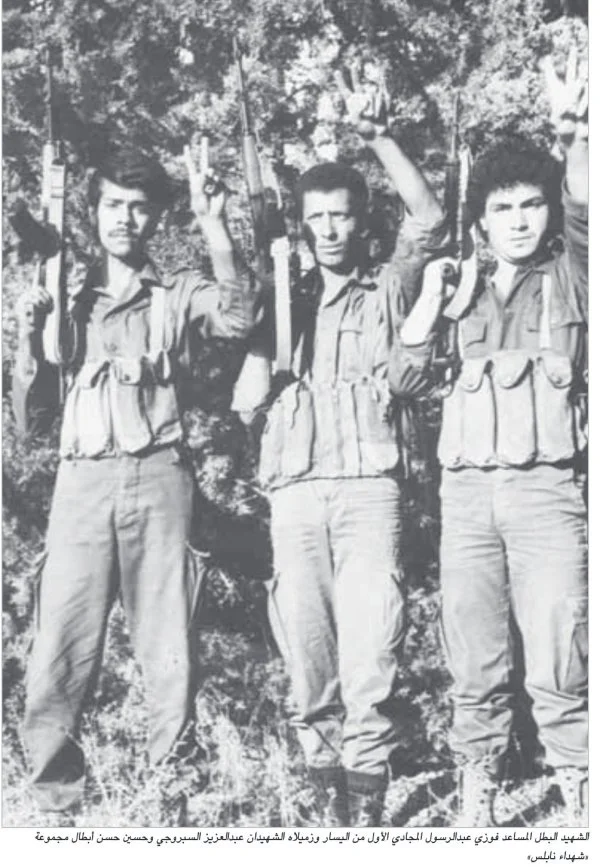
Given his discipline and unwavering commitment, Al-Majadi’s request was approved. He was selected for a high-risk operation alongside fellow fighters Ahmad Hussein Hassan and Riyad Al-Sabbouji.
Their training intensified as they prepared for the mission. For Fawzi, martyrdom and meeting his Creator seemed close at hand.
The Martyrs of Nablus Operation
Fawzi Abdul Rasoul Al-Majadi could not rest while Palestinian children were slaughtered. He longed for the operation that might bring justice even if it cost him his life.
On June 4, 1989 during the holy month of Ramadan he and his comrades set out for their mission: a daring strike on the Misgav Am settlement in Upper Galilee near the Lebanese border. Their goal: to engage Israeli soldiers and inflict as many losses as possible.
Relying on sheer faith and determination, the trio crossed from Naameh into southern Lebanon, navigating a dangerous route filled with outposts of the South Lebanon Army led by Antoine Lahad.
Evading detection, they infiltrated northern Palestine and reached the entrance of the Zar’it settlement, where they engaged heavily armed Israeli forces. In the ensuing firefight, they killed or wounded 12 Israeli soldiers.
The fighters succeeded in breaching the settlement and capturing two Israeli soldiers, demanding safe passage in exchange. The Israeli military refused and sent in reinforcements.
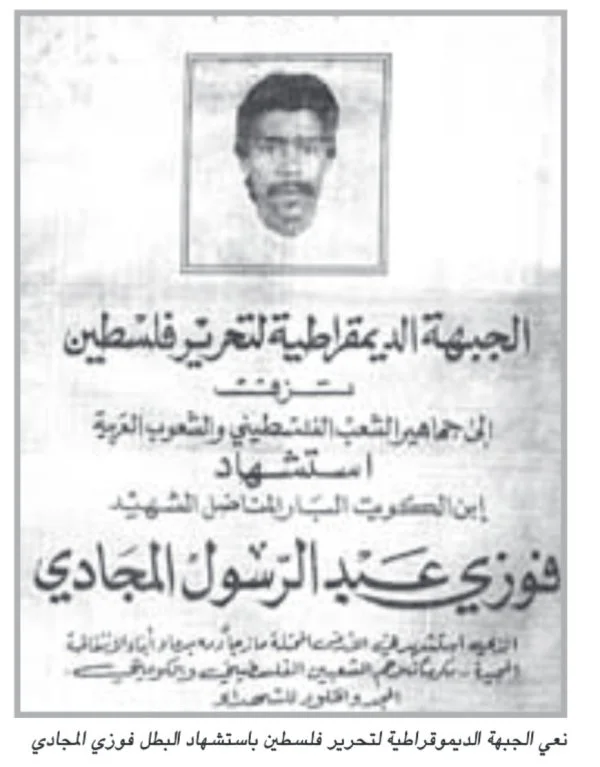
After a fierce battle lasting over two hours with Israeli forces and South Lebanon Army units, the three resistance fighters were martyred, their blood soaking the sacred soil of Palestine.
The Martyr Returns Home
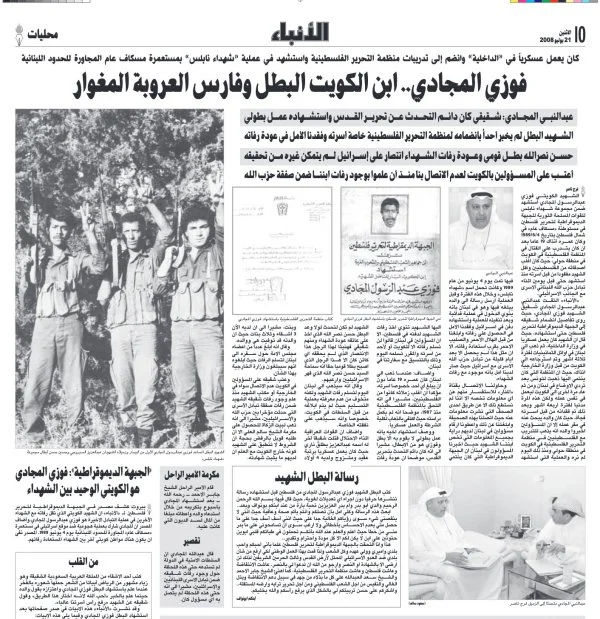
Israel held Fawzi Al-Majadi’s remains for over 19 years, finally returning them to his family in 2008 as part of a prisoner exchange between Hezbollah and the Israeli government.
In that deal, Israel released Lebanese prisoner Samir Kuntar (held since 1979) along with four others captured during the 2006 Lebanon War. Additionally, it handed over the remains of 199 Palestinian, Lebanese, and Arab martyrs. In return, Hezbollah provided the bodies of two Israeli soldiers killed in 2006.
Al-Majadi was laid to rest in Sulaibikhat Cemetery, carried on the shoulders of mourners. His life journey from Kuwait to Lebanon and finally Palestine told the story of a man who believed deeply in the justice of the Palestinian cause and sought martyrdom in its name.
Fawzi Al-Majadi and his fellow fighters showed that the road to liberating Palestine runs through sacrifice and resistance not empty agreements and fleeting diplomacy.