




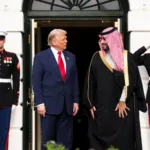
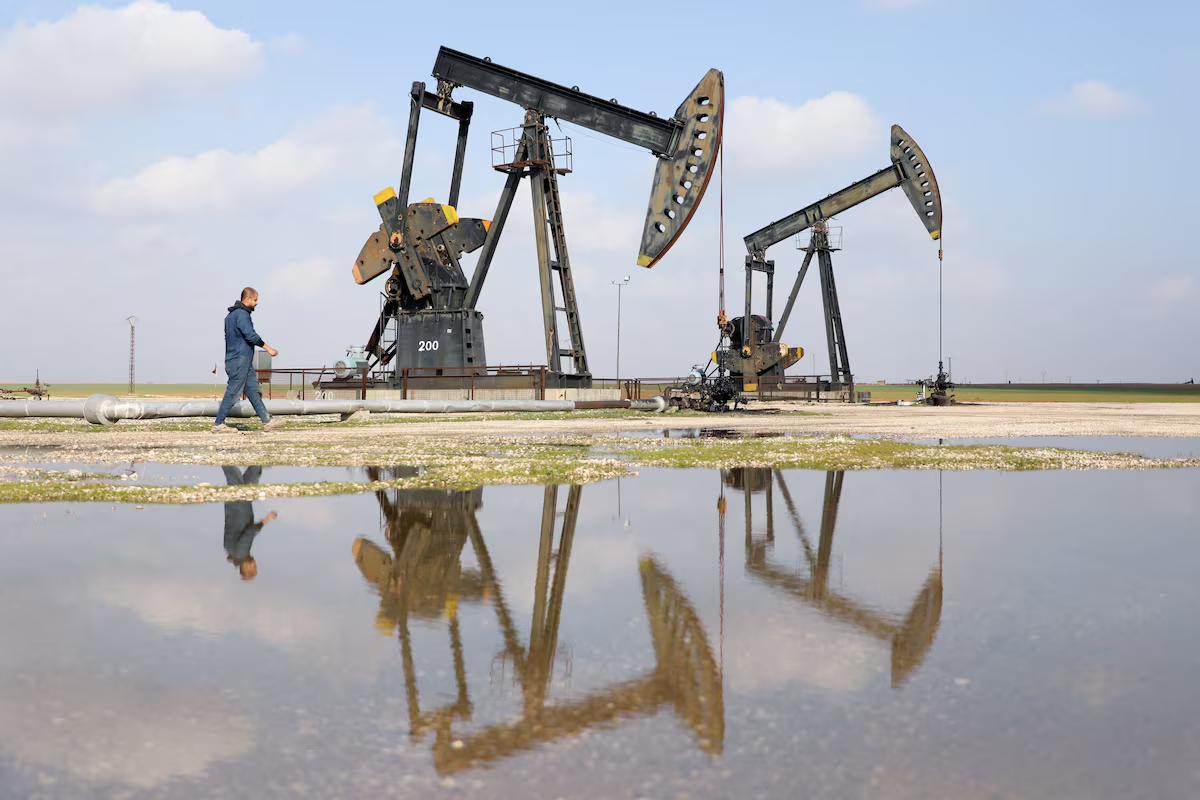
From Riyadh, on February 10, 2026, a transcontinental investment and technology alliance was announced, bringing together American and Saudi industrial giants with the aim of rehabilitating and investing in the oil and gas sector in northeastern Syria.
The announcement crowns a complex political and security process that followed the fall of Bashar al-Assad’s regime in December 2024, and the subsequent lifting—one year later—of U.S. sanctions under the Caesar Act.
It also coincides with the merger agreement signed by President Ahmed al-Sharaa with the Syrian Democratic Forces (SDF), stipulating the handover of border crossings and oil facilities to the state and the integration of SDF fighters into the Syrian army.
The Nature of the New Project
The alliance includes major American and Saudi companies and aims to explore and develop four to five oil and gas fields in the governorates of Hasakah and Deir ez-Zor, which remained under SDF control until early 2026.
Historically, these areas constituted Syria’s “energy basket” before years of war and militia control stripped them of their capacity.
Reports have not disclosed the project’s precise value, but the scale of Saudi and American participation suggests investments worth billions.
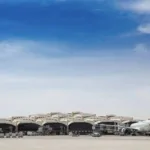
The initiative coincides with a Saudi move through the Elaf Investment Fund—to inject 7.5 billion riyals (approximately $2 billion) into the development of two airports in the city of Aleppo, alongside additional investments in telecommunications and aviation. The move reflects Riyadh’s determination to entrench its influence in the new Syria.
Rebuilding the energy sector could create jobs for Syrian workers and boost state revenues in a country devastated by war. Yet the infrastructure has collapsed entirely and will require billions of dollars in fresh capital.
Targeted Fields and Production Figures
The targeted region is northeastern Syria, encompassing the Rmeilan and al-Omar and al-Tanak fields, among others the most productive in the country.
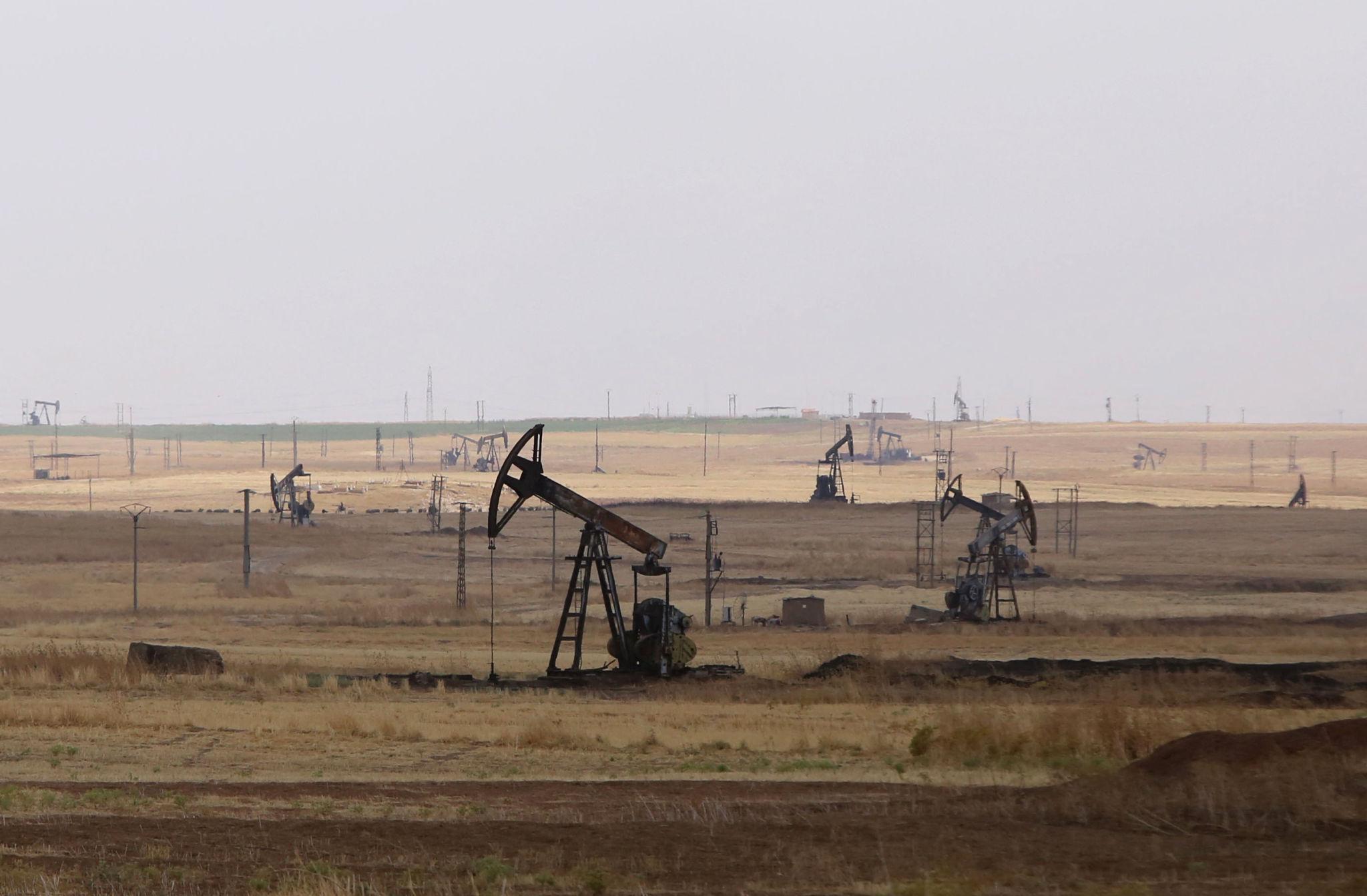
Before the war, these fields produced around 380,000 barrels per day—more than 90 percent of the country’s output.
Exploration and Production Sites
1. Rmeilan and al-Suwaydiyah Fields (Hasakah): Recently retaken by the Syrian government from SDF militias. The fields contain heavy crude and associated gas. Current production is estimated at between 10,000 and 26,000 barrels per day, with plans to raise output to 45,000 barrels per day in the short term.
2. Al-Omar and al-Tanak Fields (Deir ez-Zor): The largest fields in Syria, known for high-quality light crude. They have suffered extensive damage to surface infrastructure.
Expected Production Strategy
Phase One (2026): Focus on “low-cost repairs” to existing wells and the rehabilitation of artificial lift pumps, with the goal of securing domestic fuel needs and reducing the import bill.
Phase Two (2027–2030): Launch deep drilling and exploration in new blocks, activate gas and water injection plans to restore reservoir pressure, and reach commercial production levels that allow for exports.
Alliance Structure: Integrating Capital and Technology
The announced alliance represents an advanced model of strategic partnership, merging politically backed venture capital with high technology. The division of roles appears carefully designed to address the vast gaps in Syria’s shattered energy sector.
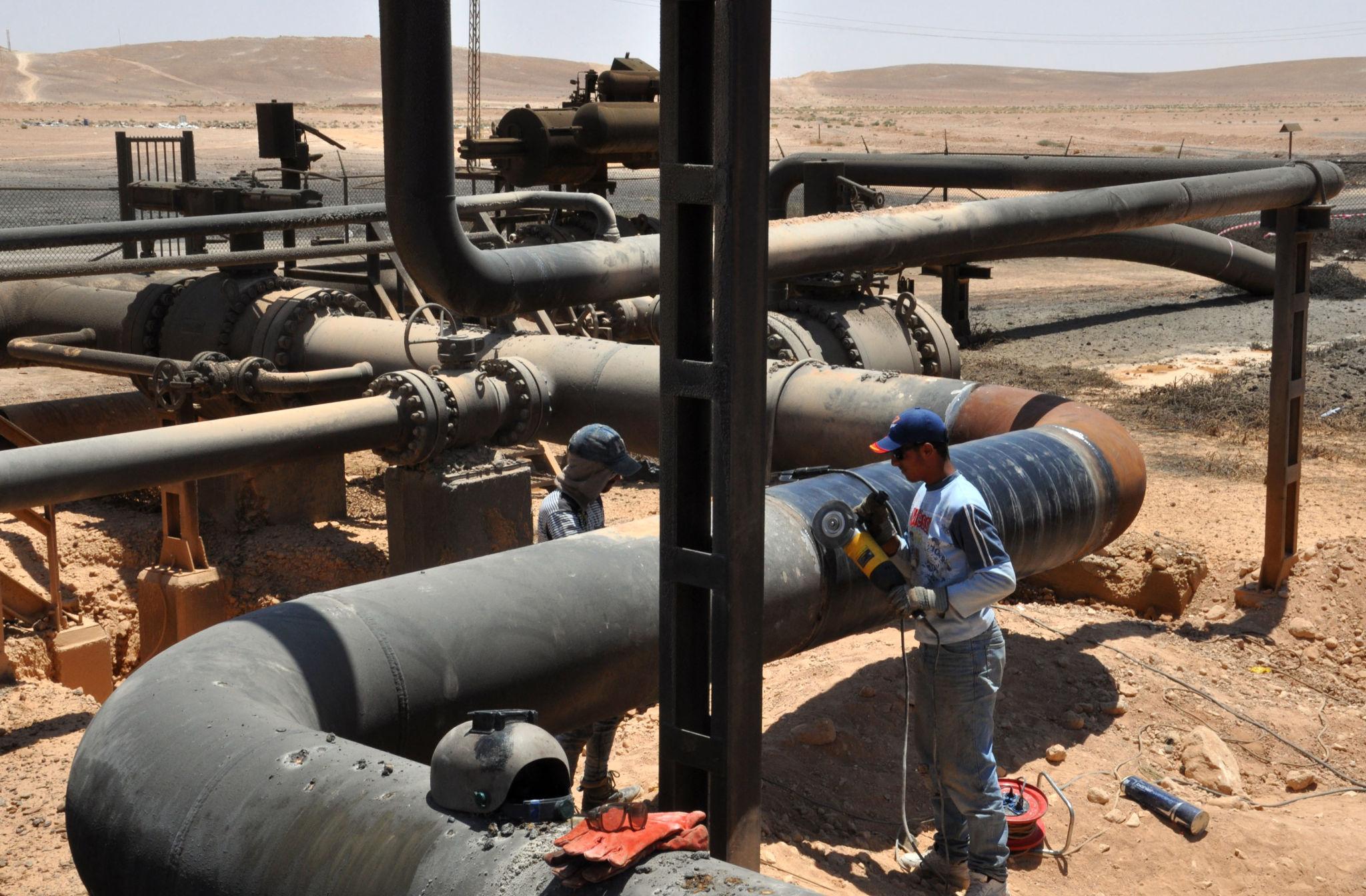
The three American companies are expected to handle the most technically complex components, including geological assessment and field engineering. The Saudi side serves as the financial and logistical guarantor, underscoring the Kingdom’s commitment to stabilizing the “new Syria” under President Ahmed al-Sharaa.
Taqa brings extensive experience in operating Iraqi oil fields, while Hunt Energy and Baker Hughes specialize in drilling and production technologies suggesting the project may encompass exploration, the construction of processing facilities, and export pipelines.
Field Conditions and the Rescue Strategy
The project primarily targets northeastern Syria, specifically the governorates of Hasakah and Deir ez-Zor. To grasp the scale of the undertaking, one must dissect the deteriorated technical reality inherited by the Syrian government and the investment consortium.
Damage Assessment: The Legacy of the “War Economy”
Technical reports indicate that the energy infrastructure suffered systematic destruction over 14 years.
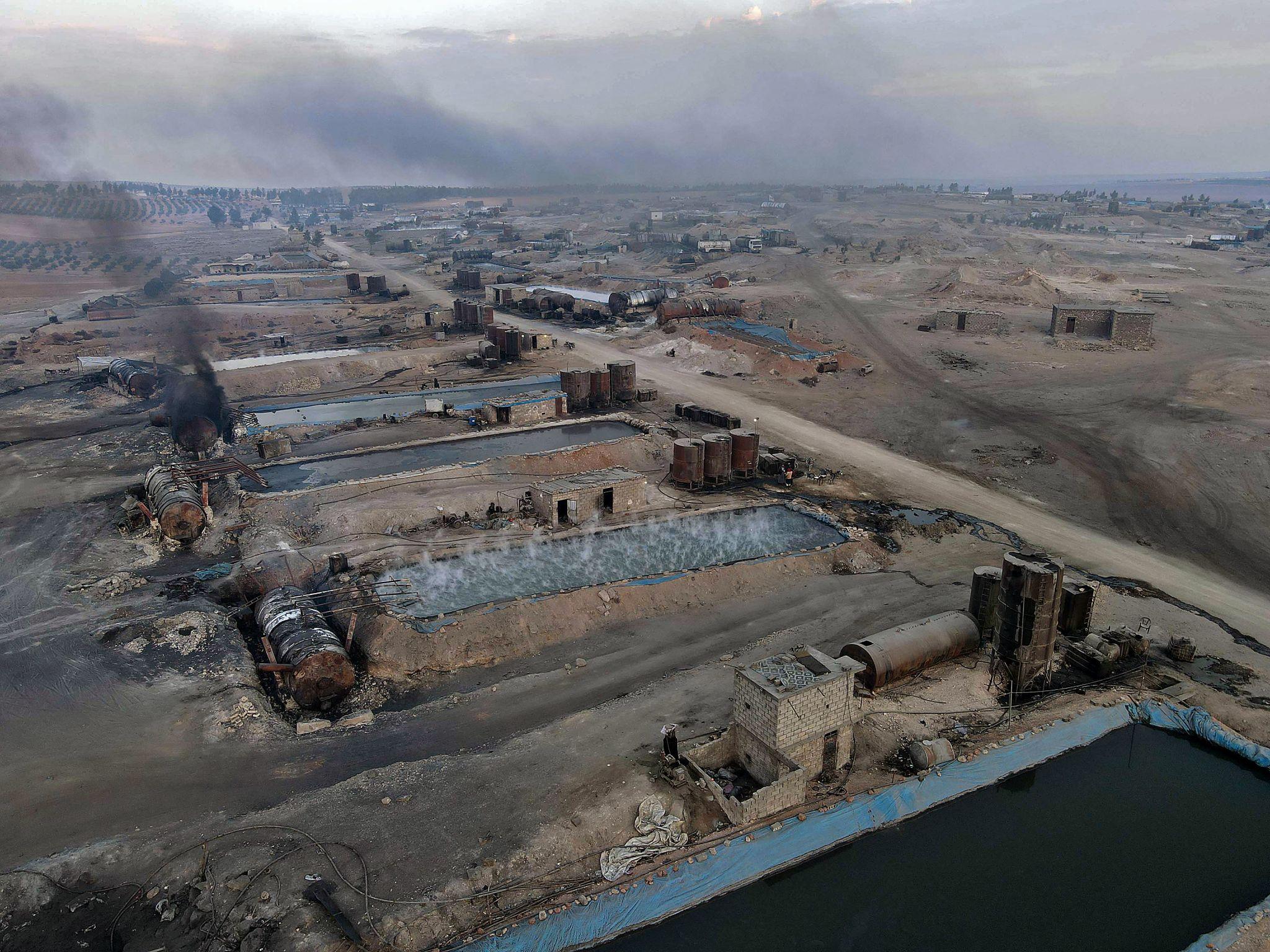
Reservoir Damage: Under the control of various factions—first ISIS, then the SDF—oil was extracted at unsustainable rates without maintenance or water injection to compensate for pressure loss, leading to a sharp decline in reservoir pressure and permanent damage to some geological layers.
Primitive Refining: Thousands of makeshift “burner” refineries proliferated, causing environmental disasters and contaminating soil and groundwater. The alliance will therefore face substantial environmental liabilities and costly cleanup operations before regular production can resume.
Network Decay: The pipeline network that once transported crude to the Homs and Baniyas refineries has been sabotaged and corroded. Major gathering stations—such as al-Taym and al-Omar require near-complete reconstruction.
Centralizing Revenues: One Syrian Flag
A cornerstone of the economic agreement is the dismantling of the “canton economy.”
Collection Mechanism: All oil and gas revenues will flow through the Syrian state’s official channels, including the central bank, enabling tighter monetary policy control and support for the Syrian pound, which has suffered severe depreciation.
Equitable Distribution: Reports point to implicit understandings to allocate a portion of revenues to develop local communities in the eastern region (Deir ez-Zor and Hasakah), ensuring tribal loyalty and regional stability—a model akin to those adopted in other oil-producing countries to secure a “social license to operate.”
Geopolitics: The Main Beneficiaries
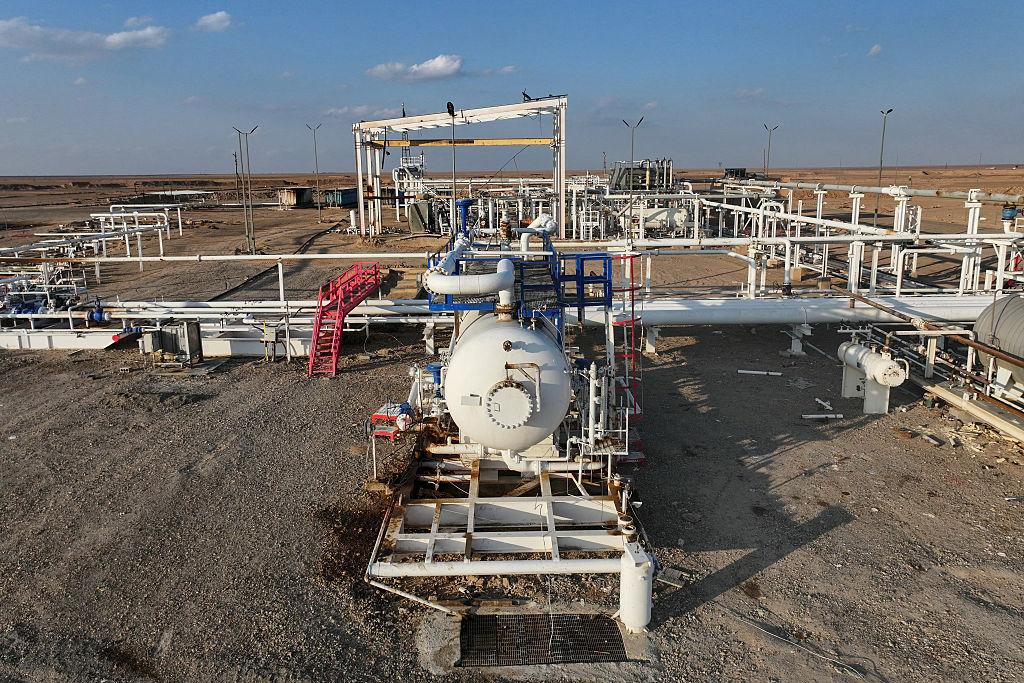
Beyond its economic dimensions, the project carries significant geopolitical weight, signaling a broader regional convergence of interests around stabilizing northeastern Syria and integrating it into regional energy markets.
Security Conditions Around the Targeted Fields
Despite political optimism, on-the-ground realities remain the greatest challenge facing the new corporate alliance.
In January 2026, Deir ez-Zor witnessed dramatic shifts, as Arab tribal forces—backed by the Syrian army launched wide-scale offensives that expelled the SDF from key fields such as al-Omar and Conoco.
Under the January agreement, internal security forces and the Syrian army deployed across Hasakah and Qamishli. This deployment provides the legal and sovereign framework for foreign companies to operate but requires professional restructuring of the army to prevent friction with local populations that could disrupt operations.
Guardians of the Oil: The stability of the new investment depends on integrating tribal forces into a formal facility-protection framework. Marginalizing these tribes could trigger renewed sabotage and pipeline disruptions.
ISIS Remnants: Cells of the Islamic State remain a latent threat in the desert, imposing additional security costs on the alliance to protect exploration teams.
In sum, the prominence of the companies involved and the international political backing behind the alliance point to a decisive global decision to reintegrate Syria into the regional economy and close the chapter of pariah-state isolation under Assad.
Yet the project’s success ultimately hinges on sustained U.S.–Turkish alignment, the new Syrian government’s ability to manage complex tribal balances, and the speed with which tangible economic returns can reach a war-weary Syrian population.


