









The Southern Transitional Council’s (STC) growing control over southern Yemeni provinces is drawing increasing attention from Israel. This development intersects with Tel Aviv’s broader security concerns over the Red Sea, the Bab al-Mandab Strait, and maritime access to the Suez Canal an axis crucial to Israeli trade and regional strategy. It also plays into the wider regional confrontation between Israel and Iran.
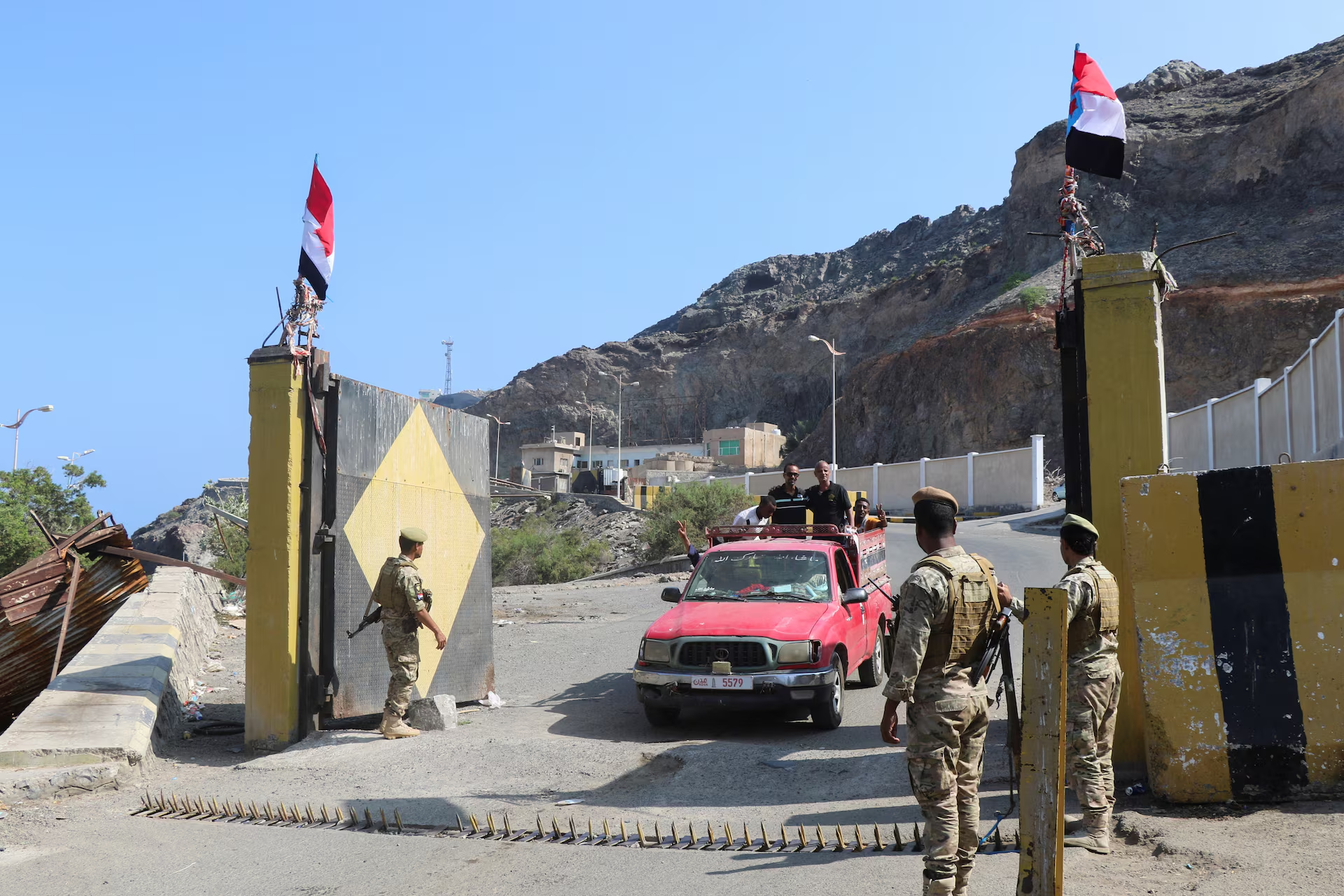
This December 2025, Yemen is witnessing a seismic shift: STC forces, backed by the UAE, have taken control of Hadhramaut, Shabwah, Abyan, Lahij, and Aden. Meanwhile, Saudi-backed Yemeni government forces have withdrawn, redrawing the balance of power in the south and ushering in new political and security dynamics.
This realignment raises key questions: How will the STC’s grip on strategic southern ports most notably Aden and Mukalla impact Israeli trade and maritime security? Could it pave the way for coordination or even alliance between Israel and these militias in countering Iranian and Houthi influence in the Red Sea and Gulf of Aden?
Two Scenarios in Israel’s Strategic Calculus
1. Weakening of Pro-Saudi Forces and Houthi Ascendancy
Israeli daily Yedioth Ahronoth outlines a scenario where the collapse of Saudi-backed government forces in the south eases pressure on the Houthis, bolstering their military capabilities particularly with Iranian support.
According to the paper, this shift could empower the Houthis to intensify maritime attacks against vessels bound for Israeli ports via the Red Sea, a pattern observed over the past two years. Houthi attacks have already slashed traffic to Israel’s Eilat port by over 90%.
From an Israeli vantage point, such a scenario heightens the persistent threat to vessels en route to Israeli ports through Bab al-Mandab and the Gulf of Aden. In response, Israeli or Israel-linked vessels might be forced to reroute around the Cape of Good Hope, significantly inflating shipping costs.
2. Formation of a UAE-Backed Southern Bloc
The second scenario offered by Yedioth Ahronoth envisions the emergence of a unified southern entity under STC control a development that Israel could view as a strategic opportunity to reengineer regional threats in its favor.
If the STC consolidates its hold on the vital ports of Aden and Mukalla combined with the UAE’s presence on the islands of Socotra and Perim southern Yemen could become a valuable outpost for monitoring key maritime routes. For Israel, this could offer a strategic advantage.
The paper suggests that such a “functional local force” could help deter the Houthis and curtail Iranian arms smuggling, reducing the frequency of attacks on Israeli-bound vessels. Emirati bases on Mayyun and Socotra islands would further enhance oversight of Bab al-Mandab from both flanks.
Israel appears eager to capitalize on this emerging order by exploring intelligence-sharing and maritime monitoring cooperation with the STC likely through UAE mediation.
Strategic and Economic Leverage
The Ports’ Role in Global Trade
Aden sits at a critical junction of global trade routes near Bab al-Mandab, serving as a gateway for vessels moving from the Indian Ocean to the Suez Canal.
Following the partial destruction of Houthi-held Hodeidah port and tightening US restrictions, many cargo ships have rerouted to Aden, elevating its strategic standing as a principal alternative.
Mukalla, in Hadhramaut, serves as a crucial hub for Yemen’s oil and gas exports, enabling the shipment of raw energy and other commodities.
Experts argue that whoever controls Aden and Mukalla wields significant economic leverage, with the capacity to shape the flow of maritime trade.
Implications for Israel
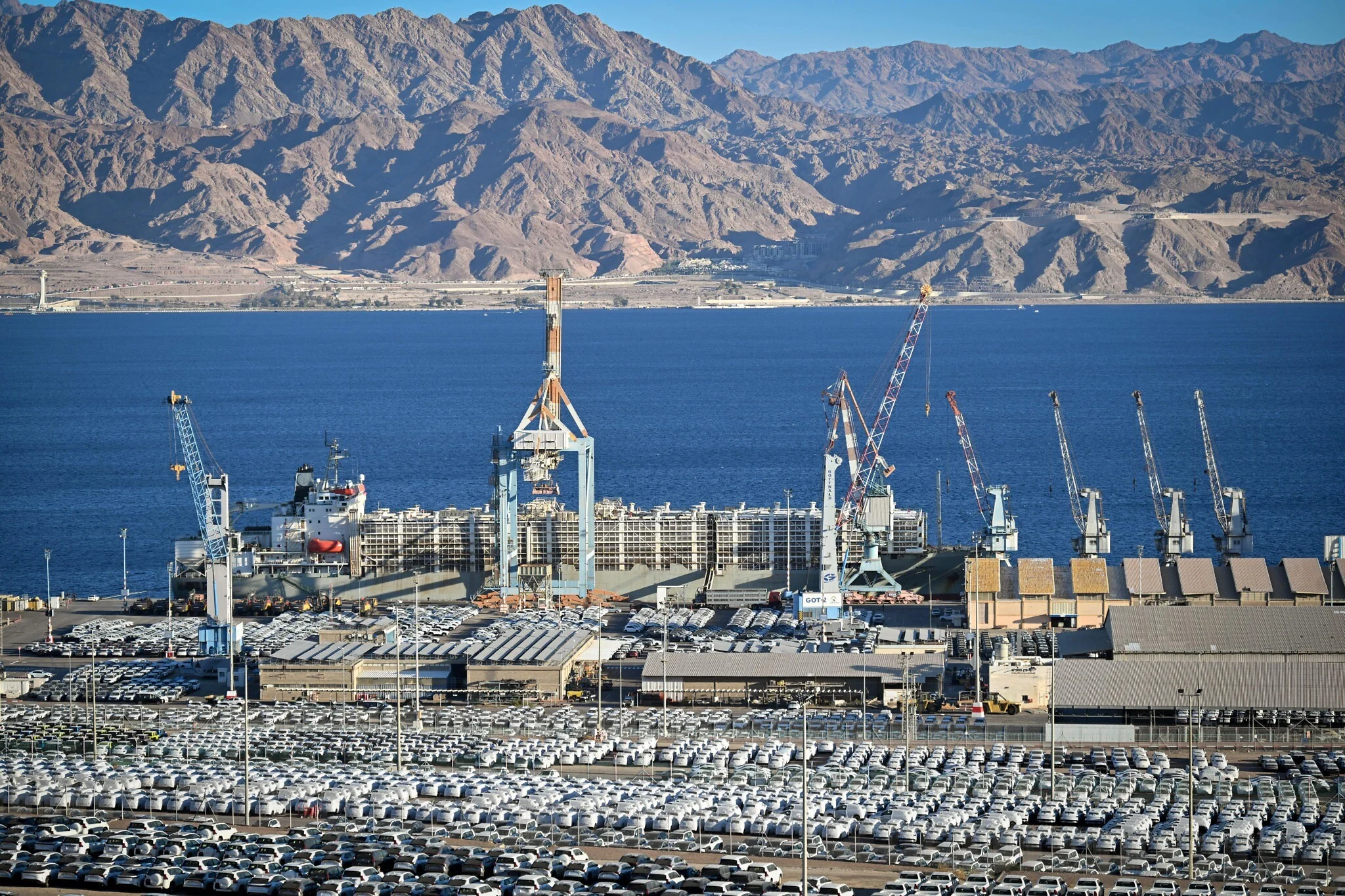
A substantial portion of Israeli trade depends on shipping routes through Bab al-Mandab and the Suez Canal to reach Eilat in the Gulf of Aqaba.
Eilat plays a central role in imports, especially of cars and fertilizers. In 2023, it received nearly 150,000 vehicles around half of Israel’s total auto imports.
However, Houthi attacks have drastically impacted operations. By mid-2025, only six ships had docked in Eilat, and the port’s revenues plummeted by 80%. Concurrently, overall traffic through the Suez Canal fell by 50%.
Israel views the STC’s rise as a chance to restore maritime routes through the Red Sea, potentially reviving trade flow and reducing Eilat’s financial losses.
Still, any outbreak of conflict whether between the STC and Houthis or due to friction between the UAE and Saudi Arabia could push shipping companies to continue diverting around the Cape of Good Hope.
STC–Israel Relations: Quiet Contacts, Emerging Interests
No official diplomatic ties exist between Israel and the STC. Yet both Israeli and Arab media have reported indirect communications.
In a September 2025 interview with The National (UAE), STC leader Aidarous al-Zubaidi stated that southern independence would allow the region to set its own foreign policy, including potential entry into the Abraham Accords.
According to All Israel News, a source within the southern administration revealed the STC is leveraging potential Israeli ties as a political, military, and economic bargaining chip in its push for secession and in its rivalry with Saudi-backed forces. The source added that the STC shares Israel’s enmity toward the Houthis and the Muslim Brotherhood.
The same outlet reported in December 2025 that STC representatives had visited Israel to explore cooperation opportunities, including maritime security and preventing arms smuggling to the Houthis.
Reports have also surfaced in Arab media about UAE permission for Israeli experts to operate radar and surveillance systems on Socotra Island. Additionally, retired Israeli officers have reportedly assisted in training STC-affiliated Security Belt forces.
The UK’s Royal United Services Institute (RUSI) highlighted joint Israeli–Emirati platforms monitoring Bab al-Mandab, noting increased security coordination between the two in recent years.
Obstacles to a Formal Alliance
Despite shared interests, significant hurdles remain for any open alliance between the STC and Israel.
According to RUSI, Israeli backing of a strengthened southern bloc could provoke the Houthis to deepen their alliance with Iran and escalate attacks to assert their presence.
Saudi Arabia is also unlikely to tolerate closer Israeli-STC ties that undermine its influence, warns Israel’s Institute for National Security Studies (INSS).
Israeli analyst Yoel Guzansky noted that while the STC aligns closely with the UAE, it does not answer to Israel. Any cooperation would need to be carefully coordinated with Abu Dhabi to avoid antagonizing Riyadh.
The rapid shifts in Yemen’s south by the end of 2025 show that the power map is no longer just a domestic affair it has become an integral part of the wider regional contest, particularly between Israel and Iran.
Israel’s interest in these developments reflects a clear attempt to exploit Yemen’s fragmentation and turn the south into a new front in the regional power struggle.
Yet any prospect of normalization between the STC and Israel remains bound by a complex web of Emirati-Saudi calculations, Houthi escalation risks, and the potential for deepening conflict rather than de-escalation.
In this context, the real danger lies in Yemen’s continued fragmentation transforming its shores and ports into arenas of proxy warfare.


