



NoonPost NoonPost

NoonPost

  • Politics
  • Economy
  • Society
  • Culture
  • In Depth
  • Focus
  • Explainers
  • Stories
AR
Notification Show More
وجود قيادتين في حزب الشعب الجمهوري خلق مشهدًا معقدًا
After the court ruling, who is running Türkiye’s Republican People’s Party?
نون بوست
“The heavy price Syrians paid will unite them”: An interview with Dr. Radwan Ziadeh
ميناء اللاذقية يستطيع استقبال الحاويات فقط أما نقلها إلى الداخل فيحتاج إلى شبكة أخرى
The route for goods from Latakia: Can Syria reconnect its sea to its inland?
نون بوست
After the Hasakah and Kobani elections, how far has the formation of Syria’s parliament progressed?
شاشة حاسوب تعرض سجلاً لجثة مجهولة الهوية في قاعدة بيانات الأشخاص المفقودين في مستشفى الناو في أم درمان، 18 أبريل 2026 (AP)
Graves without names: How many people are missing in Sudan’s war?
نون بوست
Asian partnerships and alternative corridors: Abu Dhabi’s strategy to escape the Gulf umbrella
نون بوست
How Is Turkish Military Technology Redrawing the Balance of Power in North Africa?
"أراد" هي وحدة "تدخل" مستحدثة في سلاح الجو التابع لجيش الاحتلال
“Arad”.. Why Did the Occupation Create an All-Female Force to Protect Its Air Bases?
عاد قطار الخليج إلى الواجهة بعد الإعلان عن إنجاز 50 ٪ من المشروع
A Revolution on Iron Rails: The Gulf Railway from the 2009 Dream to the 2030 Race
يقدّم عناصر من الحرس الثوري والباسيج دورات قصيرة للمدنيين على التعامل مع الكلاشينكوف
Kalashnikovs in the Squares.. How Is Iran Mobilizing Civilians for War?
نون بوست
From Public Service to Crisis Commerce: Commercial Electricity Deepens Taiz’s Suffering
سفن في مضيق هرمز، مسندم، عُمان، 27 أبريل/نيسان 2026 (رويترز)
A Digital Artery in a Minefield.. What Do We Know About Gulf Cables Beneath Hormuz?
NoonPost NoonPost
AR
Notification Show More
وجود قيادتين في حزب الشعب الجمهوري خلق مشهدًا معقدًا
After the court ruling, who is running Türkiye’s Republican People’s Party?
نون بوست
“The heavy price Syrians paid will unite them”: An interview with Dr. Radwan Ziadeh
ميناء اللاذقية يستطيع استقبال الحاويات فقط أما نقلها إلى الداخل فيحتاج إلى شبكة أخرى
The route for goods from Latakia: Can Syria reconnect its sea to its inland?
نون بوست
After the Hasakah and Kobani elections, how far has the formation of Syria’s parliament progressed?
شاشة حاسوب تعرض سجلاً لجثة مجهولة الهوية في قاعدة بيانات الأشخاص المفقودين في مستشفى الناو في أم درمان، 18 أبريل 2026 (AP)
Graves without names: How many people are missing in Sudan’s war?
نون بوست
Asian partnerships and alternative corridors: Abu Dhabi’s strategy to escape the Gulf umbrella
نون بوست
How Is Turkish Military Technology Redrawing the Balance of Power in North Africa?
"أراد" هي وحدة "تدخل" مستحدثة في سلاح الجو التابع لجيش الاحتلال
“Arad”.. Why Did the Occupation Create an All-Female Force to Protect Its Air Bases?
عاد قطار الخليج إلى الواجهة بعد الإعلان عن إنجاز 50 ٪ من المشروع
A Revolution on Iron Rails: The Gulf Railway from the 2009 Dream to the 2030 Race
يقدّم عناصر من الحرس الثوري والباسيج دورات قصيرة للمدنيين على التعامل مع الكلاشينكوف
Kalashnikovs in the Squares.. How Is Iran Mobilizing Civilians for War?
نون بوست
From Public Service to Crisis Commerce: Commercial Electricity Deepens Taiz’s Suffering
سفن في مضيق هرمز، مسندم، عُمان، 27 أبريل/نيسان 2026 (رويترز)
A Digital Artery in a Minefield.. What Do We Know About Gulf Cables Beneath Hormuz?
  • Politics
  • Economy
  • Society
  • Culture
  • In Depth
  • Focus
  • Explainers
  • Stories
Follow US

“Help Us, Umm Saleh!” A 60-Year-Old Midwife Brings Life into the Tents and Rubble of Gaza

أميرة نصار
Amira Nassar Published 19 December ,2025
Share
نون بوست

“My wife’s in labor, it’s her first child help us, Umm Saleh!”
It’s one of the many desperate cries that wake 60-year-old midwife Fiza Shreim in the dead of night. With urgency etched into every wrinkle of her hands, she grabs her worn black medical bag, throws on her clothes, and steps out of her white tent.

Guided by the beam of her flashlight, she walks through the rubble-strewn paths and scenes of trauma in Gaza City on her way to deliver life amid death.

Fiza Shreim, a woman known as the “Angel of Birth,” recounts the beginning of her journey. “It was the 1970s, I was just 13. The Israeli occupation had imposed a security lockdown in Gaza. My mother was in labor with my sister Jamila, and there was no one to help her. That’s when I delivered my very first baby.”
That experience led her to pursue formal training in nursing in 1979.

With a warm voice and radiant smile, she continues: “Ten days after I got married, I was accepted into a midwifery program not available in Gaza at the time, but in Sarafand, inside Israeli-occupied territory. I spent a year learning the foundations and practical skills of the craft.”

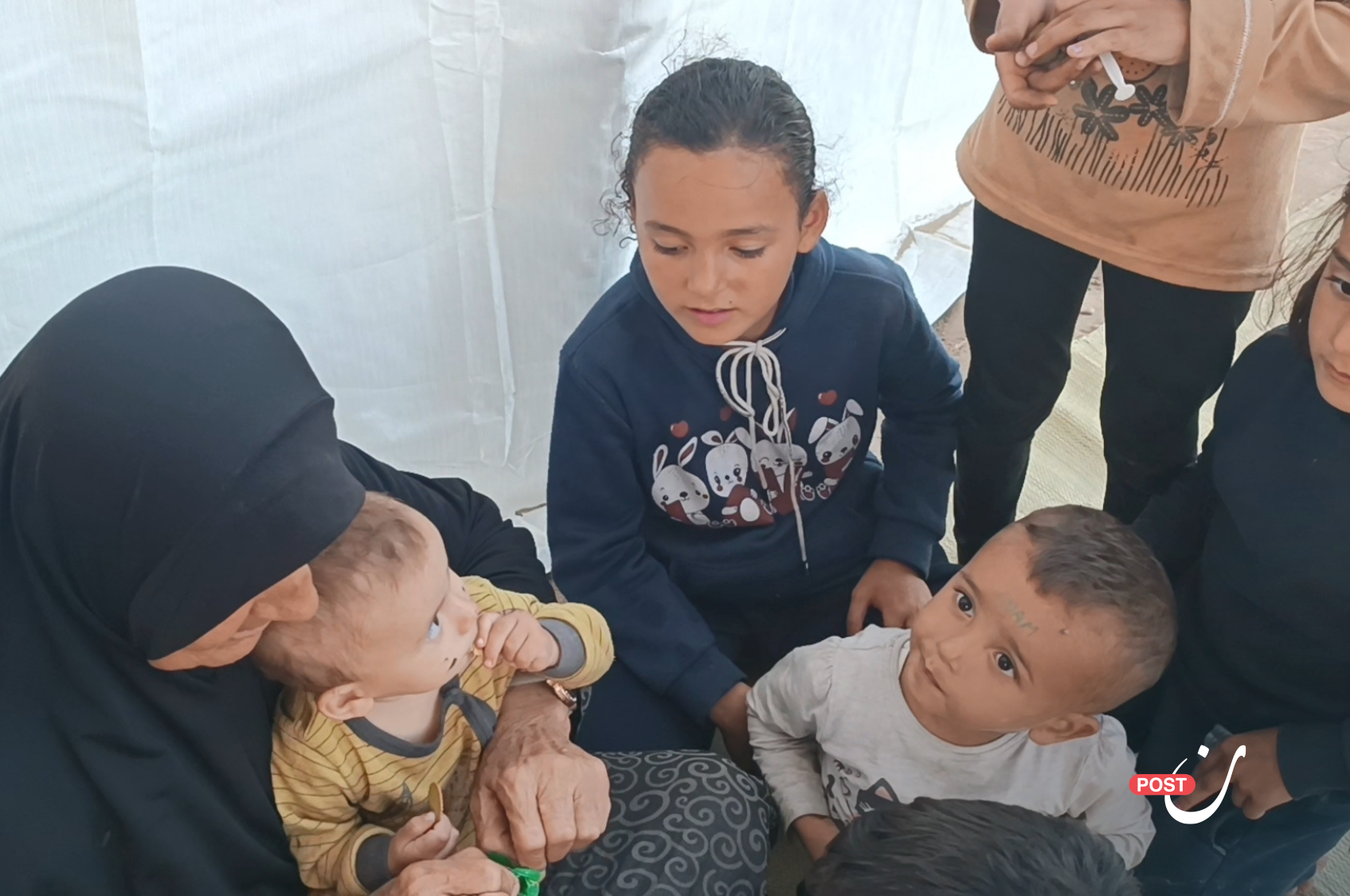
Shreim went on to give birth to 13 children of her own three of whom were killed in Israel’s war of extermination on Gaza. Today, she is a grandmother to 53 grandchildren many of whom she helped deliver herself.

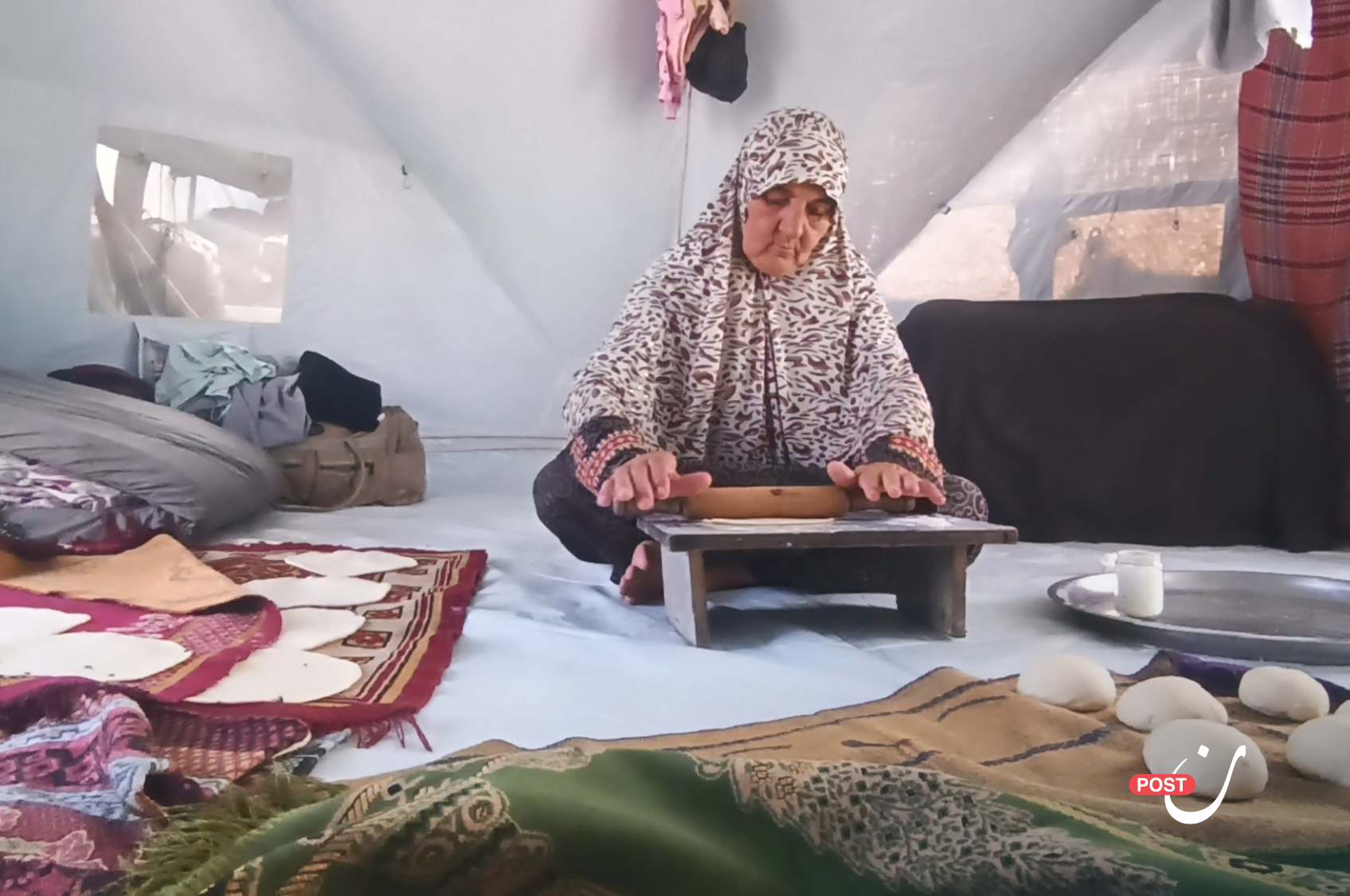
Looking around the corners of her tent, which lacks the warmth of her former home, she says:
“I worked at Al-Shifa Hospital the only facility that served women giving birth from Rafah in the south to Beit Hanoun in the north. I practiced midwifery for more than four decades without pause.”

Retirement did nothing to slow her commitment to bringing life into the world. “Even after I retired, I turned a room in my house in Jabalia into a birthing room. I continued helping women give birth, comforting them through labor, and letting them hear the joyous cries of their newborns for free, purely as a humanitarian duty.

I carried on even after being displaced to Deir al-Balah more than two years ago, during Israel’s ongoing genocide in Gaza.”

According to the United Nations Population Fund, “Well-trained midwives could prevent up to 66% of maternal and newborn deaths. Women who receive continuous care from a midwife are 24% less likely to deliver prematurely and 16% less likely to lose their babies.”

Her voice trembles and a tear slips from her eye as she speaks:
“I had long awaited the moment to help my pregnant daughter deliver her baby. She had been counting down the days. But the Israeli occupation killed her, her two daughters, her unborn child, and 23 members of her husband’s family.”
Wiping away the tear, she continues:
نون بوست

“My eldest daughter lost her husband. She went into labor on the third day of mourning. I helped her through it. I was her mother, her midwife, and the grandmother to her children all at once.”

With many pregnant women unable to reach hospitals because of relentless Israeli bombardment and an airtight blockade, Shreim now helps them give birth in tents and refugee shelters. She uses only the basic tools in her bag, while Gaza’s healthcare system lies in ruins.

Recalling one of the most harrowing births during the war, she says:
“One pitch-black night, lit only by the streaks of airstrikes, a man came running, screaming: ‘My wife is giving birth, please help us, Auntie Umm Saleh. There’s no one else no mother, no support, and no ambulance can reach us.’”
“I didn’t hesitate for a second.

I grabbed my son and said, ‘We’re going to bring life from life.’ We recited the shahada, ‘There is no god but God, and Muhammad is His Messenger,’ expecting to die under the buzzing drones overhead.”

She clasps her gnarled fingers together, takes a breath, and goes on:
“We reached their home. I helped ease the woman’s labor, and the baby emerged with her cries drowning out the sound of Israeli shelling. I delivered the placenta and cleaned the child but then realized I didn’t have any surgical sutures in my bag.
نون بوست

I walked over a kilometer back home on foot to get the threads. I returned and stitched her up under the faint glow of a mobile phone flashlight. I thank God for every life I’ve helped bring into the world, using only the simplest of tools.”

As for what she carries in her medical bag during war, she says:
“I was displaced over 13 times. I kept only the essentials: cotton, gauze, gloves, sutures, and scissors. I had to leave behind my suction equipment and oxygen tanks in my home, which was later destroyed by the Israeli army.”

During this war of annihilation, women have endured double the pain surviving bombardment while fearing for their unborn children. Many have lost their babies because ambulances couldn’t reach them in time, or the roads were too destroyed to travel.

The Israeli military has not hesitated to kill mothers and their unborn children. Yet Auntie Umm Saleh continues to deliver hope—baby by baby—from under the rubble, amidst the explosions, and inside Gaza’s tents. Through it all, she lets the world hear the cries of life from Gaza.
TAGGED: Stories
Download this article as PDF
Share this Article
Facebook Twitter Whatsapp Whatsapp Telegram Email Copy Link
أميرة نصار
By Amira Nassar Journalist and Writer from Gaza
Follow:
Journalist and writer from Gaza
Previous Article نون بوست What Are Israel’s Hidden Calculations in Southern Yemen?
Next Article نون بوست Three Seasons of Surplus, Then Came the Drought: Iraq Returns to Wheat Imports

Read More

  • Psychological Treatment in Gaza: A Bid for Survival Amid Ruin and Heavy Burdens Psychological Treatment in Gaza: A Bid for Survival Amid Ruin and Heavy Burdens
  • How Are War-Torn Tents Haunting Yemenis in Marib?
  • Generations at Risk of Regression.. What Has the War of Extermination Done to the Special Education Sector?
  • From Cartoons to Exhibitions: How Syrian Art Confronts Repression and Oblivion
  • "The Epidemic Situation in Yemen Is Complex and Intertwined".. An Interview with Health Minister Qasem Buhaibeh
part of the design
NoonPost Weekly Newsletter

You May Also Like

Psychological Treatment in Gaza: A Bid for Survival Amid Ruin and Heavy Burdens

Psychological Treatment in Gaza: A Bid for Survival Amid Ruin and Heavy Burdens

فاطمة زكي أبو حية Fatima Abu Hayya 19 May ,2026
How Are War-Torn Tents Haunting Yemenis in Marib?

How Are War-Torn Tents Haunting Yemenis in Marib?

بشرى الحميدي Bushra Alhomidy 19 May ,2026
A Silent Battle: Cancer Patients in Syria and the Deepening Treatment Crisis

A Silent Battle: Cancer Patients in Syria and the Deepening Treatment Crisis

فريق التحرير Noon Post 7 April ,2026
NoonPost

An independent media platform founded in 2013, rooted in slow journalism, producing in-depth reports, analysis, and multimedia content to offer deeper perspectives on the news, led by a diverse young team from several Arab countries.

  • Politics
  • Society
  • Economy
  • Culture
  • Interviews
  • In Depth
  • Explainers
  • Stories
  • Profiles
  • Focus
  • Latest Reports
  • Long Reads
  • Interviews
  • Interactive
  • About Us
  • Our Writers
  • Write for Us
  • Editorial Policy
  • Advanced Search
Some rights reserved under a Creative Commons license

Removed from favorites

Undo
Go to mobile version