






Since late November 2025, Yemen has witnessed unprecedented military developments following the launch of “Promising Future,” a military operation led by the UAE-backed Southern Transitional Council (STC) in the Hadhramaut Valley and the eastern province of Al-Mahrah.
Although the secessionist STC is technically part of the internationally recognized Presidential Leadership Council, it took unilateral action by deploying thousands of UAE-trained fighters to the eastern and southern provinces it considers part of its envisioned future state.
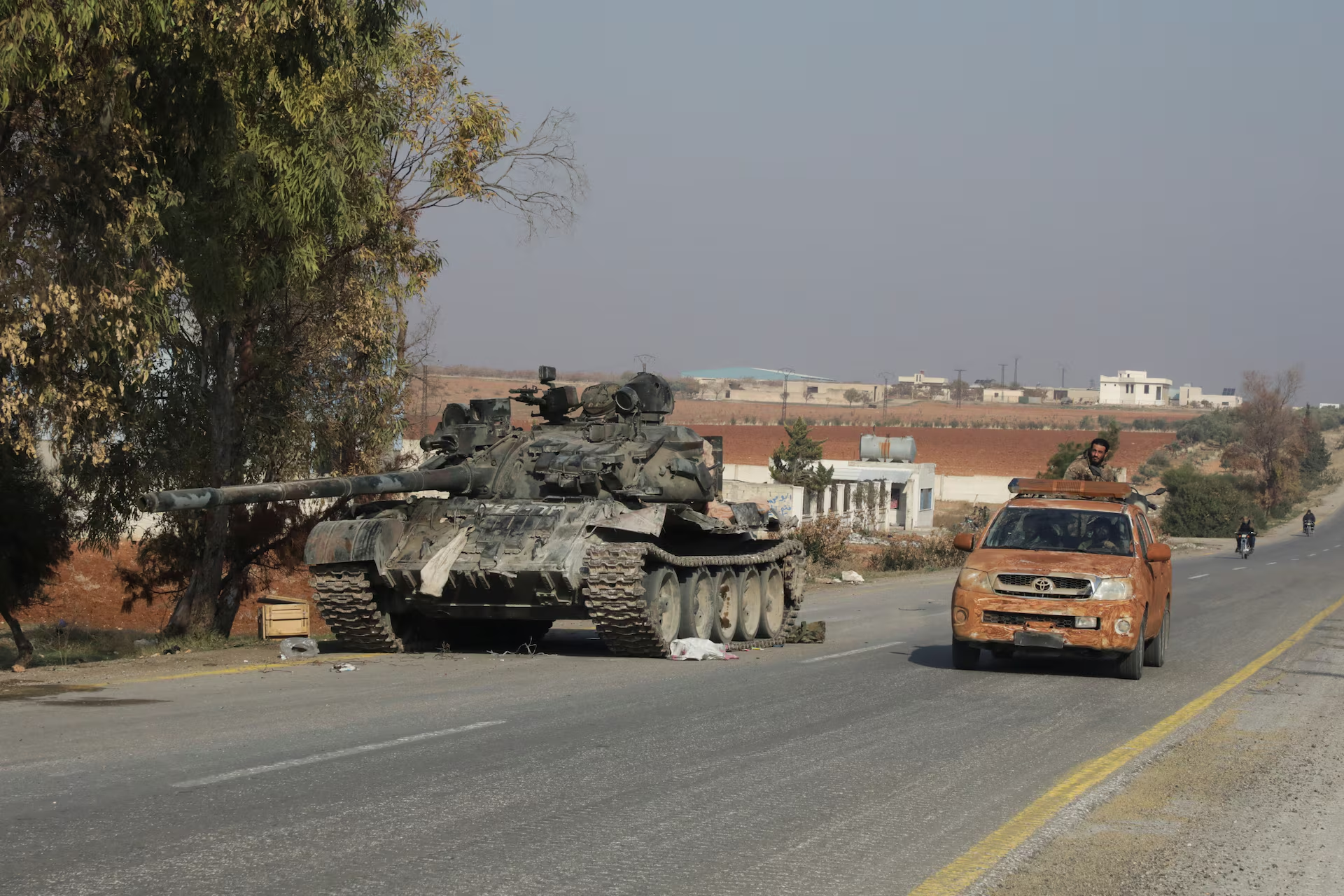
Within days, STC forces comprising military police, security belts, and the elite Hadhrami units seized control of state institutions, oil fields, airports, and border crossings in these regions, facing only limited resistance from government-aligned forces.
A Timeline of Escalation
In late November, pro-government “Hadhramaut Tribes Alliance” forces, backed by Saudi Arabia, seized an oil field and surrounding areas near the PetroMasila facility, halting production and demanding a greater share of oil revenues.
The STC seized on the incident to accuse the Hadhramaut Valley of becoming a hub for arms smuggling and diverting oil profits away from the south.
In early December, the STC launched “Promising Future.” Its elite Hadhrami units advanced rapidly, seizing several towns, raising the southern flag over the presidential palace in Seiyun, and declaring the “liberation of the Hadhramaut Valley.”
While the Hadhramaut Tribes Alliance attempted to resist from its strongholds, government forces stationed nearby did not respond militarily, allowing STC units to push forward. Clashes ensued, resulting in casualties on both sides.
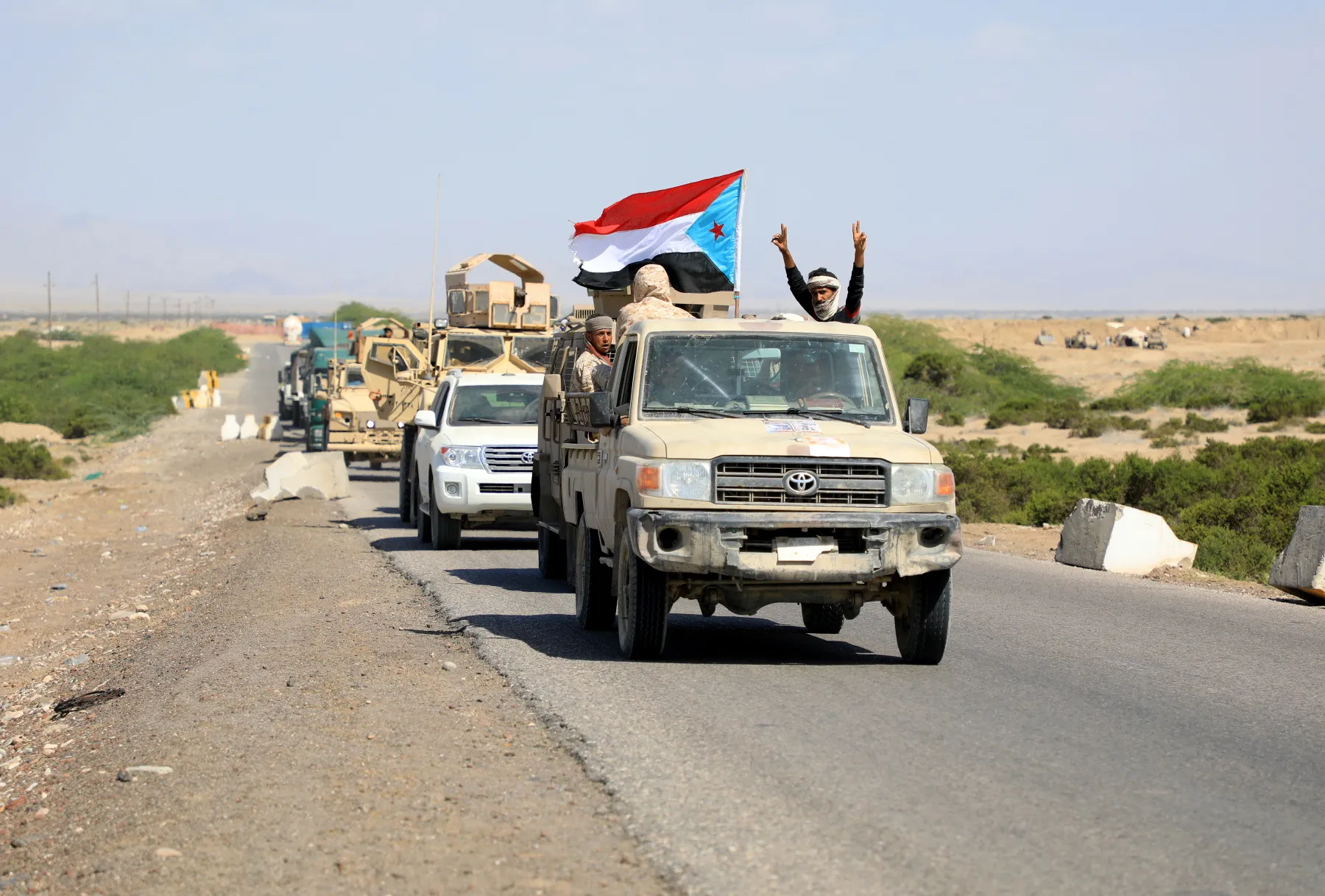
In response, Saudi Arabia dispatched a military delegation to Mukalla, the provincial capital of Hadhramaut. On December 3, the two sides reached a de-escalation agreement to resume oil supplies and halt hostilities but fighting resumed the following day.
Simultaneously, STC units moved into Al-Mahrah province, taking control of the airport, seaport, and border crossings. They hoisted the southern flag over government buildings.
Government forces put up only minor resistance. Within days, the STC declared that all eight southern provinces including Aden were now under its “protection.” The stated aim: to unify the theater of operations, bolster security, and prepare for a potential confrontation with the Houthis.
Why the Separatists Hold the Upper Hand
Military Training and Support
The STC owes much of its military strength to robust Emirati support—financially, militarily, and logistically.
-
Equipped with modern weaponry, including Chinese AH‑4 howitzers
-
Built an effective intelligence network
-
Trained fighters in offensive operations and urban control
-
Maintains multiple elite units: the Aden-based Security Belt, Hadhrami and Shabwani elites
By contrast, government-aligned forces rely on Ministry of Defense brigades supported by Saudi Arabia. However, they face chronic funding shortfalls, political fragmentation, lack of heavy weaponry, and the absence of a unified command structure.
Unified Command vs. Government Disarray
Despite its diverse factions, the STC benefits from a centralized military and political leadership through its Presidential Council and security apparatus, allowing it to assert control by appointing loyal local commanders.
The government military lacks such cohesion. Units in the First Military Region are affiliated with the Islah Party, while “National Shield” brigades report directly to Saudi Arabia, and the Giants Brigades are aligned with the STC itself creating overlapping loyalties and undermining chain of command.
Moreover, government forces struggle to control the patchwork of militias collecting informal taxes on highways and competing with the state for resources.
Financial Resources and Control of Ports
The STC controls the Port of Aden and oil export facilities in Shabwa and Hadhramaut providing it with a substantial revenue stream.
It collects port fees and customs revenues, which previously accounted for 70% of the government’s income. Although the Houthi blockade and rerouting of shipping lanes through Hudaydah have impacted trade, the STC still enjoys a financial edge.
In addition, Hadhramaut’s oil reserves represent around 80% of Yemen’s total, giving the STC significant economic leverage.
Local Depth and Tribal Support
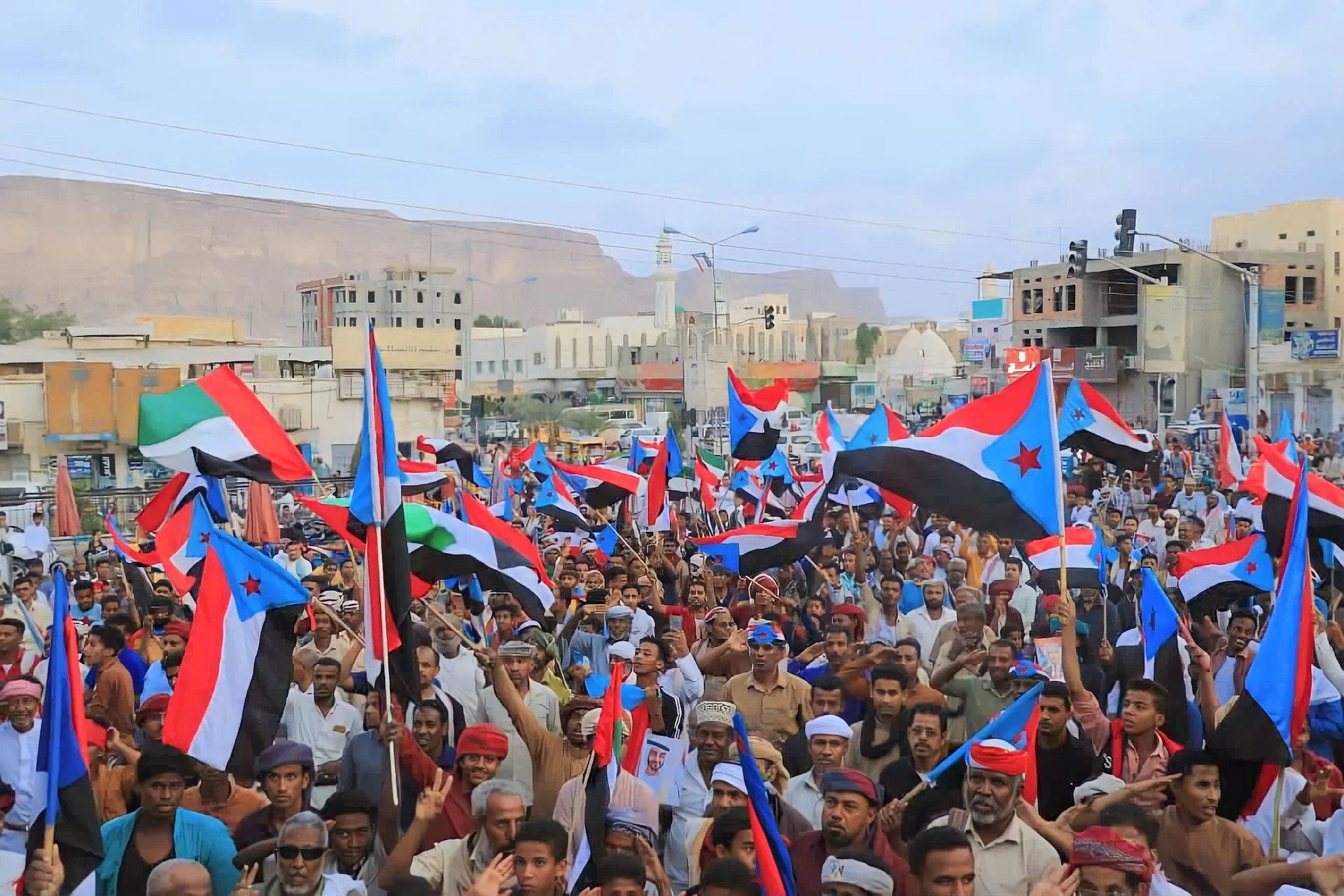
The STC draws strength from its secessionist narrative, which has attracted wide support across various southern provinces. Over the years, it has successfully mobilized popular backing through promises of improved security and governance, especially in Aden.
Conversely, the government has failed to provide basic services. Widespread power outages and unpaid salaries have severely eroded its support base.
While the government does have backing from tribal groups in Hadhramaut and Al-Mahrah, it has been unable to unify these factions. Some tribes view government forces as “northern militias” or extensions of other power centers, deepening internal divisions and weakening the state’s ability to mobilize a coherent resistance.
Factors Undermining Government Control
-
Institutional Disintegration and Service Collapse: Government ministries have lost authority, corruption is rampant, and basic services like water and electricity have deteriorated. This shifts public allegiance toward whoever controls essential resources—a vacuum the STC has effectively exploited.
-
Economic Crisis and Living Conditions: The halt in oil exports and slowdown in port activity have slashed government revenues. Yemen’s deepening economic crisis has pushed many to support whichever force can provide even minimal services—even at the cost of national unity.
-
Tribal Fragmentation and Resource Struggles: In Hadhramaut, competing tribal alliances demand local control over oil fields. This opened space for STC inroads in some areas, even as others resisted undermining central authority and creating security vacuums.
-
Smuggling and Extremist Groups: The STC justified “Promising Future” by citing rampant arms and drug smuggling in the Hadhramaut Valley, which it claims has also become a haven for extremist groups like ISIS and al-Qaeda.
-
Saudi–UAE Rivalry: A major factor in the erosion of government control. Riyadh favors a unified Yemen under a weak government capable of negotiating with the Houthis. Abu Dhabi backs southern secession, aiming to cement long-term influence over strategic ports like Aden, Mukalla, and Bir Ali.
Scenarios and Implications
A Southern Secession?
The Guardian has suggested that the STC may push for a public referendum rather than a unilateral declaration of independence, aiming to maintain the political backing of both the UAE and Saudi Arabia.
Risk of Confrontation with the Houthis
Washington’s Soufan Center argues that the STC’s takeover of oil-rich Hadhramaut is designed to deprive the Houthis of key funding sources. This could pave the way for future alliances with Israel or others against Iran. However, it might also give the Houthis a new pretext to rally support in defense of Yemeni unity.
Rising Saudi–UAE Tensions
The events underscore a widening rift between Riyadh and Abu Dhabi, which could spiral into indirect conflict through their local proxies. Alternatively, the situation may force both to renegotiate the balance of power in Yemen.
Local Chaos
The STC’s military takeover has left an administrative vacuum in Hadhramaut and Al-Mahrah. Power cuts and service collapses following the offensive have triggered fears of mass displacement. Rising regional rhetoric and signs of deepening societal divisions point to a potential social breakdown in the absence of a political settlement.
Yemen’s “Somalization”?
Observers fear Yemen could follow a Somalia-like trajectory. STC militias often operate independently, lack unified command, extort money at checkpoints, and compete for resources raising the specter of lawlessness and fragmented rule.