








The United States is preparing to establish an interim committee to govern the Gaza Strip, alongside a “Peace Council” that will oversee it. The plan, expected to be launched by December 15, 2025, is designed as an administrative and service-oriented framework that would maintain Israeli control two years after a campaign widely described as genocidal.
According to the Israeli newspaper Haaretz, the announcement comes following discussions between Washington and its allies about who will be responsible for providing basic services in the territory, given Israel’s rejection of any role for either the Palestinian Authority or Hamas.
Objectives and Mandate of the Committee
The establishment of a politically neutral, service-focused committee is part of the second phase of President Donald Trump’s plan for Gaza’s future, Haaretz reports. According to the draft U.S. ceasefire agreement circulated since September 2025, the committee’s goals include:
-
Managing Basic Services: Providing electricity, water, healthcare, and humanitarian aid to Gaza residents through a civilian body with international backing. Some drafts suggest the committee would also oversee civilian ministries and operate key infrastructure.
-
Coordinating Reconstruction: Working with donor countries and UN agencies to raise funds and oversee the rebuilding of homes and destroyed infrastructure. However, this remains theoretical given Israel’s resistance to full-scale reconstruction, favoring limited development in areas under its control such as the proposed “Green Rafah” project.
-
Border Management and Aid Coordination: Monitoring the entry of goods through crossings with Israel and Egypt under a new agreement, and ensuring that humanitarian aid flows without obstruction.
-
Laying the Groundwork for a Permanent Palestinian Administration: The interim committee is expected to operate for 6 to 12 months, after which an internationally acceptable local authority would be established either via UN-supervised elections or through a political agreement between the Palestinian Authority and other factions (though Israel opposes this).
Gaza Administrative Committee
The Peace Council, which will supervise the committee’s work, will be led by representatives from several countries. According to Haaretz and other American media outlets, the composition is as follows:
-
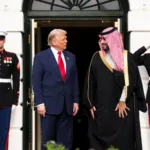
Chair of the Council: U.S. President Donald Trump
-
Council Member: Saudi Crown Prince Mohammed bin Salman
-
Previously Proposed Chair: Former UK Prime Minister Tony Blair
Details about the composition of the Gaza Administrative Committee remain limited. Drafts of the U.S. plan refer to a group of independent Palestinian figures, mainly technocrats in health, economics, and public administration, who are internationally acceptable.
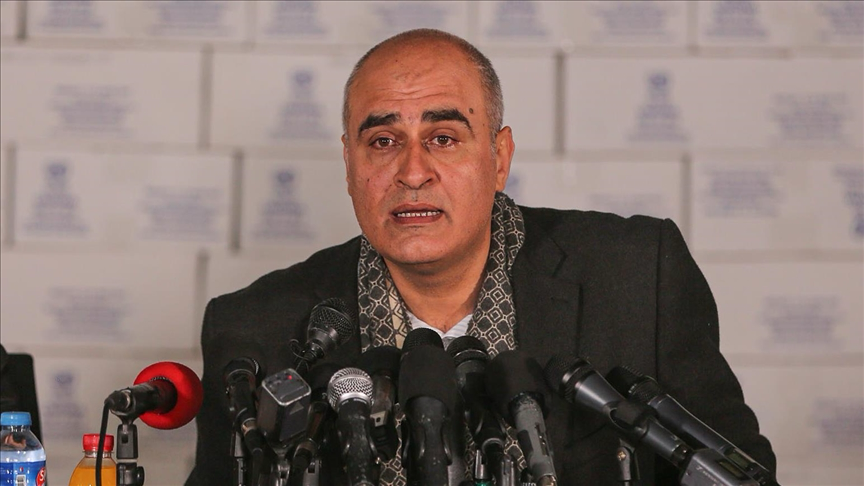
Israeli media outlets reported in October 2025 that one name floated for leading the committee is Amjad Shawa, Director General of the Palestinian NGO Network. Some reports claimed Hamas selected him, but he denied any such communication, and the movement has not officially announced any position on the matter.
Some reports mention the possible inclusion of UN and EU representatives on an advisory council. Egypt and Qatar are lobbying for roles in appointing some committee members to ensure Hamas and other factions are not entirely alienated.
However, Washington has insisted that the committee will include no members from either Hamas or the Palestinian Authority, with communications to those entities to be managed through separate mechanisms.
Key Stakeholder Positions
-
Palestinian Authority: It has rejected the idea of a foreign-appointed interim committee, calling it a blow to national legitimacy. It has reiterated its readiness to return to Gaza through a national unity government.
-
Palestinian Factions: They view the committee as an effort to institutionalize U.S.–Israeli guardianship over Gaza and insist that the only viable path forward is a comprehensive Palestinian dialogue leading to a unified national leadership.
-
Regional Actors (Egypt, Qatar, Turkey, Jordan, Saudi Arabia): Positions vary some support forming the committee provided they have input in selecting members, see it as a step toward reinstating the Palestinian Authority, and consider it part of a broader solution. Others oppose the imposition of an externally engineered structure and call for an elected Palestinian government.
-
United Nations: It has pledged to provide international legitimacy to the committee and contribute technical and financial support through its agencies.
Is the Committee a Substitute for Hamas and the PA, or a Transitional Phase?
Initial leaks from Washington suggest the committee is intended as a transitional body to fill the administrative vacuum in Gaza. However, Israel sees it as a potential long-term alternative to governing the Strip if it proves capable of managing services.
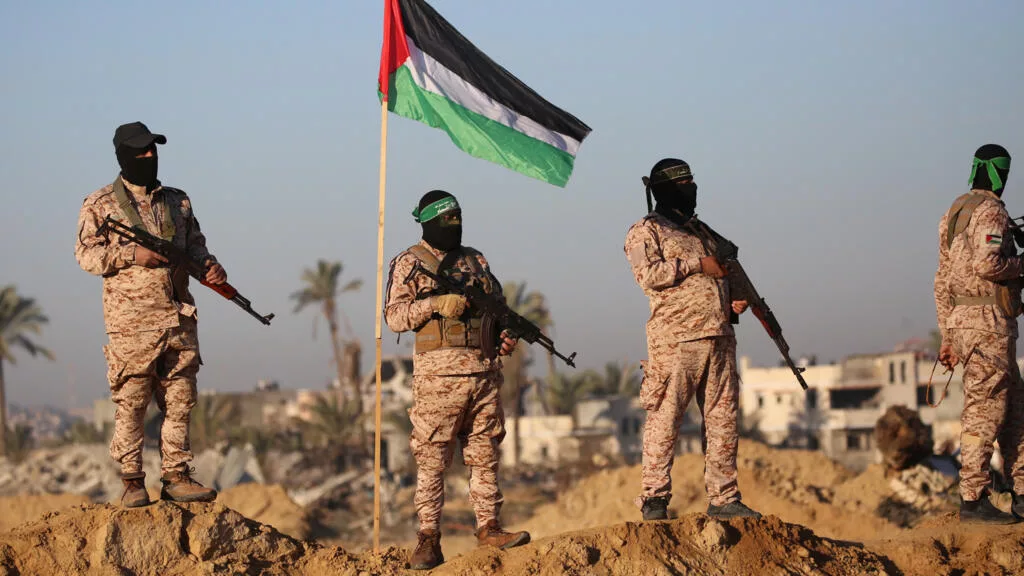
Arab states have shown relative openness to the idea, partly because they acknowledge the current weakness of the Palestinian Authority in Gaza and share Washington’s interest in sidelining Hamas.
The committee is thus being proposed as a mechanism to remove Hamas from the scene and entrench Israeli security control over Gaza.
Israel has indicated it does not oppose a civilian committee handling daily affairs—so long as it excludes Hamas and PA figures and cooperates with Israeli authorities in controlling borders and preventing weapons smuggling.
According to Haaretz, Israeli officials believe the interim committee could prevent Hamas from reclaiming power in Gaza while relieving Israel of the burden of directly managing the lives of over two million Palestinians.
Legal and Political Framework
Legally, the Peace Council and the Palestinian committee derive their mandate from UN Security Council Resolution 2803, which grants the council “international legal personality as a transitional body,” responsible for outlining the reconstruction framework and overseeing funding. The resolution authorizes cooperating states to form a stabilization force and specialized civil bodies to manage crossings and services.
However, the resolution notably omits any clear provisions for Palestinian self-determination or a binding timeline for statehood, merely calling for “creating conditions” for such outcomes following reforms to the Palestinian Authority.
Politically, the United States retains a central role. It authored the plan, passed the resolution in the Security Council, appoints the Peace Council’s leadership, and leads the formation of the international stabilization force and the reconstruction financing effort.
The UN’s role appears more technical and legal, offering legitimacy and operational support through its agencies an arrangement that some international actors have criticized as a new form of U.S.-led multilateral trusteeship.
Operational Challenges
-
Security and Arms Control: The civilian committee will lack military capacity and will have to rely either on an international monitoring force or continued Israeli military presence both of which could undermine Palestinian acceptance of the new structure and make it appear as a front for occupation.
-
Crossings Management: This remains a major challenge given Israel’s stringent security conditions and vetting of travelers. The committee will need to coordinate closely with both Israel and Egypt to ensure the steady flow of goods.
-
Basic Services: The scale of infrastructure destruction poses an immense obstacle. Without electricity, water, and sewage systems, the committee will struggle to fulfill its promises amid ongoing Israeli obstruction of reconstruction efforts.
Possible Scenarios
-
Success as a Transitional Body: In this scenario, U.S., Arab, and Palestinian stakeholders agree on committee members. The body operates effectively for a limited time and gradually transfers authority to a Palestinian government. This would require Israeli concessions and strong international support.
-
Consolidation of U.S.–Israeli Control: The committee functions as a nominal administrator while Israel maintains control over territory and crossings. Hamas and other factions continue to reject the arrangement, clashes persist, and Gaza falls under de facto international trusteeship, prolonging civilian suffering.
-
Committee Fails to Materialize: Political resistance from factions and the PA, combined with internal dissent or refusal by Palestinian figures to join, leads to Washington’s inability to form the committee. Gaza remains in a state of administrative vacuum, with deteriorating humanitarian and security conditions.
-
An Arab Alternative: Arab states, led by Egypt and Qatar, form their own Gaza administration committee with backing from the Arab League. This could serve as a middle ground between the U.S.-backed body and the Palestinian Authority and might receive broader support from Palestinian factions, though it would likely face Israeli opposition.


