










For decades, Arab peoples have shown significant solidarity with the Palestinian cause even before the Nakba, which marked the height of Zionist crimes and the loss of most Palestinian land. This solidarity was never limited to diplomatic chambers or protest chants in the streets, although both have played vital roles in pressuring the international community.
Instead, it often went further taking up arms alongside Palestinian resistance fighters against Israeli occupation and its colonial ambitions, which received political and military backing from much of the Western world, particularly the United States.
Today, amid the ongoing genocide carried out by the Israeli army in the Gaza Strip, Arab populations continue to hold Palestine in high regard. Yet their governments have severely restricted all forms of solidarity whether in word or deed. In many places, expressing support for Palestine now risks arrest and criminal charges, even as atrocities unfold in Gaza.
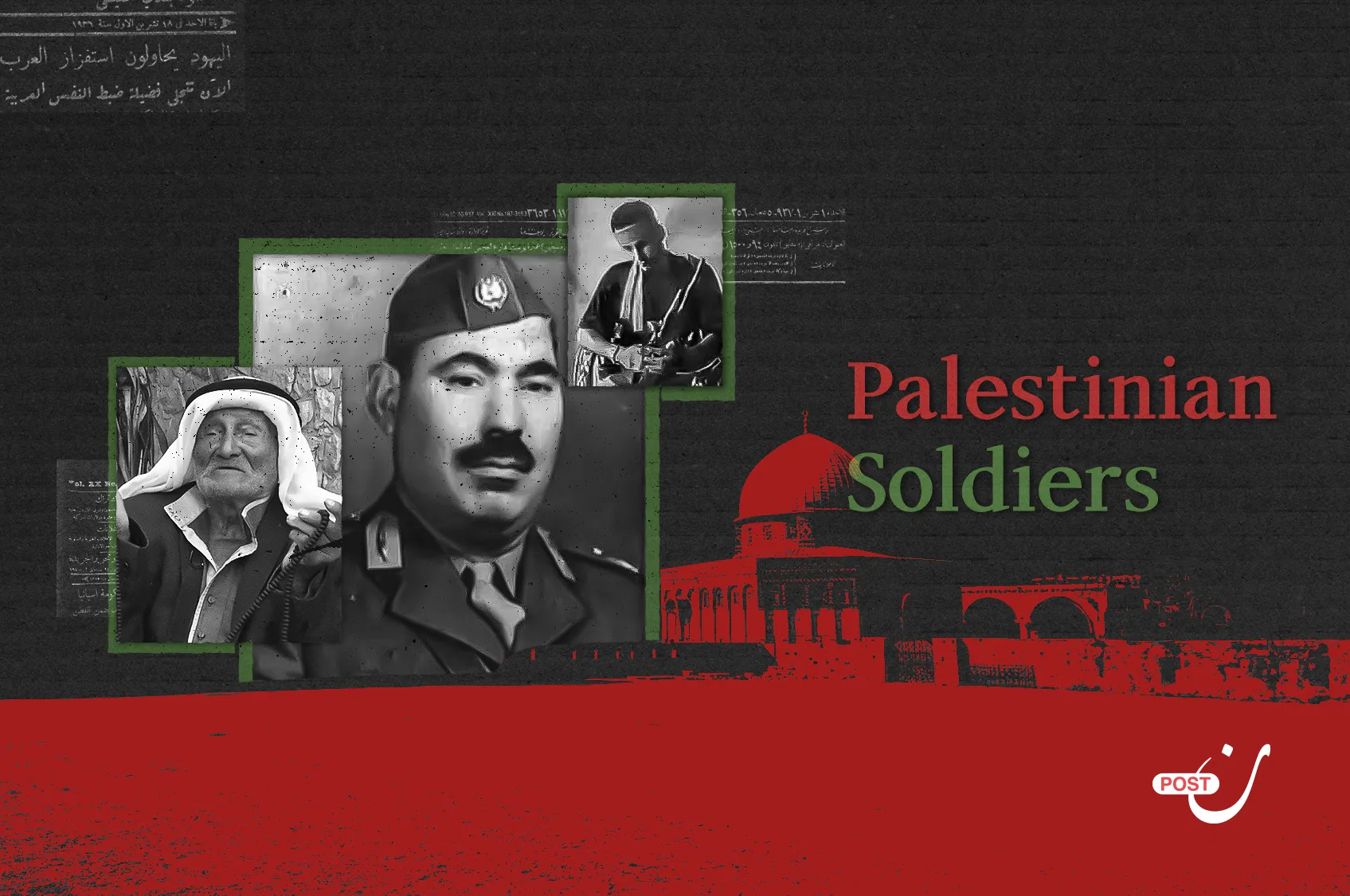
Essam Al-Jouhari is among the most notable figures who remind us of a time when Arabs fought side by side with Palestinian resistance. He is one of the key individuals we highlight in the “Soldiers of Palestine” file an initiative to honor Arab fedayeen who journeyed to Palestine, driven by the justice of the cause and defiance of their rulers’ complacency.
A Prisoner of the Mubarak Regime
Essam Muhanna Al-Jouhari, known by his nom de guerre “Abu Dujana,” took inspiration from the Prophet Muhammad’s companion, Simak ibn Kharasha (d. 12 AH), who fought in the battles of Badr, Uhud, Khaybar, and Hunayn. He later died in the Battle of Yamama during the Wars of Apostasy.
The Prophet had entrusted him with his sword, and Abu Dujana was known for wearing a distinctive red bandana in battle.
Deeply influenced by the legacy of this early Muslim warrior, Al-Jouhari modeled himself after him. He was born and raised in the mosques of Egypt’s Qalyubiyya Governorate, where he grew close to the Islamic movement. At the time, many in Egypt believed Arab nationalism was a root cause of both the Nakba and the subsequent defeat in 1967.
The signing of the Egypt-Israel peace treaty was a turning point in Al-Jouhari’s political consciousness, as it was for many others disillusioned by normalization. In response, President Anwar Sadat and later Hosni Mubarak launched a broad crackdown on youth, especially those affiliated with the growing Islamic movements that were gaining traction among the public.
Thousands of Islamic-leaning youth were arrested and imprisoned. The repression intensified following the assassination of Egyptian Prime Minister Rifaat al-Mahgoub on May 23, 1990. Among those swept up in the crackdown was Essam Al-Jouhari.
He spent several months in prison, where he was interrogated and tortured, fueling his resentment toward a regime he saw as betraying Palestine and violently suppressing dissent.
The Road to Jerusalem
While in prison, Al-Jouhari heard of the massacre that took place on October 8, 1990, when Israeli forces killed 26 Palestinian worshippers and wounded hundreds more at Al-Aqsa Mosque, as settlers attempted to storm the holy site and lay the foundation for a Jewish temple.
His anger at both the Egyptian regime and Israel’s ongoing crimes grew, especially after the 1987 “Children of the Stones” Intifada. Determined to take action, he dreamed of reaching the Prophet’s place of ascension and the land of prophets.
After his release, Al-Jouhari was denied the right to travel or leave Egypt. Undeterred, he chose a perilous path risking his life for a cause he had believed in since childhood. He crossed the Sinai Desert on foot, evading the eyes of Mubarak’s intelligence services. He carried only a small supply bag and a fake passport under the name “Luay.”
He eventually made it to Gaza, seeking martyrdom. He first lived in Sheikh Radwan neighborhood—home to many resistance fighters before moving to Khan Younis. There, he posed as a former Egyptian policeman who had moved to Gaza after quitting his job.
During this time, he began seeking contact with Hamas and its military wing, the Izz ad-Din al-Qassam Brigades, which had emerged during the First Intifada. He was particularly inspired by the movement’s founder, Sheikh Ahmed Yassin.
After much effort, Al-Jouhari finally met his goal: he was introduced to Qassam commander Mohammed Deif one of Israel’s most wanted men who was then based in Khan Younis alongside other top leaders. That meeting only deepened his belief in the justice of the Palestinian cause and his desire for martyrdom.
At the time, the Qassam Brigades were actively organizing fedayeen operations. Al-Jouhari was sent to a training camp to learn how to handle weapons in preparation for a future attack.
The Nahalat Shivah Operation
At dawn on October 9, 1994, Essam Al-Jouhari and his comrade Hassan Abbas Al-Ghazzawi (Abu Musab) set off from Gaza toward Jerusalem on a mission with no return. Their plan was to inflict maximum damage on Israeli settlers.
Armed with Kalashnikov rifles and hand grenades, the two resistance fighters reached the settlement of Nahalat Shivah, near the historic Mamilla Muslim Cemetery just 500 meters from Jaffa Gate and about a kilometer from Al-Aqsa Mosque. Their target was a café frequented by Israeli settlers in the Old City.
Abu Dujana opened fire on the settlers in the café with his Kalashnikov, then hurled grenades, spreading panic and chaos. He engaged in a gun battle with a special unit of Israeli soldiers until both he and his comrade ran out of ammunition.
Al-Jouhari was killed in the firefight, but not before he managed to kill five Shin Bet agents and a female Israeli soldier, and wound 16 others from Israeli forces.
Essam Al-Jouhari was not the only Arab fighter to join the ranks of the Palestinian resistance. Others came from Tunisia, Yemen, Egypt, Jordan, Morocco, Saudi Arabia, and Kuwait, carrying out fedayeen operations against Israeli targets.
Among the most prominent were Algerian Mohamed Abu Wadia, Saudi Riyadh Mohamed Al-Khuzaym, Sudanese Mohamed Saleh Omar, Moroccan Al-Hussein Al-Tanjawi, Iraqi Omar Ali Al-Birqadari, and Abu Badr Al-Yemeni. Their stories and those of many others will be explored further in the “Soldiers of Palestine” series.