






In the city of Sweida, where Syrian security forces have clashed with armed groups labeled as “outlaws” by the government in a bloody confrontation, a familiar colonial rhetoric has resurfaced. The Israeli occupation has revived the language of “protection” in place of occupation, exploiting a moment of chaos to expand its influence under the pretense of defending “minorities.”
What is striking, however, is how shockingly this rhetoric mirrored recent statements by Sheikh Hikmat al-Hijri, one of the most prominent religious authorities among the Druze community in Syria.
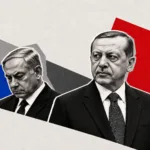
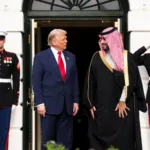
Al-Hijri has made a series of public attacks on the Syrian government, issuing appeals for international intervention to foreign leaders, including Donald Trump and Benjamin Netanyahu—himself accused of war crimes. This political escalation raises many questions about al-Hijri’s position and historical allegiances.
This report explores the spiritual and political trajectory of Sheikh Hikmat al-Hijri, from his assumption of the Druze spiritual leadership in 2012 to his evolving role as a political actor amid Syria’s post-Assad landscape.
Origins and Social Background
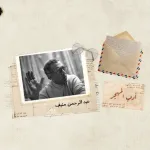
Hikmat Salman al-Hijri was born on June 9, 1965, in Venezuela, where his father was working at the time. Soon after, the family returned to Syria, where he completed his primary and secondary education. He was raised in a prominent religious family in Sweida, long associated with the spiritual leadership of the Druze. His father, Sheikh Salman al-Hijri, was one of the community’s leading clerics.
In 1985, he enrolled in the Faculty of Law at the University of Damascus, graduating in 1990. After returning to his hometown, he eventually settled in the town of Qanawat in 1998. His legal background and familial status positioned him to take on advanced communal roles, leveraging his wide network across Jabal al-Arab.
Al-Hijri assumed the role of spiritual leader of Syria’s Druze in 2012, following the death of his brother Sheikh Ahmad al-Hijri in a car crash that same year—an incident some allege was orchestrated by the Assad regime due to Ahmad’s stance on Druze defections during the 2011 uprising. Ahmad had succeeded their father in 1989, marking three successive generations of the Hijri family in the role.
His succession faced unprecedented challenges, mainly due to his swift and vocal support for Bashar al-Assad. He issued several statements backing the regime amid rising anti-government sentiment in Sweida, which severely damaged his popularity—even tarnishing the broader reputation of the Hijri family as historic spiritual authorities.
This triggered deep divisions within the Druze community, raising contentious debates about religious and political leadership in Jabal al-Arab. The spiritual leadership split into two camps: one led by Sheikh Hikmat al-Hijri in Qanawat, and another led by Sheikh Yusuf Jarbou’ and Sheikh Hammoud al-Hanawi based at the Ain al-Zaman shrine—the community’s most revered religious site.
Relationship with Assad and Position on the Revolution
Since becoming the Druze spiritual leader in 2012, al-Hijri maintained a clear pro-Assad stance. In his first public appearance after his brother’s death, he delivered a speech during Assad’s condolence visit to Qanawat, declaring: “You are hope itself, Bashar the hope, Bashar of the homeland, Bashar of Arabism and the Arabs. May God prolong your life.” It was a striking expression of loyalty.
According to a 2020 report by the Jusoor Center, al-Hijri repeatedly aligned himself with the Syrian regime. He hosted delegations from Iraq’s Popular Mobilization Forces and, in March 2015, issued a statement calling for the arming of Druze youth. He also coordinated directly with the presidential palace on administrative matters, including reinstating dismissed public employees.
In November 2018, following a kidnapping operation by ISIS, he urged Druze youth to fulfill mandatory military service. He also oversaw the formation of an armed faction in coordination with Military Intelligence—laying the groundwork for what would become his militia.
Despite mounting protests in Sweida and fatal crackdowns by regime forces, al-Hijri remained loyal to Assad. Activists accused him of being a full-fledged regime ally, especially after the toppling of a Hafez al-Assad statue in central Sweida—arguably the most symbolic act of defiance in the city’s revolutionary history.
Al-Hijri’s support for the regime extended beyond rhetoric. In 2015, he joined other clerics in issuing a decree from the Druze leadership expelling Sheikh Wahid al-Balous—founder of the anti-Assad “Men of Dignity” movement—and other dissenting clerics, accusing them of deviating from religious principles.
Sheikh al-Balous, widely popular and a key anti-regime figure, was assassinated in a car bombing in Sweida, followed by a second explosion targeting the hospital treating him. In 2021, his son Laith al-Balous accused Iran and Hezbollah of orchestrating the killing.
Less than a year after the incident, al-Hijri defended General Issam Zahreddine—a Republican Guard officer from Sweida accused of severe human rights violations—in a media interview, describing him as “devoted to serving his nation and army.”
A pivotal moment came in early 2021 when al-Hijri was publicly insulted by a Military Intelligence officer, sparking outrage across Sweida. Damascus later issued a formal apology.
This event marked a shift in al-Hijri’s stance. He began voicing increasing criticism of regime policies and, by 2023, expressed open support for protest demands calling for radical political change and regime withdrawal from the province.
His Role in the Current Political Crisis
After Bashar al-Assad fled in late 2024, al-Hijri found himself sidelined in the emerging political order. The interim government led by Ahmad al-Shara’ did not recognize him as the legitimate representative of Syria’s Druze, curbing his influence and excluding him from official delegations visiting Damascus and meeting the new president.
Instead, official recognition went to national figures such as Suleiman Abdel Baqi, commander of the “Free Druze Gathering,” and Laith al-Balous, son of Sheikh Wahid and leader of Muthafaat al-Karama. Both were featured in meetings with the new government, signaling an effort to dismantle the Hijri family’s long-standing dominance.
In response, al-Hijri escalated his rhetoric. He rejected the outcomes of the National Dialogue Conference and issued repeated criticisms of government policies. Eventually, he called for international intervention to guarantee a “political transition.”
On February 17, 2025, he issued a statement framing the relationship with the new government as a “partnership”—a belated attempt to reassert his relevance.
Then, on March 6, Sweida witnessed protests in which demonstrators raised al-Hijri’s portrait and Druze flags, chanting against the Shara’ administration. The protests included groups like the Syrian Brigade Party, the Sweida Military Council, and secular and federalist movements calling for autonomy or secession.
Amid this turmoil, on March 15, al-Hijri declared that “no reconciliation or agreement” was possible with the current government, labeling it “extremist and wanted for justice,” and warning that the country had reached a “do or die” moment.
His public appeals for foreign intervention—and, most controversially, his outreach to foreign leaders including Israeli Prime Minister Benjamin Netanyahu—marked the most dangerous turn in his trajectory. Under the pretext of “protecting the Druze,” al-Hijri opened the door to direct Israeli involvement, which soon included airstrikes on Damascus. The resulting backlash among Syrians—Druze included—was fierce.
In this transformation, al-Hijri has moved beyond the role of a local religious figure to become entangled in foreign agendas that threaten national unity. His shift from Assad loyalist to opponent of the new government appears less a move toward independence than a strategic alignment with regional interventions now leveraging him as an internal front under the guise of sectarian representation—while ultimately targeting Syria’s sovereignty.


