









هذا التقرير متاح أيضًا بـ العربية
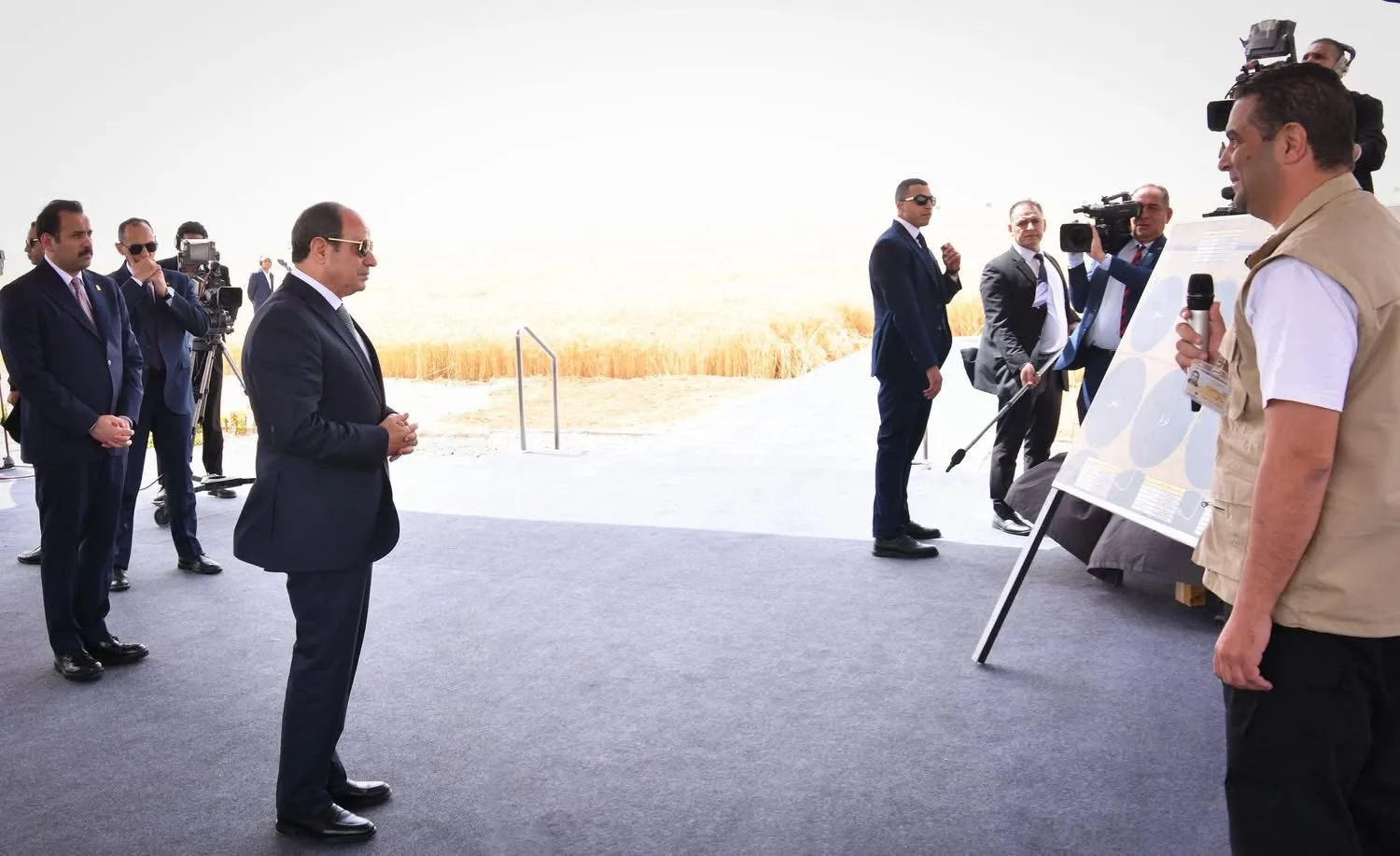
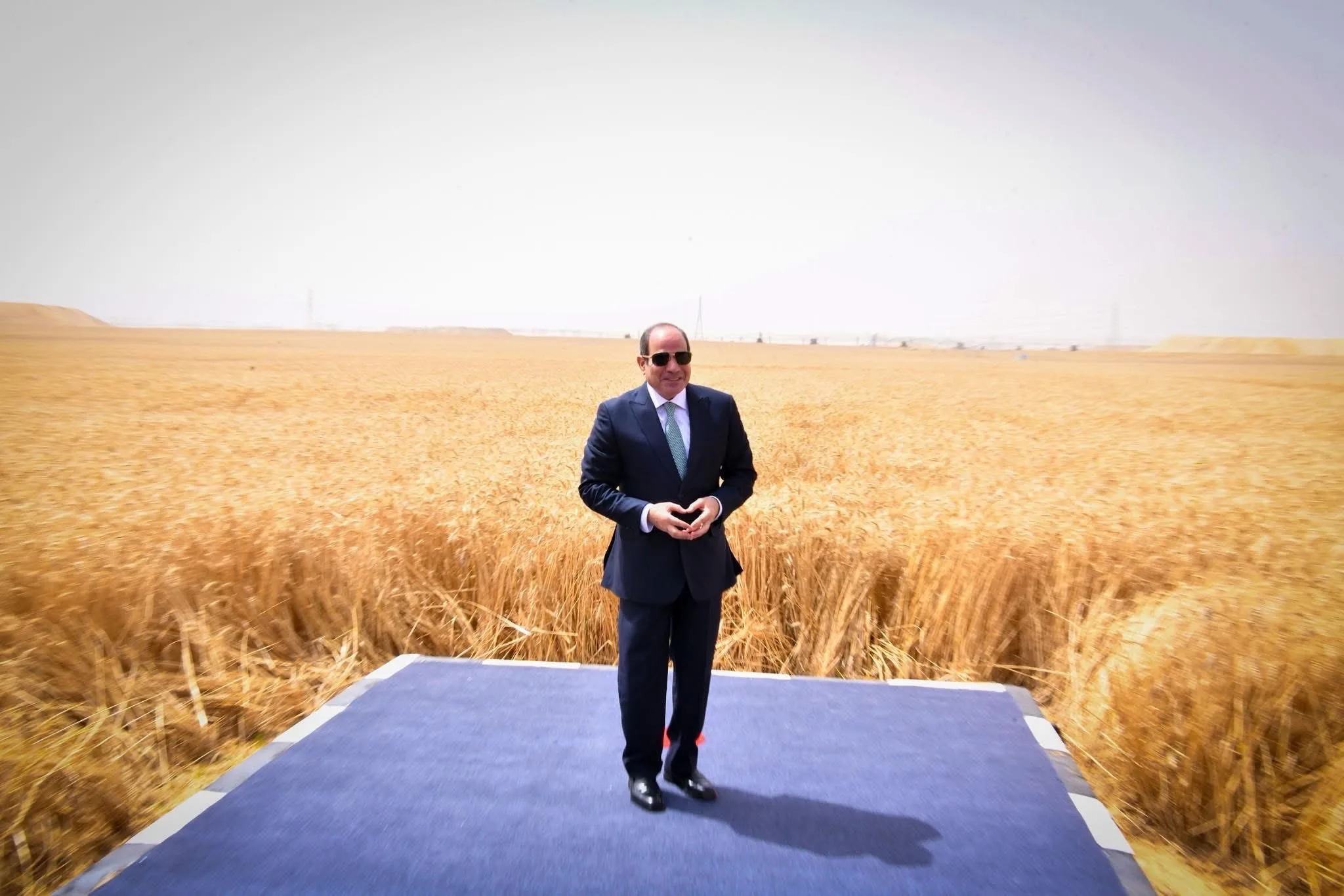
Egyptian media lavished exceptional praise on the launch of the “New Delta” project on the Sheikh Zayed Axis in Giza Governorate, inaugurated by President Abdel Fattah el-Sisi on May 17, with commentators describing it as a “development epic” and others calling it one of the largest strategic projects in modern Egyptian history.
The project, whose total cost is estimated at around EGP 800 billion ($15.05 billion), is part of the state’s vision for agricultural expansion and strengthening food security. It aims to reclaim about 2.3 million feddans west of the Delta (nearly one-fifth of Egypt’s total agricultural land), with the participation of dozens of companies working in agriculture, infrastructure, and services linked to the project.
Despite the promises in official plans of a qualitative leap in agriculture and development, the project has also sparked debate and reservations among various segments of Egyptians, who question the real feasibility of such projects that burden the national economy at a time when it is already weighed down by debt and borrowing. So what are Egyptians afraid of?
“Mostaqbal Misr”.. The Opening Verse
Before delving into the economic gains the state promotes for the “New Delta” project, against the backdrop of doubts and controversy surrounding it, the name of the entity implementing the project stands out as one of the main sources of concern for some Egyptians, especially since management of the project was assigned to the “Mostaqbal Misr” agency affiliated with the Air Force, raising questions from the outset about the expanding military role in managing the country’s economic and development files.
The “Mostaqbal Misr” agency officially emerged in 2022 under a presidential decree as an entity affiliated with the Air Force and run under the supervision of its officers, led by Colonel Pilot Bahaa El-Ghannam, one of Sisi’s close associates. He had drawn attention as early as 2017 when he presented the proposal for the “Mostaqbal Misr for Sustainable Agriculture” project before the president, in a scene that raised questions at the time about the absence of ministers and civilian officials responsible for agriculture, irrigation, and supply.
Despite the agency’s military character, it has been entrusted with managing a number of major agricultural and development projects, at a time when the Ministry of Agriculture appeared relatively distant from direct oversight of these projects. This prompted critics to warn of what they described as the expanding phenomenon of the “militarization of the economy,” extending into strategic and vital sectors such as food security and agricultural production.
 Within just a few years, the agency’s activity expanded remarkably in the Egyptian market through massive land reclamation projects stretching across millions of feddans in multiple areas of the Western and Eastern deserts, from the “New Delta” zone near Dabaa, through Minya, Beni Suef, Aswan, the oases, and El Oweinat, all the way to parts of North and Central Sinai.
The “Mostaqbal Misr” agency was not the only military entity strongly present in economic and agricultural activity. It was preceded by the National Service Projects Organization of the Armed Forces, which also expanded in recent years into agriculture, greenhouses, fish farming, and food industries, as part of the military institution’s growing presence in the arteries of the Egyptian economy.
An Egyptian Development Leap
Supporters of the project see it as a strategic step capable of bringing about broad economic and developmental transformation in Egypt by reducing the import gap in a number of key crops, foremost among them wheat, corn, and oilseeds, thereby easing pressure on foreign currency and enhancing the state’s ability to deal with fluctuations in global markets and supply chain crises.
Backers also point out that it is not limited to the agricultural dimension alone, but extends to creating hundreds of thousands of direct and indirect job opportunities, establishing new urban and development communities, and geographically redistributing development beyond the narrow Nile Valley, helping reduce population congestion and open new horizons for economic and social mobility.
While acknowledging the difficulty of achieving full self-sufficiency in light of Egypt’s water and geographic challenges, its proponents stress that the realistic goal is to achieve “relative self-sufficiency” by reducing the fragility of the national economy and strengthening the state’s bargaining power in global food and energy markets.
In the same context, some view the project as a strategic card that gives Egypt greater flexibility in confronting rapidly shifting geopolitical changes, especially after food security became one of the elements of power and national sovereignty in the contemporary world. Countries that rely almost entirely on external sources to secure their food needs become more vulnerable to political and economic pressure in times of crisis.
This argument is based on the international shifts the world has witnessed in recent years, as food security is no longer a secondary economic or agricultural issue, but has become an essential part of the concept of national security. This has been underscored by successive crises beginning with the coronavirus pandemic, passing through the Russia-Ukraine war, and reaching the escalating regional and international tensions that have redrawn states’ priorities in food, energy, and strategic stability.
Challenges in Abundance
Despite the major economic ambitions put forward by the “New Delta” project, and the way it is promoted as one of the strategic solutions for strengthening food security and reducing the import bill, the project also faces a package of challenges and criticisms that raise questions about its economic feasibility and its ability to achieve its declared goals over the long term.
Water tops the list of these challenges, as it is the most sensitive factor in any agricultural expansion in Egypt, which already suffers from mounting water pressures due to the limited share of Nile water, the repercussions related to the Grand Ethiopian Renaissance Dam, and rapid population growth that has reduced per capita water availability to levels that place the country within the range of “water poverty” (less than 500 cubic meters per citizen annually).
In response to this reality, the state has in recent years adopted policies to rationalize water consumption, including reducing the cultivation of some water-intensive crops and expanding the reuse and treatment of agricultural and sanitary drainage water. Critics argue that such solutions may not be sufficient to ensure the sustainability of a project of this scale, especially given concerns about intensive reliance on groundwater and the possibility of its depletion over the long term.
The project also raises economic questions related to the massive investment cost, which exceeds $15 billion, at a time when Egypt’s financial conditions are suffering from high levels of public debt and growing financing burdens and internal and external deficits, in addition to questions about the project’s ability to generate an economic return that covers its cost, and whether development priorities should instead focus on improving the efficiency of existing agricultural land rather than costly expansion into desert farming.
The project’s desert nature poses an additional challenge, as agriculture in desert environments differs from its counterpart in traditional Delta lands, whether in terms of infrastructure costs or operational needs, modern technologies, fertilizers, irrigation networks, and energy, in addition to the need to establish integrated residential and service communities capable of attracting labor, investment, and food industries linked to agricultural activity.
In light of these factors, observers believe the project’s success will depend not only on land reclamation, but on the state’s ability to strike a balance between vast development ambitions, economic pressures, and limited natural resources, in a way that ensures the project’s sustainability and economic viability over the long term.
Legitimate Concerns.. The Precedents Are Not Encouraging
Amid the complex challenges surrounding the “New Delta” project, concerns are mounting among segments of Egyptians over the project’s ability to achieve the ambitious goals announced for it, especially in light of previous experiences with major national projects that drained vast financial resources without delivering — in the view of this camp — the promised results to a sufficient degree, contributing to a growing public debt burden and an unprecedented reliance on borrowing.
Many recall the land reclamation project of “the 1.5 Million Feddans” project, announced in 2017 amid a broad promotional campaign as a qualitative leap in agriculture and food security, before talk of it gradually receded as logistical and technical challenges emerged, along with problems related to infrastructure and water, leading a number of investors to withdraw and some of its targets to falter.
Reference is also made to the Toshka project, which the state revived and redeveloped again in 2022, although it was first launched in the 1990s before stalling for years due to technical, water, and economic challenges. This reinforces for some the skepticism about the ability of major desert agricultural projects to generate quick and sustainable returns.
The comparisons do not stop at agricultural projects alone, but extend to a number of mega-projects that cost the state billions of dollars, such as the New Administrative Capital, and before it the New Suez Canal, which at the time cost EGP 20 billion, equivalent to approximately $8.2 to $8.5 billion at the exchange rate then..
The ambiguity surrounding some of the technical and economic details of the “New Delta” project has further intensified questions within academic and economic circles. In this context, economist and former dean of the Faculty of Economics and Political Science Alia El Mahdi raised a set of questions related to the nature of the targeted crops, expected productivity per feddan, the number of agricultural cycles, the potential savings in the import bill, the anticipated export return, as well as the number of jobs the project will provide and the readiness of residential and service infrastructure — schools, hospitals, and utilities — to accommodate new communities of this size.
A segment of citizens expresses caution toward the official rhetoric accompanying major national projects, especially with repeated experiences that, in their view, saw rises in the prices of services or goods following the announcement of major economic achievements, such as the discovery of the Zohr gas field, which was followed by large increases in gas prices, or the expansion of fish farming projects accompanied by a dramatic surge in fish prices, and power stations that resulted in prices increasing many times over.
Against this backdrop, fears are centered on the possibility that such mega-projects may become more of a cosmetic cover for polishing the regime’s political image than direct economic solutions to structural crises, especially amid mounting criticism linked to living conditions that have pushed millions into the mire of poverty and deprivation, and that their course may shift from a step toward salvaging what can still be saved into mere palliatives and painkillers for the street before it reaches the point of explosion.