










هذا التقرير متاح أيضًا بـ العربية
The Iran war exposed just how fragile Iraq’s oil export map is. Most of the crude leaves from the Basra fields and their southern ports, then crosses the Gulf toward the Strait of Hormuz.
As that route became choked, Baghdad found itself facing a marketing crisis as storage tanks began to fill, tankers hesitated, and marine insurance costs rose, turning Iraq’s ability to get its oil to market into the most acute pressure point in its economy.
Before the crisis, exports from southern Iraq were running at around 3.3 million to 3.4 million barrels per day. But in April, only about 10 million barrels passed through Hormuz over the entire month, or roughly 330,000 barrels per day. At the peak of the bottleneck, output in the south fell to about 800,000 barrels per day after storage tanks filled up, tankers hesitated, and marine insurance costs climbed.
That is why Baghdad has begun treating alternatives as an urgent necessity. On June 3, 2026, approved the Iraqi government a plan to raise oil exports by pipeline from 220,000 barrels per day to 770,000 within two and a half months, while increasing trucked exports to 420,000 barrels per day in three phases.
But even if both targets are fully achieved, the theoretical total would not exceed 1.19 million barrels per day, still far below the south’s usual capacity. That is why the debate in Iraq has shifted from improving southern ports to searching for alternative or supporting outlet networks, which we track as follows:
1- Kirkuk-Ceyhan via the Kurdistan Region
This route depends primarily on northern oil that is, Kirkuk crude and volumes from the Kurdistan Region.
The route begins in Kirkuk and the region’s fields, then heads toward Fishkhabour on the Iraqi-Turkish border before entering the Iraq-Türkiye pipeline and continuing to the Mediterranean port of Ceyhan. That makes it the closest practical alternative, because it is an existing route and does not require being built entirely from scratch.
The Kirkuk-Ceyhan route was halted in March 2023 after an international arbitration ruling in Baghdad’s favor over Türkiye allowing the Kurdistan Region to export oil through Ceyhan without the federal government’s approval.
Before the shutdown, northern flows were close to 450,000 barrels per day, including about 370,000 from the region and 75,000 of federal crude.
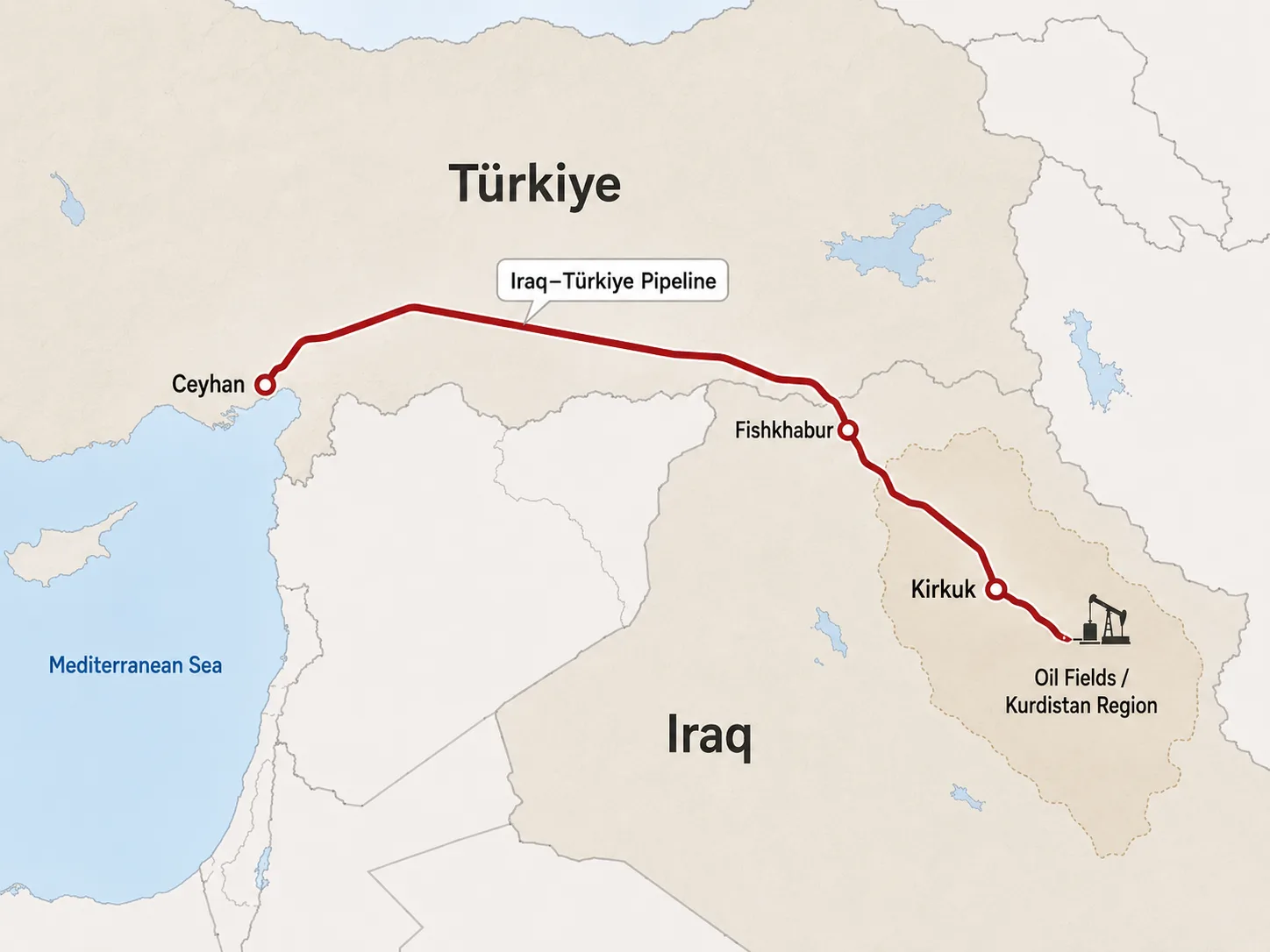
After the Hormuz crisis, the route returned to the forefront through an emergency understanding between Baghdad and Erbil. The federal government asked the Kurdistan Region to route Kirkuk crude through the region’s pipeline network to Ceyhan in order to ease pressure on southern exports.
After the two sides reached an agreement, pumping resumed at about 170,000 barrels per day, with an initial target of 250,000, while the Iraqi oil minister later spoke of raising volumes through Ceyhan to 500,000 barrels per day.
But the resumption did not resolve all of the route’s complications. Türkiye remains an indispensable party as the transit state and the owner of the Ceyhan terminal, while transit fees, previous arbitration cases, and the broader framework of the oil relationship between Baghdad and Ankara remain part of negotiations that have yet to be definitively settled.
Ceyhan’s advantage is that it sends oil to the Mediterranean, far from the Gulf and Hormuz, and can be expanded faster than any new project. It also gives Baghdad a relatively ready-made outlet to ease pressure on the south, especially if understandings with Erbil and Ankara stabilize.
But in its current form, this route does not directly carry Basra oil. What Baghdad can do now is an internal balancing act: exporting Kirkuk crude north through Ceyhan, then compensating northern refineries with volumes of southern crude instead of the quantities that were exported. In this way, pressure on the southern system is eased, but Basra crude itself has still not reached Ceyhan.
The biggest knot remains political and financial more than technical. The route runs through a complex web of interests among Baghdad, Erbil, and Ankara. The dispute is not only about operating the pipeline, but also about who manages oil sales and loading at Ceyhan, where revenues go, and how transit fees and the dues of companies operating in the region are paid.
This is also where the importance of SOMO appears. Baghdad insists that exports pass through it as the official body responsible for marketing Iraqi oil.
The route is also approaching a sensitive deadline, as Türkiye announced that it will terminate the Iraq-Türkiye crude oil pipeline agreement, along with all related protocols and memorandums, effective July 27, 2026.
2- The direct federal Kirkuk-Ceyhan line
This route also ends in Ceyhan, but reaches it by a different path through a direct federal line from Kirkuk and Nineveh toward the Iraq-Türkiye pipeline, without relying on the Kurdistan Region’s network as in the previous route.
The importance of this route lies in giving Baghdad greater control over Kirkuk crude. If reactivated, the federal government would be able to pump oil north to Türkiye with greater flexibility and reduce its dependence on understandings with Erbil. In that sense, it is as much a political route as an oil one.
The line has effectively been out of service since 2014 after attacks by the Islamic State group, and its sections and stations were sabotaged or disabled. In 2024 and 2026, Baghdad again raised the issue of rehabilitating it, including inspecting a section about 100 kilometers long and restarting pumping and storage stations.
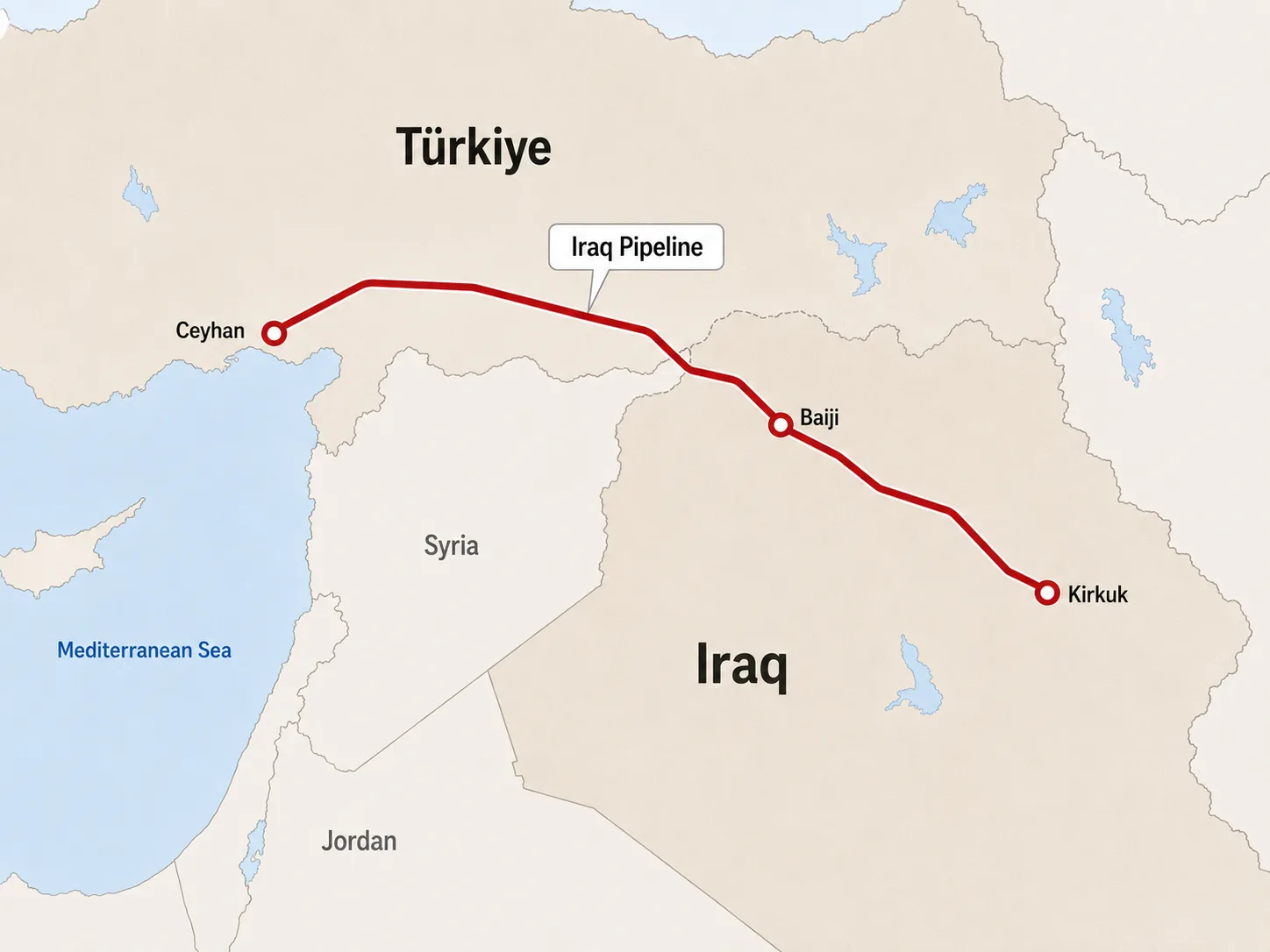
The figures being discussed for initial operation range between 200,000 and 250,000 barrels per day, with statements suggesting it could reach 350,000, and perhaps 450,000 if additional volumes are added later.
The advantage of this route is that it reduces Baghdad’s dependence on the region, but its drawback is that it still requires time, rehabilitation, and protection, and in the end it does not eliminate the need for Türkiye.
Like the previous route, it also does not open a direct outlet for Basra oil, but rather strengthens northern oil exports and eases overall pressure on the export system.
3- The Syrian route: Baniyas and Tartus
This route is the most sensitive among the new alternatives. It begins in western Iraq through Anbar and the border crossings with Syria, then reaches the Syrian coast, especially Baniyas and Tartus on the Mediterranean. But three levels within this route must be distinguished.
The first level already exists in part and consists of Iraqi trucks transporting fuel oil across Syria to Baniyas.
Under SOMO contracts, the supply of about 650,000 metric tons of fuel oil per month was arranged between April and June, to be transported overland through Syria.
The Rabia crossing in northwestern Iraq, in Nineveh province opposite Syria’s al-Yarubiyah, was reopened to ease pressure on the al-Waleed crossing in western Anbar, opposite al-Tanf on the Syrian side, after fuel-oil trucks bound for Baniyas piled up.
This is a genuine emergency route, but it is tied more to fuel oil and heavy products than to conventional export crude.
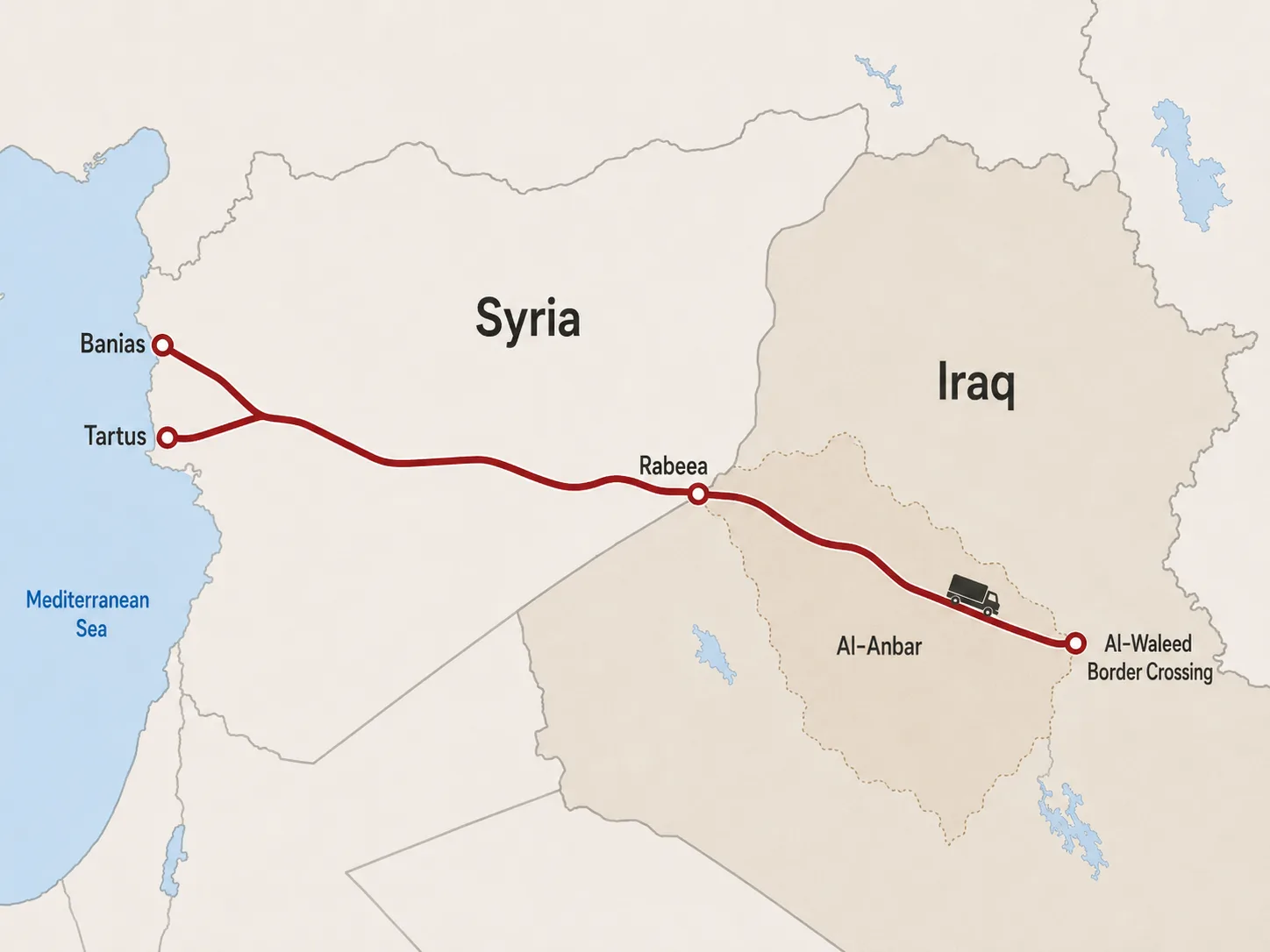
The second level is the Iraqi-Syrian agreement in June 2026 on transporting, storing, and handling Basra Light, Medium, and Heavy crude through the ports of Baniyas and Tartus, along with opening a representative office for Iraq’s Oil Ministry to manage operations. Here, the discussion moves from fuel-oil trucks to an official framework that includes Basra crude itself.
The third level is the historic Kirkuk-Baniyas line, the old pipeline route that resurfaces whenever talk returns to an Iraqi outlet on the Syrian coast.
The line was built in the 1950s, stretching about 800 kilometers with a historical capacity of around 300,000 barrels per day, but it was repeatedly halted for political reasons and then effectively fell out of service after 2003 because of age and sabotage.
The importance of the Syrian route lies in giving Iraq a Mediterranean outlet from the west, not through the Turkish gateway in the north. If developed, it could allow Baghdad to distribute part of its crude or products via the Syrian coast instead of confining them to the Gulf. Baniyas also has an existing refinery and oil infrastructure, with refining capacity of about 130,000 barrels per day, making it more oil-ready than Tartus.
As for Tartus, it is closer to a logistical and commercial port that could be developed for handling and storage, but for now it is not a clearly capacious outlet. Even if it can load limited oil cargoes, that does not prove it is ready to receive a broad and regular Iraqi route.
The Syrian route’s difficulties are not only about distance, but also about the new Syria’s ability to turn its coast into a reliable oil corridor.
Iraq needs secure roads from its western border to Baniyas and Tartus, ports capable of storage and handling, and clear arrangements for insurance, shipping, and financing, in addition to settling whether the discussion is only about trucks and heavy products or about rebuilding an actual crude pipeline.
That is why the Baniyas-Tartus route is viewed today as an emergency outlet for handling, storage, and fuel oil — and perhaps later as a gateway for crude — but it has not yet become a mature alternative to Basra or Ceyhan.
4- Overland transport by truck
One of the options on the table today is overland transport within a temporary network of roads and crossings that can begin from storage tanks, refineries, or fields, then head to Syria through al-Waleed and Rabia, or to Jordan, or to Türkiye, depending on the agreements available.
This route emerged because Iraq needed a quick solution when the sea route was disrupted. In March 2026, the oil minister spoke of a plan to move about 200,000 barrels per day by truck through Türkiye, Syria, and Jordan, before a Cabinet decision in June raised the target ceiling to 420,000 barrels per day in three phases.
The advantage of this option is that it does not wait for a pipeline to be built. Tanker trucks can be deployed quickly if crossings, drivers, insurance, and unloading points on the other side are available.
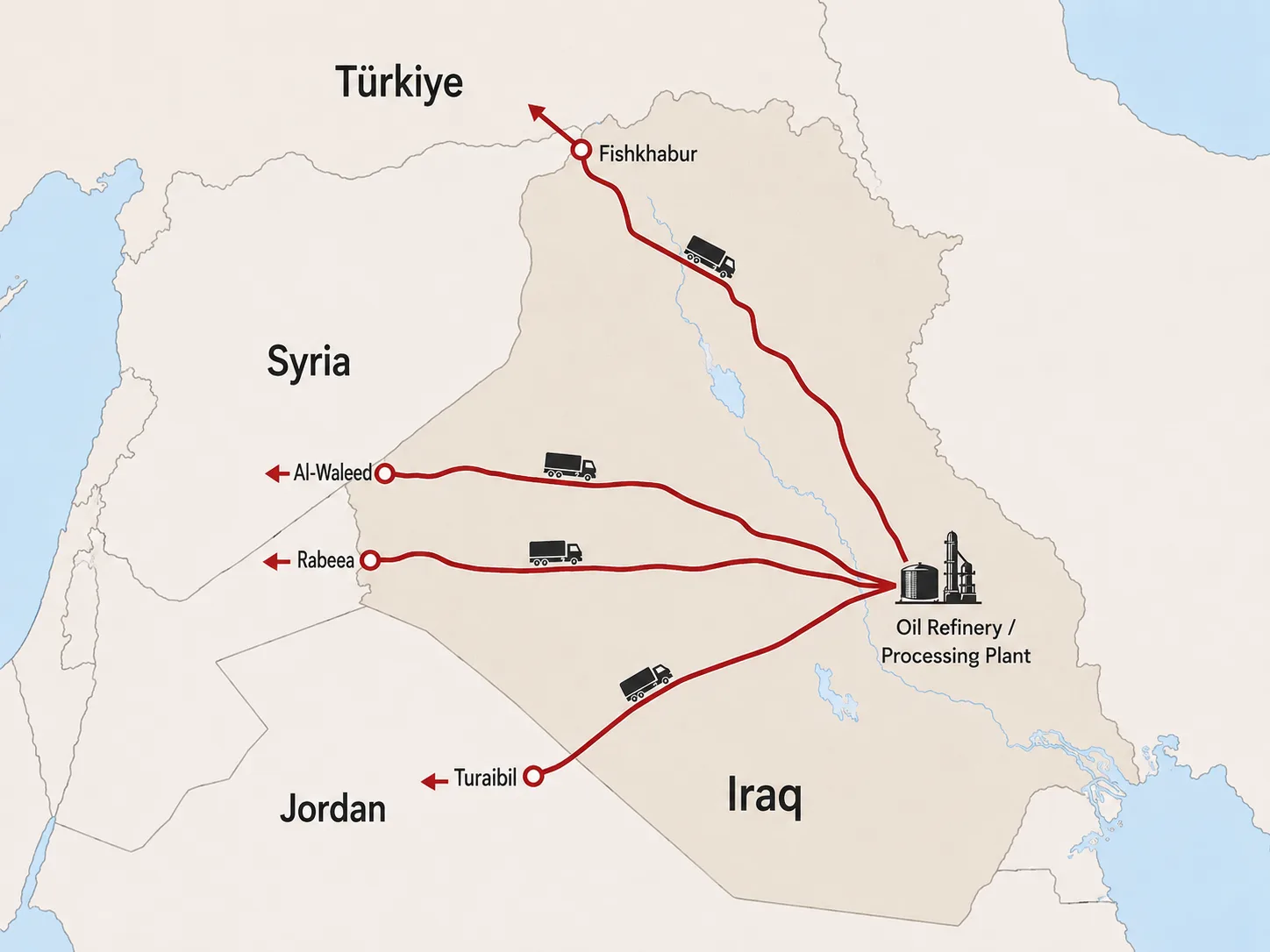
That is why this option is useful in emergency moments: it eases full storage tanks, opens a limited outlet for moving products, and gives Baghdad some room to maneuver when the sea route is disrupted.
But this option is not without obvious drawbacks, including the cost of trucking, its slowness, and the need for huge numbers of trucks to replace the volumes carried by tankers or pipelines. Borders can also quickly become clogged and turn into a bottleneck because of congestion.
Most importantly, the part that has actually been documented so far is tied more to fuel oil than to crude. Transporting heavy products by truck is one thing; building a sustained overland channel for exporting Basra crude is another. Overland transport therefore remains an emergency fix, not a permanent economic alternative.
5- The Basra-Haditha pipeline
This is the most important route if the goal is to move southern crude itself to other gateways. It begins in Basra and extends to Haditha in Anbar, over a distance of about 700 kilometers, with a diameter of 56 inches and a planned capacity ranging between 2.25 million and 2.5 million barrels per day.
The value of this line is that it does not end at a port, but at a distribution hub. Haditha here is not an export outlet but a distribution junction. If Basra crude reaches it, it becomes possible to direct that crude in more than one direction: north to Ceyhan, west to Syria and Baniyas and Tartus, southwest to Jordan and Aqaba, or internally to Iraqi refineries.
In that sense, the Basra-Haditha line is almost the only route that can, in theory, take southern oil out of the southern geography itself.
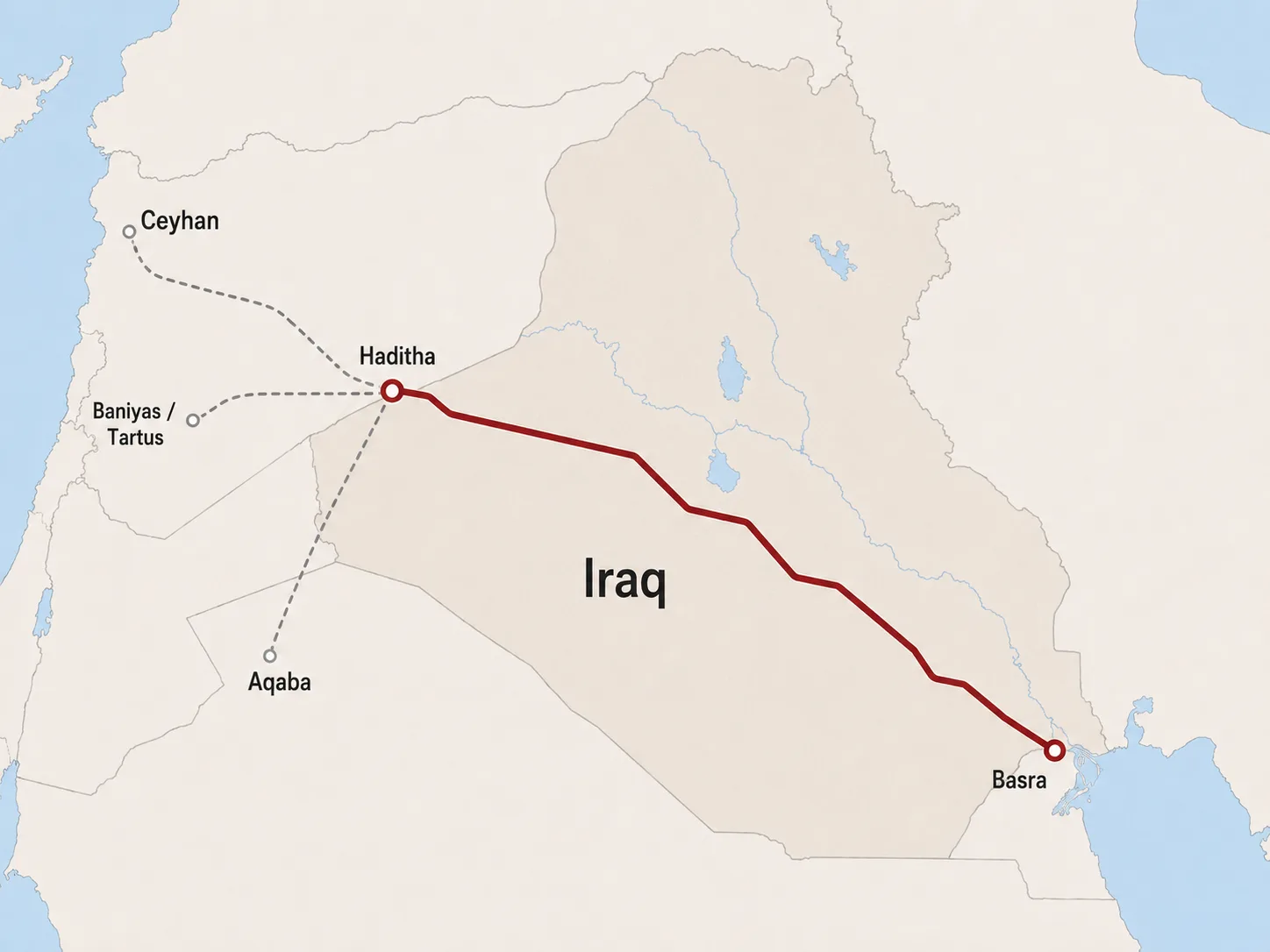
Ceyhan depends on northern crude, trucks are limited, and Baniyas currently relies on overland transport and fuel oil. This line, by contrast, if completed, would carry Basra crude in large volumes to central and western Iraq, where it could be distributed to multiple outlets.
The project has moved from paper to initial implementation after the Iraqi Cabinet approved a contract between Basra Oil Co. and the State Company for Oil Projects, a government firm affiliated with the Oil Ministry, worth about 5.97 trillion dinars, or roughly $4.6 billion. Amendments were then issued to facilitate implementation, and the Oil Ministry announced the start of work on the project in May 2026, with initial funding allocated.
But that does not make it a near-term solution. As of June 6, 2026, there is still no actual operating capacity on this line. It still requires construction, pumping stations, protection, sustained financing, and final outlets. It is therefore the most important strategic route on the map, but not a quick relief valve for the Hormuz crisis.
6- The Haditha-Aqaba line
This route runs from Iraq toward Jordan and ends at the port of Aqaba on the Red Sea. In the scenarios under discussion, it could be linked to Basra or Haditha, then cross into Jordanian territory, with a capacity of around 1 million barrels per day. Part of the oil would go to supply Jordan, but the bulk of it is supposed to be exported through Aqaba.
Aqaba’s importance lies in giving Iraq a maritime outlet outside the Gulf and the Strait of Hormuz. Instead of crude heading south to Basra and then crossing the Gulf, it could move west toward Jordan and then leave from the port of Aqaba on the Red Sea toward the Suez Canal and global markets.
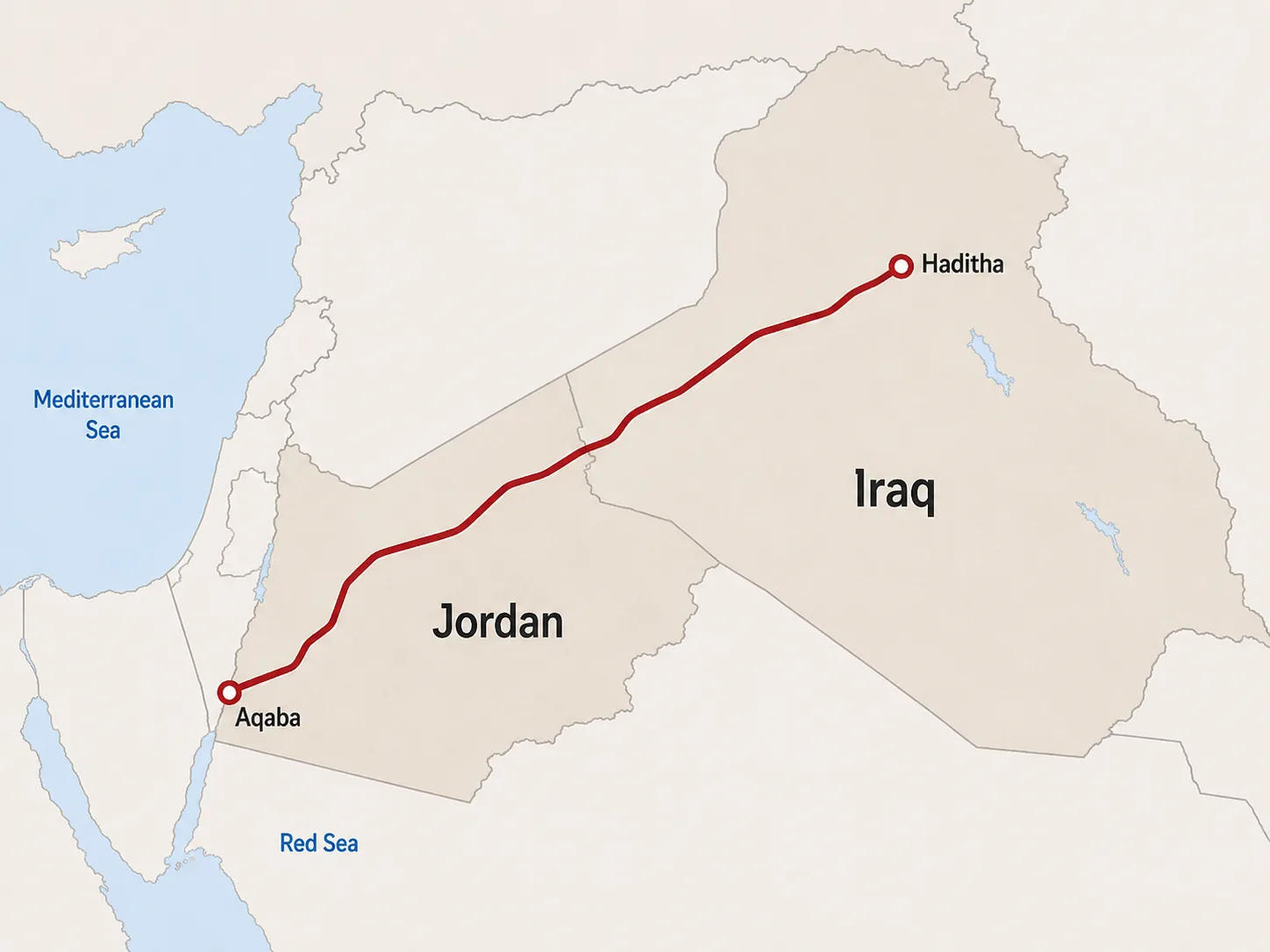
But this route is still far from implementation. The project is old, its idea dating back decades, and it has been agreed in principle more than once, yet it has remained stalled because of cost, security, financing, and political controversy. Building a line of this length would also take years.
For that reason, the Aqaba route is not an immediate alternative to Basra, but it is a strategic option on the Red Sea, and it could become valuable if the Basra-Haditha line or any internal pipeline trunk capable of delivering crude to western Iraq is completed.