






هذا التقرير متاح أيضًا بـ العربية
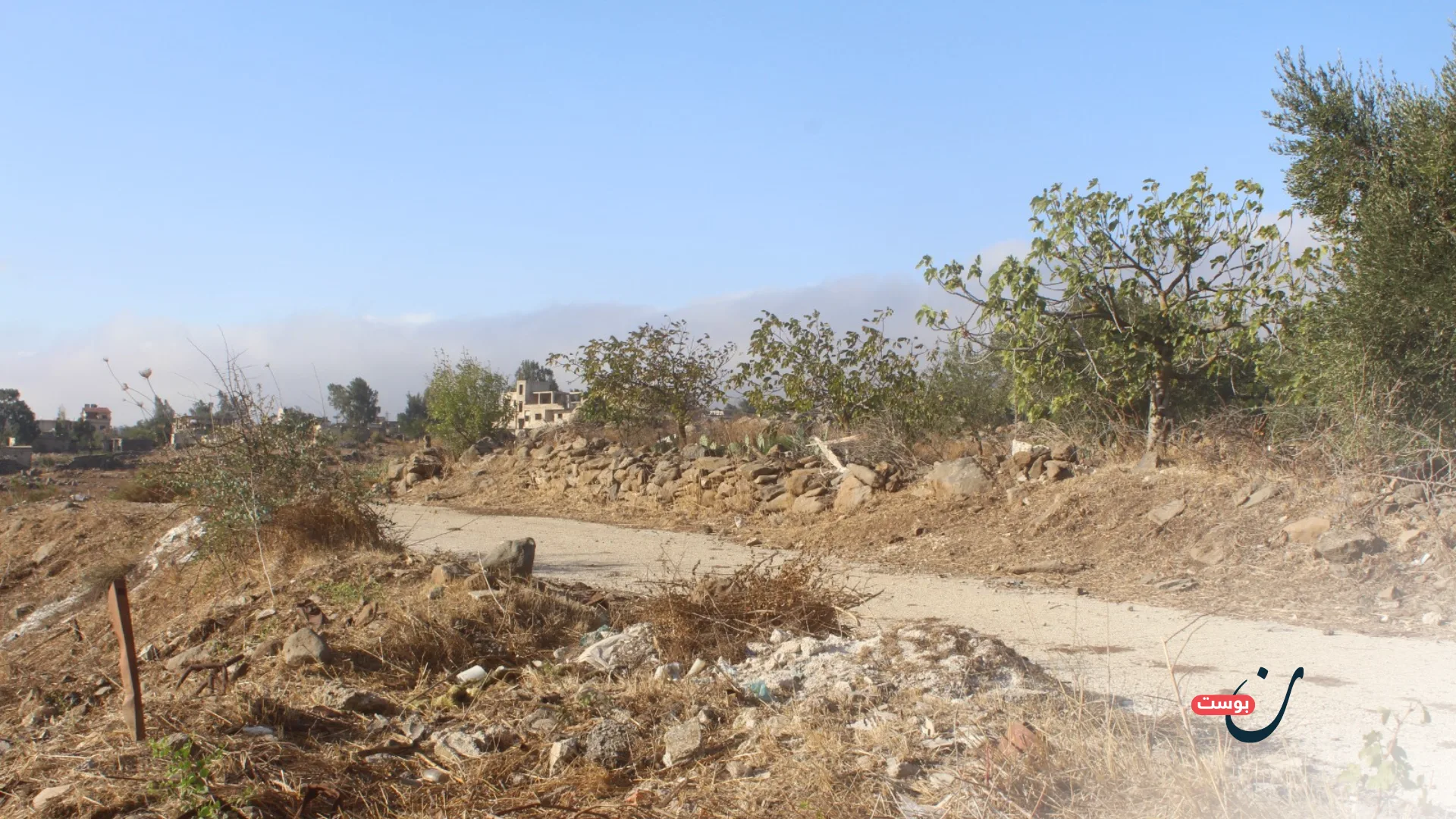
“Let one of us take it first, then we’ll talk about it” … This The statementsThe issue of the ownership of Shebaa Farms was thrust back into the spotlight by remarks made by Syrian President Ahmad al-Sharaa during a meeting with a delegation of dignitaries from the Damascus countryside, amid continuing debate over its unresolved status for nearly three decades.
The farms, which cover an estimated 25 square kilometers, are considered a disputed area between Lebanon and Syria. The United Nations classifies them as occupied Syrian territory, while Lebanon considers them Lebanese land under Israeli occupation. Hezbollah relies on this position to justify the continuation of its military operations against Israel, on the grounds that they are tied to the liberation of “occupied Lebanese land.”
The roots of this ambiguity go back to the failure to definitively demarcate the Lebanese-Syrian border after World War I, which led to conflicting claims over sovereignty in the area, before “Israel” imposed control over it following its occupation of the Golan Heights in 1967 and built a border fence in the early 1970s that prevented farmers from reaching their land.
Although Shebaa Farms was not at the center of the border dispute before 2000, Israel’s withdrawal from southern Lebanon that year brought it back to the fore as a “legal and political vacuum” in the border area.
It indicates StudyA study by the Kroc Institute for International Peace Studies at the University of Notre Dame, titled “The Conflict Between Israel, Hezbollah, and Shebaa Farms,” indicates that the area has historically been peripheral to the border dispute, and that the core problem is not limited to ownership but also stems from the absence of a clearly demarcated border between Lebanon and Syria.
The study also explains that historical maps issued by French, Lebanese, and Syrian entities show discrepancies in locating Shebaa Farms, reflecting the continued absence of a clear historical consensus over sovereignty there.
United Nations: Shebaa Farms Is Syrian Territory
The United Nations relied on a set of maps and international resolutions to determine the area’s legal status, which was reflected in IllustrationThe “Blue Line” was established in 2000 as a technical line intended to verify Israel’s withdrawal from southern Lebanon, in accordance with U.N. resolutions, without constituting an official international border between Lebanon and “Israel.”
The Blue Line stretches for about 120 kilometers from Naqoura on the western coast to the foothills of Mount Hermon in the east. It was given this name after the U.N. color used to draw it on maps.
The line serves as a reference for the work of the United Nations Interim Force in Lebanon (UNIFIL) and the Lebanese Army in monitoring the situation in the country’s south, as any breaches of it are considered a violation of the status quo. It also includes points disputed by both sides, most notably the Shebaa Farms.
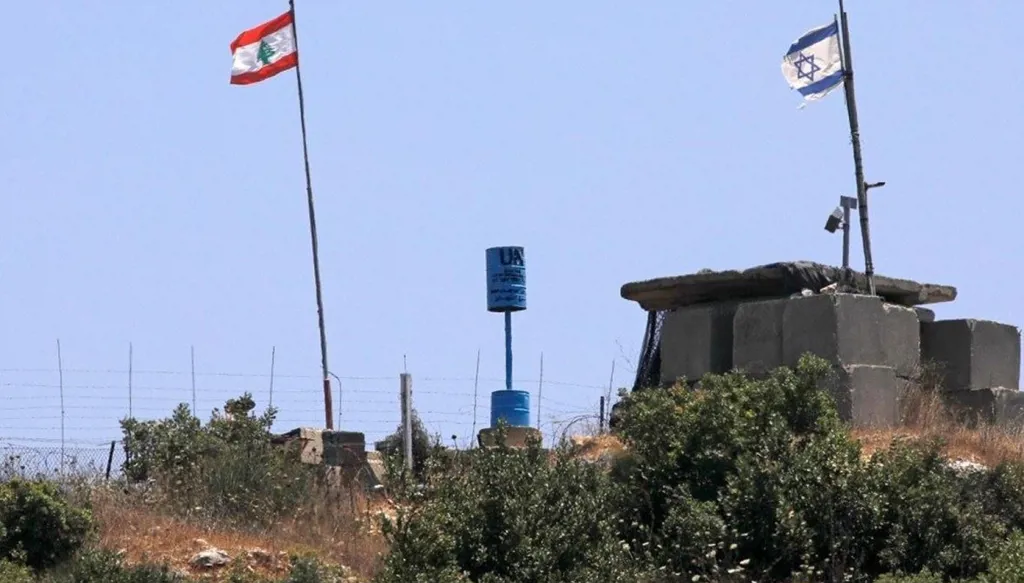
UN documents point to a consistent position holding that the Shebaa Farms are Syrian territory, not Lebanese land, due to the absence of a formal border demarcation agreement between Lebanon and Syria. Since 2000, the organization has repeatedly called on both Lebanon and Syria to demarcate their border.
It concluded Report The UN secretary-general stated in a report dated May 22, 2000 on which the United Nations relied when drawing the Blue Line that Israel had completed its withdrawal from Lebanese territory in accordance with Resolution 425, and the farms were not included among the Lebanese lands covered by the withdrawal.
According to the report, the United Nations asked Lebanon, Syria and countries holding relevant documents to provide evidence establishing the course of the border between the two countries. Lebanon submitted title deeds for agricultural land in the Shebaa Farms, documents confirming that official Lebanese state and religious institutions had exercised administrative and judicial authority there, as well as a 1966 map showing the farms within Lebanese territory.
The report also referred to a 1964 decision by a joint Lebanese-Syrian committee that deemed the area Lebanese, along with Syrian backing for the Lebanese claim.
By contrast, the United Nations found that this evidence conflicted with other official documents and maps. Among the Lebanese maps available to it, 10 maps issued by official institutions, including the Ministry of Defense and the army, showed the Shebaa Farms as part of Syrian territory. Syrian maps showed the same result.
It also relied on six official Syrian maps, including three issued after 1966, all of which placed the Shebaa Farms inside Syria.
The organization also relied on the 1974 Syrian-Israeli disengagement agreement and the maps attached to it, initialed by Syria and Israel, which placed the Shebaa Farms within the area of operations of the United Nations Disengagement Observer Force (UNDOF), rather than within the area of operations of UNIFIL in Lebanon.
After reviewing dozens of maps and documents, the United Nations concluded that the available evidence was insufficient to alter the status quo. It determined that the Shebaa Farms fall within the territory occupied by Israel from Syria in 1967 and therefore are subject to Resolutions 242 and 338, not Resolution 425 concerning withdrawal from southern Lebanon.
According to the reportIn U.N. Secretary-General report No. 248 of 2006, the United Nations affirmed that the legal status of the Shebaa Farms as Syrian territory occupied by “Israel” remains unchanged, and will not change unless Lebanon and Syria reach a formal agreement to demarcate the border in accordance with international law.
The United Nations also considers Syria’s acceptance over the years of having the area fall within the scope of operations of its force in the Golan, without any formal objection to its classification as occupied Syrian territory, to be among the factors supporting its legal position.
The file is complicated for these reasons
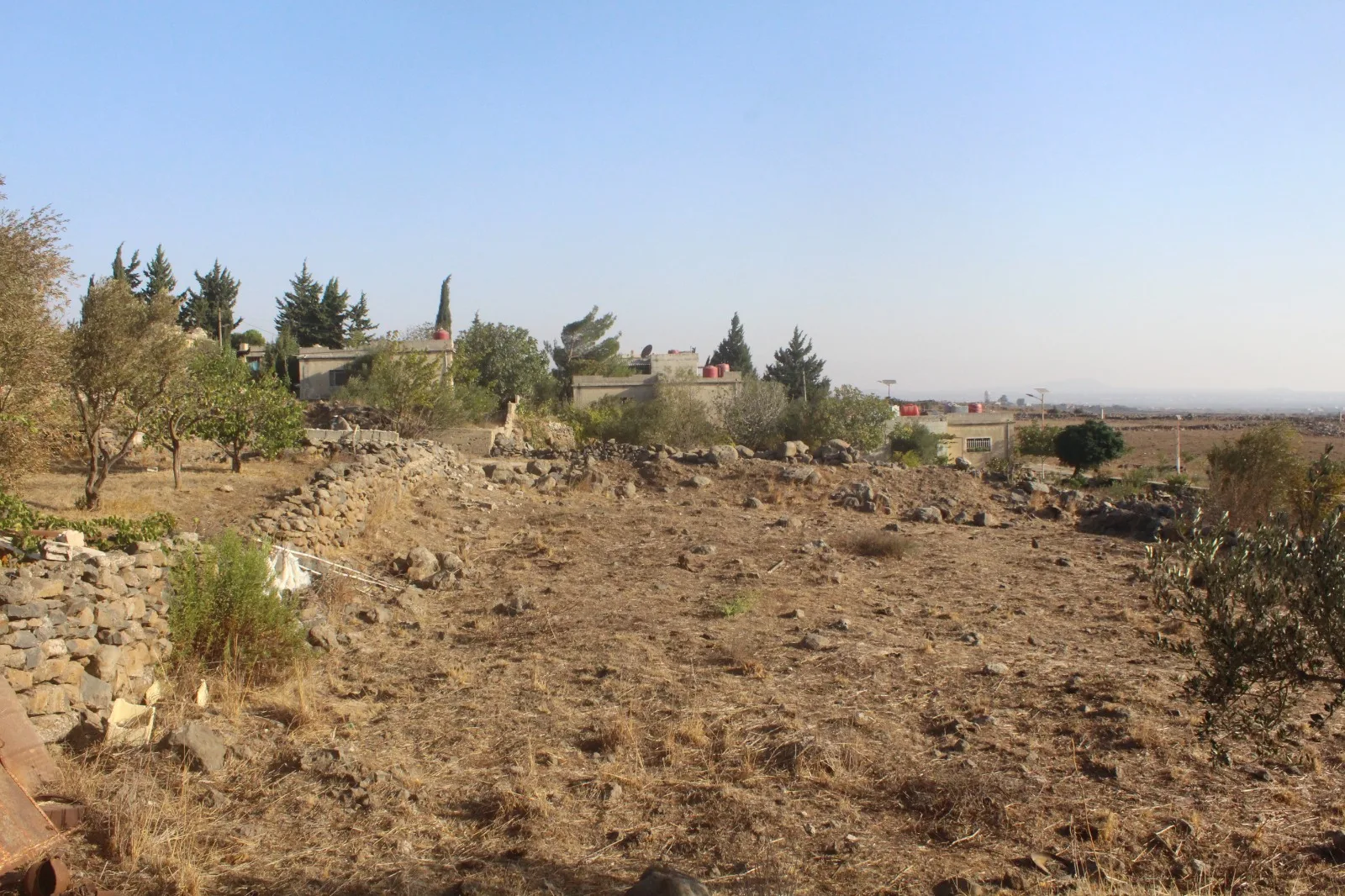
The Shebaa Farms file is complex and thorny, with political, security, geographic, and even geopolitical dimensions, according to Khaled Khalil, an expert on Syrian-Israeli relations. That is because the farms lie along overlapping, winding borders in a rugged mountainous area between Syria and Lebanon. They are not merely natural terrain, but historically and socially intertwined borderlands as well.
In remarks to NoonPost, Khalil reviewed the historical background of the dispute, explaining that since the 1920s, following the Sykes-Picot Agreement and the drawing of the borders between Syria and Greater Lebanon, as it was then called, the area remained without a clearly defined boundary line because of its rugged mountainous nature and its location at the tri-border point of Syria, Lebanon, and Palestine.
Despite the demographic and geographic overlap in the area, Khalil noted that actual administration and sovereignty were Syrian until “Israel” occupied it in 1967. After occupying it, “Israel” considered it part of the occupied Syrian Golan Heights. When it withdrew from southern Lebanon in 2000, it refused to withdraw from Shebaa Farms, arguing that it was not Lebanese territory but part of the land it had occupied in 1967.
He stressed that this Israeli position was not an acknowledgment of Syria’s ownership of the farms, but was also tied to security and geopolitical considerations, given the area’s strategic importance.
Khalil believes the farms will remain a thorny issue in the future between Syria and Lebanon within the broader matter of demarcating borders that are socially, historically, and topographically intertwined. Any relinquishment of the issue will not last long. President al-Sharaa has only postponed discussion of the matter and has not left it as a pretext and justification in Hezbollah’s hands, especially since the statements came amid ceasefire negotiations between “Israel” and Lebanon, in which Lebanon is demanding a full Israeli withdrawal, which would also mean a withdrawal from the farms.
He explained that ownership of the farms is part of a set of deferred issues because of their regional sensitivity, especially since the area remains occupied by “Israel.” This postponement, even if its temporary political reasons are understood, points to a strategy and more realistic approaches that do not mean abandonment, particularly since the ownership documents are not complicated and both sides possess documentation, meaning it would be easy to determine ownership.
But what has further complicated the matter is the Israeli occupation and the instrumental use by “Hezbollah” of the unresolved dispute over ownership of the farms, keeping it trapped in a vicious circle that requires many issues to be sorted out: first, from Damascus’ point of view, putting its relationship with Lebanon in order; and second, the issue of Israeli occupation, which is also considered one of the deferred matters because Syria is going through a transitional phase.
That is why Damascus is focused on avoiding being dragged into distractions or provocations that would obstruct its strategy of internal reconstruction with its developmental dimensions, which al-Sharaa has expressed more than once, and on avoiding contentious issues and postponing them until full stability is achieved in Syria.
“There is no Syrian intervention in Lebanon.”
President Ahmed al-Sharaa, during his meeting with dignitaries from the Damascus countryside, denies any Syrian intervention in Lebanon and confirms that border demarcation is not a priority at the present time. pic.twitter.com/x8HUTEuVUv
— Noon Syria (@NoonPostSY) June 13, 2026
Al-Sharaa’s vision and Damascus’ strategy
Khalil believes that President Ahmed al-Sharaa, in his recent remarks on Shebaa Farms, expressed the political mindset of the new Syria after the fall of the defunct Assad regime one that has a precise hierarchy of priorities, focuses on what matters most, and leaves unresolved issues for later without forgetting them. Through this, he reinforces a policy based on avoiding confrontation.
Although the remarks neither set clear parameters nor settle the debate over the farms and their ownership, they do not appear to amount to abandonment, as was the case under the Assad regime, meaning this file is being deferred to a later stage.
Khalil said this is what President al-Sharaa expressed: that the goal of the Syrian negotiator with “Israel” is to return to the atmosphere of Dec. 8, 2024, and halt Israeli attacks in order to focus on rebuilding the home front — in other words, a strategy of breaking objectives down within a precise hierarchy so as to avoid an explosion of the situation and proceed step by step.
He added that al-Sharaa’s vision, which he laid out in his interview with Al-Mashhad TV, is based on rejecting interference in Lebanese affairs, particularly through military approaches or the tutelage policies that prevailed in the past, despite the controversy stirred by the request of US President Donald Trump.
He believes this vision is grounded in the principle of noninterference and of not being drawn into provocations and conflicts beyond the border, while maintaining neutrality. According to Khalil, opening the Shebaa Farms file at the present time could give parties linked to Iran a pretext to obstruct Damascus’ path toward reorganizing its relationship with Beirut, noting that al-Sharaa said explicitly that the time is not right to raise this issue.
Khalil stressed the principle of unity of path and destiny between Syria and Lebanon, arguing that they are not merely two neighboring countries, but are bound by deep historical and social ties. He believes that a policy of setting priorities and avoiding the explosion of disputes or escalation, while not relinquishing rights, is a successful policy, noting that it is the same approach followed by the Syrian negotiator in the renewed talks with Tel Aviv.
The resistance narrative: a Juha’s nail
Khalil blamed both the father-and-son Assad regime for complicating the file, arguing that the policy of ambiguity and deliberate neglect it pursued, by sending contradictory signals about the identity of the farms, helped keep the issue suspended and allowed “Hezbollah,” perhaps under Iranian pressure, to continue using it as a political card.
At the time, the Syrian position was also unclear and raised many questions about the reasons for this abandonment, but it later became clear that it was for political reasons in favor of “Hezbollah,” which relies on the “Lebanese-ness” of the farms to legitimize the narrative of “resistance,” turning this land into a “Juha’s nail.” The narrative is based on the claim that there is Lebanese land occupied by “Israel,” thereby legitimizing the party’s weapons, the result of which was Iranian control over Lebanon.
He continued that Hezbollah, whose presence emerged in the 1990s and whose influence was strengthened after Operation Grapes of Wrath in 1996, became the dominant force in the Lebanese scene after the Israeli withdrawal from southern Lebanon in 2000. It needed a narrative to justify retaining its weapons after the occupation of most of the south had ended, so it relied on the issue of Shebaa Farms as Lebanese land that remained occupied.
From Khalil’s point of view, if the legal dispute over the farms had been settled, the party would have lost one of its most prominent domestic justifications for keeping its weapons. Yet, in his view, it continued to employ the issue within an ideological discourse linking the liberation of Lebanese and Palestinian lands, while in the end serving the Iranian project more than serving Lebanon or the Palestinian cause.
How can this file be resolved?
Khalil believes the issue of ownership of Shebaa Farms will be settled technically through international legitimacy, because the relevant documents exist, and the United Nations is part of the process of reestablishing ownership and redemarcating the border between Damascus and Beirut.
He noted that the matter is not limited to demarcating the land border, but also includes maritime borders, especially after the discovery of large natural gas reserves off the eastern Mediterranean coast, as the issue of demarcating maritime borders in the economic waters between Syria, Lebanon, and “Israel” remains unresolved.
This file requires, according to Khalil, first achieving the Syrian objective of restoring normal relations with Lebanon, based on the principle of partnership rather than tutelage as in the past.
But he believes that also requires Lebanon to recover from the problem of Hezbollah’s dominance, as it “hijacks” the state’s decision-making, holds the power over war and peace, and determines Lebanon’s fate in a way that serves Iran especially in light of recent regional developments and the war being waged by the United States and “Israel” against Iran.
The party’s standing alone, apart from the Arab and regional order, and its alignment with Iran instead of Lebanon, makes it, in his view, a threat to Lebanese and Syrian national security and to the security of the region.