











هذا التقرير متاح أيضًا بـ العربية
When Mariam was born in Denmark, her mother did not expect the process of registering her to turn into a journey across three nationalities, ending with her receiving her grandmother’s citizenship rather than that of her Syrian mother or her Palestinian-Syrian father.
But what happened to Mariam was only an extension of a story her father is also living through, as he is still waiting to obtain Syrian citizenship through his mother.
Mariam’s mother, Nour al-Huda Abu Halawa, 32, holds both Syrian and Turkish citizenship. She is the daughter of a Syrian father and a Turkish mother, and she married a Palestinian man who was born and raised in Syria to a Syrian mother. The couple now live in Denmark.
Although her husband lived his life in Syria and enjoyed his rights there, on his official papers he remains Palestinian, waiting for the chance to obtain Syrian citizenship through his mother if amendments are made to the laws currently in force.
Nour al-Huda told NoonPost that when Mariam was born, the family believed she might obtain Danish citizenship because her father is Palestinian-Syrian, after being told that children born in such cases may be treated as stateless, allowing them to receive Danish citizenship.
For that reason, the family did not immediately register their daughter in any other country and waited several months in the hope that she would be granted Danish citizenship. The surprise came when the Danish authorities automatically registered the child as Turkish, based on the Turkish citizenship held by her mother.
Nour al-Huda says the irony was painful for her: She was able to pass on to her daughter the Turkish citizenship she inherited from her own mother, but she could not give her Syrian citizenship, noting that had she not held Turkish citizenship, Mariam’s legal path might have been different from birth.
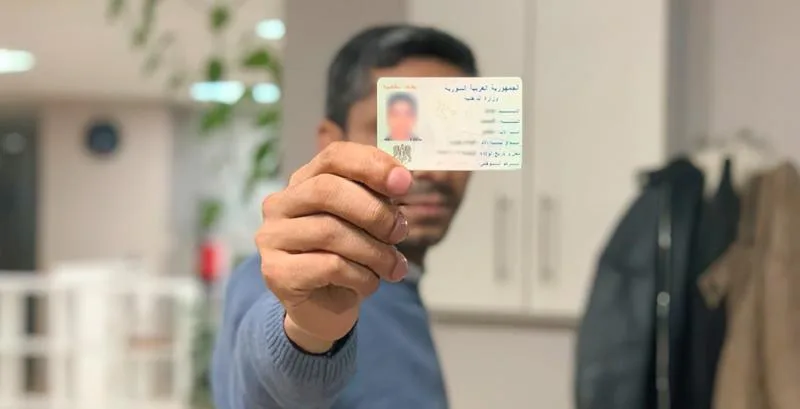
The complications did not stop there. When Mariam visited Syria for the first time as an infant, she entered on her Turkish passport, and her mother had to present additional documents proving that her father was a Palestinian born in Syria before they were allowed to complete the entry procedures.
Even so, Nour al-Huda stresses that for her, the issue is not about a passport or a document as much as it is about identity and belonging. She makes a point of taking her daughter to Syria, introducing her to her father’s family, and raising her to love the country to which she belongs, but she believes the law does not recognize that belonging.
The young woman says she has still not registered her daughter in Syria, because the law does not grant citizenship to the children of Syrian mothers. The family is waiting for a legal or constitutional amendment that would place mothers and fathers on equal footing in this right.
Nour al-Huda directs a message to members of the People’s Assembly, urging them to make this issue a priority in discussions over the new constitution. She argues that granting Syrian citizenship to the children of Syrian women would enshrine equality, strengthen their connection to their mothers’ homeland, and encourage them in the future to return and help rebuild Syria.
Why can’t a Syrian mother pass her citizenship to her children?
Mariam’s case is tied to the legal text governing nationality in Syria for more than five decades. Legislative Decree No. 276 of 1969, known as the Syrian Arab Nationality Law, enshrines the principle that nationality is passed through the father, with narrow exceptions, including granting nationality to a child born in Syria to a Syrian mother if legal paternity to the father is not established.
There are no official statistics showing how many children of Syrian women are affected by the nationality law, but rights organizations say its impact extends to thousands of families inside and outside Syria, especially after years of war and the mixed marriages, displacement and refuge that accompanied it.
Before the popular protests began in 2011, Syrian women married Palestinians residing in Syria as well as Arabs and foreigners, leaving many of their children legally tied to the father’s nationality despite being born and living in the country, along with all the related procedures involving residency and official documents.
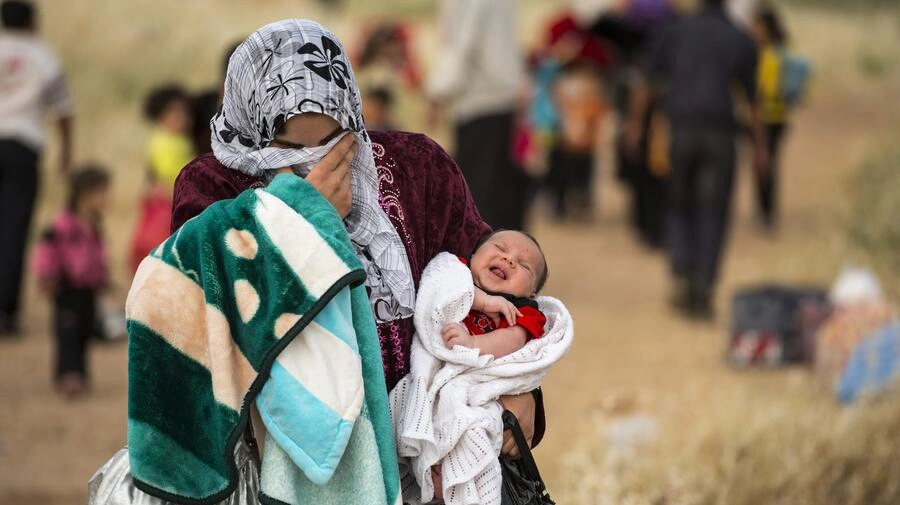
During the war years, marriages between Syrian women and foreigners increased, including fighters who came to Syria.
In a number of cases, these marriages were not officially registered and relied only on religious contracts, leading to complex legal situations for children. Some remained unregistered in any country or were exposed to the risk of statelessness, while others carried only their father’s nationality without being able to obtain Syrian citizenship despite living in Syria.
For years, rights organizations have called for amending the nationality law, arguing that the continued denial of Syrian women’s right to pass their citizenship to their children contradicts the principle of equality and non-discrimination affirmed in the constitutional declaration issued in 2025, even though the nationality law remains in force until it is amended.
From a rights demand to a draft law
With the formation of the new People’s Assembly, the issue of amending the nationality law has returned to the forefront of debate, amid hopes among many Syrian women that it will become a draft law discussed under parliament’s dome, opening the door to legislative reform that would place mothers and fathers on equal footing in the right to grant nationality to their children.
Despite the hopes pinned on the new assembly, the mechanism for introducing an amendment to the nationality law remains unresolved. The relevant committees have not yet begun their work, and no announcement has been made about which body will take up the issue.
People’s Assembly member Nour al-Jandali had previously expressed support, in remarks to the Siraj platform, for amending the nationality law, saying that depriving women of the right to pass on their nationality constitutes discrimination against them.
But she told NoonPost that it is still too early to state new positions, given that the parliamentary committees concerned with the issue have not yet begun their work.
Journalist and legal expert Saleh Mallas believes the current phase offers a real opportunity to reopen debate over the nationality law, but that it differs from previous attempts because the issue is no longer confined to the demands of rights organizations or women’s campaigns. It has become tied to the broader process of rebuilding Syria’s legislative framework, alongside preparations to draft a new permanent constitution.
Mallas told NoonPost that the convening of the People’s Assembly alone does not necessarily mean the issue of amending the nationality law will be opened. That requires a clear legislative will among a number of assembly members to turn this demand into a legal process, beginning with the submission of a draft law or formal amendment proposal, then referring it to the relevant committee — most likely the Constitutional and Legislative Affairs Committee — to study the amendment before presenting it to the assembly for a vote.
He points out that the essence of the amendment is not to create a new right for Syrian mothers, but to remove the existing discrimination between citizens on the basis of sex in the way nationality is transmitted, by amending the articles that restrict this right to the father so that a Syrian mother, like a Syrian father, can grant her nationality to her children.
He adds that the success of any initiative inside parliament will not depend on declarations of political or rights-based support, but on translating that support into actual legislative steps by forming a bloc of lawmakers who back the amendment and preparing a legal memorandum grounded in the constitution that explains the social and legal effects of the current law, in preparation for presenting the amendment bill to the assembly.
Mallas does not rule out a broader debate accompanying this over the humanitarian consequences the law has left for thousands of families, and the resulting problems related to residency, official documents, education, work and civil rights issues that have become more prominent after years of war and displacement.
Reform: a legislative priority or a deferred right?
Although amending the nationality law enjoys the support of a number of rights advocates and some members of the People’s Assembly, its passage is not tied to legal considerations alone.
As Mallas explained, nationality laws remain among the pieces of legislation most closely linked to state sovereignty, which means any amendment raises questions related to mechanisms for verifying civil records and scrutinizing the status of beneficiaries, especially in light of the war years and the displacement, refuge and loss of official documents that accompanied them.
He notes that the biggest challenge may be less legal than political, since draft laws are subject to the legislative priorities of the assembly. That means rights-related issues may remain postponed unless there is political will to push for their inclusion on parliament’s agenda.
He adds that the responsibility of lawmakers who support the amendment does not stop at declaring supportive positions, but begins with submitting a draft law and defending it inside the People’s Assembly until it reaches the voting stage.
Mallas believes the nationality law does not merely regulate administrative procedures, but reflects the state’s conception of citizenship itself. The question today, in his view, is not only who has the right to pass on nationality, but whether citizenship is an equal relationship between all citizens and the state, or whether it still passes through the father alone.
He considers the absence of any legislative debate over amending the law a possible indication that addressing one of the most prominent forms of legal discrimination between men and women in Syrian legislation continues to be deferred.
As the People’s Assembly awaits the start of its legislative path, Mariam, like thousands of children of Syrian women, also remains in limbo. In her family, the wait for citizenship is not passed from fathers to children, but from mothers to their children: a father waiting for Syrian citizenship from his mother, and a daughter waiting for the law one day to grant her the right to obtain it from her mother.