






هذا التقرير متاح أيضًا بـ العربية
Iraqi Prime Minister Ali al-Zaidi’s visit to Türkiye on Tuesday, July 28, cannot be treated as a routine trip or a protocol stop on the Iraqi government’s agenda. Rather, it was an exceptional visit of a special nature, whether in terms of its sensitive timing or in light of the tension and setbacks that have marked Iraqi-Turkish relations in recent months, making any potential rapprochement between the two countries fraught with many minefields and thorny issues.
The visit can be read, first and foremost, in the context of Iraq’s recent moves to reorder Baghdad’s foreign relations and broaden its circle of partnerships, away from dependence on a single axis. At the same time, it comes within the framework of Türkiye’s approach of opening up to various parties through a comprehensive political strategy based on strengthening common ground and setting aside bilateral differences, even if only temporarily, amid the challenges produced by recent regional developments.
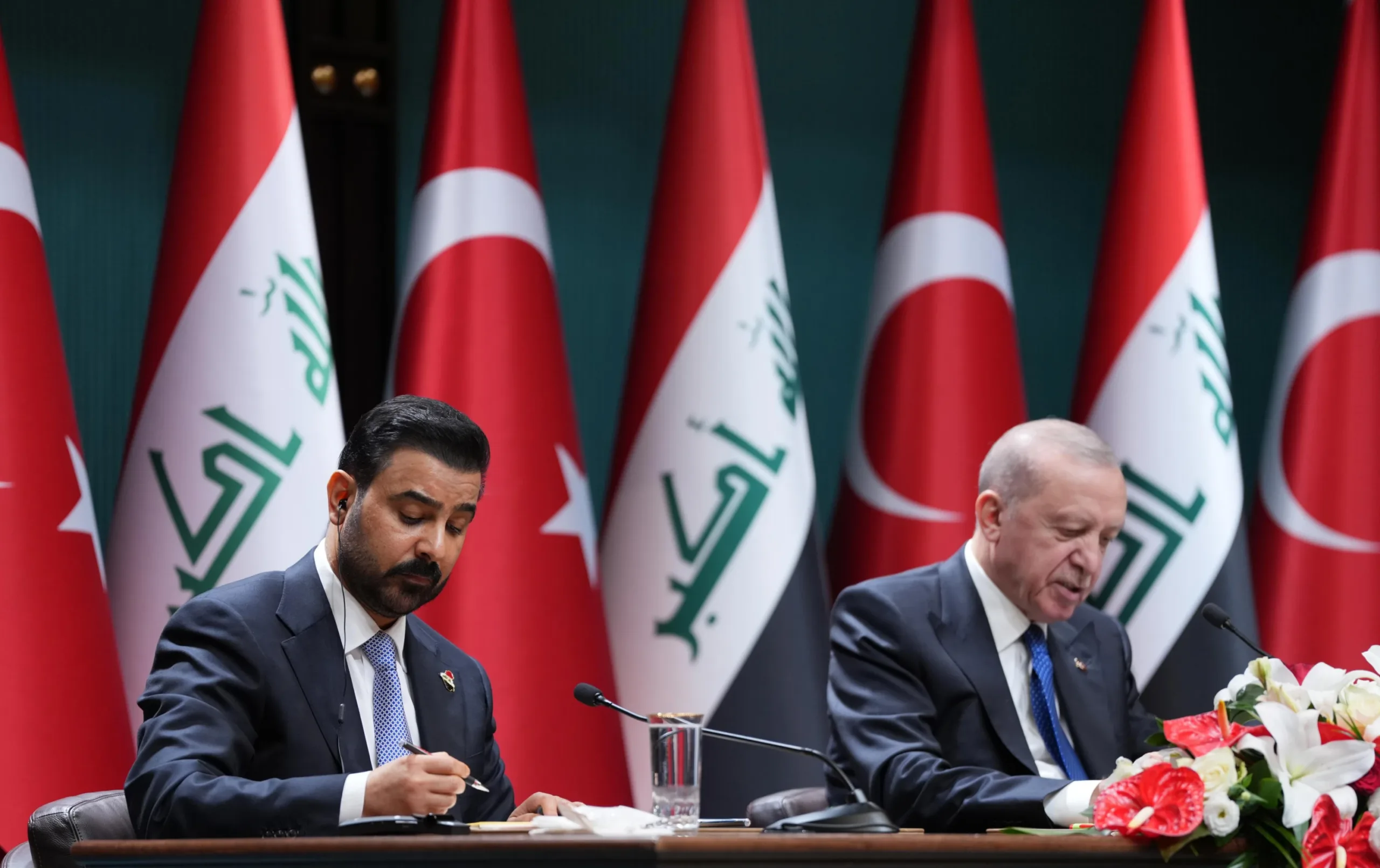
From this perspective, al-Zaidi’s visit, made at the invitation of Turkish President Recep Tayyip Erdogan, placed on the table the most sensitive issues that have shaped relations between the two countries over the past two decades, foremost among them security, energy and water.
These are issues that push Iraqi-Turkish relations beyond the framework of traditional geographic neighborliness and toward the possibility of a strategic partnership that touches the future of both states, their place in their regional environment, and their relations with the outside world.
The significance of timing: An attempt to understand the broader context
The visit comes amid a war during which the regional map is being redrawn geopolitically and the balance of power is shifting at a rapid pace, while plans aimed at fragmenting the region and dragging it into side and bilateral conflicts that drain what remains of its capabilities are steadily coming to light. That has served as an alarm bell for all parties.
Since the Iraqi parliament voted to choose him as prime minister on May 14, al-Zaidi has been trying to redirect the compass of Iraqi foreign policy, seeking to move beyond a strategy of dependence on a single axis a reference to Iran and expand the building of new alliances and partnerships based on balanced relations with various regional and international powers.
From this standpoint, Iraq’s recent moves have come as a translation of those efforts and an attempt to widen Baghdad’s room for maneuver among competing powers. The moves began toward Tehran, then Washington, and then Ankara, while an anticipated visit to Riyadh looms on the horizon, although it was postponed following attacks carried out by Saudi Arabia and the United States against some Iraqi armed factions hours earlier.
In the Iraqi imagination, Türkiye represents the main overland gateway to Europe and the Western camp, and one of the primary sources of goods and services for Iraq, in addition to its pivotal role in the water, security and energy files. Added to that is the Kurdistan Region issue, with all that it represents as a core dilemma tied to the concepts of sovereignty and Iraqi national identity.
For its part, Türkiye views Iraq as an extension of its national security and as one of the important tracks Ankara relies on to support its regional and international policies, as well as a key pillar for strengthening its presence on the international stage. Hence President Recep Tayyip Erdogan’s invitation to al-Zaidi to visit Türkiye at a time when the region is witnessing developments and challenges that compel all parties to reconsider their policies and approaches, and to step back and assess the scene pragmatically, away from rigid positions.
A visit to shake up the stalemate
Although Turkish-Iraqi relations are not suffering from complete stagnation and do not lack channels of dialogue and multiple diplomatic tracks indeed, they may be among the most active regional relationships in terms of meetings, joint committees and agreements they have nonetheless failed to achieve a real breakthrough on the most sensitive issues between the two countries, foremost among them oil, water and the Kurdistan Region. That has kept the relationship politically in a gray zone.
Since 2024, relations have entered a new phase of cooperation in which the two sides began building an institutional framework to regulate their course, through the signing of about 26 agreements and memorandums of understanding during Erdogan’s visit to Baghdad in April 2024, including a framework for cooperation on water and a memorandum on strategic cooperation.
That path was then reinforced by the signing of 11 additional documents in May 2025, followed by the creation of mechanisms for security cooperation and the follow-up of water, trade and transport projects.
Yet despite covering vital areas, these agreements did not produce a tangible breakthrough on the sensitive disputed issues, and most of them remained confined to theoretical frameworks and institutional procedures. Accordingly, the current visit is seen as an attempt to move relations between the two countries from the stage of signing agreements and building inactive institutional frameworks to the stage of consolidating mutual interests and beginning the actual implementation of those understandings, translating them into concrete steps on the ground.
A list weighed down by issues
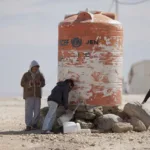
The list of shared issues between Iraq and Türkiye includes dozens of files, led by water. Iraqis depend heavily on the Tigris and Euphrates rivers, a large portion of whose waters originate in Turkish territory. With river levels declining and Iraq’s water infrastructure deteriorating, this file has become one of the most sensitive and vital issues in relations between the two countries.
Despite the signing of a number of agreements on the matter in 2024 and 2025, particularly those related to financing water infrastructure projects inside Iraq, the issue remains unresolved because of differing views over the causes of the crisis. While some reduce it to a decline in Iraq’s water share, others see the core of the problem as lying in the deterioration of Iraqi infrastructure and weak water resource management.
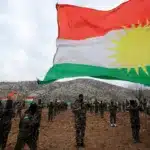
The security file is one of the most complex issues between the two countries. Ankara views the presence of the Kurdistan Workers’ Party in northern Iraq as a direct threat to its national security and, on that basis, carries out military operations against the group’s targets inside Iraqi territory.
Baghdad objects to this from time to time, which calls for greater coordination between the two sides, especially after the party announced the end of its armed activity, something that could open the door to broader security understandings.
Energy is the third major sensitive file between the two countries. The Kirkuk-Ceyhan pipeline is of strategic importance to Iraq because it provides an alternative outlet to the southern ports and the Strait of Hormuz, giving Baghdad greater ability to diversify its oil export routes. Türkiye, meanwhile, seeks to operate the pipeline at higher rates and strengthen its position as a regional hub for energy transport and trade.
Another pivotal file is the Development Road project, one of the projects capable of bringing about a qualitative shift in the nature of relations between Iraq and Türkiye. The project aims to link the Grand Faw Port in southern Iraq to the Turkish border through a network of railways and roads, reaching European markets through Turkish territory.
The economic file also stands out, after trade volume between the two countries reached about $16.8 billion in 2025, amid aspirations to raise it to $30 billion. Added to that is the strong presence of Turkish companies in Iraq, where they have carried out more than 1,000 projects with a total value of nearly $36.5 billion, making Iraq one of the most important foreign markets for Turkish contractors.
Yet economic relations between the two countries still suffer from the conventional nature of their paths, as they are concentrated largely in the export of Turkish products to the Iraqi market, alongside some economic understandings linked to the energy sector.
Accordingly, the ambition in the coming phase is to broaden the scope of these relations so they become more balanced and reciprocal, encompassing infrastructure, industry, transport and technology, in addition to facilitating investment procedures in both countries and benefiting from each side’s capabilities and potential to advance shared interests.
A new package of agreements
The visit resulted in the conclusion of a number of joint agreements in the fields of energy, transport, education, water and security, while the Turkish president and the Iraqi prime minister announced the launch of a new phase of economic integration and strategic cooperation between the two countries, pushing bilateral relations toward broader and more effective tracks.
Among the most prominent announced understandings was the Turkish Petroleum Corporation’s joining the partnership in the Kirkuk field, in a pivotal logistical step in the path of mutual understanding. Iraq also expressed its readiness to supply Türkiye with about 1 million barrels of crude oil per day, strengthening integration between the two countries in the energy field.
Al-Zaidi also announced the start of actual implementation of the Development Road project, stretching about 1,200 kilometers and aimed at linking the Grand Faw Port to the Turkish border and from there to European markets, describing the project as Iraq’s “third river” alongside the Tigris and Euphrates because of its role as a strategic trade corridor linking East and West.
In the same context, the two sides agreed to strengthen cooperation on the water file according to principles that ensure the sustainable use of resources and address the challenges of drought and climate change, alongside expanding military and security coordination. Erdogan stressed that Iraq’s security and stability are a direct extension of Turkish national security, announcing Ankara’s readiness to supply Baghdad with advanced defense products and continue cooperation in combating terrorism and sparing the region further conflict.
A new page, but…
Despite the importance of the agreements concluded by the two sides during the visit which can be said to have already laid a strong foundation for a new phase of constructive relations built on different bases they did not deal directly with the most sensitive disputed issues, nor did they produce the hoped-for breakthrough on them, even if they approached some of them in one way or another.
In the Iraqi-Turkish case, where relations are filled with thorny and sensitive files, progress is not measured by the number of agreements and memorandums of understanding signed, nor by the frequency of reciprocal visits, but rather by the extent to which those understandings are turned into practical measures on the ground and executable mechanisms are launched to help untangle the outstanding issues, according to a specific timetable and genuine political will from both sides.
The coming phase, therefore, will be a real test of the seriousness of this rapprochement and its ability to overcome the legacy of disputes.
Ultimately, al-Zaidi’s visit and the outcomes it produced reveal a new Iraqi approach to reshaping the relationship with Türkiye and moving it from one weighed down by disputes to a pragmatic partnership based on mutual interests and shared strategic projects.
But the success of this shift will remain contingent on moving from the language of promises and written memorandums of understanding to actual implementation and real translation on the ground, as the true benchmark for measuring whether this relationship will develop into a sustainable, long-term partnership or remain captive to a state of oscillation between stagnation and tension.