





هذا التقرير متاح أيضًا بـ العربية
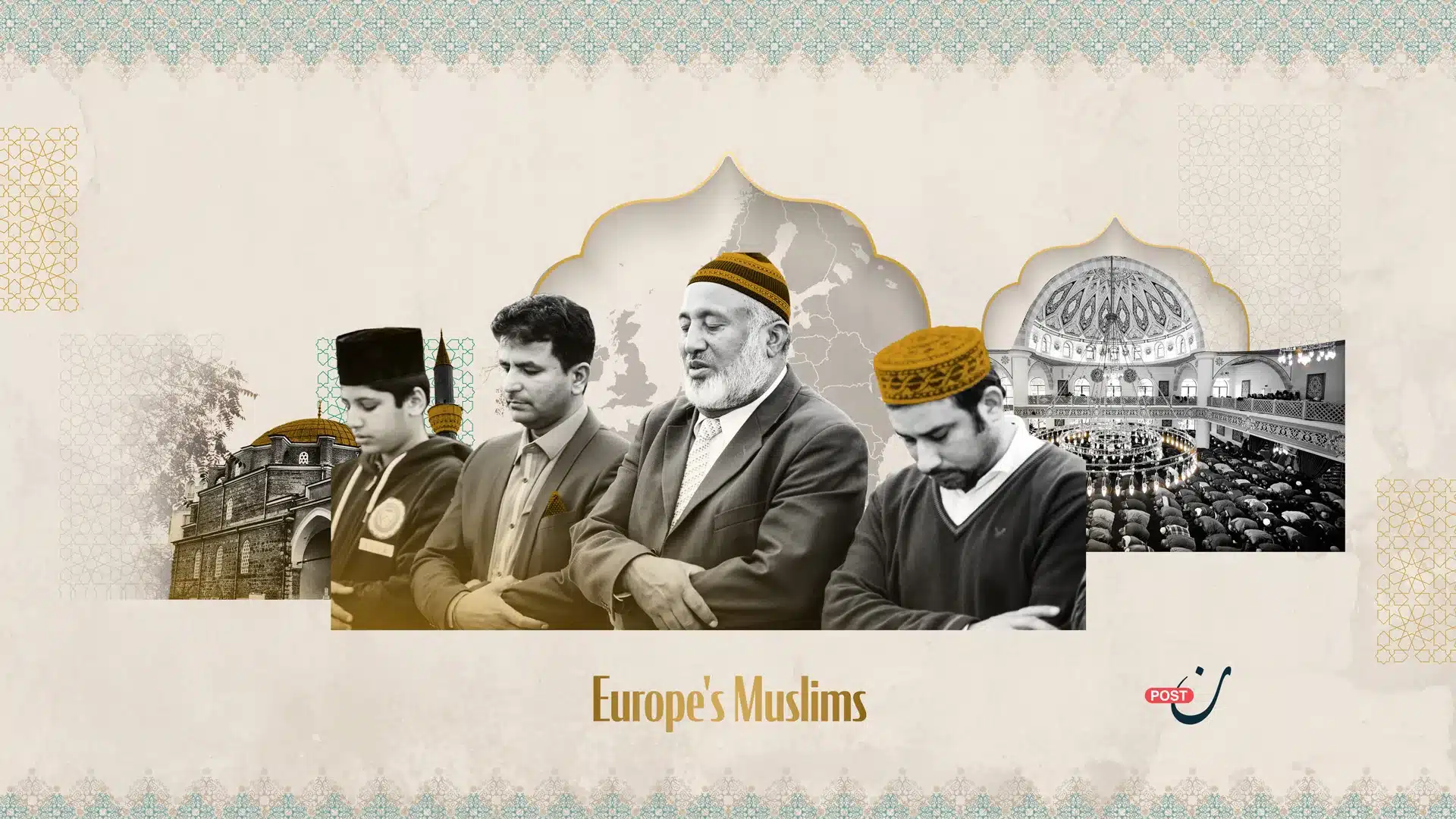
Muslims in the Netherlands are distinguished by their ability to integrate quickly into society, to the point that they have become a fundamental component of the state despite their relatively small numbers compared with other European countries. Aside from some racist measures, procedures, and incidents targeting the Muslim community there, it remains one of the country’s most successful minorities.
Muslims in the Netherlands
Muslims represent 5 percent of the total population of 17 million, or 850,000 people, according to 2019 statistics. Most are Turks, numbering nearly 400,000, followed by Moroccans at around 390,000, according to the Dutch statistics agency, CBS.
Muslims are spread across industrial and rural cities alike, having achieved success at every level economic, social, and political. Entire areas now have Muslim majorities, especially since some members of the community now trace their roots in the Netherlands to the fourth generation. They are concentrated in several strategic areas, most notably the capital Amsterdam, Utrecht, The Hague, Den Haag, and Haarlem.
Moroccans: the first wave of migration
The Netherlands’ acquaintance with Islam dates back to before World War II, through migrants from the Dutch colonies of Suriname and Indonesia who moved to the European country for work and to improve their incomes. By 1950, their number had reached about 5,000 Muslims, who together laid the first brick in the wall of the Muslim minority there.
In the late 1950s and early 1960s, with the launch of Asian, African, and Middle Eastern migration waves toward Europe whose countries had opened their doors at the time to the peoples of the world for reconstruction after World War II large numbers of Muslims and Arabs flocked to the Netherlands, where they joined the agricultural and industrial sectors.
According to former vice president of the Islamic University in the Netherlands, Marzouk Oulad Abdellah, who moved to Amsterdam in 1974, Moroccans were the first Muslim nationality to settle in the European country in a stable and permanent way, rather than for a short period before returning to their homeland. Turks followed, then other nationalities.
That minority, which at first numbered only a few thousand before rising sharply to 260,000 Muslims by the end of 1979, succeeded in building its first mosque in the Netherlands specifically in Amsterdam in 1975 and it remains the mother mosque to this day. It was the first step toward building hundreds of mosques in other cities, divided according to each community’s nationality: mosques for Moroccans, others designated for Turks, others for Pakistanis, and so on.
In a qualitative leap in the trajectory of the Muslim community in the Netherlands, the Islamic University of Europe was inaugurated in the city of Schiedam in the west in 1998, becoming the first Islamic university in Europe. A branch was then opened in Amsterdam in 2001.
The university teaches Islamic religious subjects inspired by Al-Azhar curricula, including Quran, hadith, exegesis, jurisprudence, history, and biography. It has helped Muslims preserve their identity and learn the matters of their faith in a way that enabled them to remain steadfast in the face of the state’s secularization and the ongoing missionary currents across Europe.
Integration: government flexibility
Over the past decades, Dutch authorities have adopted a package of decisions and laws to facilitate the integration of Muslims into Dutch society, unlike many other European countries that tightened restrictions on minorities in general.
In 1990, the Dutch parliament passed a law allowing foreigners to participate in municipal elections, provided they had resided in the country for only five years. Just three years after the law was passed, Muslims won three parliamentary seats, a number that rose to seven after eight years.
In addition, the government made it easier for newcomers to obtain Dutch citizenship. Language was no longer an essential condition, and the required period was reduced to just five years to obtain residency and then citizenship. This encouraged Turkish and Moroccan migration to the country in the late previous millennium and the early new millennium, as the number of Muslims rose from 13,000 in 1990 to 171,000 in 1999.
The government also supported Muslim-affiliated organizations with training and language courses that promote integration and narrow the distance between minorities and the Dutch, in addition to opening employment opportunities to Muslim youth. This led to a drop in unemployment among Muslims from 18 percent in 1990 to 6 percent in 1998.
On the women’s front, Muslim women were significantly embraced by many Dutch social institutions. Various fields of work were opened to them, and they were given educational courses and lessons in language. It even went so far as to include Muslim women in the women’s police sector, with a special Islamic uniform (the hijab) designated for them.
As part of helping Muslims engage in Dutch society and present a positive image of the Muslim community, Dutch television conducted a successful social experiment two years ago, bringing together eight Dutch Muslims under one roof for a full week as part of the program Muslims Like Us (originally British), with the aim of showing that Muslims in the Netherlands are no different from the Dutch themselves in their concerns. It was a response to far-right claims that lumped all Muslims together under the labels of rigidity and extremism.
By the end of the seven days, the program succeeded in proving how distinct the eight Muslims were in their personal ideas despite sharing the same faith, and how they were united on fixed national positions and issues the same ones shared by native Dutch people of other ethnicities and religions. This was strongly reflected in Dutch society’s acceptance of Muslims as partners in the homeland rather than a threat to it.
Concerns and challenges
“To begin with, we must point out that our concerns as a Muslim community in the Netherlands are far fewer than they are in other countries, despite the somewhat growing influence of the far right in recent years,” said Hossam Issa, 50, a member of the Islamic Democratic Party in the Netherlands, as he began speaking about the reality of Muslims in this European country.
Issa, who is of Egyptian origin, pointed out that the first Muslim family gathering in the Netherlands was in the early 1970s, when Moroccans began bringing over their families, followed by Turks and then Indonesians and others. The Muslim minority thus turned into family communities, marking an official declaration of those families’ settlement and the beginning of the first touches of adaptation and adjustment to Dutch society.
In remarks to NoonPost on the reality and challenges facing the Muslim community, the Dutch Islamic Democratic Party member said education is the biggest concern for Muslims there, as they face problems of adaptation, academic delay, and language difficulties. But the severity of that problem has gradually begun to fade thanks to Islamic organizations, which have provided special lessons and courses for Muslim students to join the education system.
Education in the Netherlands is divided into two types: public education, which all citizens attend, and religious education specific to each religion separately, according to the constitution issued after World War II. Therefore, building Islamic schools is a legitimate constitutional and legal right. The main obstacle, however, lies in obstruction by individuals, citizens, and some officials, according to Issa, who said they obtained a license four years ago to establish an Islamic school in one of the towns Affiliated with The Hague, but residents objected to its establishment despite the permit having been issued.
Despite the presence of 47 Islamic schools in various Dutch cities, the community there is seeking more in order to preserve its identity. But there are enormous difficulties in obtaining licenses. Between 2004 and 2014, Muslims received only one school license in The Hague.
On the rationale behind delaying licenses, Issa said: “Our main problem is the obstruction of elementary schools, which causes the obstruction of secondary schools. If you have three elementary schools in the city, you are entitled to establish a secondary school. If you have 167 children in the fourth or fifth grade, you have the right to request a secondary school. That is why the obstruction was focused on granting licenses for elementary schools.”
He added: “In The Hague, 20 percent of the population is Muslim. One study conducted by Utrecht University said there should be between 17 and 20 Islamic schools in The Hague, while we have only three.”
Among the most prominent problems facing Muslims in the Netherlands are those related to health customs. Although the Netherlands has one of the best health insurance systems in the world, it clashes with a set of Muslim customs, especially those related to women’s medicine and the elderly. But that problem has recently receded with the emergence of the third and fourth generations, and with them the rise of Muslim doctors who understand those sensitivities.
This is apart from the problem of unemployment, which has declined significantly from what it once was a period when it was subject to outright racist procedures, as Muslims were excluded from work because their full names revealed their religious identity and they were then screened out. As a result, there were calls not to deal with job applicants on the basis of their names, but rather through numbers and codes that reveal neither the applicant’s identity nor name and indicate nothing other than qualifications alone.
As for political presence, Muslims in the 1980s and 1990s tended more toward the Labor Party, whether by personal preference among members of the community or based on instructions coming from the capitals of their countries of origin in Turkey and Morocco. But the situation has now changed somewhat, according to the Islamic Democratic Party member, who revealed that many Muslim members are present within the Netherlands’ major parties, foremost among them the Green Party.
With the start of the new millennium, Muslims were exposed to major problems related to integration as racist rhetoric escalated. The idea then emerged of launching an Islamic political party to speak on their behalf, and in 2005 the Islamic Democratic Party was established in The Hague, in what amounted to a strong blow to the far right.
An Islamic party in a secular state was difficult to accept at first, but it later became familiar after intensive sessions held by Muslims with members of other communities and with the Dutch themselves. They began changing the distorted image held about them, in addition to the many members within the Nida Party.
It is worth noting that Muslims in the Netherlands have achieved major accomplishments at the economic level, with hundreds of projects and investments across various cities. Some areas have even become almost exclusive to Muslim-owned projects, in addition to clear dominance in certain sectors such as commercial markets and restaurants, which are heavily controlled by Turks and Moroccans.
Racism and the far right
The rise of the far right since the beginning of the new millennium has been reflected in the reality of Muslims in the Netherlands, as is the case with other minorities across European countries. Geert Wilders and the Party for Freedom succeeded in achieving several gains on more than one front in undermining Muslim influence, obstructing the construction of mosques and schools and calling for their closure on the grounds that they are an obstacle to integration into Dutch society.
It is worth noting that during Ramadan last year, supporters of Wilders and his party gathered in front of Ahl al-Sunna Mosque, one of the largest mosques in The Hague, and held a pork barbecue to provoke Muslims, who naturally called the police, who moved them away from the area. On the other side, however, some Dutch families decided to support Muslims by fasting one day of Ramadan and taking part in a communal iftar with the community, according to testimonies from some Muslims there to NoonPost.
The crisis between the Muslim minority and extremists in the Netherlands centers on the fact that the Dutch do not directly live alongside Muslims. All the false and extremist perceptions about Muslims have therefore been acquired secondhand and through media outlets aligned with populists.
For this reason, the Islamic Democratic Party there adopted the policy, “Hear from us, not about us,” organizing many meetings and encounters with far-right supporters in the north and south of the Netherlands. Together they discussed Islam’s tolerance, democracy, and civility, far from the false and distorted image that spread for political and doctrinal reasons.
This narrative was confirmed by the European Center for Counterterrorism and Intelligence Studies in its study published in February 2021 under the title “Dutch Muslims’ perceptions of Islamophobia,” which was based on the results of 15 in-depth interviews with figures from the Muslim community and a survey of 102 participants from eight mosques.
The study found that the state of anxiety in Dutch society toward Muslims is primarily due to the media and education, through constant warnings about Muslims and attempts to project a negative image of them as extremist groups.
There is also an unjustified linking of Islam with extremist groups such as ISIS and others, along with the suggestion that the Muslim community as a whole is a cell of that organization. These perceptions have somewhat cast a shadow over Dutch society’s acceptance of Muslims, especially among those who have not lived alongside them, particularly in northern and southern cities.
In the end, the reality of the Muslim community in the Netherlands remains one of the most prominent successful models, especially after it established itself as a fundamental pillar of the state economically and socially, alongside its growing political presence. Future estimates suggest that in the coming years Muslims may occupy an advanced position in terms of both their quantitative and qualitative weight.