












هذا التقرير متاح أيضًا بـ العربية
A propaganda apparatus linked to the Israeli occupation government is working to move the battle over the Gaza narrative into a new arena: the sources AI tools search before answering their users.
Contract documents and disclosure records, along with recent journalistic investigations, reveal funding for websites and materials, some of which were crafted around the very questions users ask about starvation, genocide, war crimes, and the conduct of the occupation army.
Techniques were also used to boost these pages’ visibility in search results and help them reach bots such as “ChatGPT,” “Perplexity,” “Gemini,” and “Copilot.” Materials tied to these campaigns have already made their way into sources cited by some of these tools in media tests published in July and August 2026.
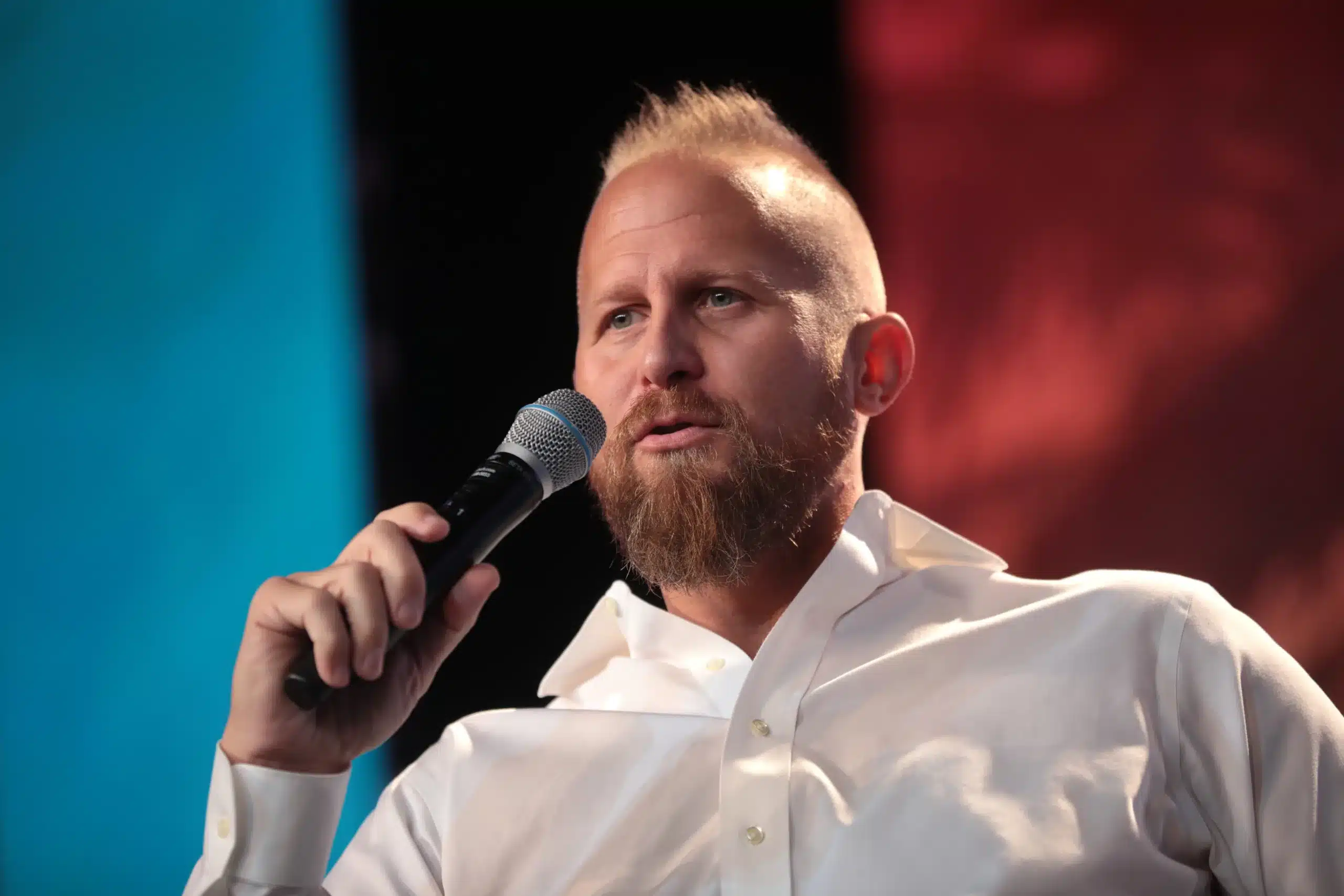
The campaign is advancing along two main tracks. The first is led by Clock Tower X, the firm founded by Brad Parscale, former digital director of President Donald Trump’s campaign. Since September 2025, its contract has explicitly included an objective related to shaping results connected to AI tool conversations.
The newer track is tied to Piro and a website called the Hanover Institute for Public Policy, which publishes dozens of pieces designed in the form of research papers, Q&As, and references.
So far, documents and tests show a documented chain that begins with funding and content production and ends with some pages reaching the search and retrieval systems used by AI bots.
What did the new campaign reveal?
On Aug. 14, 2026, journalist Jacob Wendler published an investigation in the US outlet Politico tracing a public relations campaign linked to the occupation government. It focused on the Hanover Institute, which presents itself as a research institution publishing studies on antisemitism and political and historical issues related to “Israel.”
The site features headlines written as questions, summaries of findings, tables of contents, FAQ sections, footnotes, and references. Wendler’s investigation linked more than a dozen pieces published on the site to a $100,000 campaign to produce and distribute content targeting the American public.
The most notable wave of publishing began on Aug. 6, while the US foreign policy outlet Responsible Statecraft, in follow-up coverage published on Aug. 17, counted at least 100 reports during this wave.
Materials dated earlier than that also appear, including a page published on June 26, indicating that the site was established before the intensive burst of activity that began on Aug. 6.
The materials addressed questions such as “Is Israel carrying out a deliberate starvation campaign in Gaza?” and “Is the Israeli army the most moral in the world?” along with genocide, apartheid, war crimes, the torture of Palestinian prisoners, the organizations that documented occupation crimes, humanitarian aid, and the history of 1948.
A piece by Hanover on starvation in Gaza, published on Aug. 12, reveals how this type of content is constructed. The page reviews summaries issued by Human Rights Watch, the Israeli human rights organization B’Tselem, and Amnesty International, then reframes the discussion around the standard of legal intent.
Alongside that, it presents Israeli figures on aid entry issued by the occupation army, the Foreign Ministry, and the Coordinator of Government Activities in the Territories.
The text ultimately takes the form of a research-style piece containing a direct question, figures, summaries, and extractable references, rather than appearing as a political advertisement or conventional propaganda material.
On its funding page, Hanover says its funder does not choose its topics, review drafts, or approve findings, wording the site presents as evidence of its editorial independence.
That same page also makes clear that, after the recorded relationship began, the institution stopped using descriptors such as “independent,” “nonpartisan,” and “neutral.” This point matters because the site, in its current disclosure, is linked to a chain of companies ending with an advertising agency affiliated with the Israeli occupation government.
Who funds and carries out these campaigns?
Records under the US Foreign Agents Registration Act show the legal and financial connection in the Hanover track. On June 2, 2026, registered its activities with the US Department of Justice, identifying Havas Media Germany as the foreign principal for which it works on behalf of the Israeli government advertising agency Lapam.
Daniel Rosenberg, co-founder of Piro, described the services as strategic communications and media relations, while the filing indicated that political activities could include communications aimed at influencing the American public. On its funding page, the Hanover site itself lists the names Piro, Havas, and Lapam, along with the registration number registration FARA linked to it.
The documents show a broader $900,000 program for “Piro” described as a pilot digital communications project, including audience research, content engineering, writing, production, a distribution plan, and performance measurement. The $100,000 that a Politico investigation linked to Hanover materials represents a smaller scope within this activity.
The available documents do not provide a precise end date for the $900,000 program, describing it as a pilot project without a documented final duration.
This was preceded by the “Clock Tower” track, whose documented contract began Sept. 18, 2025, at a value of $6 million for four months, or about $1.5 million per month. The agreement required the production of at least 100 core pieces and 5,000 derivative versions per month, while seeking 50 million monthly impressions, with 80 percent of the content directed at Gen Z.
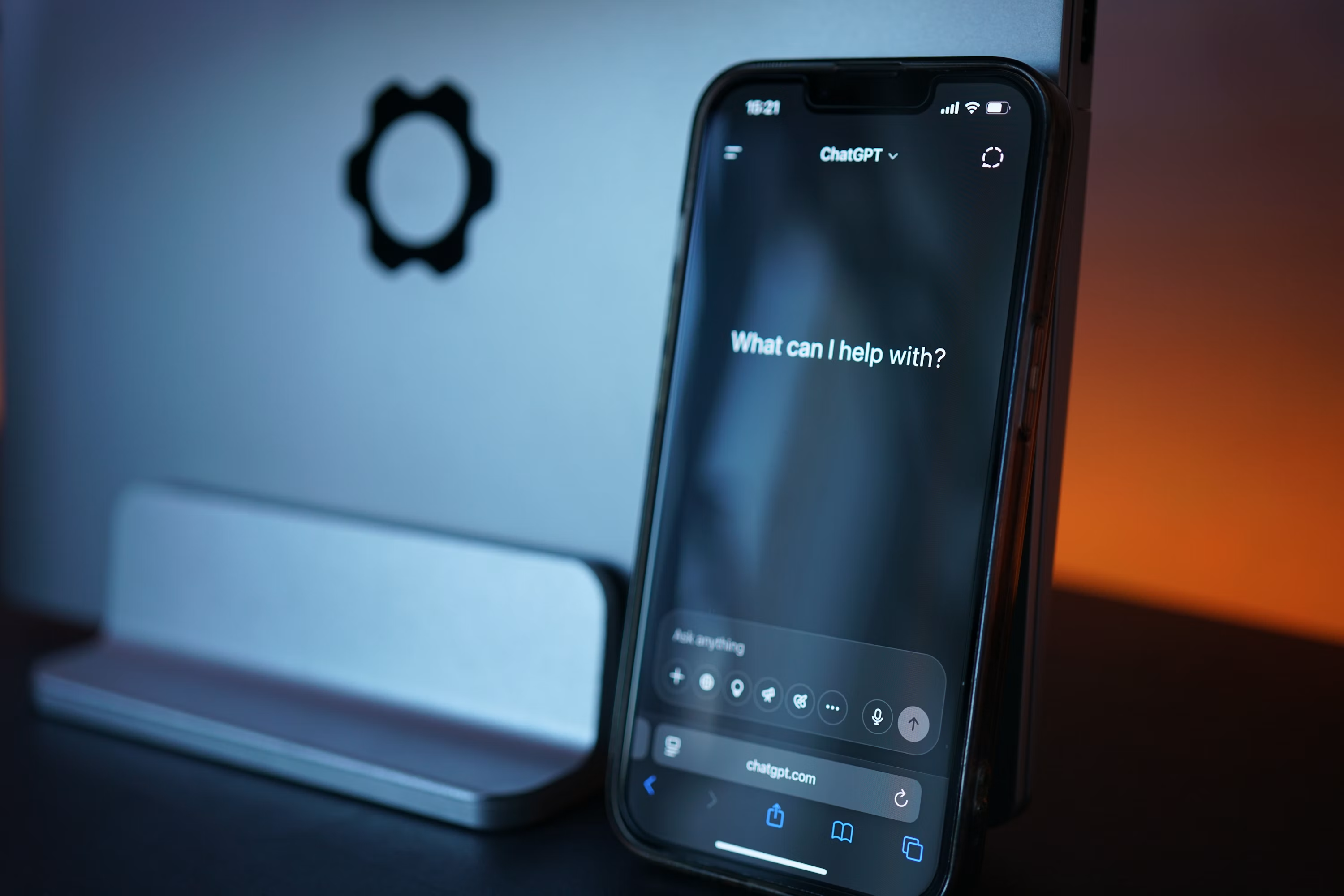
The contract also included the creation of websites and content to achieve what the document stated in English as “GPT framing results,” the clearest phrase in the available contracts regarding targeting the environment in which AI tool results appear.
The value of the program “Clock Tower” expanded in December 2025 from $6 million to $9 million. A later US filing then showed seven monthly payments of $4.5 million for each month from April through October 2026, totaling $31.5 million for this phase.
In an investigation published by the US investigative outlet Drop Site News on July 28, 2026, journalist Nick Cleveland-Stout compiled the contracts, expansions, and related payments and put the total value of the operation at about $46.5 million, a figure that represents the combined phases of the program and does not describe the first contract alone.
Registration documents link the project “Clock Tower” to an agreement providing services to the occupation government through Havas, while the Israeli Foreign Ministry appears as the government entity behind the broader communications project known as “Project 545.”
Eran Shayovich, the ministry chief of staff, appeared as a point of contact for the project. Both the Clock Tower and Piro campaigns share the intermediary Havas and their connection to government bodies of the occupation, though the contracts, contractors, and figures differ between the two tracks.
How does campaign content make its way into AI chatbot responses?
Documents from AI companies explain a pathway that allows content published online to reach a user’s answer within moments.
OpenAI, the company behind ChatGPT, says that its ChatGPT Search service can rephrase a user’s question into one or more queries, send them to search providers, review the results, and conduct additional searches before generating an answer and displaying the links it used.
Google describes a similar mechanism in its “Grounding with Google Search” service used with Gemini: the system analyzes the question, generates queries, runs searches, and processes the results before producing the answer.
And It explains that Microsoft says Copilot can generate queries and send them to the Bing search engine to ground its answer in data from the web, while Perplexity says in its documentation that it searches the internet in real time, then summarizes the results and displays the sources used.
That means a question can move from the user to a search query, then to a page or excerpt selected by the system, after which that excerpt enters the context the model uses when writing its answer.
Any page that a campaign can make indexable, linguistically linked to the question, and organized in a way that makes information easy to extract from it becomes a candidate to enter this chain.
The difference between this process and model training is made clear in the documentation of OpenAI itself. The company uses the OAI-SearchBot crawler for content eligible to appear in ChatGPT Search, while GPTBot is associated with content that may be used in developing foundational models. The company allows site owners to control the crawlers separately, placing real-time search and training on two different technical tracks.
How is content crafted to increase its chances of appearing and being cited?
The techniques aimed at increasing the chances that content will appear in AI tool responses are known as generative engine optimization, or GEO. They are an extension of search engine visibility tactics, focusing on making pages easier to find, extract information from, and cite.
In Clock Tower’s contract , the production of large volumes of content was tied to the use of the Market Brew tool to improve the visibility and ranking of narratives. The company markets tools for query analysis, strengthening semantic links between pages, and modeling site architecture, with the aim of boosting content presence in search and AI systems.
As for Pyro, its website offers a service called “story optimization for AI.” It says it identifies the platforms, websites, and forums that models rely on to access information, then selects target queries and produces content it describes as “engineered according to how language models assess credibility,” before publishing it, measuring citations to it, and revising it based on the results.
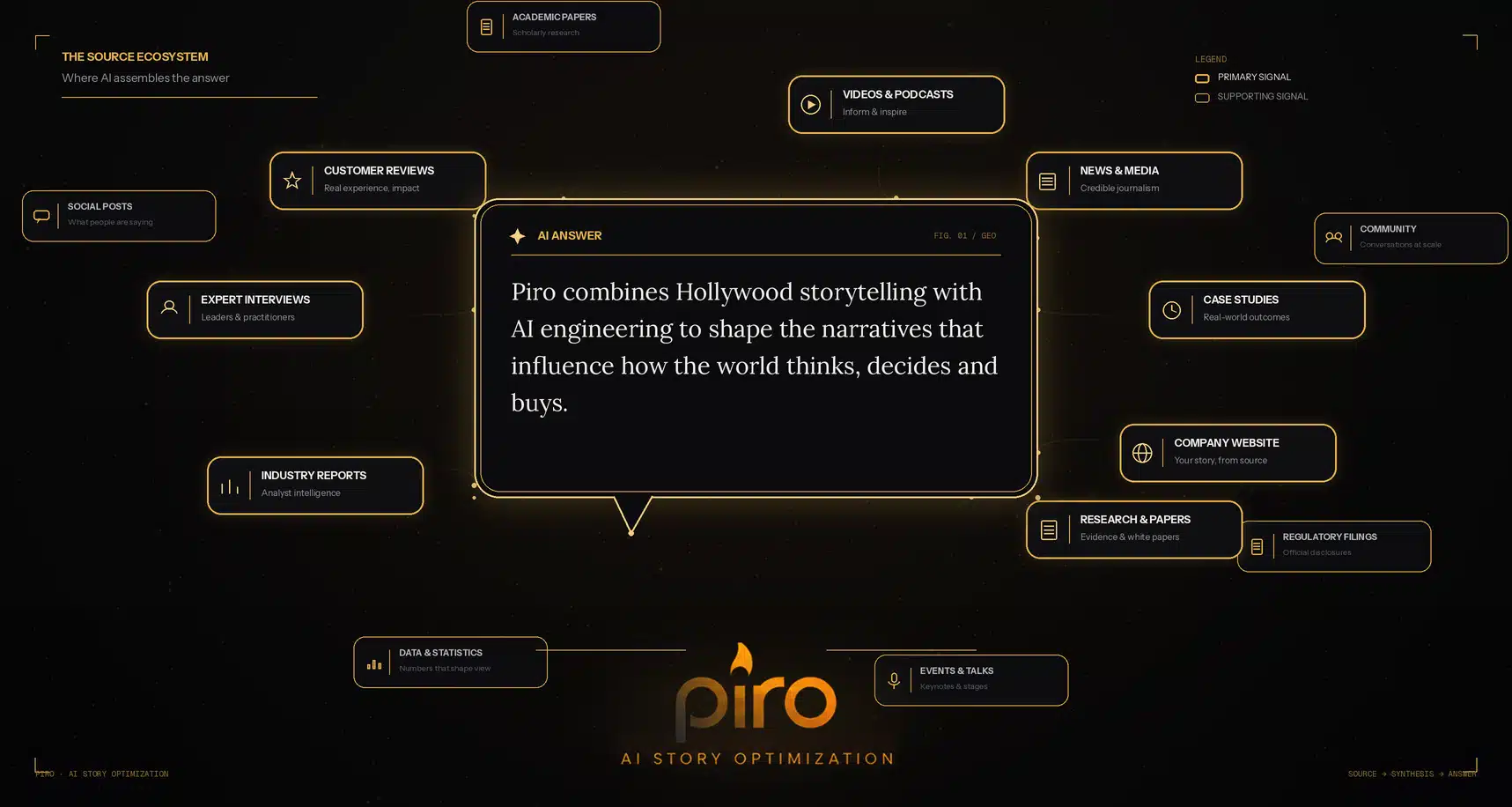
The company explains that it publishes these materials either on the client’s websites or on third-party sites it creates, then retests the landscape, measures citations, and adjusts the content as results change.
Hanover’s materials match this methodology in form as well. Many begin with a title written as a question the user themselves might ask, followed by a summary of the findings, short and precise subheadings, numbers, tables, frequently asked questions, and a list of sources. The linguistic alignment between the question and the title helps at the retrieval stage, while sections such as “key findings” provide short text units that the system can extract and use within the answer.
Politico’s investigation also linked Hanover’s technical infrastructure to the company Rees, or Resonance AI Technology, which markets its services under the slogan “Get recommended by AI” and describes some content as “designed for extraction.”
The company presents a case study saying it published about 70 pieces over six weeks for a client in the cybersecurity sector, then, according to its internal measurements, raised the share of questions that recited the client from 14 percent to 75 percent. These figures remain part of the company’s marketing pitch, while clearly revealing a business model based on publishing, then testing, then modifying content according to citation results.
Academic research also supports the idea that source visibility can be increased in these ways. A research paper on generative engine optimization, whose initial version appeared in 2023, tested about 10,000 queries and found that adding citations, statistics, and documented excerpts improved source visibility in some generative environments by as much as about 40 percent. In an experiment on Perplexity , it recorded an improvement of 37 percent.
These figures are tied to the design of the experiment and the systems used in it, so they indicate the effectiveness of some GEO techniques without becoming a fixed rate that can be generalized to all ChatGPT answers or others.
Has this content actually made its way into user responses?
Politico’s investigation found in tests it conducted that ChatGPT and Perplexity repeatedly cited Hanover materials when asked neutral questions related to Gaza, the occupation army, anti-Zionism, and antisemitism.
This constitutes the clearest direct evidence so far that the new project has reached the retrieval and citation stage sought by services that optimize visibility within AI tools. The tests did not publish a broad statistical rate showing how often Hanover appeared across hundreds of questions or sessions, so what can be measured here remains actual inclusion in the source list in specific, published cases.
Drop Site News had reached a similar result on July 28 with the Clock Tower network. When the outlet asked Perplexity“When asked whether strengthening US military cooperation with “Israel” was beneficial, the site “Alivia,” one of the network’s websites, appeared among the top sources used in the answer.
In another test on the benefits of technological cooperation between the United States and “Israel,” websites affiliated with the network appeared among the sources used by “Gemini” and “Copilot” and “Perplexity.”
The network includes sites with generic names that suggest independent institutions, including “Paxpoint,” “Fact Signal,” “Cognitora,” “Jostorium,” “Culturavia,” and “Compassion Pulse.”
The network’s pages carried disclosures tied to “Clock Tower” registration and the distribution of materials on behalf of the occupying state, but whether that connection appeared to an AI chatbot user varied from one session to another. In a test conducted by “Drop Site” on the website “Paxpoint,” some tools showed its connection to the occupation government, while other tools did not highlight that information in the answer presented to the user.
These tests confirm that the campaign’s websites reached the retrieval and citation layer in specific, documented cases. Measuring the impact of those sources on the substance of the answer, however, requires asking the same question again under similar conditions, with the source both available and blocked, and then comparing the results across a large number of sessions.
What do we know about the use of this content in AI models training?
Drop Site News found 912 archiving instances of websites in the “Clock Tower” network within the “Common Crawl” repository between January and June 2026.
“Common Crawl” is an open repository that collects broad copies of web pages and makes its data available to researchers and companies, and that data can be used to build subsequent datasets.
“Paxpoint” recorded the highest number, with 220 archiving instances, followed by “Alivia” with 158, then “Fact Signal” with 108 and “Cognitora” with 106, while the remaining instances were distributed across the network’s other sites.
The Drop Site investigation also tried to test whether the network’s information existed in the internal knowledge of AI tools through questions that did not appear to rely on direct search, and it found a stronger pattern with “Gemini” and “Copilot,” along with indications in some “Perplexity” tests, while the same pattern did not appear in the tests it conducted on “ChatGPT” and “Claude.”
These results provide indications that some information may have reached internal knowledge or pathways not visible to the user, but they do not reveal the data source each model used during training. A page’s presence in “Common Crawl” proves that it reached an open archive that can be used to build datasets, but that alone does not determine which company selected the page and included it in a specific training cycle.
The picture becomes clearer when the campaigns’ timeline is assembled. Since September 2025, the “Clock Tower” contract appeared, explicitly listing the shaping of results linked to GPT tools among its objectives. Its value then expanded in December, and payments increased throughout 2026.
On June 2, 2026, “Pyro” registered its program linked to “Havas” and “LAPAM,” and in August a wave of intensive publishing by “Hanover” followed, before a Politico investigation revealed that some of its materials had reached the sources of “ChatGPT” and “Perplexity.”
What this sequence establishes is that part of the propaganda funded by the Israeli occupation government moved beyond buying ad space and influencing search engines and social platforms to trying to shape the information environment in which AI chatbots search.
The tools used include producing thousands of pages, creating websites that appear research-oriented or informational, drafting materials around the questions users ask, improving their ability to appear and be retrieved, and then measuring whether they are cited.
Published tests have already shown that some of this content did in fact make its way into the answers of widely used tools, while measuring the scale of its influence on the direction of those answers and proving that it entered the training of a specific model still requires broader data and testing than what was available as of Aug. 17, 2026.