




هذا التقرير متاح أيضًا بـ العربية
In Yemen, the conflict does not appear to be confined to the confrontation between the government and the Houthis. Alongside military operations, questions of influence, the multiplicity of power centers, and the governorates’ demands for resources and development intersect on the ground. Meanwhile, developments in Marib and Hadramout are imposing themselves on the political and military landscape. While Marib, in the government’s view, represents an obstacle to the Houthi project, local demands are emerging in Hadramout that the Yemeni authorities believe must be addressed before they worsen, as a way to avoid their turning into a broader political crisis.
In this context, differences among the anti-Houthi forces are putting the issue of unified political and security decision-making to a difficult test, alongside the continued Saudi presence, while Yemen’s Foreign Ministry is banking on internal cohesion to strengthen its position abroad. As for the peace track with the Houthis, it remains, from the Yemeni government’s perspective, tied to clear guarantees of compliance with any future settlement.
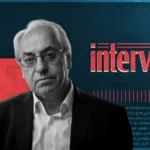
In this interview with Noon Post, Mustafa Ahmed Noman, Yemen’s deputy foreign minister, discusses developments in Marib and Hadramout, Marib’s importance in Yemen’s equation, Hadramout’s demands, differences among anti-Houthi forces, the Saudi and Emirati roles, diplomatic efforts, and the conditions for any future peace track, in addition to what Yemen needs from within and from the international community to break out of the cycle of war and division.
The interview:
Yemen has recently witnessed rapid military and political developments, especially in Marib and Hadramout. How do you read this phase, and are we facing a temporary escalation or a new shift in the course of the Yemeni conflict?
There is nothing new about the military operations carried out by the Houthis. They understand—and this is a well-known strategy—that moving closer to a decisive outcome, whether through peace or war, means the end of their influence and control over the geographic area they seized and tightened their grip on since 2014 through coercion, brutality, abuse of citizens, and depriving them of their most basic rights.
In light of the recent developments in Marib, how do you assess the nature of the escalation and its objectives? Do you see it as specifically tied to Marib, or as part of an attempt to redraw the balance of control and influence in Yemen?
Marib represents the greatest obstacle to the project that the Houthi militia imagines it is capable of entrenching. Were it not for the steadfastness of Marib’s people at the outset, followed by national solidarity among Yemenis who reject the Houthi project, the outcome would have been catastrophic.
Marib is not merely a financial resource; it is a national obstacle to these delusions. The Houthis have been unable to overcome it despite all the human losses they have thrown into the inferno, where they became fuel for the fantasies that gripped their leaders about their ability to drag Yemenis back to the eras of the imamate.
Nor can the national and historic role played by Sheikh Sultan al-Aradah in bringing citizens together and mobilizing energies to protect the future of Marib and Yemen be overlooked.
By contrast, Hadramout is witnessing rapid political and security developments. Do you believe the roots of the tension are tied to local demands, or are there broader political and regional dimensions?
What is happening in Hadramout is a consequence of the crisis the province experienced at the end of 2025. There is no doubt that the demands of Hadramout’s people are legitimate, just like those of the rest of the provinces, in terms of benefiting from the wealth located within their geographic boundaries.
The effort being made by Presidential Leadership Council member and Hadramout governor Mr. Salem al-Khanbashi to improve services — which will positively affect living conditions there — is evident.
Hadramout’s position should serve as a motivating and supportive factor in creating a more positive climate that, if achieved, could attract Yemeni investors first and then foreign ones, and could become a model for the rest of the provinces.
There is a clear multiplicity of forces and components that wield influence on the ground in government-controlled areas. To what extent can the legitimate authority unify political and security decision-making in Hadramout, and what are the main obstacles to that?
What exists on the ground is the natural product and inevitable result of the war that has been raging since 2014. The efforts being made by the Presidential Leadership Council and the government are moving in this direction, which may seem slow to many, but it must be built on a solid foundation so that it does not suffer a setback that everyone is seeking to avoid.
There is no doubt that these differences have affected unity, and that is something now being overcome. The first step is unity of purpose, defining the path, and making sound choices of leaders capable of delivering, away from the idea of regional quota-sharing and with a focus on competence.
How do you assess the Saudi and Emirati roles in the ongoing developments in Marib and Hadramout? Is there a shared vision among the Yemeni, Saudi, and Emirati parties regarding the future of these areas?
Saudi Arabia’s role in Yemen did not begin with the outbreak of the war; it is a long history that will not stop and cannot be severed, because geography imposes its own rules and cannot be changed. It is geography that sets the framework for historical relations, in their ebbs and flows.
Likewise, the Emirati role, which began with the state’s independence, has been positive, and there is ample evidence of that, whether in development projects or in the war in which UAE soldiers fought and in which they gave many young lives and much blood.
In light of the recent developments, do you fear that Hadramout could turn into a new arena for regional competition, alongside the ongoing war with the Houthis? What political and diplomatic tools are available to prevent that?
Hadramout is part of Yemen’s geography, and its local authority has declared and reiterated that the province is not demanding secession, but rather a fair share that would enable it to achieve the development its citizens need.
All issues that begin as rights-based demands and are ignored under the umbrella of vague slogans turn into political demands, and then become calls marked by exaggeration and grandstanding. Addressing local issues without grandstanding before they worsen is the cure for all of Yemen’s social ills, whether in Hadramout or elsewhere.
From your position in the Foreign Ministry, what diplomatic moves are currently underway to contain the escalation in Marib and Hadramout and prevent it from spreading to other areas? Are there any new Arab or international contacts or initiatives in this direction?
The Foreign Ministry and its missions are carrying out their national duty in clarifying the official narrative in the face of the Houthi narrative. But it must be understood that this is tied to internal cohesion and unity of the political ranks, because foreign policy is, by its nature, a reflection of domestic conditions.
It is not possible to speak to the outside world with narratives that contain exaggerations or depart from reality, because the embassies accredited to our country know the details of what is happening and have an accurate assessment of internal conditions. The duty of our missions is to earn the world’s trust in the narrative they present.
After years of war and incomplete negotiations, is the political track with the Houthis still a realistic option? If so, what conditions or guarantees do you see as necessary for any future settlement to succeed?
The conditions for engaging in peace tracks are known and clear to everyone, and without guarantees that the Houthis will abide by them, then talk of negotiations becomes nothing more than a waste of time and effort.
I repeat that the Houthis show no enthusiasm or desire even to talk about a peaceful solution, because they know that peace is the beginning of the end of their destructive project for society.
The cost of peace is far greater than the cost of war, and the Houthis understand this. That is why sub-state entities seek to perpetuate unrest and instability, because that is the environment best suited to their activities and prosperity. From this standpoint, focusing on creating the model people aspire to in areas controlled by the government is the shortest path to getting rid of these entities.
Finally, if the current escalation continues, what scenario do you expect for Yemen’s future in the coming period? What does Yemen need today from Arab states and the international community to prevent a slide into a new round of war and support a political path that ends the division?
Continuing to rely on the international community is important, but secondary. It must be preceded by internal effort, which, if the world sees it as serious, will then enable it to provide the necessary financial assistance.
The international community knows the finest details of what is happening and is following developments and changes. What is required is to address it in a different language that it understands, far from exaggeration. We must stop presenting the issue in the manner of a supplicant, because the domestic front is the foundation, while the media and the international community are only supporting factors. They cannot be relied upon to change realities on the ground.