










هذا التقرير متاح أيضًا بـ العربية
Colombia has recently come under a broad wave of condemnation from a number of Arab and Islamic countries over its sudden decision to recognize what it called “Israeli sovereignty” over the occupied Syrian Golan Heights, making it the second UN member state, after the United States, to take this controversial step.
Colombia’s Foreign Ministry justified the decision, announced on Monday, Aug. 10, by citing what it described as the continued state of regional instability in the Middle East and the strategic importance of the Golan to Israel’s security, declaring Bogota’s recognition of “Israeli sovereignty” over the area and what it called “Israel’s right to protect itself from external threats.”
This shift in Colombia’s position comes just days after current President Abelardo de la Espriella took office, in a change that runs completely counter to the policy of Gustavo Petro’s previous government. It was met with broad welcome from the Israeli Foreign Ministry, which described the recognition as “historic.”
Beyond the sense of shock that has gripped some over this sudden shift in Colombia’s position, a reading of the history of relations between Bogota and Tel Aviv shows that the matter does not appear as exceptional as the current scene might suggest. For decades, Colombian-Israeli relations have been marked by a high degree of closeness, cooperation and intimate alliance.
This trajectory saw no sharp retreat or even temporary cooling except during the Gaza war, which represented an exceptional and temporary moment in the history of those relations, as in the relations of many other countries, when Colombia under Petro adopted a position more inclined toward humanitarian considerations and more critical of Israel’s fascist policies against the Palestinian people in Gaza and the rest of the occupied territories.
Relations between the two countries offer a clear example of how policy toward Israel has become a mirror of ideological changes within Colombia itself. Whenever the identity of the ruling authority and its political orientation shift, that is directly reflected in the nature of the relationship with Tel Aviv, between closeness and alliance on the one hand, and political rupture and confrontation on the other
Early recognition.. seven decades of close ties
Colombian-Israeli relations began very early, emerging alongside the Israeli occupation of Palestinian land. Bogota recognized the occupying power in February 1949, making it one of the countries that moved quickly to do so. Diplomatic relations were then established and the two embassies opened in 1957, ushering in a new phase of growing cooperation and partnership.
In the 1980s, relations between the two sides entered a notable turning point with the expansion of security and intelligence cooperation. The two countries also concluded numerous security and economic agreements, and Israel later became one of the leading suppliers of technology and military equipment to Colombia, which increasingly relied on Israeli weapons to arm its military forces.
Over time, Israeli defense technology was transferred to Colombia, which in turn began developing its capabilities in military and defense industries. This contributed significantly to supporting it during its long war against the Revolutionary Armed Forces of Colombia, or FARC, as well as drug networks and armed groups. From that point on, Israel became for Bogota not merely an economic partner, but a close security and military partner.
In 2013, the two countries signed a free trade agreement that entered into force in August 2020, deepening relations further at the military, economic and political levels. This closeness was also reinforced through exchanges of official visits: Benjamin Netanyahu visited Colombia in September 2017, while Colombian President Ivan Duque visited Israel in 2021.
From 1949 through 2021, relations between the two countries saw no sharp tension or dispute threatening their strategic foundations. Even when the government of Juan Manuel Santos formally recognized the State of Palestine in August 2018, that step did not lead to a break with Israel, as happened in other cases. At the time, Bogota tried to strike a middle course by preserving its close relations with Israel while also responding to regional and international pressure calling for recognition of the Palestinian state.
Petro and the turning point
With Gustavo Petro’s rise to power in 2022, Colombian-Israeli relations entered an exceptional turn of tension and chill. Petro, the first leftist president to govern Colombia, reshaped the contours of his country’s foreign policy toward Tel Aviv, adopting a position more supportive of and closer to the Palestinian cause and the rights of the Palestinian people, while becoming more critical of Israeli policies.
Petro’s positions toward Israel were not limited to political criticism alone. They went further into firmer stances that made him one of Latin America’s most outspoken leaders in criticizing Israel and supporting the Palestinian cause. In his address to the UN General Assembly in September 2023, he criticized what he described as the international community’s double standards in dealing with the Palestinian issue and the Israeli occupation, comparing the international position on Russia’s occupation of Ukraine with its stance toward Israel’s occupation of Palestinian land. He then called on the United Nations to sponsor an international peace conference on Palestine in parallel with a similar conference on Ukraine.
In the early years of Petro’s rule, Colombian-Israeli relations moved from being one of the clearest examples of closeness and tight alliance into a phase of mounting tension and disputes, before reaching their peak with the outbreak of Israel’s savage, barbaric war on the Gaza Strip. That war marked a decisive and exceptional moment in the history of relations between the two countries and paved the way for the dispute to move from the level of political rhetoric to sharper diplomatic and economic measures.
Gaza.. the earthquake that shook relations
The Gaza war came as an explosion that shook the foundations of the relationship between the two countries. From the first days of the war, Petro adopted a clear political position centered on calling for peace talks leading to full recognition of the Palestinian state and an end to the occupation. As Israel’s savage, barbaric bombardment of the Gaza Strip escalated, he raised the tone of his rhetoric to an unprecedented level, linking the occupation’s practices to some Nazi practices. This angered Tel Aviv, which responded by suspending its military exports to Colombia, in a move seen as punishment for Bogota’s position.
The Colombian government did not stand idly by in the face of the Israeli response. It answered by recalling its ambassador to Tel Aviv for consultations on Oct. 31, 2023. Petro said at the time that Colombia could not keep its ambassador there if what he described as the “massacre of the Palestinian people” did not stop, further intensifying the strain and tension between the two countries.
The clash then moved onto other tracks when Colombia formally intervened before the International Court of Justice in April 2024 in the case brought by South Africa against Israel under the Genocide Convention. Colombia’s Foreign Ministry said the step was intended to provide tangible support for the Palestinian cause in the international judicial arena.
In May of the same year came the most confrontational step, when Petro announced the severing of diplomatic relations with Israel, accusing Benjamin Netanyahu’s government of committing “genocide” in Gaza. Days later, he ordered the opening of a Colombian embassy in Ramallah, in a move aimed at upgrading relations with the Palestinians and strengthening diplomatic support for the Palestinian state.
The escalation was not limited to the political and diplomatic levels, but extended into the economic sphere as well. In the summer of 2024, the government in Bogota decided to ban Colombian coal exports to Israel and tied the continuation of the ban to Israel’s compliance with the provisional measures issued by the International Court of Justice. Bogota later hosted moves within the “Hague Group” aimed at coordinating international measures toward Israel.
Then came October 2025 as the most dangerous watershed in the course of relations between the two countries, when the Colombian government expelled what remained of Israel’s diplomatic mission in the country after Israel detained two Colombian women who had taken part in the “Global Sumud Flotilla” bound for the Gaza Strip, pushing relations between Bogota and Tel Aviv into one of the worst phases in their history.
Thus Gaza once again proved to be the foremost thermometer in shaping state policies and the orientations of peoples. Just as it marked a pivotal moment in the history of Colombian-Israeli relations, it also became a turning point in redrawing an important part of the map of international positions toward Tel Aviv, playing a central role in widening the gap between the occupying power and global public sentiment, which has increasingly begun to tilt toward supporting the rights of the Palestinian people.
De la Espriella and restoring the alliance to its course
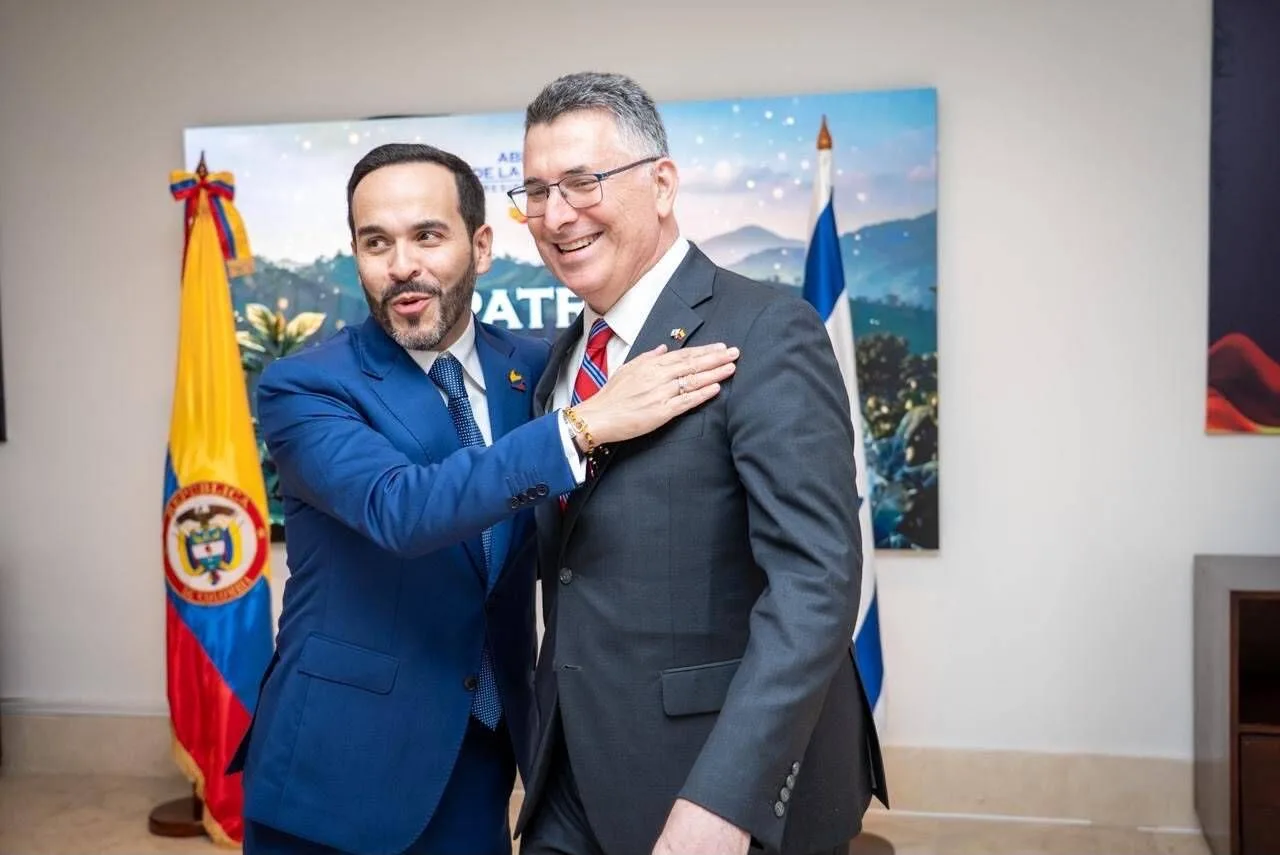
With the victory of hard-line right-wing lawyer Abelardo de la Espriella, backed by US President Donald Trump, in Colombia’s presidential election held last June, relations with Israel underwent another reversal in their trajectory, quickly returning to the path of closeness and alliance that had prevailed before Petro took office.
Before winning the election, de la Espriella had announced that once in power he would work to restore the historic alliance with Israel. His team also held prior understandings and contacts with the Israeli side regarding the restoration of diplomatic relations between the two countries and the strengthening of areas of joint cooperation, an early indication that the Petro period, which represented a clear exception in the history of Colombian-Israeli relations, was on its way out.
Yet the Colombian shift toward Tel Aviv was not limited to promises to restore relations to what they had been before 2022. It appeared to be heading toward a more advanced level of political and diplomatic closeness. Alongside Bogota’s recognition of what it called “Israeli sovereignty” over the occupied Syrian Golan Heights, de la Espriella announced his intention to move his country’s embassy from Tel Aviv to Jerusalem.
Such moves reveal a declared and clear Colombian orientation toward inaugurating a new phase of intimate relations with the occupying power, one that may surpass in its level of closeness and alliance what relations were before the Petro era. This would once again return Bogota to the position of one of Tel Aviv’s leading allies in Latin America, alongside Argentina and Venezuela, and a central instrument in the Zionization of a continent that for long decades remained resistant to Israeli penetration.
From this perspective, this Colombian shift in its relations with the occupying power, and the near-total submission to the Israeli agenda that has accompanied it, can be read as a return to the traditional course of relations between the two countries, not a break from it as some describe it. In reality, Petro’s time in office and the Gaza war were the exception to the rule, the only moment when Bogota broke from the flock of close relations and strategic alliance with Tel Aviv that had extended for more than seven decades.