








هذا التقرير متاح أيضًا بـ العربية
After nearly seven years of opposition, Libya’s House of Representatives in Benghazi unanimously approved the maritime memorandum of understanding signed in November 2019 between the former Government of National Accord and Türkiye. All 110 members voting on Tuesday, 20 October, backed the agreement, which defines the two countries’ maritime jurisdiction areas in the Mediterranean.
The vote also reversed the decision to sever political relations with the Republic of Türkiye. Its significance goes beyond a passing diplomatic rapprochement, marking a striking shift in Libya’s alliances and political balance, particularly in relations between the eastern Libyan camp and Ankara.
The Government of National Accord and Türkiye signed the maritime agreement on 27 November 2019 to define their respective maritime jurisdiction areas in the Mediterranean. It entered into force between the two parties on 8 December that year and was registered with the United Nations on 11 December 2019.
Approval by the House of Representatives in Benghazi does not, in itself, bring the agreement into force or resolve the legal and political controversy surrounding it. It does, however, represent a fundamental shift by a legislative institution that had been one of the agreement’s most prominent opponents in Libya since its signing.
This raises questions about what prompted the shift, Benghazi’s place in Türkiye’s new approach to Libya, and what Khalifa Haftar’s camp hopes to achieve by reshaping its relationship with Ankara. It also raises questions about the implications of this rapprochement for Libya’s alliances and the regional balance of power in the eastern Mediterranean.
– Libya’s House of Representatives, based in the east of the country and close to Khalifa Haftar, voted unanimously to adopt two memorandums of understanding with Turkey on delimiting maritime jurisdiction areas and on security and military cooperation.
– Parliament canceled two decisions it issued in 2020, the first rejecting ratification of the two memorandums signed with Ankara and the second severing political relations with it.
– The two memorandums were signed on Nov. 27, 2019, between the Government of National Accord headed by Fayez al-Sarraj and the Turkish government, to define maritime jurisdiction areas and strengthen military and security cooperation between the two countries.
– The decision comes after growing rapprochement between Ankara and the authorities in eastern Libya, and a change in the leadership of the Libyan parliament this October, reflecting a shift in its previous position toward Turkey.
– Approval of the maritime agreement could pave the way for expanding Turkish oil and gas exploration activities in Libyan waters, despite Greek objections to the agreement.
— Noon Post (@NoonPost) October 20, 2026
No coincidence
This shift was no coincidence. It emerged from a series of political and diplomatic developments in Libya in recent months, with Türkiye among the main drivers. Ankara expanded communication and coordination with Khalifa Haftar’s camp in the east while maintaining close ties with the Tripoli camp in the west.
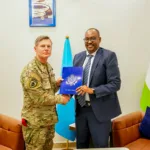
These parallel efforts were evident in the timing of the House of Representatives’ vote, which coincided with talks held by Turkish intelligence chief Ibrahim Kalin in the capital, Tripoli. These included a meeting with Abdul Hamid Dbeibah, prime minister of the Government of National Unity. Ankara is seeking to build a broader network of relations with Libya’s various parties and centres of power, reducing the extent to which its interests depend on a single side in a political environment that remains highly fluid.
Tuesday’s decision followed earlier steps that had prepared the ground. In June 2025, the House of Representatives formed a technical committee to study the maritime agreement submitted by the appointed government led by Osama Hammad. This was the first practical indication that the eastern Libyan legislature was reconsidering an agreement it had long rejected.
The development also came only about two weeks after al-Salihin Abdel Nabi was elected speaker of the House of Representatives, succeeding Aguila Saleh, who had opposed the agreement for years. Abdel Nabi’s election has added significance because he previously chaired the Libyan-Turkish parliamentary friendship committee and helped develop channels of communication between the two countries’ legislatures.
Ratification is also difficult to separate from broader changes in relations between Ankara and eastern Libya, involving individuals, institutions, and political and diplomatic contacts. The relationship has gradually moved from hostility and confrontation towards a more pragmatic approach based on mutual interests and revised political calculations. This also has wider implications for Türkiye’s place in Libya’s changing political landscape.
A strategic gain: what does the shift mean?
An initial reading of this striking shift is that Ankara has largely succeeded in changing the political standing of the maritime agreement. Once tied to the Tripoli camp in its confrontation with the east, and long disputed or opposed by several Libyan political forces and groups, it is now accepted by both rival political institutions, or nearly so. This broadens its support within Libya and gives it a different political weight from when it was signed in 2019.
Seen in this light, the shift can be viewed as a strategic gain for Ankara and the culmination of a long process of diplomacy, political engagement and rebuilding relations. Türkiye intervened forcefully in the Libyan crisis in 2019 as a main backer of the Tripoli camp against Haftar and the eastern camp. Nearly seven years later, its diplomacy and broader approach to Libya have enabled it to overcome hostility in the east and build greater trust and shared interests with its centres of power.
Ankara has thus gradually moved from backing one Libyan side against another to a more flexible position, allowing it to communicate and coordinate with both and engage with the country’s main centres of power and influence. This helps protect Turkish interests from domestic political fluctuations. It also gives Ankara greater scope to play a political role in future arrangements or settlements, and perhaps to build on this breakthrough to advance efforts to resolve a crisis that has defied settlement for years.
The House of Representatives’ decision to reverse the severing of political relations with Ankara is also significant. It shows that the shift extends beyond maritime boundaries to a broader reshaping of relations, effectively beginning a process of institutional normalisation between Türkiye and eastern Libya.
If this process continues, it is likely to have direct implications for Türkiye’s presence in Libya and its place in the country’s internal politics. It opens the way for Ankara to extend its influence beyond its historical ties to the west and the Tripoli camp, giving it greater room to manoeuvre between east and west. This increases the prospect of Türkiye moving from a party to Libya’s conflict to an influential actor in reshaping it.
Benghazi’s place in Türkiye’s approach
Over the years, Ankara has sought to reshape its presence in Libya. Initially, one of the most prominent expressions of that presence was its support for one side against another. Over time, it has developed into a broader network of interconnected interests spanning security, defence, energy, reconstruction, trade and infrastructure. These sit alongside maritime and strategic interests linked to the balance of power in the eastern Mediterranean.
This helps explain how Benghazi changed from the centre of a camp opposed to Ankara into a key consideration in Turkish policy. Türkiye appears to have gradually recognised that Tripoli alone is not enough to protect its long-term interests. Building strategic interests around one camp alone remains a risky bet, especially in Libya’s highly volatile political environment, where any change in the balance of power or structures of authority can put those interests to a serious test.
Political pragmatism also requires Ankara to acknowledge eastern Libya’s sources of power and influence, which are difficult to ignore. These include the military institution affiliated with Haftar’s camp and the political and legislative weight of the House of Representatives in the conflict. They also include resources, ports and strategic facilities concentrated in the east and the oil crescent, as well as the eastern camp’s ties to Egypt and a range of Arab, regional and international powers.
– Libya’s Foreign Ministry announced the start of procedures to release 10 activists representing the negotiating delegation of the “Global Sumud Land Convoy” and deport them from the country, after they had been deprived of their freedom for a full month.
– The release decision came directly and immediately after the meeting that brought together Turkish intelligence chief Ibrahim Kalin and Libyan army deputy commander Saddam Haftar in the city of Benghazi.
– The details of the case go back to May 24, 2026, when forces affiliated with “Haftar” in eastern Libya detained the activists as they sought to organize a land convoy aimed at breaking the siege on the Gaza Strip and delivering humanitarian aid.
– The Libyan authorities based their decision to expel the activists from the country and end their crisis on official rulings issued by the Benghazi Court of Appeal and the public prosecutor’s office.
— Noon Post (@NoonPost) June 24, 2026
Another factor shaped Ankara’s calculations: the lack of domestic political consensus that had long weakened the maritime agreement signed with Tripoli, owing to the eastern camp’s continued opposition. That opposition was not, in itself, sufficient to cancel or legally terminate the agreement. But it remained a weakness in terms of Libyan consensus and acceptance, allowing opponents to question whether the agreement represented a unified Libyan position.
Together, these factors convinced Ankara that it could not expand its role from an influential player in western Libya to a power with a presence across the country without engaging Benghazi and building stable understandings with the eastern camp. The same was true of its effort to move beyond its historical ties to one side of the conflict and establish channels of communication and interests with Libya’s various centres of influence.
From this perspective, Türkiye’s opening to Benghazi was part of a broader reorientation of its Libya policy, rather than a passing tactical shift. The process began with expanded communication and the development of shared interests. Its latest expression was the House of Representatives’ vote in favour of a maritime agreement that the same camp had been among the fiercest opponents of years earlier. This reflects the scale of the change both in Benghazi’s place in Turkish calculations and in Ankara’s position within Libya’s balance of power.
What does Haftar want from rapprochement with Ankara?
The eastern Libyan camp’s shift cannot be understood in isolation from Haftar’s calculations and his camp’s political ambitions. A change of this magnitude appears neither purposeless nor random. It comes amid a highly complex regional situation, as influence and interests shift among the powers that have backed his camp over the years, from Egypt to Saudi Arabia and the UAE. Russia’s presence in Libya is another part of this picture.
Perhaps most notably, the first prominent comment on the vote came from Saddam Haftar himself. He said the agreement could help protect Libya’s economic interests and create wider opportunities for cooperation, investment and long-term partnerships, describing Türkiye as an important regional power. His remarks clearly reflect the eastern camp’s new, pragmatic approach to Ankara.
Haftar’s camp can gain in several ways from this rapprochement. Chief among them are wider political recognition and a stronger position in any future arrangements for power in Libya. It can also diversify sources of investment and reconstruction support, attracting Turkish companies and projects to the east. Further gains include expanded security and military cooperation and an additional channel of influence over Tripoli, given Türkiye’s longstanding position as the western camp’s most influential external backer.
One of the most significant potential gains, however, concerns the regional balance of influence. Rapprochement with Ankara gives Haftar greater room for political manoeuvre among competing powers, allowing him to diversify his allies and partners and avoid complete dependence on his traditional allies. This approach takes on greater importance as relations shift among the regional powers involved in Libya, including Cairo’s growing engagement with Tripoli and increasing differences between Saudi Arabia and the UAE on some issues.
As Field Marshal Khalifa Haftar reaches the age of 83, will the “rapid succession” plan for his youngest son, Saddam, succeed? How has the international community reacted to his rise? And will tribal leaders and western Libya accept him as a future ruler?
https://t.co/EhSsSaTJGs
✍️ @Aseif_Elnasr https://t.co/rx5TWV61y2
— Noon Post (@NoonPost) July 3, 2026
An opening to Türkiye does not necessarily mean Haftar’s camp is abandoning its traditional allies or exchanging one alliance for another. It can instead be read as an attempt to rebalance its external relationships and build a more diverse network, allowing it to engage with the powers influencing Libya with greater independence and room for manoeuvre.
Another interpretation concerns Saddam Haftar’s growing political ambition and the arrangements he may be making for the future of power in Libya. Achieving that ambition requires political, security and military partnerships beyond the eastern camp’s traditional circle.
This is one way to understand the channels of communication Haftar’s son has opened with several regional and international powers in recent months, seeking wider acceptance and presenting himself as someone they can work with. He may also be seeking to present himself as a ready and reliable alternative in arrangements for “the day after” and for the future of power and the state in Libya.
The significance of parliamentary ratification therefore extends beyond the agreement itself. It signals a major breakthrough for Ankara’s influence in Libya. Türkiye, whose presence was tied to the western camp for years, has gradually overcome hostility in the east. Benghazi has moved from being one of the main centres of opposition to Turkish policies and agreements to a party with which Ankara can reach understandings on one of the most sensitive and complex issues.
Türkiye’s most important gain thus goes beyond wider political acceptance of the maritime agreement. It lies in reshaping Ankara’s position in Libya: from influence largely tied to one side of the conflict to a greater ability to communicate with and influence both. This gives it more scope to protect its interests and help shape future political, security and economic arrangements.
The vote and its implications appear to mark the culmination of years of Turkish engagement that have reshaped an important part of Libya’s balance of influence. Yet that success raises a broader question: how will the regional powers involved in the eastern Mediterranean respond to this shift, and how far will it affect their calculations, interests and existing alliances?
