






هذا التقرير متاح أيضًا بـ العربية
As the Iraqi government pledges to bring all weapons under state control and end the autonomy of armed factions, Laith al-Khazali, one of the most prominent leaders of the Iran-linked Asaib Ahl al-Haq, has become deputy prime minister. His appointment gives the movement a senior role in the executive, alongside the Ministry of Labour and Social Affairs secured by its political wing, as negotiations continue over the future of its weapons and military influence.
Khazali’s rise, despite being under US sanctions, reveals how political and security calculations overlap in the formation of Ali Falih al-Zaidi’s government. The movement demanded the post before announcing its readiness to hand over its weapons. Diplomatic sources also spoke of implicit US acceptance of the appointment in exchange for security commitments, raising questions about Baghdad’s ability to establish a state monopoly on arms and what these understandings mean for its relationship with Washington.
From Asaib to government: Laith al-Khazali’s rise
Laith Hadi Sayyid al-Khazali began his military career as Asaib Ahl al-Haq emerged between 2005 and 2006, following splits within the Mahdi Army, the armed group led by Iraqi cleric and politician Muqtada al-Sadr during the US occupation of Iraq.
He was among its earliest leaders alongside his brother Qais, the group’s secretary-general. Asaib received support from Iran’s Revolutionary Guard and Lebanon’s Hezbollah and took part in attacks against US forces.
The brothers came to prominence after the attack on a government compound in the central Iraqi city of Karbala on 20 January 2007, which killed five US soldiers and wounded three others. The US Treasury accused them of playing leadership roles in the operation. The gunmen used uniforms and equipment resembling those of US forces to pass through security checkpoints.
In March 2007, British special forces arrested the brothers near Basra in southern Iraq, along with Hezbollah commander Ali Musa Daqduq. They were later held by US forces before Laith was transferred to Iraqi authorities in June 2009.
The transfer came amid negotiations over the fate of five Britons kidnapped from Iraq’s Finance Ministry building in May 2007: computer expert Peter Moore and four of his guards.
Asaib’s political and security activities expanded with the withdrawal of US forces in 2011. Its armed formations later took part in the fight against the Islamic State group, which seized large parts of Iraq in 2014. Brigades linked to Asaib became part of the Popular Mobilisation Forces (PMF), the military institution granted legal status by parliament in November 2016.
On 6 December 2019, the US Treasury imposed sanctions on Laith al-Khazali and his brother under the Global Magnitsky programme, which is designed to punish those involved in gross human rights abuses and corruption.
The department accused Laith of leading efforts to drive Sunni residents out of areas in Diyala province in 2015, including killings. It also accused Asaib of widespread abuses against civilians and of opening fire on protesters during the 2019 demonstrations.
On 3 January 2020, the US State Department announced the designation of Laith and Qais al-Khazali as “Specially Designated Global Terrorists,” while also designating Asaib Ahl al-Haq as a foreign terrorist organisation. It cited allegations relating to attacks on US and coalition forces and the support the group received from Iran’s Revolutionary Guard.
Washington continued to treat Laith as an influential leader within Asaib. On 7 May 2026, the US Treasury announced sanctions on economic networks linked to the movement. It accused Mustafa Hashim Lazim al-Bahadli, whom it described as Asaib’s economic official, of working directly with Khazali to finance oil-smuggling operations and manage activities linked to the metals sector.
The department said Bahadli helped expand Asaib’s presence in the oil and metals sectors and used companies, projects and government contracts as fronts for financial activities linked to the organisation. It also imposed sanctions on four Iraqi companies he owns or controls that operate in the oil sector and related services.
The November 2025 parliamentary elections strengthened Asaib’s political influence after its political wing, the Sadiqoun Movement, won 28 seats. One of its leaders, Adnan Faihan, became first deputy speaker of parliament, giving the movement a stronger position in negotiations over the formation of the government and the allocation of executive posts.
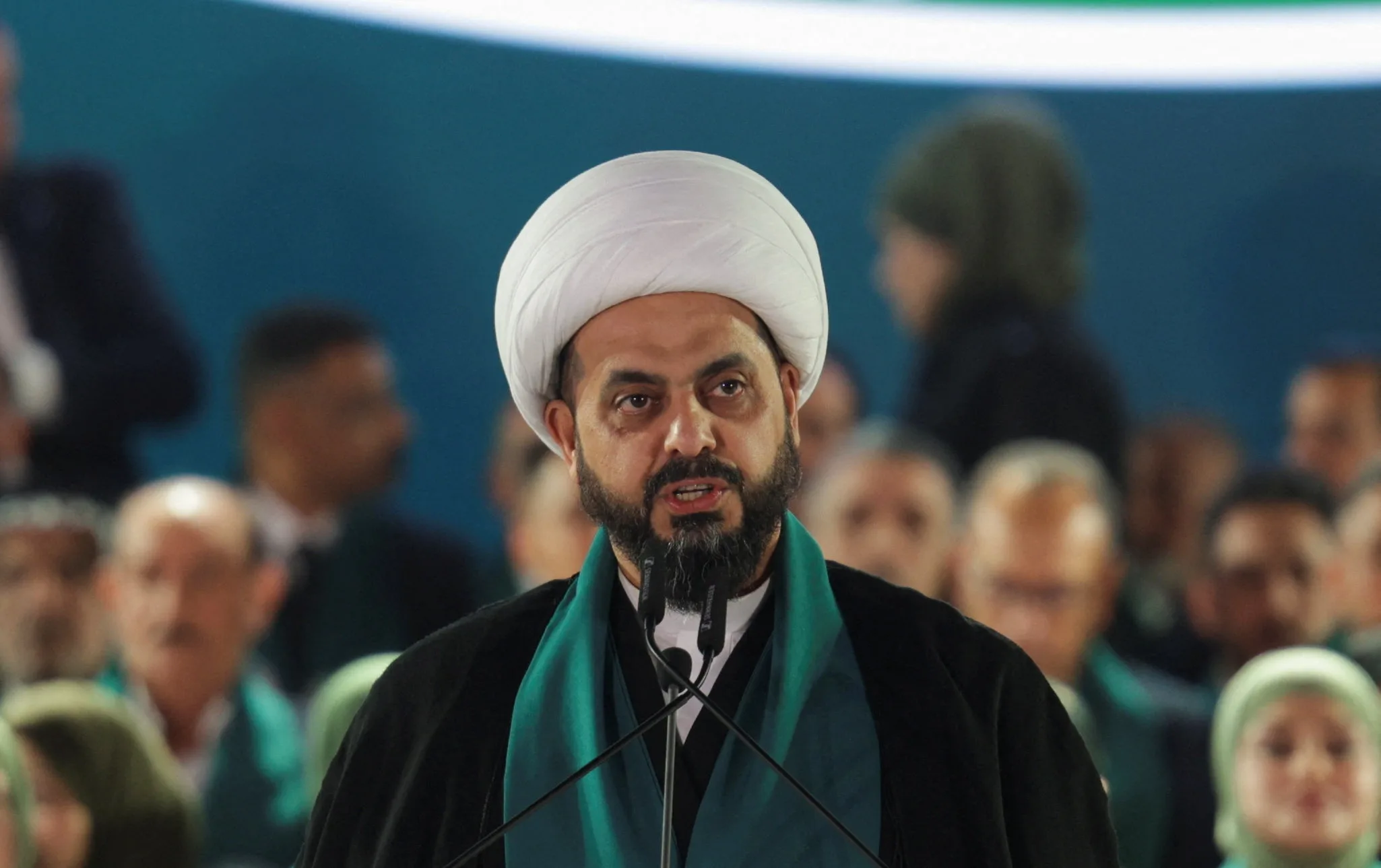
This coincided with Ali al-Zaidi’s rise to the premiership through an agreement within the Coordination Framework. The bloc includes the most prominent Shia political forces, among them parties and movements linked to Iran-backed armed factions. Former Prime Minister Nouri al-Maliki’s nomination had faltered because of US objections, before Zaidi won President Donald Trump’s support and took office in May 2026.
Zaidi began governing with an incomplete cabinet. Parliament approved 14 ministers on 14 May, but key portfolios, including the interior and defence ministries, remained unresolved because of disputes among political forces over the allocation of posts. Negotiations to complete the government continued for nearly five months.
On 19 May, Ahmed Adnan announced that Sadiqoun was demanding the Ministry of Labour and Social Affairs and one of the deputy prime minister posts. Adnan, a member of the movement’s general body, confirmed that Laith al-Khazali was its nominee for deputy prime minister, while its choice for the ministry remained under negotiation.
The movement continued to demand both posts until parliament voted on 15 October 2026 to appoint Laith al-Khazali as deputy prime minister and Sadiqoun’s nominee, Mohammed Raad al-Moussawi, as minister of labour and social affairs. The session, attended by 261 lawmakers, included a vote on three deputy prime ministers and 11 ministerial portfolios.
During the session, Zaidi explained that his deputies would receive no additional salaries or financial allowances, and no staff posts would be allocated to their offices. Their work would take place in the field, according to their areas of expertise and citizens’ needs. A number of lawmakers objected to the creation of new government posts as part of power-sharing agreements.
On 18 October, at a celebration held by the movement to mark the new posts, Qais al-Khazali announced that Sadiqoun had received its rightful share of government positions. He specified that his brother would serve as deputy prime minister for services affairs, alongside the movement’s control of the Labour Ministry. In his first remarks after the appointment, Laith affirmed his commitment to serving citizens and carrying out his assigned government duties.
The following day, Faiq Zaidan, head of Iraq’s Supreme Judicial Council, received him in his new capacity. The two discussed legal aspects of development matters. The detailed executive powers of Khazali’s post have yet to be announced.
How does his appointment fit with the government’s pledges on weapons?
Establishing a state monopoly on arms has been one of the Zaidi government’s most prominent pledges since taking office. It faces mounting US pressure to end the autonomy of Iran-linked armed factions, particularly those with formations within the PMF that retain organisational and leadership ties to political parties in government.
The government relies on the legal framework governing the PMF. The law passed by parliament in 2016 defines it as an independent military formation within the Iraqi armed forces, reporting to the commander-in-chief and subject to military law. It also requires members to separate themselves from political, party and social structures and prohibits them from engaging in political activity.
Implementing that separation remains disputed because some brigades retain links to the leaders of the factions from which they emerged. Control over weapons therefore depends on chains of command, procedures for issuing orders, the management of weapons depots and funding, as well as the Popular Mobilisation Commission’s legal subordination.
Asaib Ahl al-Haq’s pledges to separate military and political activity date back years. On 13 December 2017, Qais al-Khazali announced the movement’s intention to sever its ties with armed formations incorporated into the PMF and place weapons exclusively under state control. Asaib drew on that position when renewing its pledges in June 2026.
The latest move came in early June, when Asaib announced a central committee headed by one of its leaders, Jawad al-Talibawi, to implement the decision to sever ties with PMF formations. The committee was tasked with drawing up an inventory of weapons, vehicles, equipment and personnel and coordinating with the commander-in-chief of the armed forces. The decision covered Brigades 41, 42 and 43, which are linked to Asaib within the PMF.
The announcement responded to the Coordination Framework’s call for weapons to be placed exclusively under state control, as well as directives from the Shia religious authority represented by Grand Ayatollah Ali al-Sistani.
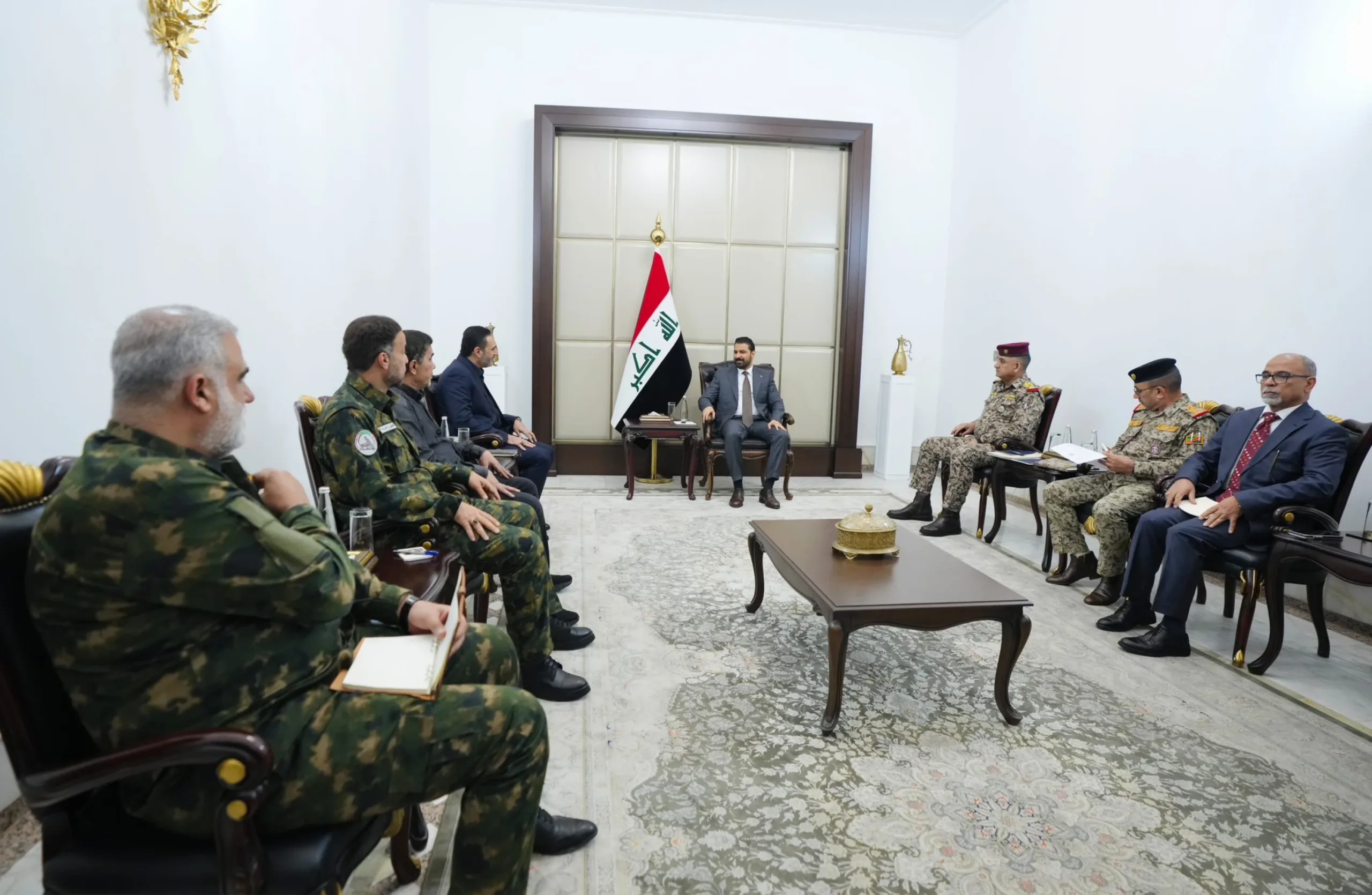
The following day, Zaidi received delegations from Asaib Ahl al-Haq and Kataib Imam Ali, an armed group led by Shibl al-Zaidi. He announced a joint committee to establish procedures for severing those ties and bringing weapons under state control, praising the two factions’ response to the government’s policy.
Sadiqoun leader Ahmed Adnan explained that the measures aim to transfer authority over the use of weapons to the commander-in-chief of the armed forces. The weapons would remain with PMF formations, while the factions’ political and ideological ties to those formations would end.
Qais al-Khazali reaffirmed this approach on 11 September, saying the weapons had become part of state institutions, foremost among them the Popular Mobilisation Commission. He also argued that independent armed groups continued to exist for reasons relating to security and sovereignty, which should be addressed to persuade them to hand over their weapons.
Asaib’s announced plan would leave weapons with PMF formations while transferring decisions over their use to the government leadership. Actual state control depends on the extent to which party leaders’ ties to those formations end and the formations’ operations and military orders are brought under the official chain of command.
On 21 August 2026, Shafaq News reported, citing a source familiar with negotiations with the factions, details of a weapons handover two days earlier at a headquarters in the Yusufiya district, south of Baghdad. The handover included equipment linked to Asaib’s 41st and 42nd brigades.
The source said fewer than 10 locally made and Iranian-made drones, all without munitions, were handed over alongside other assorted weapons, in the presence of a committee comprising representatives of the interior and defence ministries, the National Security Advisory and the Popular Mobilisation Commission. The source stressed that no missiles were handed over.
The government committee had been seeking missiles and offensive weapons. The agency’s report covered only the Yusufiya operation and did not provide a comprehensive inventory of what Asaib had handed over at other sites.
The Critical Threats Project, a US research programme that tracks security threats and armed groups in cooperation with the Institute for the Study of War, concluded that the weapons handed over were likely to represent only a limited portion of Asaib’s arsenal. Its assessment was based on the equipment included in the operation and previous reports that some factions had handed over old missiles and unusable drones while retaining other heavy weapons.
These developments coincided with disagreements over the deadline for establishing a state monopoly on arms. During his visit to Washington in July 2026, Zaidi had pledged to address the issue by 30 September, to coincide with the end of the US-led international coalition’s mission in Iraq.
Iraqi officials subsequently began reinterpreting that date. Government spokesman Haider al-Aboudi explained that 30 September referred to the end of the international coalition’s mission. National Security Adviser Qassem al-Araji confirmed that bringing weapons under state control involved negotiations and organisational procedures that required more time.
On 18 September, Araji said the committee responsible for bringing weapons under state control was working without a fixed deadline. Days later, in an interview with The New York Times, Zaidi revealed a phased plan ending on 30 June 2027.
The prime minister explained that the plan begins with a 90-day de-escalation period. During that time, the factions would refrain from attacks on US interests or countries in the region in exchange for guarantees that US forces would not attack them. Weapons would then be gradually handed over to state institutions until the final deadline.
He added that the armed groups would cease to exist as independent formations and their members would be integrated into the PMF. Groups continuing to operate under faction names after the deadline would be considered unlawful. He noted that some factions had requested an extension until the end of 2027.
Sources close to Zaidi told Alhurra that the next phase would include handing over long-range offensive weapons, including missiles and drones, and reorganising armed formations ahead of their members’ integration into official military institutions.
The announcement coincided with Zaidi’s meeting with US Secretary of State Marco Rubio in New York on the sidelines of the UN General Assembly. On 22 September, US special envoy to Iraq Tom Barrack confirmed that Washington and Baghdad had agreed that the state should have sole control of military force by the end of June 2027.
On 1 October, Zaidi announced that implementation of the plan to bring weapons under state control had begun. Days later, at a reception for tribal sheikhs and notables, he revealed that five factions had agreed to hand over their weapons and three had already done so, while talks continued with the others.
He did not name the five factions or detail the weapons handed over, despite earlier announcements of steps towards state control by Asaib Ahl al-Haq, Kataib Imam Ali and Saraya al-Salam, which belongs to Muqtada al-Sadr’s movement.
Other factions, most notably Kataib Hezbollah and Harakat al-Nujaba, continued to retain their weapons. They tied the future of their arsenals to an end to the foreign military presence and guarantees protecting Iraq from external attacks.
In an analysis published on 24 June 2026, the Washington Institute for Near East Policy said Asaib and Kataib Imam Ali’s willingness to make concessions on weapons might reflect an important political shift. It warned, however, that the groups could retain their military and economic influence while strengthening their positions within state institutions.
The institute said some factions might seek broader political recognition and relief from sanctions while other groups retained their armed capabilities. It warned of a possible division of roles among Iran-linked forces and stressed that assessing the seriousness of the initiative required verification of the weapons handed over, chains of command and financial networks.
Ihsan al-Shammari, head of the Iraqi Political Thinking Center, said extending the timetable for bringing weapons under state control gave the factions more time to regularise their status and allowed them to participate in government arrangements while security negotiations continued.
Asaib secured government posts while the plan remained incomplete. Laith al-Khazali’s nomination was announced in May, before the movement’s June pledge to sever its ties with armed formations.
How does Khazali’s appointment affect relations with Washington?
Efforts to complete Zaidi’s government faced US reservations about figures linked to armed factions taking senior executive posts. Iraqi political sources revealed in August 2026 that Washington objected to several nominees, foremost among them Laith al-Khazali, and linked those reservations to its demand for progress on bringing weapons under state control.
But on 11 September, Qais al-Khazali revealed that his movement had received US messages through Iraqi intermediaries about its participation in government. He said Washington had shown a willingness to lift its objection to US-designated figures holding government posts in exchange for Asaib handing over part of its strategic weapons arsenal to the Iraqi army.
Khazali said the movement rejected linking the plan for state control of weapons to US conditions. It had informed the intermediaries that this was an internal matter to be addressed after the government was formed and the Coordination Framework adopted a programme to place weapons exclusively under state control. He also stressed the need to address the reasons factions retained their weapons, foremost among them the foreign military presence and attacks on Iraqi territory.
On 30 September, Iraqi Parliament Speaker Haibat al-Halbousi announced that the US had approved Laith al-Khazali’s appointment as deputy prime minister, marking a shift from earlier reports of Washington’s opposition to his nomination.
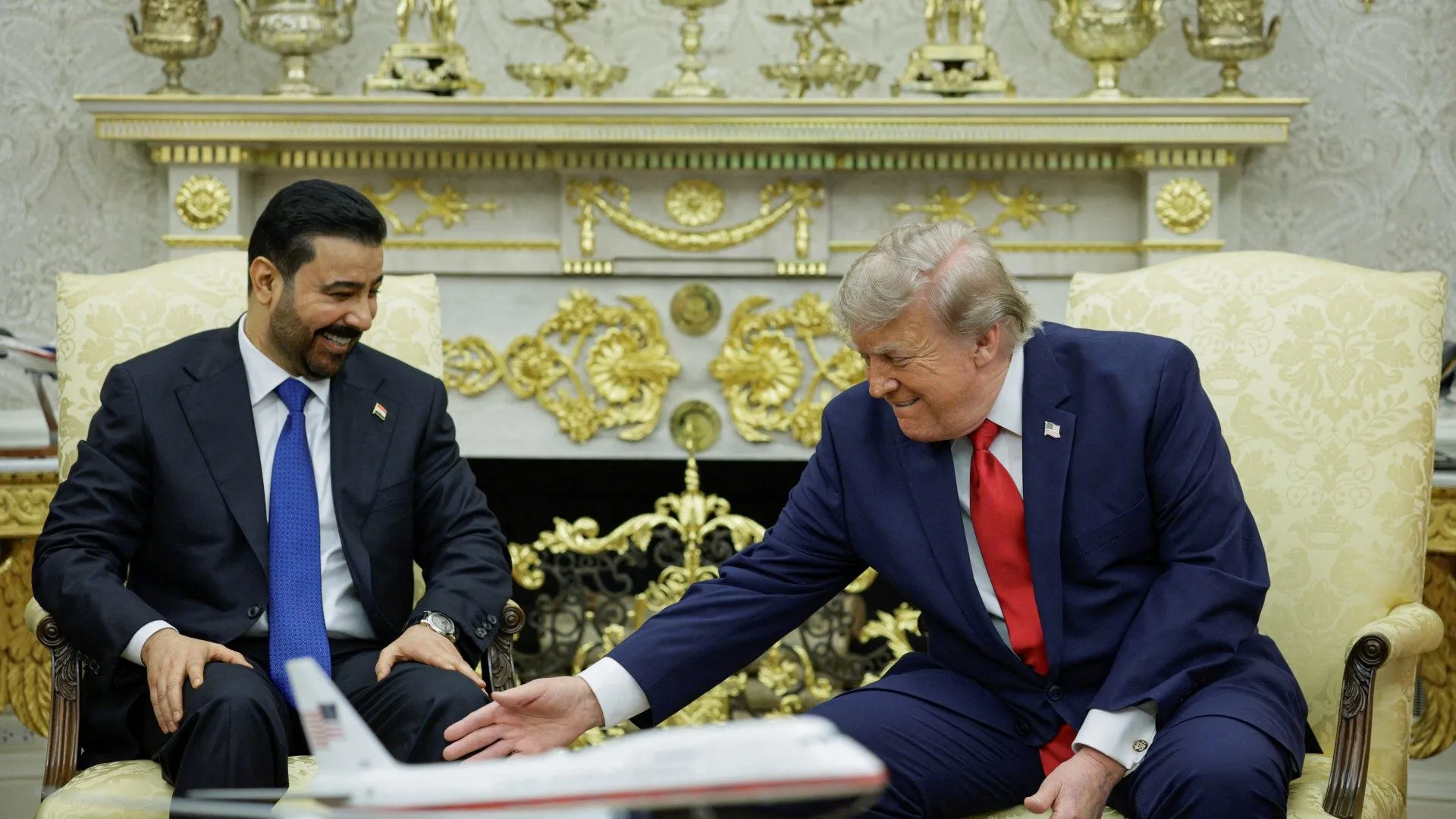
On 16 October, a day after parliament voted on the appointment, Agence France-Presse reported, citing two diplomatic sources, that Zaidi had secured implicit US acceptance during his September visit to the United States on the sidelines of the UN General Assembly.
One source said the acceptance followed Zaidi’s commitments to proceed with the plan to bring weapons under state control and ensure that factions would not target US interests in Iraq. The second confirmed US acceptance of some forces linked to armed factions participating in government.
A US State Department spokesperson told Voice of America on 16 October that the Trump administration supported Zaidi’s vision of a sovereign and secure Iraq capable of preventing attacks launched from its territory. The spokesperson criticised Iran’s use of armed factions to threaten Iraq’s sovereignty and exploit its resources, but did not state a position on Khazali’s appointment.
The most prominent public objection came from Republican US Representative Joe Wilson, who criticised the decision and pointed to Khazali’s designation and Asaib’s connection to attacks on US and Iraqi forces. Neither the White House nor the State Department has so far publicly issued official approval of his appointment.
Former US diplomat Joey Hood sees this position as reflecting the Trump administration’s approach to Iraqi factions. He said the administration appeared ready to give Zaidi greater room to manage his relationship with armed forces, focusing on security and economic outcomes rather than intervening in the details of government formation.
Hood suggested that Zaidi could use figures such as Khazali to pressure groups that refuse to place their weapons under state authority. He argued that the success of this approach depended on the government’s ability to make uncooperative factions comply with its decisions, prevent them from carrying out attacks without official authorisation and stop them exploiting state resources.
Sajad Jiyad, an Iraqi researcher at the Century Foundation, a foreign policy think tank, offered another interpretation. He argued that Khazali’s appointment could encourage other factions to integrate into state institutions and abandon their armed wings, now that political participation offered access to senior government posts.
US sanctions on Khazali nevertheless remain in place. They include the freezing of his property and financial interests under US jurisdiction and a ban on most transactions with him by US persons.
The restrictions also cover entities owned 50 per cent or more by sanctioned persons. US dealings with the Iraqi government and its institutions continue under the relevant laws and licences, meaning Khazali’s presence in the cabinet does not automatically trigger comprehensive sanctions on the state.
Companies and financial institutions dealing with economic networks linked to Asaib may face sanctions risks, depending on the nature of their transactions and their connections to listed persons and entities. This applies particularly to the oil, metals and government contracts sectors targeted by US Treasury measures during 2026.
Zaidi faces the task of preserving his relationship with Washington while relying on a ruling coalition that includes forces linked to Iran-backed armed factions. Those factions remain divided over handing over weapons and integrating into official military institutions.
The outcome of the plan to bring weapons under state control, due for completion on 30 June 2027, remains the main factor determining the future of these understandings. Asaib has secured its share of government posts, but Baghdad must still prove it can bring armed formations under state authority, the pledge on which Washington based its acceptance of the new deadline for completing the process.
