







هذا التقرير متاح أيضًا بـ العربية
The region is watching warily as talk of a possible US-Israeli strike on Iran intensifies and signs point to another confrontation. The element of surprise remains central to Iran’s calculations and has never been far from the minds of decision-makers in Tehran.
Despite official statements that any military action will be postponed until after elections in the US and Israel, the rapid developments and turbulence of recent days suggest a picture largely at odds with those public assurances. They have prompted suggestions that a confrontation may be closer than ever, particularly as negotiations between Washington and Tehran falter and Iran maintains its positions on disputed issues.
The gap between public statements about de-escalation and accelerating preparations on the ground leaves growing uncertainty. Will Netanyahu ignite a new confrontation as a last chance to save his political future, or at least delay a reckoning given his difficult electoral position? And will Trump give him the green light, despite repeatedly saying that any escalation will be postponed until after the elections?
Signs of a new confrontation: What military movements suggest
Recent days have seen rapid military movements that can be read as efforts to increase readiness for a possible new confrontation. Growing signs suggest the region is entering an extremely sensitive phase, one that may involve preparations for a military operation rather than the usual political and military pressure on Tehran.
Among the clearest signs are US precautionary measures affecting its diplomatic and military presence in several countries in the region. Reports indicated that Washington had issued orders to evacuate some diplomats and the families of US government employees from Saudi Arabia. Other media reports described moves to withdraw or reposition some US forces stationed at bases in Jordan, Qatar and Kuwait, amid escalating Iranian threats and a Pentagon review of regional deployments. Although State Department spokesperson Tommy Pigott denied some of the reports, describing them as “inaccurate ,”, their emergence at a time of heightened regional alert adds to the uncertainty.
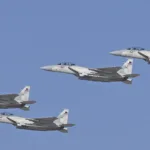
Flights by dozens of Israeli fighter jets, accompanied by refuelling aircraft, have also drawn attention as they passed through Syrian and Iraqi airspace to the vicinity of the Iranian border. Their routes closely simulated those required for long-range offensive operations. Israel presented the flights as exercises intended to deter adversaries and demonstrate readiness. Other reports offered a more alarming interpretation: some of the flights may have been intended to provoke an Iranian response that would justify a retaliatory strike, reflecting an urgent Israeli desire to escalate the situation.
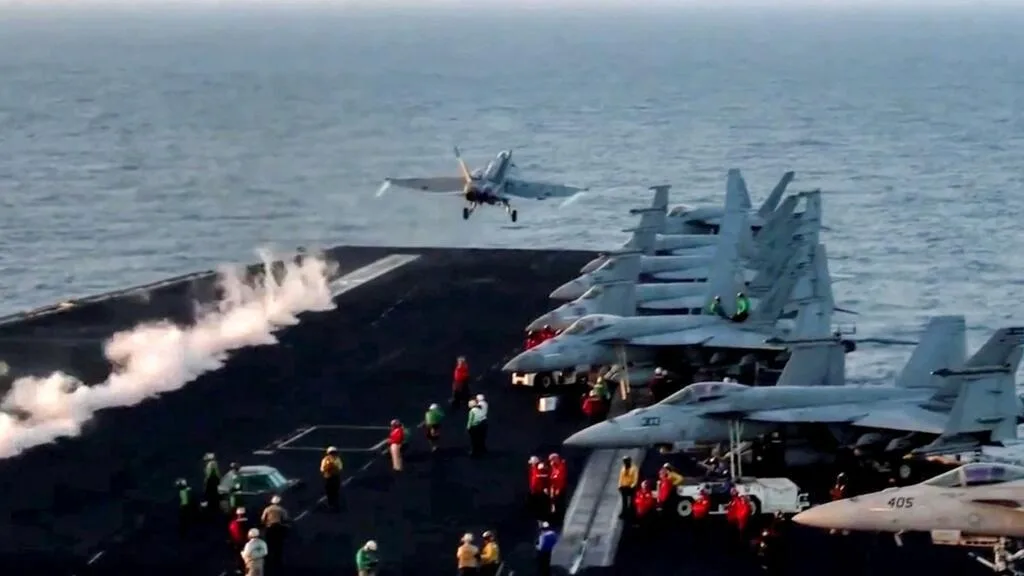
The US has also noticeably reinforced its military capabilities in the region, redistributing and repositioning some forces and equipment across different theatres, including the eastern Mediterranean. Although officially described as redeployment and heightened readiness, the timing and nature of these moves invite comparisons with deployments preceding earlier rounds of escalation. They may form part of broader preparations for military action against Tehran or efforts to contain its regional repercussions.
– Washington is “quietly” withdrawing its forces from military bases in Jordan, Qatar and Kuwait, while also reducing its diplomatic presence across the Middle East.
– The US moves come as a precaution driven by escalating Iranian threats, amid Pentagon reviews to adjust the map of its force positioning in the region.
– Iran’s Revolutionary Guard warns that Tehran possesses modern technologies enabling it to strike US bases and interests from greater distances and from beyond the region.
— NoonPost (@NoonPost) October 22, 2026
An Axios report reinforces this interpretation. It described discussions between US President Donald Trump and Israeli Prime Minister Benjamin Netanyahu about a possible new, large-scale military operation against Iran, with US and Israeli forces remaining on standby to resume fighting if political leaders decide to proceed. Although the White House denied the account, continued discussion of the military option at this level indicates, at a minimum, that the parties concerned have not definitively ruled it out.
Netanyahu has meanwhile renewed his confrontational rhetoric towards Tehran, again accusing it of seeking to rebuild its nuclear capabilities. He has gone as far as presenting the overthrow of the Iranian regime as the way to eliminate the threat at its source, while speaking of directing the army, Mossad and security agencies to work towards that goal. Israeli Defence Minister Israel Katz has also threatened a severe response if Iran attacks Israel, reflecting increasingly confrontational political and military rhetoric alongside the movements on the ground.
Press reports have also described US-Israeli proposals and plans for a rapid, high-intensity joint operation against Iran. The primary targets would be facilities linked to the nuclear programme, missile and drone arsenals, and parts of the country’s vital infrastructure. These proposals were reflected in CNN’s report on the possible use of the GBU-43/B bomb known as the “Mother of All Bombs.” Some reports also linked the proposals to high-level US-Israeli military movements and contacts, providing another indication of ongoing preparations. The nature and details of these plans still require verification, however, given the extreme sensitivity of information about potential military operations.
Other countries have also undertaken military movements in anticipation of a possible widening of the confrontation. These include the deployment of British Typhoon fighter jets to Saudi Arabia, reports of French movements involving forces and air defence systems, preparations and movements attributed to Pakistan and Turkey, and reports of Egyptian military movements towards Saudi Arabia in recent days.
Although some of these movements have been presented as efforts to strengthen Saudi defences against Houthi threats, their timing and the range of countries involved also allow them to be read as broader regional preparations for a scenario that could extend beyond the Yemeni front. The repercussions of a direct US-Israeli strike on Iran would probably not remain confined to Iranian or Israeli territory. Such a strike could push Tehran and its allies to widen their response to include US interests and military bases, as well as Washington’s regional allies.
Taken together, these interconnected and simultaneous developments suggest that the region is bracing for possible escalation: US repositioning, long-range Israeli flights, heightened readiness, increasingly confrontational political rhetoric, Western and regional defensive movements, and the continuing deadlock in negotiations. Although they do not establish that a decision to go to war has been made, they keep war a likely possibility. They suggest that the gap between deterrence and preparedness, on the one hand, and a slide into open confrontation, on the other, has narrowed recently.
Denials at odds with developments on the ground
Amid these rapid developments, Trump and Netanyahu have both sought in recent days to deny or rule out a new military operation against Iran before the forthcoming elections in their countries. On 8 October, the US president explicitly announced that his country would not attack Iran before the US midterm elections scheduled for 3 November. He also referred to talks with Tehran that he described as “productive”. The White House later reaffirmed his position.
Netanyahu announced on 14 October that he was not seeking to launch a pre-emptive strike against Iran before the Israeli elections scheduled for 27 October. His office also denied reports of efforts to reignite the war before polling day, while leaving open the possibility of a military response if Tehran attacks first.
Yet these public reassurances clash with developments on the ground. US and Israeli military movements and preparations are accelerating, as described above. Negotiations between Tehran and Washington are also clearly stalled: the gap between their positions persists, and each side continues to reject the other’s proposals. This is gradually narrowing the scope for diplomatic solutions and increasing the likelihood of more escalatory options.
The stark contradiction between public assurances of de-escalation and accelerating military preparations leaves several possibilities open. It also raises further questions: could Netanyahu launch a swift operation against Iran before the elections, and how might he approach it?
Escaping the election trap: Will Netanyahu act?
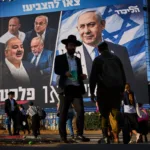
The prospect of war with Iran has become central to Israel’s election campaign and a major point of contention between Netanyahu’s camp and the opposition. Both sides are seeking to use the issue to advance their political narratives and improve their electoral chances, whether by invoking achievements from the previous confrontation or warning of the consequences of being drawn into another round at an extremely sensitive moment.
The outcome of the previous confrontation, and the Netanyahu government’s handling of it, have shaped domestic politics. Criticism of the government’s performance and the war’s repercussions has been met by Likud’s efforts to portray it as a strategic achievement in which Israel dealt heavy blows to Tehran and weakened some of its capabilities. But the polarised political atmosphere and opinion polls suggest that this narrative has not decisively shifted electoral sentiment towards Netanyahu and his allies.
With polls indicating a difficult electoral position for Netanyahu and his camp, speculation has intensified that he may reopen the confrontation with Iran as a way out of the political impasse. He could bet on war rallying the public behind the leadership in a time of danger, or on it creating exceptional circumstances that reshape the political and electoral landscape. These could extend to postponing the elections, giving him more time before a reckoning over his political future.
Days before the Oct. 27 election, Likud is betting on a blocking bloc and a caretaker government that could last for months, while the opposition finds itself stuck on the question of the Arab parties
📍So how is Netanyahu turning deadlock into an opportunity to stay?👇
https://t.co/ZwD5JyuVYF
✍️ @ahmad_m_tanani https://t.co/gNBw8AD0wR
— NoonPost (@NoonPost) October 21, 2026
These concerns have grown as Israeli political and security circles have discussed a possible new military strike on Iran in recent days. Opposition political and security figures have warned against using military escalation to serve electoral calculations or partisan interests, clearly signalling fears that Netanyahu and Likud could benefit politically from a new confrontation.
Yet war would be a risky and complicated political lifeline for Netanyahu. Postponing elections is not within the prime minister’s sole authority. It requires a complex legal and parliamentary process and a degree of consensus extending beyond the ruling coalition, which may be difficult to secure amid political polarisation and internal division.
An opposing view in Israel holds that a broad confrontation with Iran on the eve of the elections could turn a political opportunity for Netanyahu into an electoral liability. The expected Iranian response, the missile barrages that may accompany it, a return to shelters, human and material losses, and disruption to daily life could increase public anger at the government rather than produce a “rally around the leadership” effect.
The Jerusalem Post quoted Likud sources as saying that the party’s preferred scenario at this stage was to keep the front quiet until the elections. They feared that a new war with unpredictable consequences could disrupt the electoral landscape and damage the party’s chances rather than strengthen them. War is therefore more complicated than a potential electoral lifeline for Netanyahu: it carries both opportunities and risks.
What about Trump?
The US political picture is similar. Trump faces declining approval ratings and Republican fears of losses in the forthcoming midterm elections. The repercussions of his handling of the conflict with Iran have created a complicated political and electoral situation, placing Iran at the centre of US electoral calculations.
Opinion polls show how sensitive the issue is for US voters. In a Pew Research Center survey conducted on 8 October, 65 per cent of Americans said they were dissatisfied with Trump’s handling of the conflict with Iran, while 33 per cent expressed support. Of greater electoral significance, 73 per cent expressed serious concern about the possibility of rising fuel prices, while 71 per cent feared US deaths or injuries. The survey also showed that support for Trump’s handling of the war had fallen even among Republicans, from 69 per cent in March to 63 per cent in October.
These findings align with a Reuters report describing efforts within the Trump administration to keep the Iran front relatively quiet until the November elections. Officials fear that renewed escalation would increase electoral pressure on Republicans and deepen their potential losses in Congress. According to the report, White House officials regard the November vote as a political priority, particularly given the war’s unpopularity and concerns about its direct effects on fuel prices and the cost of living, issues that weigh heavily on US voters’ choices.
– The Israeli occupation army prepared a ready-to-execute plan over the weekend (Oct. 10) to strike nuclear facilities and headquarters belonging to the Iranian regime, in addition to civilian infrastructure and power stations
– Trump opposed a renewed military confrontation and rejected launching the attack before the midterm elections scheduled for Nov. 3.
– Leaks indicate the proposed strikes would have been more severe than last February’s strikes, and included a new target bank covering vital and civilian sites that had not previously been targeted.
– Despite the temporary rejection, informed sources considered reactivating the attack option in the following weeks to remain a possible and plausible scenario, noting that brandishing strikes may also fall within negotiating tactics.
– Netanyahu pressured for the attack to be carried out before the Israeli elections on Oct. 27 and the US elections, while Israeli Chief of Staff Eyal Zamir had previously warned that the attack could push toward postponing the Israeli elections for fear of an intensive Iranian missile response.
– The leaks coincided with an undeclared visit by US Defense Secretary Pete Hegseth to Israel to meet Netanyahu and discuss developments and regional threats.
— NoonPost (@NoonPost) October 21, 2026
A broad confrontation with Iran before the elections may not be the most favourable scenario for Trump. If the war drags on, widens or has economic and human consequences within the US, it could shift from a means of projecting strength and decisiveness to an electoral liability for the president and his party. A limited, swift military operation remains a possibility, however, if the administration believes it can secure clear gains without sliding into open war or incurring a high domestic cost.
The situation remains highly uncertain and complex, making it difficult to predict how the crisis will develop in the coming days. US and Israeli statements continue to deny or rule out war before the elections. Yet military movements and preparations are accelerating in ways that suggest a different interpretation from the publicly stated political positions.
These movements could form part of a strategy of deterrence and increasing pressure on Tehran, or they could represent preparations for a swift military operation. All scenarios remain possible. The presence of figures such as Trump and Netanyahu, whose decisions cannot be assessed by conventional standards, makes the picture harder to read and makes it unrealistic to rule out any scenario categorically.
