










هذا التقرير متاح أيضًا بـ العربية
Throughout Yemen’s years of conflict, enforced disappearance has remained one of its most difficult human rights issues. People have vanished after being abducted or detained, leaving families searching for any information about them. Establishing the truth is complicated by the number of parties to the conflict, their different areas of control and the overlap between bodies responsible for detention.
The passage of time does not diminish the issue’s importance. Knowing the whereabouts and fate of the disappeared is a right of their families, not a demand that can be deferred. Uncovering the circumstances of their disappearance and holding those responsible accountable is also an essential part of the state’s responsibility towards victims of violations.
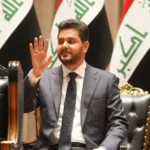
On the International Day of the Victims of Enforced Disappearances, NoonPost speaks to Yemen’s minister of human rights, Mishal Mohammed Omar, about enforced disappearance in the country: how cases are documented and followed up, how the government handles them, and its responsibilities towards the disappeared and their families.
Since taking office as minister of human rights, how would you describe the scale of enforced disappearance in Yemen, based on the ministry’s latest data? How many cases have been officially documented and verified?
Enforced disappearance is one of Yemen’s most complex human rights issues. We cannot give a definitive total because the cases reported to official bodies do not necessarily reflect its full scale. We have documented and verified cases, but we believe the real number is higher than the recorded figures, particularly because some families are reluctant to report for fear of threats and retaliation. This reluctance is especially evident in cases involving women.
That is why the ministry is gathering information from multiple sources: its offices in the governorates, monitors and contact with families, in coordination with relevant national bodies. Our aim is to compile accurate data that can provide a basis for establishing the fate of the disappeared and pursuing those responsible for these violations, rather than present an incomplete figure as a final tally.
To which entities or parties does the ministry attribute the enforced disappearances it has documented? Does it have a breakdown of cases by entity, region and period?
The information and facts we have documented confirm that the Houthi terrorist militias are responsible for a large share of abductions, detentions and enforced disappearances. These practices have been linked to several of their security and intelligence bodies, including those responsible for investigation and detention. We also have information indicating the involvement of women affiliated with the militias, known as the Zainabiyat.
In handling these cases, we are careful to distinguish between documenting an incident and attributing it on the basis of available information, and establishing criminal responsibility, which is a matter for investigative and judicial authorities.
In the enforced disappearance cases documented by the ministry, how many people’s fates has the government been able to establish, and how many cases remain unresolved? What are the main obstacles to obtaining information about the remaining cases?
We need to distinguish between cases documented by the ministry and those about which the relevant government authorities have obtained information. The ministry follows up on cases reported to it, but it is not the only body holding data on detention and disappearance in the country. Information held by several bodies overlaps. We therefore do not want to give an overall figure without an updated national database to support it.
What we can confirm is that the ministry has followed up on many cases and obtained information about them. It is working to coordinate this information with the National Commission of Inquiry, the Ministry of Interior, the ministry’s offices in the governorates and monitors.
When the ministry receives a report about someone believed to have been forcibly disappeared, how does it verify the case and trace the person’s fate? What happens once the case is documented?
The ministry checks the available information and reviews relevant data and documents through its field monitors and offices in the governorates. It contacts the appropriate authorities according to the nature of the case and follows up on any developments.
Once documented, the case is added to those the ministry follows up on within its mandate. Depending on the incident, it may be referred to the appropriate authorities, or the ministry may contact them about it. Throughout this process, the ministry observes legal requirements and protects information about victims and their families.
In cases attributed to the Houthi group, what means does the government have to establish the fate of the disappeared or press for their release, particularly where it does not control the areas concerned? What results has it achieved so far?
The lack of effective control over some areas does not remove the government’s responsibility to follow up on its citizens’ cases or advocate for their rights. The government pursues these cases through available national and international channels. This includes communicating with international bodies through the UN process, in coordination with the office of the UN envoy and the International Committee of the Red Cross; raising cases of disappearance and detention in relevant forums; and demanding that the fate of the disappeared be disclosed and those arbitrarily detained be released. Results vary depending on the case and how efforts to resolve it progress.
We also have a government committee responsible for negotiations on exchanges of detainees and abductees. It continues to work towards exchanges that secure their release, particularly civilians.
This process has included talks and deals involving large numbers of detainees, most recently an exchange deal scheduled for last July. However, the Houthi militias withdrew from their commitments at the last moment and cancelled their side of the exchange.
How does the ministry handle detention or disappearance cases in areas under government control? What steps are taken to investigate them and hold any entity proven to be involved accountable?
The ministry’s position is clear: the protection of human rights is indivisible. Any allegation of unlawful detention, disappearance or a violation of people’s rights in areas under government control must be checked and followed up in accordance with the law.
Within its mandate, the ministry monitors and follows up on reported detentions and allegations of unlawful deprivation of liberty. It contacts local authorities, the relevant security bodies and the Ministry of Interior to establish the status of these cases and the grounds for detention.
Where there are no legal grounds for continued detention, the ministry works with the relevant authorities to end it or refer the case to the prosecution under the applicable legal procedures, so that it can investigate and pursue criminal accountability within its jurisdiction. The ministry does not take the place of investigative bodies, the prosecution or the judiciary. Its role is to follow up, monitor, communicate and coordinate. Neither an entity’s status nor its location should obstruct accountability where a violation of the law is proven.
How closely does the Ministry of Human Rights cooperate with the ministries of interior and justice, the prosecution and the prison authority on enforced disappearance cases? Where do cases usually stall: documentation, investigation or identifying those responsible?
I do not think it is accurate to generalise that enforced disappearance cases stall at a particular stage. There are different stages and areas of responsibility. The ministry’s human rights role involves monitoring, documentation, follow-up and coordination, while investigative bodies, the prosecution and the judiciary handle criminal investigations and matters of judicial responsibility.
One of the greatest difficulties arises when we cannot reach the disappeared person or obtain information about where they are detained.
There is also ongoing coordination between the Ministry of Human Rights and relevant national bodies, particularly the Ministry of Interior, local and judicial authorities, and the National Commission of Inquiry. The ministry works to draw on information from its offices in the governorates and its monitors to build a more complete picture of cases and follow them up.
What has the Yemeni government done, in coordination with the United Nations and the international community, to establish the fate of the forcibly disappeared? What tangible results has this cooperation produced?
The government pursues these cases through available national and international channels. It works to provide the relevant international bodies with information and case files on disappearance and detention, raise these issues in international forums, and demand disclosure of the fate of the disappeared and guarantees for detainees’ rights.
Work on the cases of detainees and abductees continues through the UN process, in coordination with the office of the UN envoy and the International Committee of the Red Cross, each acting within its mandate. The aim is to help establish the fate of detainees, abductees and the disappeared, and secure their release.
How does the ministry work with families who may spend years without knowing the fate of a disappeared relative? Is there an official mechanism to provide legal, psychological or social support?
Families of the disappeared bear an immense human and psychological burden. They face not only the loss of a family member but years of uncertainty about that person’s fate and whereabouts. The ministry therefore considers families essential to following up on cases. It works to listen to their reports and information and pursue whatever avenues it can with the relevant authorities.
A particularly serious challenge is that some families are afraid to report a disappearance in the first place. This is especially evident in cases involving women in areas controlled by the Houthi militias, where some families withhold names or information for fear of threats or extortion. The ministry has received confirmed statements and testimonies from former female detainees describing large numbers of women detained or disappeared in militia prisons.
There is still a need to develop a more integrated national mechanism to provide families of the disappeared with support, particularly legal, psychological and social support. The ministry considers this an important area to work on with government bodies and international partners.
Looking ahead, what results and figures can your ministry commit to so that the government’s performance on enforced disappearance can be assessed, whether in establishing people’s fate, investigating cases or referring those responsible to the judiciary?
The Ministry of Human Rights cannot, on its own, set a numerical target for establishing the fate of the disappeared. Those results depend on bodies, procedures and circumstances beyond its mandate. But we can commit to strengthening monitoring and documentation mechanisms, following up on cases, contacting the relevant authorities, developing databases, submitting cases and files for which the necessary information is available to the bodies with jurisdiction, and continuing to raise the issue and the rights of victims and their families with national and international bodies.
The ministry will also continue to coordinate with the bodies handling cases of detainees and abductees, and press for investigations and accountability in cases of unlawful detention, in accordance with the law. Most importantly, cases of the disappeared must remain open. The years their families spend waiting must not become a reason to forget these cases or close their files. Families have a right to know the fate of the disappeared. Uncovering the truth and holding those responsible for violations accountable must remain an objective.
