








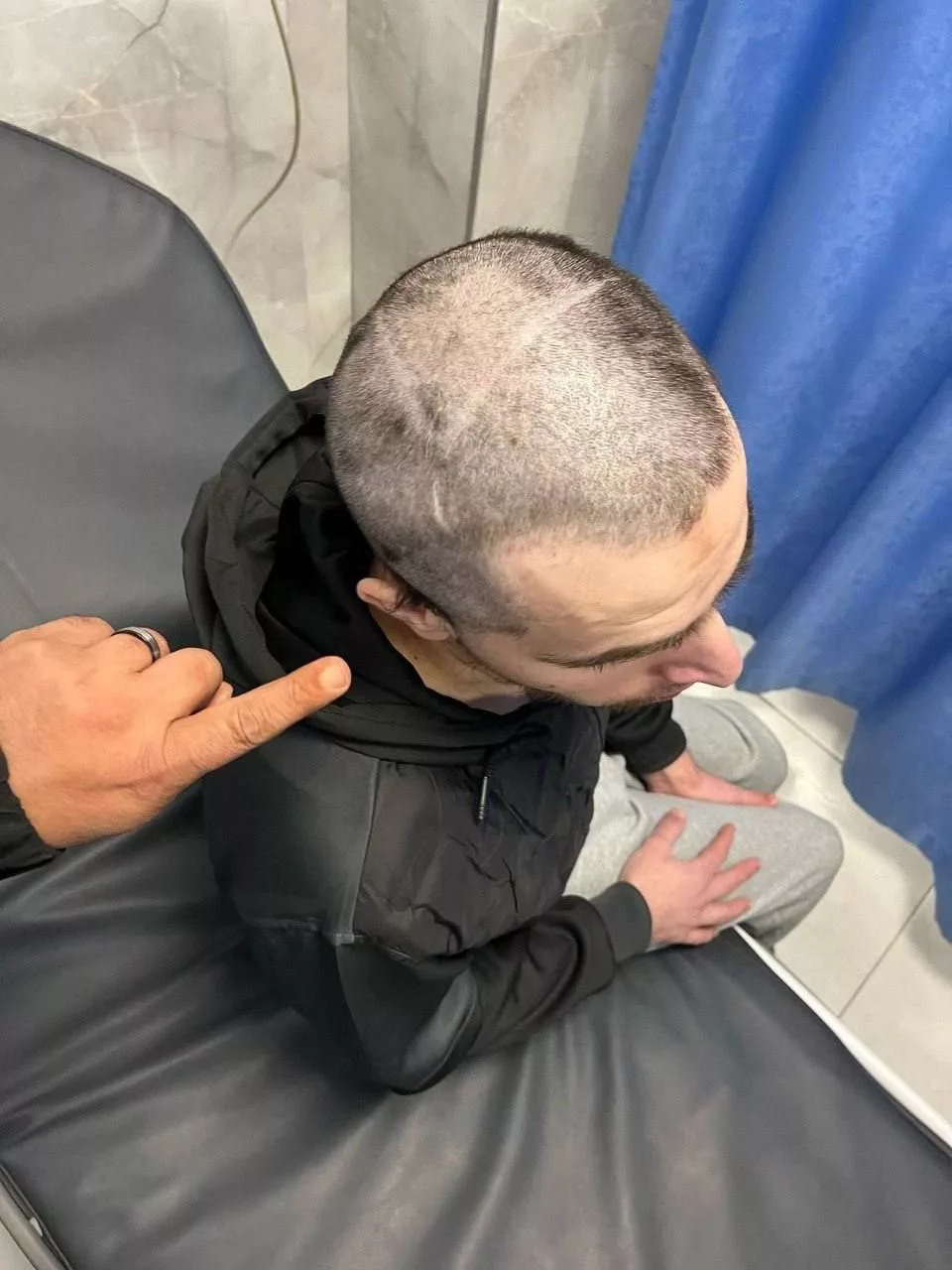
In early April, Israel released Palestinian prisoner Musab Qatawi. Upon his release, his head was shaved, and a Star of David had been crudely etched onto his scalp with a sharp instrument by Israeli soldiers. This was not an isolated incident. Nearly two years earlier, a similar case was reported when the same symbol was carved onto the face of detainee Urwah Sheikh Ali.
This recurring pattern raises urgent questions: Why does Israel inscribe the Star of David onto the bodies of Palestinian detainees—onto their heads and faces? From this inquiry, we pivot to a broader contemplation of the masked face in Palestinian resistance.
Beyond its evident security purpose, the mask carries humanistic and philosophical dimensions—an aesthetic and cultural form of defiance. For the human face, with all its representational power, lies at the core of the colonial conflict between oppressor and oppressed.
The Face as the Victor’s Identity
The Israeli colonial imagination seeks to erase the identity of the Palestinian “other.” This erasure is central to the settler-colonial mindset—one that became even more explicit after October 7. Inside Israel’s prison system, especially since far-right politician Itamar Ben Gvir assumed the post of National Security Minister in 2022, Palestinian prisoners endure a relentless hellscape.
The prison authorities impose deeply humiliating physical practices designed to dismantle the prisoner’s mental framework, eroding their resistance and reducing them to beings without identity or agency—unable to think beyond Israeli dominance.
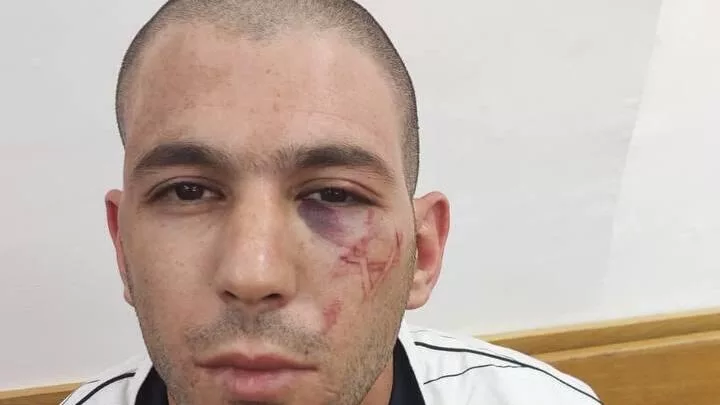
Among these acts of degradation is the carving of the Star of David into the heads and faces of released Palestinian prisoners—perhaps others whose images have not yet surfaced. The choice of location—the head and face—is no accident. The face is more than flesh; it is the vessel of Palestinian identity and defiance. Even in captivity, it reflects dignity and resilience.
Before the moment of liberation, Israel seeks to brand these faces with its own identity—replacing Palestinian features with the mark of the colonizer. It is an eternal symbolic punishment: a scar of shame and humiliation engraved onto the body. The message is unmistakable: “If you resist me with your body in an effort to expel mine from your land, I will leave my identity on your body—for eternity.”
Another facet of Israel’s exterminatory policy, especially evident in Gaza, is starvation—a tactic that degrades both body and face. By obstructing humanitarian aid, food, and medicine, Israel has inflicted not only death by hunger but visible physical emaciation.
The face of Gaza has changed—its features now gaunt, afraid, tearful, and devoid of hope. Israel punishes the Palestinian face even without a scalpel, through exhaustion, hunger, and terror.
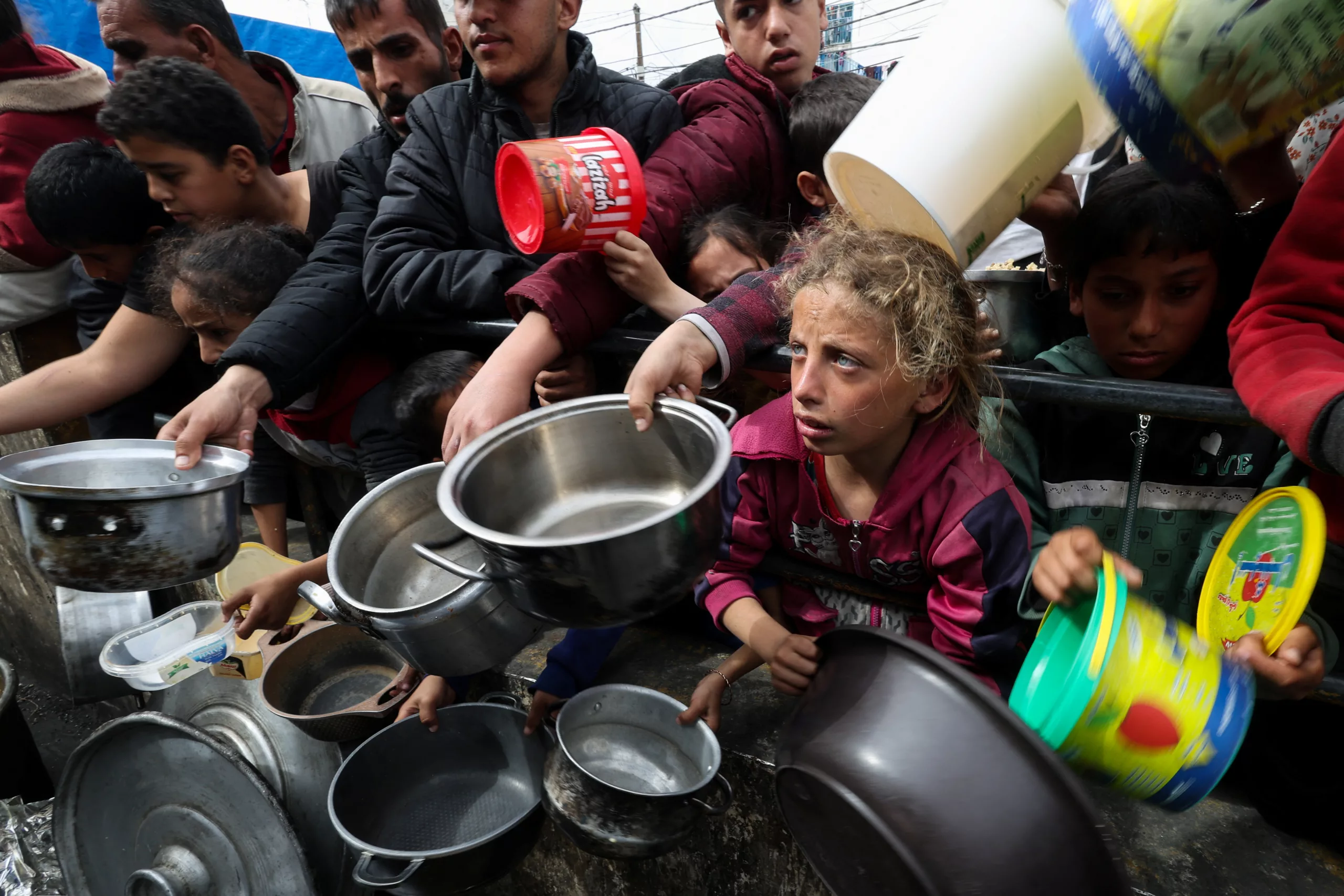
Bombings and drone shrapnel have also mutilated countless faces, leaving permanent disabilities—turning the Gazan visage into a reflection of war and genocide.
These tactics aren’t limited to Gaza. In September 2024, an explosion of “pager” devices in Lebanon caused hundreds of facial disfigurements, underscoring that Israel’s violations of human facial sanctity know no geographic bounds.
The Masked Face and the Colonizer’s Insecurity
Historically, the mask has served varied functions—security, warfare, medicine, art, labor. Thieves, surgeons, actors, revolutionaries, and soldiers all mask their faces—for protection, anonymity, or performance.
In the Palestinian context, the mask transcends security needs. It serves to escape not only Israeli surveillance but also the colonizer’s own constructed image of the Palestinian face. This image is far from neutral—it is dehumanized by design, crafted to justify the total invasion of the Palestinian body, starting with the face.
In Israeli eyes, the Palestinian face is not simply foreign—it is threatening, incompatible with their conception of what a “human” face looks like.
The Palestinian face thus carries a dual existential charge. It is the face of the “other,” inherently unequal to the Israeli self. The dynamic becomes binary: the colonizer’s face versus the colonized’s; superiority versus inferiority.
The more the Palestinian face resembles that of the Israeli, the more it is perceived as a threat—unclassifiable, unsettling. When it diverges, it is seen as an empty vessel, stripped of vitality.
Yet in philosopher Emmanuel Levinas’s framing of the face-to-face encounter, the presence of the other’s face is a prerequisite for humanity itself: “The face reflects human formation and gives it a personal dimension; it completes this formation through the presence of the other.”
Here, the mask protects against the violence of naming, against racialized perceptions, and against identity theft. It becomes, paradoxically, a more authentic expression of Palestinian resistance.
Thus, the masked face of the Palestinian fighter holds profound symbolic meaning. Beyond obscuring identity to evade arrest by either Israeli forces or complicit Palestinian authorities, it erases the colonizer’s imposed facial architecture. To Israeli eyes, the Palestinian face is always a lesser face.
And so, the face disappears—reduced to a blank canvas without nose, lips, or cheeks. No longer can it be violated or classified. The masked Palestinian seems to say: “When you saw my face, you dehumanized me. You tortured and killed me. You etched your colonial symbols onto my scalp. Now, I deny you that face. I have erased it—and with it, your colonial logic.”
What remains, however, are the eyes. The eyes of resistance. Eyes that see their oppressor and are seen in return—but no longer with fear. These are eyes that flash and vanish, track and engage, defy and confront. They are not merely biological organs; they are weapons of resistance—unyielding, sharp, alert.
This narrative of facial resistance was recently illustrated when masked Palestinian fighters, dressed in military gear, handed over Israeli detainees to Red Cross officials. The message was clear: they are still here, resisting a war of extermination.
Unlike Israel’s branding of Palestinian prisoners with Stars of David, the Palestinian fighters made no attempt to mark the bodies of Israeli captives—no keffiyeh prints, no Palestinian flags, no symbols of the enemy’s identity.
This contrast reveals something essential: the Palestinian struggle is not for dominance over bodies, but for sovereignty over land. Since the 1948 Nakba, Palestinian land has been colonized by foreign settlers. In its latest war on Gaza, Israel has extended its colonization from land to face, carving its symbol onto both.
As in Palestine, so in anti-colonial movements worldwide—from fedayeen in Egypt, Syria, Lebanon, and Jordan, to the People’s Army in Vietnam, the Zapatistas in Mexico, the Tamil Tigers in Sri Lanka, the Sandinistas in Nicaragua, and the Japanese Red Army. All wore masks.
Their reasons and colors varied, but the intent was singular: to evade both surveillance and imposed identity.
Their resistance was, in part, a resistance of the face—an act of defiance against the face the colonizer tried to impose. The response: a masked face that cannot be possessed.


