









هذا التقرير متاح أيضًا بـ العربية
On the evening of Saturday, 17 October, 10 days before the Knesset elections, Yinon Magal, one of Benjamin Netanyahu’s most prominent media supporters, described Netanyahu’s rival Gadi Eisenkot as a “monkey,” linking the slur to Eisenkot’s Moroccan roots and accusing an Ashkenazi elite of controlling him behind the scenes. Although Magal later denied intending a racist insult, saying he had used the expression to describe a frontman controlled by others, his remark had already revived an issue that predates the election campaign by decades.
Since the Nakba of the Palestinian people and the establishment of Israel in 1948, no Mizrahi Jew has become prime minister, although members of the community have served as president, army chief and ministers holding key portfolios. The rise of Eisenkot, the son of Moroccan immigrants, brings that absence into sharper focus. His party, Yashar, is polling ahead of Likud in several surveys, and he is emerging as a serious contender for the premiership.
Yet the significance of the race extends beyond the possibility of a Mizrahi becoming prime minister for the first time. It highlights the position of a community that helped build the right’s electoral strength while the premiership remained the preserve of leaders of European origin. It also raises fresh questions about the limits of individual breakthroughs within institutions where ethnic and social hierarchies continue to have an effect.
From absorption camps to the state’s margins
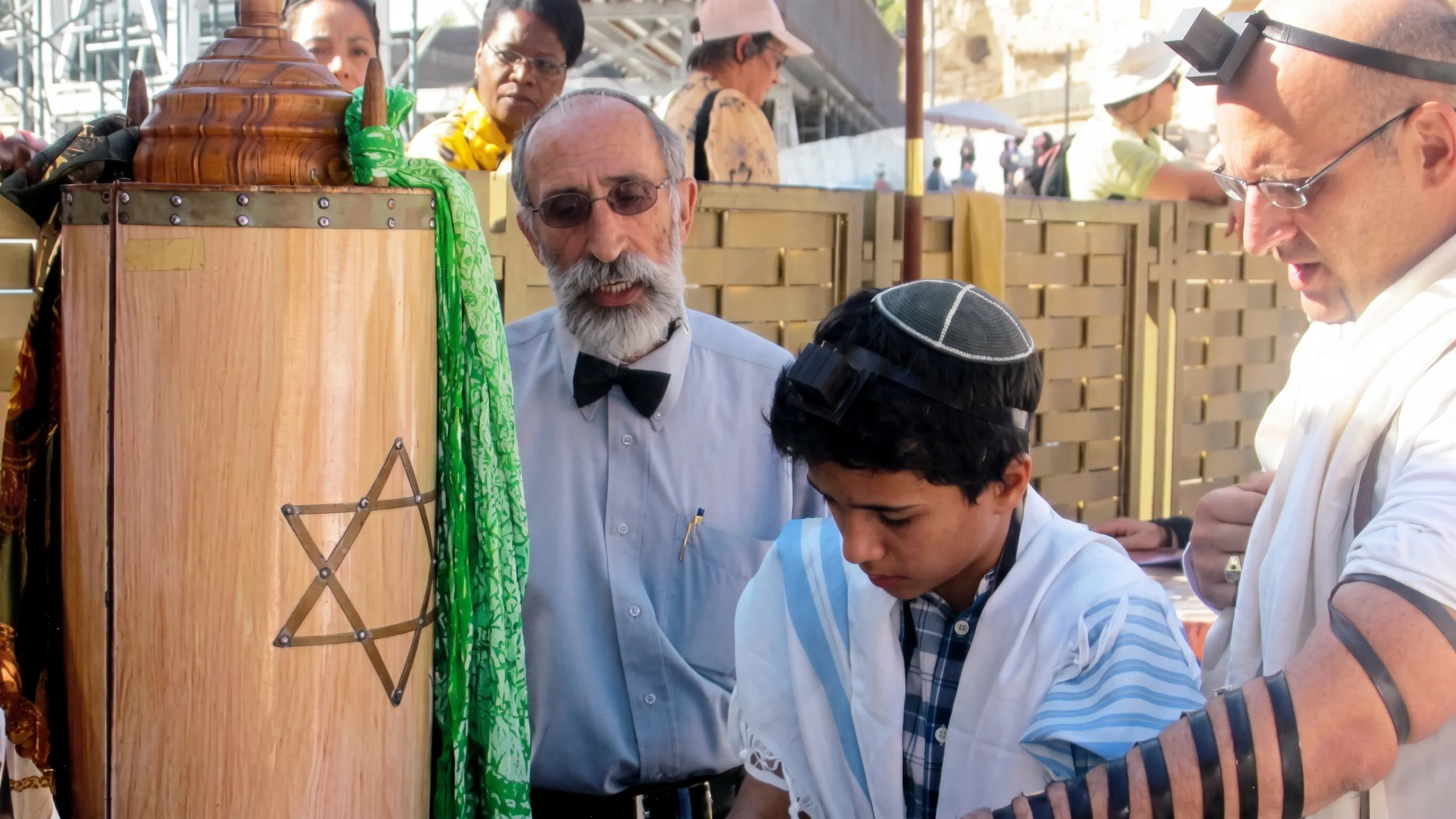
In the first years after the Nakba, the settler society received large waves of immigrants, many from Arab and Muslim countries. Some were housed in the homes of Palestinians expelled from Jaffa, Ramla, Lydd and elsewhere, before the expansion of the absorption camps known as “ma’abarot”, which consisted of tents and tin shacks.
By 1951, there were 127 such camps, housing about 250,000 Jews, three-quarters of them Mizrahim. According to figures cited by researcher Shlomo Swirski, 58 per cent of Mizrahi immigrants were sent to the camps, compared with 18 per cent of those arriving from Europe. The disparities extended beyond housing to employment, education and access to state institutions. Nor did moving from a camp to a town automatically bring integration. Investors avoided projects in the periphery, preferring the major cities. Limited opportunities pushed some residents to leave, while others remained trapped in places that helped the state expand without guaranteeing their children a comparable share of its resources.
(Image source: Wikimedia Commons)
Historian Avi Picard documented how the Jewish Agency adopted a selective immigration policy between 1951 and 1956 amid fears about the impact of North African Jewish immigration on the state’s European character. By the mid-1950s, immigrant absorption had shifted from camps to development towns, particularly through the “from ship to village” operation launched in 1954, which sent immigrants directly to the periphery.
The camps became permanent communities. The Khalisa ma’abara became Kiryat Shmona, while Sderot began in 1951 as a camp receiving immigrants from Kurdistan and Iran, followed by large numbers of Moroccans. About 60 per cent of Moroccan immigrants who left the camps were directed to development towns, creating a social geography that separated the children of immigrants from the East from centres of wealth, universities and influence.
As its defenders argue, this policy can be understood as part of a project to distribute the population and entrench settlement. But its role in that settlement project does not erase its internal consequences. Life in the periphery was associated with scarce resources, unemployment and limited opportunities for advancement. Alongside these conditions, the image of “second Israel” took root, in contrast to an Ashkenazi elite dominating the centre and its institutions.
From protest to the right’s electoral base
Protests against marginalisation erupted in July 1959, when police shot Moroccan immigrant Akiva Yaakov Elkrif in Haifa’s Wadi Salib neighbourhood. They spread to development towns and immigrant communities, revealing anger that extended beyond the shooting to housing, working conditions and treatment by the ruling establishment.
The location had a double significance: Wadi Salib was a Palestinian neighbourhood where immigrants were housed after its residents were displaced in 1948. Historian Yfaat Weiss notes that Israeli memory later associated it with Moroccan Jews and erased its original inhabitants. The authorities’ response to the protests combined security measures and evacuation without addressing the inequality that had sparked them.
In the early 1970s, protests resurfaced through the “Black Panthers” movement in Jerusalem’s Musrara neighbourhood, another Palestinian neighbourhood where Mizrahi immigrants had been housed. Young men, including Saadia Marciano and Charlie Biton, led a movement against poverty and discrimination. It angered Golda Meir, who described them as “not nice,” but forced greater attention to social programmes. Biton later entered the Knesset on the leftist Hadash list.
Meanwhile, the issue of the Yemenite children remained deeply embedded in immigrants’ memories, tied to families who insist that their children disappeared from hospitals and were handed over for adoption in an operation known as “The Carpet of Bewilderment”. At the time, official committees attributed most cases to deaths and denied the existence of an organised kidnapping policy, while some cases remained unexplained. Government compensation approved in 2021, totalling 162 million shekels, did not end the dispute over truth and responsibility.
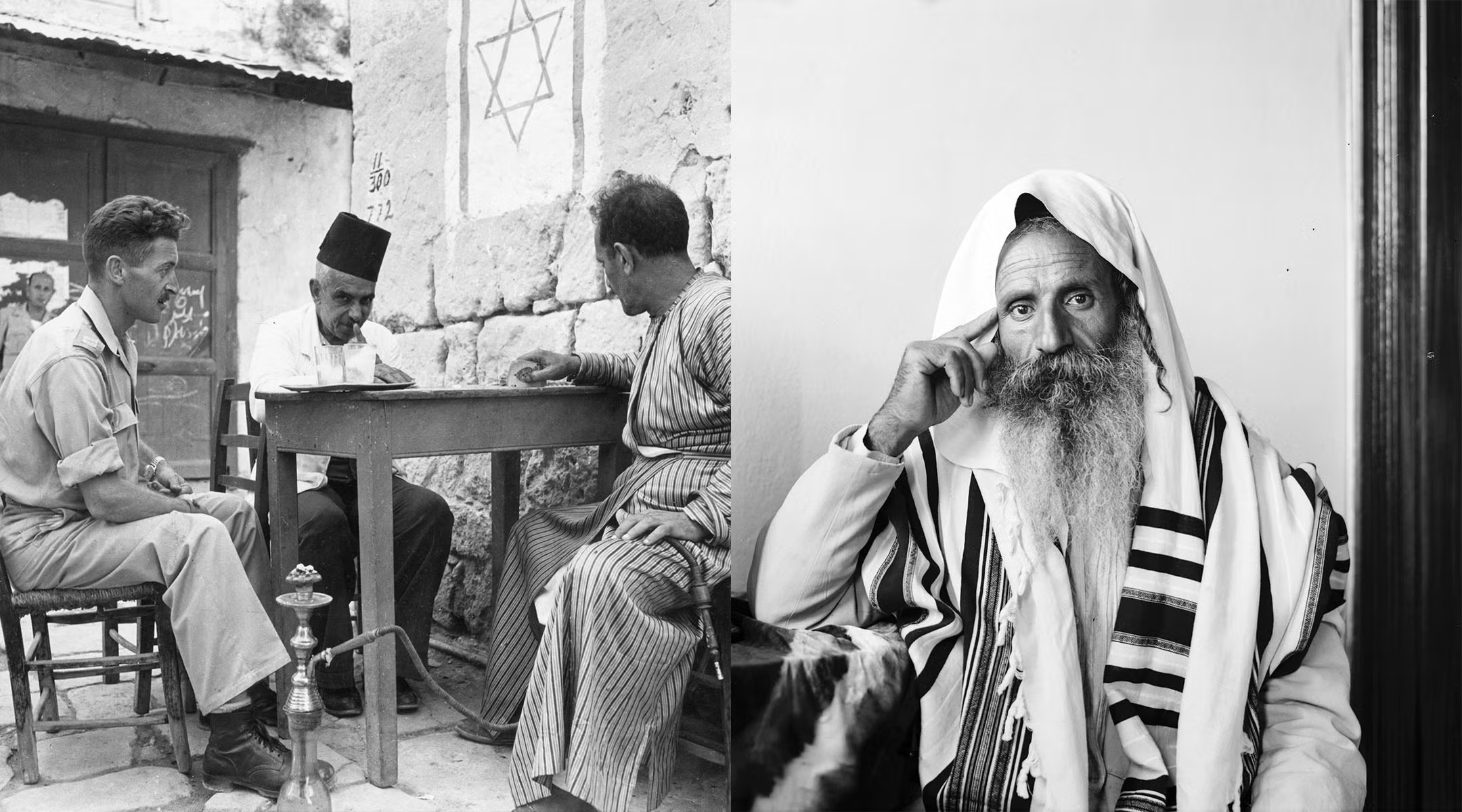
This history gave rise to a narrative of grievance that extended beyond poverty to opposition to the erasure of Eastern culture under the banner of the “melting pot.” That narrative, however, divided into two readings. A right-wing interpretation blames the Mapai labour elite for discrimination. A critical interpretation, found in the writings of Ella Shohat, Sami Shitrit and others, traces its roots to the European character of the Zionist project and its separation of “Arab Jews” from their culture.
The most important electoral shift came in 1977, when Mizrahi votes helped propel Menachem Begin’s Likud to power. The bond was cemented in 1981 after actor Dudu Topaz used the derogatory term “chakhchakhim” against Likud supporters. Begin turned the insult into a rallying cry that helped him win by a narrow margin.
Shas was founded in 1984 to offer a Mizrahi religious identity independent of Ashkenazi dominance, while also attracting traditional, non-Haredi voters. Since then, a large bloc of Mizrahi votes has been divided between Likud and Shas, and the right has repeatedly drawn on the memory of those insults in election campaigns.
This strategy works by turning political disagreement into a confrontation between voters who feel the establishment looked down on them and an elite portrayed as seeking to restore its monopoly. Likud has thus maintained its image as the representative of the marginalised even after decades in power, directing anger towards its rivals rather than subjecting its own social and economic record to scrutiny.
Research by economist Momi Dahan shows that the right-wing bloc won 61 per cent of the vote in towns with Mizrahi majorities in the 2022 election, compared with 36 per cent in Ashkenazi towns. He notes, however, that the gap narrows considerably when education and religiosity are taken into account, cautioning against explaining voting patterns through ethnic origin alone. The irony is that Likud, the greatest beneficiary of this alignment, has never elected a Mizrahi leader.
Rising through the institutions of power, but falling short of the top
Marginalisation did not prevent Mizrahim from reaching senior positions. In 1978, Yitzhak Navon became president. He descended from a Sephardic family said to have Spanish roots on his father’s side and Moroccan roots on his mother’s. Moshe Katsav, who was born in Iran, became president in 2000. But the presidency, with its representative functions, is not equivalent to the premiership, where executive power is concentrated.
The army offered a more open route to advancement. Moshe Levy, Shaul Mofaz, Dan Halutz and Gabi Ashkenazi, all of wholly or partly Eastern origin, served as chiefs of staff before Eisenkot became the first army chief of Moroccan origin, serving from 2015 to 2019. But this advancement took place within an institution whose language and values had been shaped by the founding elite. It did not necessarily bring with it an effort to change the social position of Mizrahim. Their rise did more to integrate Mizrahi commanders into the existing elite on its terms than to change its structure or redistribute influence within it.
In politics, David Levy rose from trade union work in Beit She’an to become foreign minister and deputy prime minister, but failed in his two bids for the Likud leadership in 1992 and 1993. Silvan Shalom, who was born in Tunisia, held the finance and foreign affairs portfolios and challenged Netanyahu for the party leadership without displacing him.
On the other side of the political divide, Benjamin Ben-Eliezer, who was born in Iraq, led the Labor Party and served as defence minister. Later, Amir Peretz, who was born in Morocco, led the party and became defence minister in 2006. Even so, these breakthroughs did not produce a Mizrahi prime minister.
Two other generals came close to contesting the premiership. Yitzhak Mordechai, who was born in Iraqi Kurdistan, ran for prime minister in 1999 before losing ground and withdrawing on the eve of the vote. Mofaz, who was born in Tehran, lost the Kadima leadership to Tzipi Livni in 2008, in a contest whose winner would have been on course to be tasked with forming a government. When he later led the party, he joined Netanyahu’s government in 2012, then withdrew after about 70 days, before his party’s electoral collapse.
Some of these careers ended in political failure; others involved investigations or criminal and ethical convictions, as in the cases of Katsav, Mordechai and Shalom. This has fed a narrative of selective targeting of Mizrahim. But that narrative still requires systematic comparison with their Ashkenazi counterparts and cannot, on its own, explain their setbacks or negate facts established by the courts.
These experiences reveal both the possibilities and the limits of individual advancement. Eastern Jews reached key ministries and the army’s top command without ending disparities in influence. Equally, the fact that no Mizrahi has become prime minister does not, by itself, prove the existence of a coordinated decision to exclude them. Overlapping elite networks, party structures and the ability to form coalitions all shape the issue, alongside social and ethnic origin.
Eisenkot faces the test of identity and coalition-building
Eisenkot’s background allows him to appeal to different constituencies. He is a son of the periphery who began his career in the Golani Brigade, associated in the Israeli imagination with the popular classes; a former chief of staff; and a father who lost his son Gal in Gaza. He entered politics alongside Benny Gantz in 2022 before founding Yashar and becoming one of Netanyahu’s most prominent rivals.
At the same time, he presents himself as an heir to the state’s traditions and institutions. He has chaired organisations commemorating Ben-Gurion and embraces the discourse of “mamlachtiyut”, which places the public interest above sectoral interests. As a “traditional” Jew, he combines Mizrahi cultural identity with the image of a general acceptable to secular Ashkenazi constituencies.
Days before the 27 October vote, a Channel 12 poll gave Yashar 23 seats to Likud’s 19, while other polls put Netanyahu in a stronger position. But a party’s lead does not settle who becomes prime minister. The opposition bloc is not guaranteed a majority, and its refusal to cooperate with Arab parties narrows its options. Divisions among its leaders make coalition-building more difficult.
– Gadi Eisenkot received 43% compared with 38% for Benjamin Netanyahu in terms of preference for the post of prime minister.
– Eisenkot’s party won 22 seats, ahead of Netanyahu’s Likud, which fell to 20 seats.
– No majority for either camp:
Netanyahu camp: 53 seats (needs 8 more seats to reach a majority of 61).
Eisenkot camp: 50 seats.
Outside both camps: 17 seats distributed among other parties.
– 54% of respondents support holding a live televised debate between Netanyahu and Eisenkot before the election.
— NoonPost (@NoonPost) October 12, 2026
Avigdor Lieberman has added pressure from within the camp, accusing Eisenkot of planning a unity government with Netanyahu and describing him as “Gantz 2.” The possibility remains that Eisenkot could make electoral gains yet stumble at the coalition stage, however compelling his personal story.
Ethnic origin had entered the race even before Magal’s insult, through a campaign mocking Eisenkot’s English accent. Calling him a “monkey” then brought those insinuations into open confrontation, intensified when a Likud activist posted a fabricated video depicting him as a monkey. Netanyahu was slow to condemn the remark. He eventually described it as inappropriate, linking his condemnation to a demand that Eisenkot condemn insults directed at Likud voters.
The incident crystallises a contradiction in Eisenkot’s rivals’ rhetoric: they target him for his Mizrahi origins while presenting him as a front for an Ashkenazi elite controlling him. Even within Likud, some objected to the insult out of concern that it would anger the party’s Mizrahi base and generate further sympathy for Eisenkot.
Likud lawmaker David Bitan acknowledged that Eisenkot’s background and personal story give him an electoral advantage, while former Shas lawmaker Yigal Guetta welcomed the idea of a Moroccan prime minister. But these positions do not establish the extent of any shift in votes. They show that identity can cross party lines without proving the collapse of political loyalties built since Begin’s rise.
He is both a military theorist who shaped some of the most influential combat doctrines and a politician presenting himself as an alternative to Netanyahu, while retaining the same core security approach towards Palestinians.
He combines the position of a military theorist who shaped some of the most influential combat doctrines with that of a politician presenting himself as an alternative to Netanyahu, while retaining the same core security approach toward the Palestinians
📍What do you know about Israeli General Gadi Eisenkot?
https://t.co/Bi2K3jkYrR https://t.co/q009i3XK1W
— نون بوست (@NoonPost) August 3, 2026
Eisenkot chose to hold Netanyahu responsible for the climate that produced the 7 October attack and for the failure to anticipate it, avoiding a contest confined to identity. His party, meanwhile, took on the task of exploiting the identity issue directly. It released clips in which its candidates described themselves as “proud monkeys” and invoked Topaz’s 1981 insult, presenting Eisenkot as the candidate to become the first Mizrahi prime minister.
This division of labour serves his need to retain two constituencies: secular voters seeking an alternative to Netanyahu, and voters from the right and the periphery whose shift towards him may be eased by his background. But it does not guarantee a repeat of Begin’s experience. Voters leaving Likud may abstain or choose another right-wing party, and sympathy for Eisenkot does not necessarily mean acceptance of his potential partners.
These dynamics give voter turnout added weight. Eisenkot may benefit from declining enthusiasm among Likud voters without winning their votes. But greater representation for Arab parties will not automatically produce a majority capable of governing as long as his camp refuses to cooperate with them. Identity can shift votes, but turning that shift into power requires a political decision about the coalition and its limits.
For that reason, fulfilling voters’ desire for a prime minister of Moroccan origin requires turning votes into a governing majority. Even if Eisenkot succeeds, it would be an important symbolic breakthrough without automatically redistributing influence or dismantling the disparities that produced “second Israel.”
For Palestinians, meanwhile, the limits of change remain clearer. The man who may break a monopoly within Jewish society is one of the figures most closely associated with the “Dahiya doctrine,” based on the use of disproportionate destructive force. He has also pledged to end Hamas rule in Gaza within 18 months of taking office as prime minister. A change in the identity of the person at the apex of power does not, in itself, transform the doctrine directing that power against Palestinians.
