






هذا التقرير متاح أيضًا بـ العربية
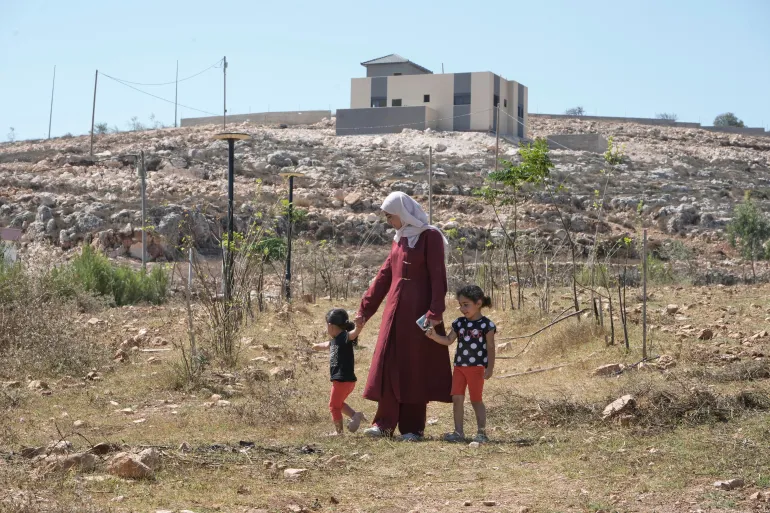
On Ras al-Ain hill in the town of Qusra, Kinda and Hoor can see their grandmother and aunt from the window, just 20 metres away, but cannot reach them. The two girls ask their mother, Ruqayya, “Grandma is here — let’s go?” All she can do is explain that Israeli occupation soldiers and settlers are preventing them from visiting.
In the other house, Aisha sits with her mother. They can see the rest of the family only through the windows: the few metres between their homes have become impossible to cross.
For the past two weeks, three families on Ras al-Ain hill have been living under siege by settlers and the Israeli occupation army. One home has been turned into a military outpost. Bringing in food and medicine now requires approval and a wait, while the two girls have become afraid even of the road leading home.
The families are determined to stay, but an even greater fear haunts them: that what happened less than a month ago to the al-Tubasi family in Jalud will be repeated in Ras al-Ain, and that the siege will force them to leave their homes to the settlers.
A home turned into a military outpost
Ruqayya Samih Saleh Hassan, from Qusra, can no longer leave her home freely. Taking her sick daughter to the doctor, visiting her family or reaching her husband’s relatives, who live just 20 metres away, now requires prior coordination and a wait for approval from the occupation army. Ruqayya sums up her life today in a few words: “We are completely confined.”
Her ordeal began on 21 January 2026, when settlers pitched a tent on the hilltop, about 500 metres from her home. Since then, they have repeatedly stormed the area and attacked the family, including with an agricultural tractor. Ruqayya says: “From that day until now, they kept coming at us. Attacks with the tractoron, back and forth, more than once.”
The attacks extended beyond the immediate surroundings of the house. Settlers drove more than 100 sheep onto the family’s land, among the trees and crops, destroying part of their livelihood. Ruqayya says: “There were plums, olives, grapes and sage — it’s all gone.”
The siege intensified about two weeks before the interview, when the settlers moved their tent to a spot just 20 metres from the house. As they moved closer, the electricity was cut, the water remained off for more than a month and the only road to the house was blocked with stones. Attacks continued throughout the day. Ruqayya describes what now happens around her home: “They started coming down every hour, every two hours, attacking the house, throwing stones, shouting at us and cursing us.”
Ruqayya tried to obtain permission to leave, but her first attempt failed and, according to her account, the ambulance was attacked. The next day, she finally managed to take her daughter to the doctor. She stayed with her in town for two days for treatment before requesting permission to return.
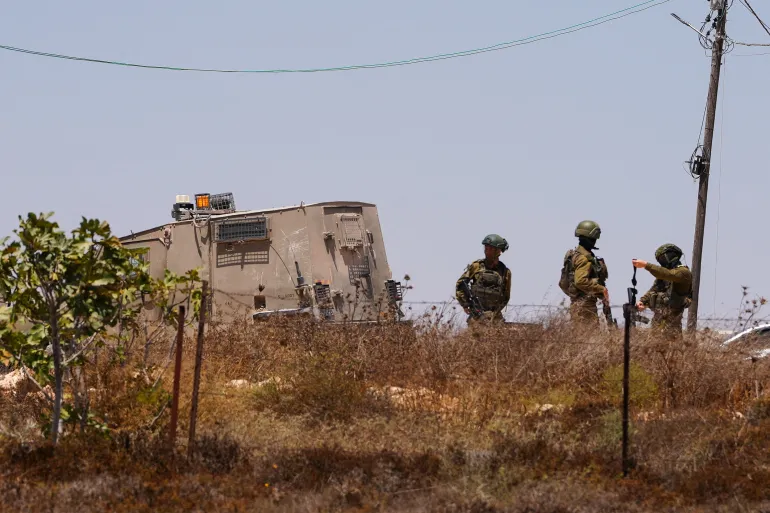
When she returned, however, her home was no longer as she had left it. Israeli occupation soldiers had seized it and turned it into a military outpost. The neighbouring home belonging to her husband’s brother, where his mother and sister live, was also within the area under siege.
Ruqayya and her two daughters had nowhere to stay except a nearby villa owned by Luay Abu Ridi. From there, they can see their relatives in the other house, only 20 metres away, but the soldiers do not allow them to cross that distance. Ruqayya says: “There are only 20 meters between us and them, and even so, we’re forbidden from reaching each other.”
Those trapped in the other house have no refrigerator, gas or washing machine, so they rely on canned food and bread. When the family tried to prepare food in the villa and deliver it to them, the soldiers stopped them. Even meeting their simplest daily needs requires the soldiers’ approval.
The siege has affected Ruqayya’s two daughters most severely. They do not understand why they cannot visit their grandmother and aunt when they can see them from the window. Ruqayya says: “My daughters are little. They miss seeing their grandmother, and they miss seeing their aunt.”
When one of the girls sees her grandmother, she asks her mother, “Grandma is here — shall we go down?” Ruqayya can only explain that they cannot, because the soldiers are watching the area and preventing them from reaching her.
As the siege continues, fear has begun to affect every part of the girls’ lives. Ruqayya says they have started wetting themselves during the day and at night, and are afraid to sleep alone, although they used to do so.
She explains: “I had gotten them fully used to sleeping in a room by themselves. Now they’re afraid to sleep alone. Even when I’m there, they want me to stay asleep beside them, pressed up against them.”
The effects extend beyond sleep. According to their mother, the girls have become more irritable and prone to crying, and refuse to learn or follow instructions. Ruqayya says: “Their condition is very bad — irritability and crying all the time. They completely refuse to sit and learn. They don’t take in orders or even instructions,” before adding: “I’ve almost lost control over them.”
With Kinda due to start kindergarten soon, Ruqayya fears the siege will prevent her from beginning her education. She says: “I don’t know whether this plan will still stand or whether circumstances will cancel it. God forbid, if things stay like this, how am I supposed to take her?”
The girls’ fear stems not only from the siege but also from their encounters with settlers. On one occasion, Ruqayya was visiting her family in town. When she left with her daughters to return home, she did not realise settlers were watching them.
She recounts: “By chance, the settlers were watching us and we didn’t notice, so they chased us with the tractoron.”
Ruqayya left her daughters with their grandmother for several days before persuading them to return, but they remained afraid throughout the journey. They kept saying: “Mama, now it will chase us, now it will chase us.” When they reached the house, one said: “Mama, we don’t want to leave the house. Let’s just stay inside.”
The girls’ lives are now confined to the house, and Ruqayya’s life has also come to a standstill. Weeks have passed without her seeing her family, and even her simplest daily needs require coordination and approval. Sometimes she looks at other people’s lives on her phone and sees an ordinary life that is now beyond her reach: “This one is going to visit her friend, this one is going there, this one is going shopping. I’m deprived of all of that because I’m completely confined.”
Even bringing in food requires approval and a wait. Ruqayya says: “Food needs coordination,” explaining that obtaining any supplies she lacks can take a day or two, forcing her to ration what she has.
Her daughters’ refusal to eat makes the situation harder. She says: “I have a 4-year-old daughter and a 2 1/2-year-old daughter. Sometimes one of them eats half a bread roll. Most of what they live on is water.”
At the end of her account, Ruqayya asks only to have her home and her life back, and for her daughters to return to the lives they knew before fear became part of their day.
She says: “I want the army out of our house so we can go back and live in it, and for the settlers to move away from us, and for our normal, ordinary life to return — or even less than ordinary, as it was. We want to go back to visiting our family, and for our family to come visit us.”
Then she sums up everything she wants in one sentence: “That’s all I want.”
Fear beyond the front door
The siege has not only cut Ruqayya off from the outside world; it has also separated her from her husband’s family, just a few metres away. Aisha Hassan lives with her mother in a house about 20 metres from Ruqayya and her daughters. Neither household can cross the short distance separating them.
It began with settler attacks. Israeli occupation forces then entered the area and turned Aisha’s brother’s house into a military outpost, leaving the family trapped between settlers and soldiers. Aisha says: “The siege came from both sides. We are currently under house arrest.”
As the siege tightened, the restrictions went beyond making it difficult to leave the house. Aisha says the soldiers even prevent her and her mother from opening the windows facing their positions. Visiting them or delivering necessities now requires coordination that can take four or five days.
Aisha’s elderly mother needs regular medication and suffers from stomach pain and a problem with eye pressure. Although her condition is relatively stable, food has become a daily problem: they have only canned goods, which worsen her stomach pain. Aisha says: “Right now, the only food is canned food. Yes, it hurts her stomach, but what can we do?”
From her window, Aisha watches settlers move freely across the hill, while she and her mother are forbidden from opening the door or leaving the house. She says: “Just a little while ago I was watching the settlers. They’re up on the hill strutting around and walking freely, while we’re not allowed to open the window or the door.”
What weighs on her most is the siege’s effect on her brother’s daughters, Kinda and Hoor, who have lived in fear since the attacks began. Aisha recalls the moment they saw their belongings being thrown from the window of the house seized by the soldiers: “Two days ago they saw their things — and they’re little — being thrown out of the window. Their beds and toys were broken, and their clothes were thrown out of the window.”
The beds and toys were part of the small space where the girls felt safe. Seeing their belongings broken and thrown out of the house left the family feeling powerless to protect them. Aisha says: “We feel helpless toward the two girls and don’t know what to do for them.”
The family is considering taking the girls to a psychologist after the siege ends to help them overcome what they have experienced. But Aisha knows that buying new toys or repairing what was broken will not necessarily erase their fear.
She returns to the image that sums up the siege: members of one family living in two neighbouring houses, yet unable to meet. She says: “We live in one house, and they’re in another, but we only see them through the windows, nothing more.”
Sometimes even that limited contact is cut off when a drone flies between the houses. Despite everything, Aisha’s demand is simply for an end to a life of constant fear and waiting: “We just want to live in peace and go back to sleeping calmly, nothing more.”
‘Food needs coordination’: Life on hold pending the occupation’s approval
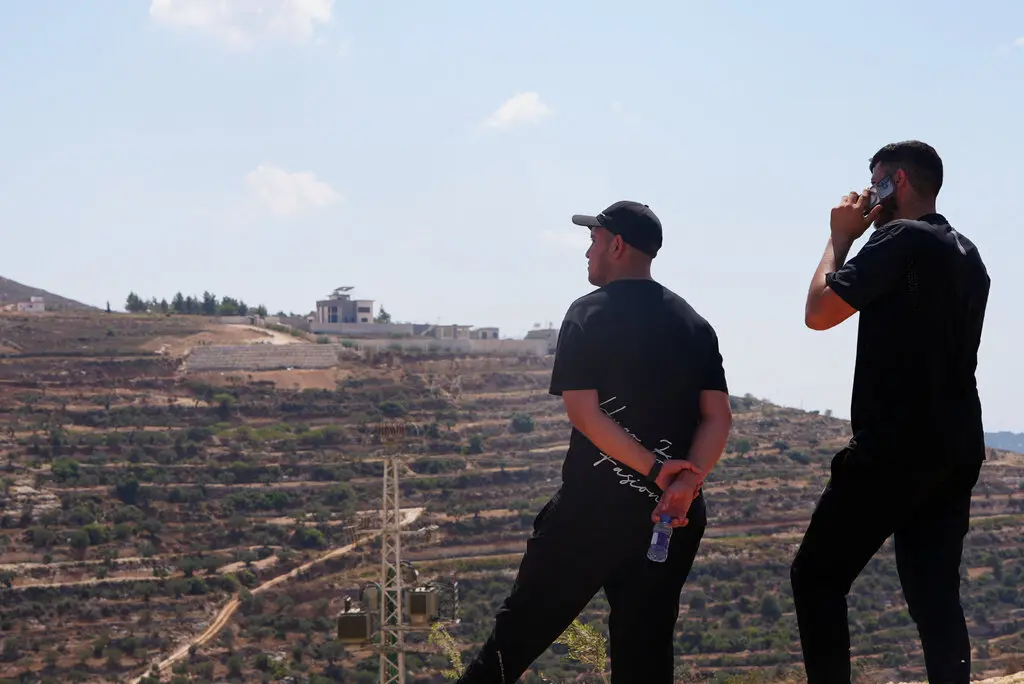
In the besieged homes on Ras al-Ain hill, three families remain isolated after the road connecting them to Qusra was closed. Their access to food, medicine and water depends on what is allowed through. The municipality is trying to provide basic necessities in cooperation with humanitarian organisations, but deliveries remain limited as the siege grows harsher by the day.
Qusra’s mayor, Abdel Azim Wadi, says the municipality has been able to bring in only small quantities of aid throughout the siege, working with UNICEF, which helped deliver some medicines and food supplies.
The families under siege are Youssef Abdel Karim Hassan, his wife and daughters; Luay Abu Ridi, his brother Qusai and his son Ahmad; and Rizq Abdel Karim, his mother and his sister.
Their suffering extends beyond shortages of food and medicine. Restoring water and electricity has become part of the daily struggle to survive. Wadi explains that on the seventh day of the siege, municipal crews restored electricity to the homes after several days without power. The following day, they restored the water line to the three houses, despite an attack on the water team as it worked.
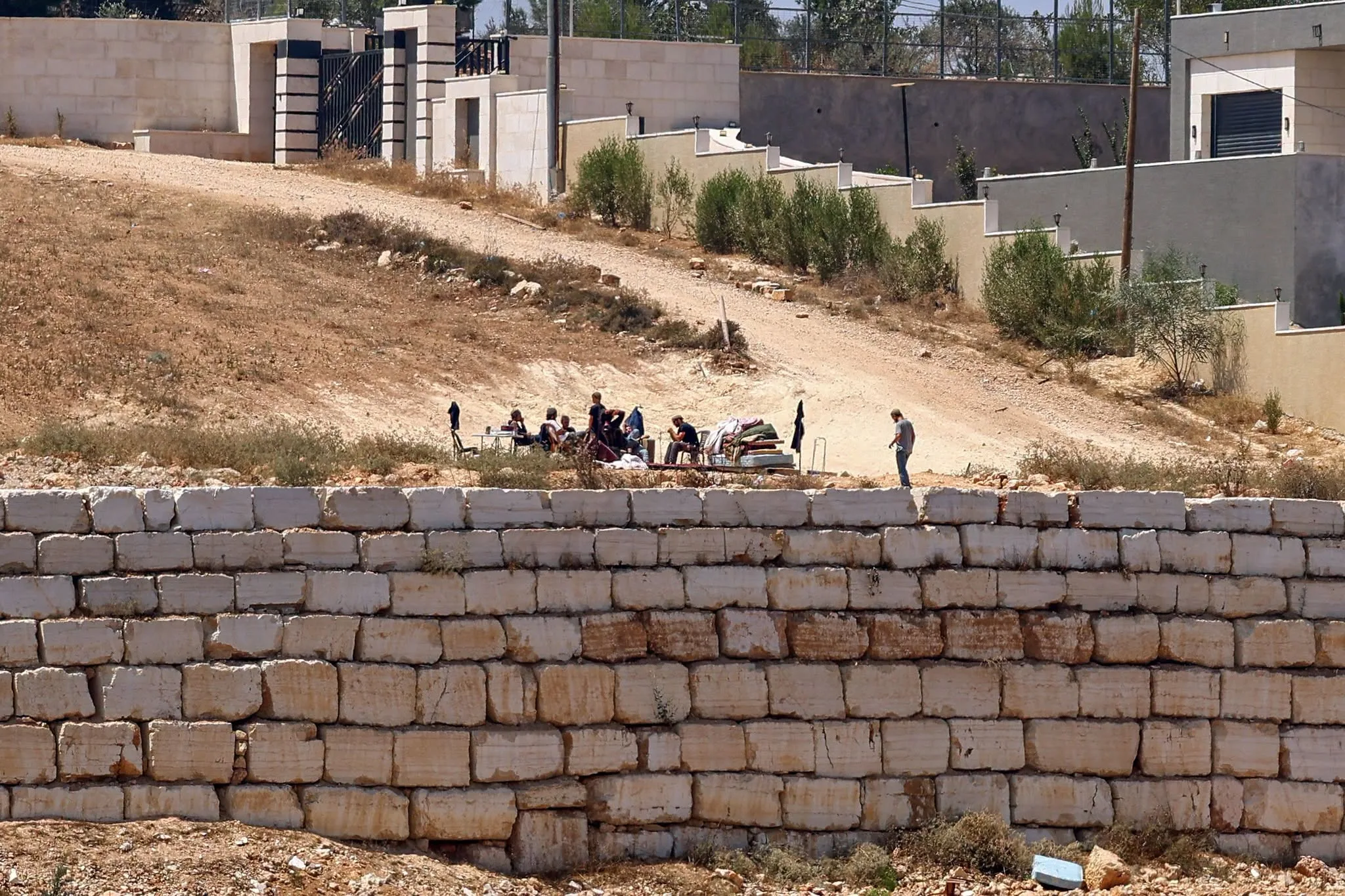
The siege has also affected residents’ livelihoods. Israeli occupation soldiers seized Youssef Abdel Karim Hassan’s home and turned it into a military outpost. A nearby factory making ornaments and fountains, which employed about 13 workers, was shut down after its workers were prevented from reaching it.
Wadi traces the events back to settlers climbing the hill and pitching tents, followed by repeated attacks on homes and facilities. He says they cut the water and electricity networks several times, let their sheep onto the land, pelted homes with stones and opened fire. They also attacked Ras al-Ain spring, which Wadi describes as the town’s main water source.
As the settlers moved their tents closer to the homes, the families’ contact with the rest of Qusra diminished. Occupation forces then entered the area and took up positions on the road to the hill before seizing Youssef Hassan’s home and turning it into a military outpost. Wadi sums it up as: “The settlers’ siege and the army’s siege.”
Wadi describes the situation as unprecedented: three families are being prevented from reaching Qusra and communicating with their relatives, even though the homes under siege stand on the town’s own land. He believes aid deliveries, necessary as they are, cannot become a permanent solution. The families need an open road and safety in their daily lives, rather than occasional food parcels.
He says: “In principle, the siege should be broken in 11 minutes, not 11 days.”
The mayor fears the siege of Ras al-Ain could become a model repeated elsewhere, with siege and sustained pressure used to push residents off their land. He is therefore calling on local, international, legal and humanitarian institutions to act to end it. He stresses that these families “have the right to live in their homes like the rest of the world’s families,” and that the women and children under siege are being subjected to violence inside their homes.
From the first day, Wadi reminded the families of what happened in 1948, when the people of Haifa and Jaffa were told, “Leave — it’s only for a few days, and you’ll come back,” only for a temporary departure to become an absence lasting decades. Faced with the choice of enduring the siege or leaving, these families chose to stay in their homes.
Wadi stresses that Qusra will continue working to break the siege and prevent a repeat in Ras al-Ain of what happened to the al-Tubasi family and other families forced from their homes.
From outpost to home: Displacement step by step
Raed Muqdi, a researcher on environmental and settlement issues, believes the siege begins long before residents are confined to their homes. It begins with the expansion of a settlement outpost, the closure of a road and owners being cut off from their land. The pressure gradually reaches the house itself.
Muqdi places events in Ras al-Ain within a broader pattern in Qusra and Jalud, southeast of Nablus. Over the years, settlements and outposts have expanded around the two towns, with roads and infrastructure built to connect them. Qusra is surrounded by the settlements of Adi Ad and Magdolim, along with three outposts. Jalud is surrounded by the settlements of Esh Kodesh and Ahiya, as well as other recently established outposts.
As roads were built between these settlements and outposts, owners were cut off from vast areas of the two towns’ land. Muqdi estimates that settlers now control more than 70 per cent of Jalud’s land and more than 42 per cent of Qusra’s.
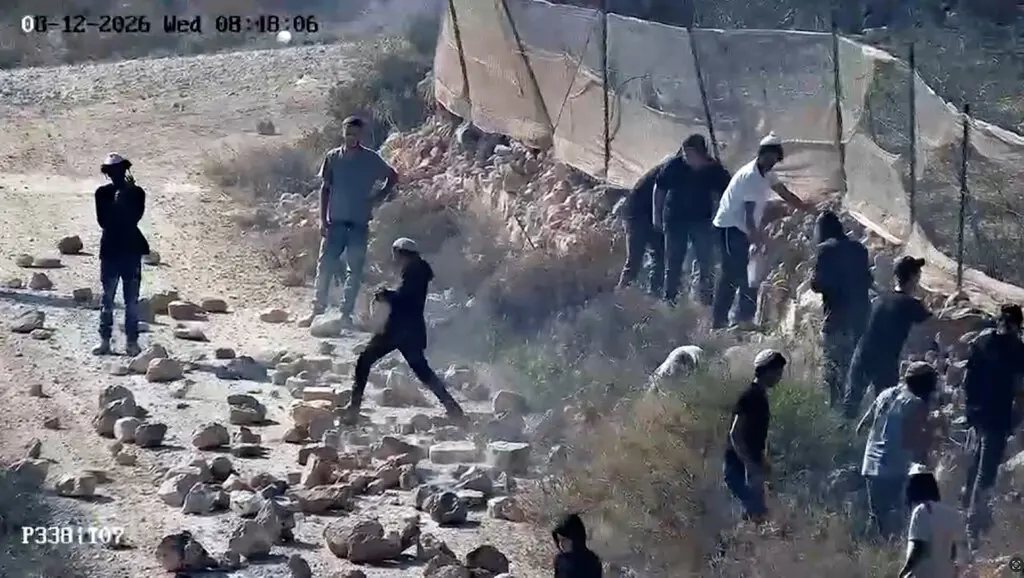
This control has directly affected agriculture and residents’ movement. The road linking Jalud and Qusra has been completely closed since 2023. Farmers have been denied access to more than 2,870 dunams planted with ancient Roman olive trees, whose fruit has gone unharvested for three years. During the same period, more than 39 greenhouses and facilities were demolished and other projects destroyed, restricting agriculture and reducing opportunities to earn a living in the two towns.
Across southern Nablus, Muqdi says the expansion of outposts and the roads connecting them to settlements has cut owners off from more than 2,950 dunams planted with ancient olive trees since 2023. This has coincided with the destruction of springs, vandalism of fields and the burning of more than 1,700 olive trees.
Over time, the pressure shifts from the land to its owners. Muqdi points to the al-Tubasi family in Jalud, where settlers took over an entire neighbourhood and forced the family to leave. In Qusra, attempts to seize homes and push residents out have continued for years.
Muqdi explains that taking control of land does not always require an official confiscation order. It may begin with closing the road, preventing owners from reaching their land, then vandalising it and pursuing anyone who tries to use it. As these practices recur, a temporary ban becomes permanent, and the surrounding settlements and outposts come to determine where Palestinians can move and which land they can access.
The losses then extend beyond the land to the essentials of daily life. Restrictions on movement, denial of access to land, declining agricultural activity, economic pressure and constant fear make staying more difficult and may push families to leave without an official order displacing them.
Amid all this, Ruqayya wants to return home, while Aisha wants her family reunited and to sleep in peace. Kinda and Hoor want only to reach their grandmother without fearing the road or the sound of the “tractoron” that still haunts them even inside the house.
But the families know how this can end: a tent pitched on the hilltop, a road closed, owners barred from their land and a house besieged until staying becomes impossible. That is why they hold on to their homes despite the fear, hunger and waiting. They insist on their right to stay, rather than leave in the hope of returning.
