





هذا التقرير متاح أيضًا بـ العربية
The Israeli forces’ crimes in Gaza have extended far beyond the killing of more than 73,000 people and the destruction of entire communities. Even the dead have not been spared. Israeli forces have repeatedly targeted cemeteries with airstrikes, artillery fire, military raids, and bulldozers. At the same time, soldiers have filmed themselves mocking Palestinians from inside graveyards and shared the footage on social media.
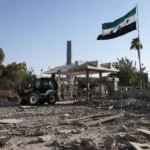
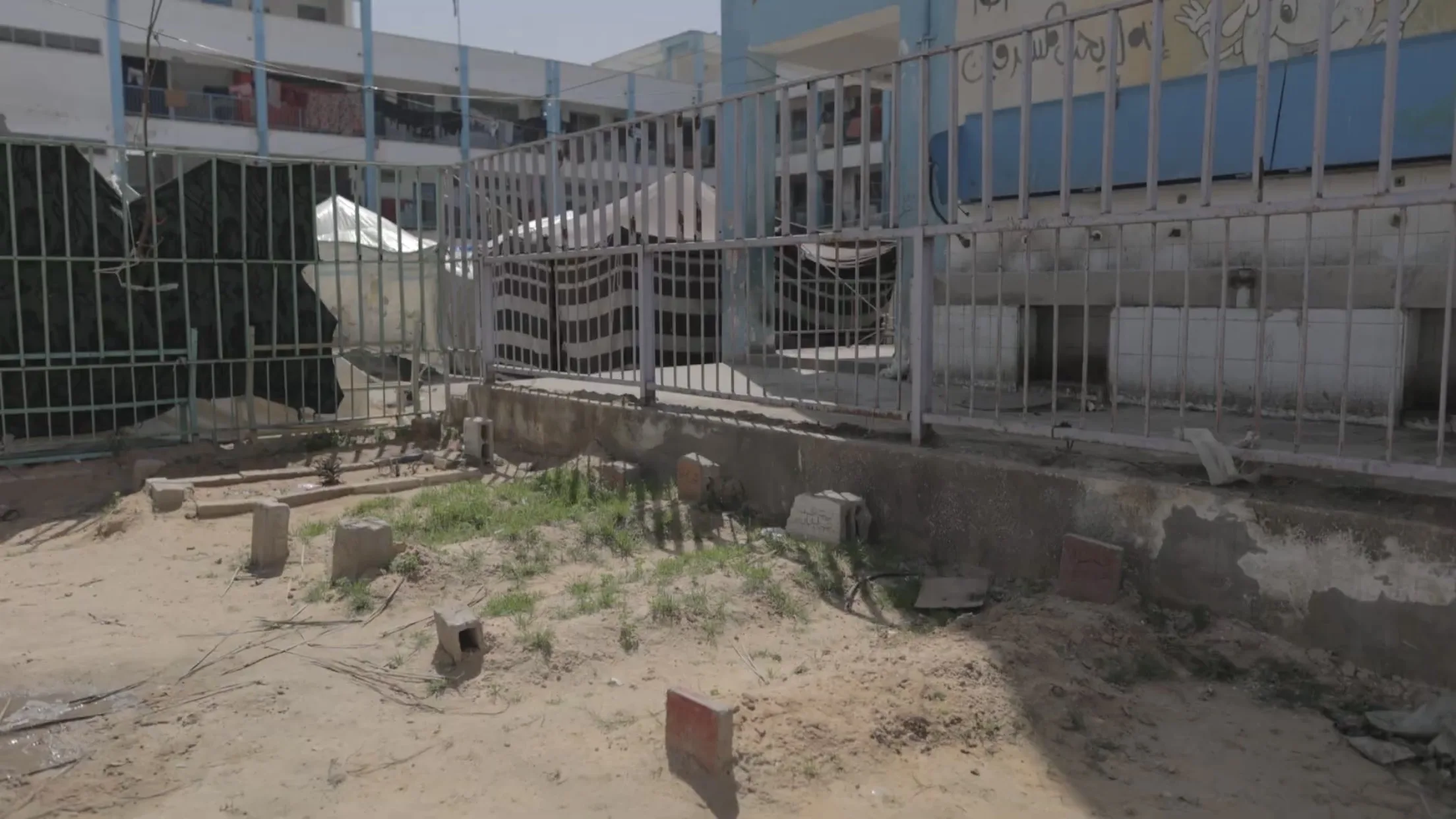
The attacks have left graves destroyed, markers obliterated, and the remains of many Palestinians missing or scattered. Cemeteries have been reduced to stretches of rubble and earth, with human remains buried beneath or mixed into the debris — turning even places of burial into sites of devastation.
According to a statement by the Euro-Mediterranean Human Rights Monitor and the Palestinian Ministry of Endowments, 93.5% of Gaza Strip cemeteries were damaged, either completely or partially, by the Israeli military.
Gaza’s dead are not spared
Thirty-nine cemeteries were completely bulldozed and destroyed, while 19 other cemeteries were subjected to shelling and partial exhumation. Only four of the 62 official cemeteries escaped damage.
The destruction was not limited to cemetery walls, buildings, or external landmarks, but extended to the graves themselves; the statement indicates that the Israeli forces destroyed 62.9% of all individual graves in the Strip, while the structure of another 30.6% of graves was damaged, leading to the disappearance of the markers of a large number of graves and the mixing of remains together.
Ahmad Harzallah, for his part, said the Israeli military was not satisfied during the war with wiping out 71 members of his family and the families of his paternal and maternal uncles, but continued its assaults on their dead by exhuming their graves, bulldozing them, scattering what remained of their bodies and strewing them inside and outside the cemetery after its markers had been destroyed.
Harzallah told Noonpost: “I cannot forget the moments when I placed my brother’s body in the grave, then followed it with what remained of his children’s bodies in November 2023, nor the times that came after, when we carried the bodies and remains of our relatives and neighbors to the cemetery. What we lived through is indescribable, but what deepened our anguish was that they were not spared the occupation’s harm even in their graves.”
He continued: “ The Israeli military attacked Sheik Radwan Cemetery, where we buried them, with heavy missiles. Then its tanks and bulldozers advanced into the area and bulldozed the cemetery, erasing the last traces of our martyrs.”
Harzallah said he inspected the cemetery after Israeli forces withdrew, describing the scene as “catastrophic by every measure,” with bodies, remains and bones scattered everywhere and mixed with dirt and mud. In contrast, the cemetery’s features had almost completely vanished, leaving only the remaining bodies and traces of death to indicate what the place was.
He added: “I moved toward the northern side of the cemetery, where my brother and his family were buried. On the way, I passed dug-up graves, bodies, and remains amid shocking scenes. When I reached the place where my brother had been buried, I found no marker indicating his grave. The area had been completely bulldozed, and nothing remained but scattered bones, with no one knowing which body they belonged to. For me, that was the height of anguish, to see the sanctity of my brother’s grave violated.”
He noted that he and his relatives tried to search for the bodies belonging to their family by recalling the clothes they were wearing when they were killed and by digging in the sites of the bulldozed graves. Still, those attempts yielded nothing, because the occupation deliberately sought to erase the cemeteries’ markers, in his words.
Stealing bodies
Alongside its destruction of cemeteries, and during its raids on them, the Israeli military exhumed and stole a large number of martyrs’ bodies from different cemeteries across the Strip.
According to Gaza’s Government Media Office, the Israeli forces stole about 2,300 bodies from cemeteries during the war, with the thefts carried out in more than 20 official and makeshift cemeteries across the Strip.
Among the occupation’s most egregious cemetery crimes was its raid on the Martyrs’ Cemetery in the Tuffah neighborhood east of Gaza City on Jan. 5, 2024, where Israeli soldiers exhumed about 1,100 graves, bulldozed the remains with heavy machinery, and stole 150 recently buried bodies.
Bulldozing and exhumation also struck Al-Faluja Cemetery in northern Gaza on Dec. 14, 2023, where graves were bulldozed, remains scattered, and recently buried bodies pulled out. At Beit Hanoun Cemetery, the military destroyed large sections of it with military vehicles, while residents documented pits in specific graves that they said had been robbed of their bodies.
Acts of vandalism and exhumation also targeted the Ali bin Marwan, Sheik Radwan, and Sheik Shaaban cemeteries, in addition to the historic Saint Porphyrius Church cemetery in Gaza City.
It was not clear why the Israeli military carried out campaigns to steal martyrs’ bodies from cemeteries until Israeli forces returned hundreds of martyrs’ bodies to the Strip through the Kerem Shalom crossing, and unidentified, conclusive evidence emerged that the occupation had stolen organs from many of the bodies it had taken.
According to examinations by medical teams and body management committees in Gaza, some of the returned bodies showed transverse incisions and cuts in the abdomen and chest, along with changes to or the disappearance of certain vital features. These incisions are consistent with the removal of organs from some of the bodies.
The tragedy of Gaza’s makeshift cemeteries
As the Israeli’s criminal attacks on cemeteries continued, Palestinians were forced to establish mass and makeshift graves inside residential neighborhoods, hospital courtyards, and sports fields.
This tragedy was accompanied by the widespread emergence of temporary mass and makeshift cemeteries, with more than 30 major makeshift mass cemeteries established, in addition to about 120 smaller mass graves containing three bodies or more each inside residential neighborhoods, sports fields, and hospital courtyards, including the grounds of Al-Shifa and Nasser medical complexes.
With the bombardment continuing, the death toll rising, and access to official cemeteries impossible — whether because of military operations, the difficulty of transporting the dead there, or the destruction of the cemeteries themselves — many families and local committees had no choice but to bury the dead in the nearest available safe space.
The makeshift cemeteries established during the war are estimated to contain about 3,000 bodies of unidentified martyrs.
As time passes, identifying these bodies becomes harder, especially as they decompose, are disfigured, or lose parts. Without the necessary medical examinations, the number on a grave may become the only identity available.
Abu Mohammed al-Adeen, one of the displaced people who took refuge in Al-Hilu School in Bureij refugee camp, said dozens of Palestinians were killed during the Israeli forces’ incursion into and siege of the camp as a result of indiscriminate shelling and direct attacks on the school, its surroundings and homes, in addition to intense artillery bombardment that hit different areas of the camp.
Al-Adeen explained that many of the martyrs’ bodies could not be buried by their relatives, while other victims fell without their families being able to identify them. He noted that the siege imposed on the camp, along with ambulances’ inability to reach targeted areas, compounded the difficulty of dealing with the victims’ bodies.
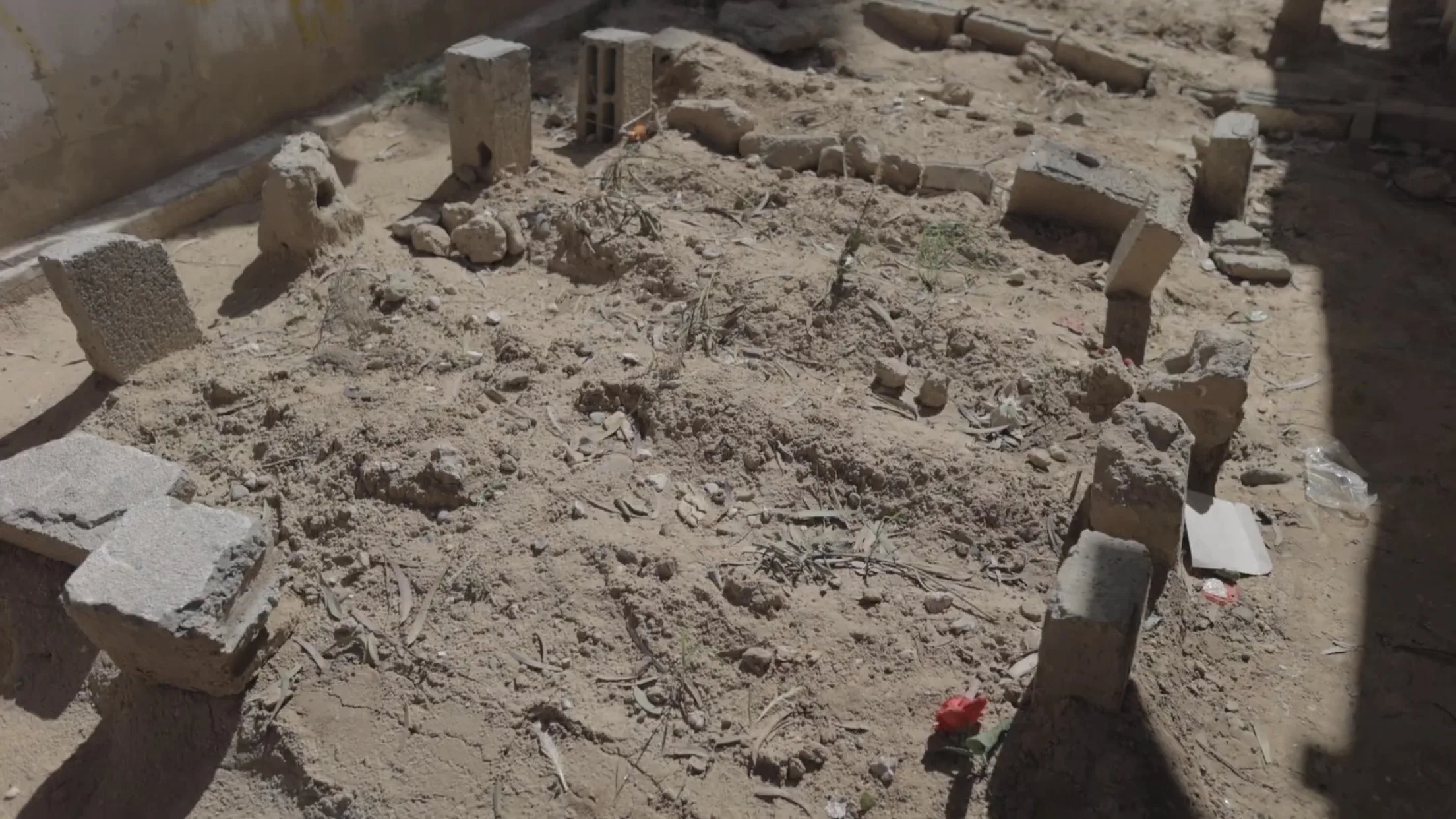
He added in remarks to Noonpost that the relatives of martyrs who were inside the school, as well as in other schools sheltering displaced people, were forced to bury their loved ones temporarily inside the schools and in whatever places they could reach, in the form of makeshift cemeteries, amid continued shelling and fear that anyone trying to transport or reach the bodies would be targeted.
Al-Adeen pointed to an even greater dilemma in dealing with unidentified martyrs who had fled to the school haphazardly during the period of the Israeli’s incursion into the camp, as there was no known authority or family to take charge of burying them or determining their identities.
He continued: “In the end, we decided to bury them temporarily as well inside the school courtyard and around it, because bodies cannot remain unburied for long. So we decided to honor them and bury them.”
Al-Adeen said the displaced would wrap a martyr’s body in nylon coverings, then dig a shallow grave because of limited means and fear of being targeted, before placing the body inside and covering it with dirt.
He explained that many of the martyrs buried under those conditions did not have gravestones bearing their names, but only numbers, in an attempt to document their burial sites until their identities could be determined.
After the siege ended and Israeli forces withdrew from the camp, some families were able to identify their children’s bodies by the clothes they had been wearing. But the vast majority of the bodies, according to al-Adeen, remain unidentified to this day.
Abu Mohammed noted that the tragedy of unidentified martyrs does not end with the inability to identify their graves, as the families of many missing people still cling to the hope of their return, believing they may still be alive in occupation prisons.
He explained that during their raids on schools sheltering displaced people, Israeli forces arrested large numbers of them, leading some families of the missing to believe their loved ones had been taken captive, rather than killed and buried nearby without their knowledge.
He added that the continued lack of information about their fate leaves families trapped between two painful possibilities: waiting for their children to return from occupation detention, or discovering that their bodies had all along been buried underground in temporary graves, without names or clear markers indicating their identities.
Attempts to rehabilitate cemeteries
After the horrors, attacks, exhumations, and abuse of martyrs’ bodies that cemeteries endured, government and grassroots efforts began to rehabilitate some cemeteries located outside areas controlled by Israeli forces. The efforts included removing rubble, organizing the cemetery, and rearranging graves whose occupants are known.
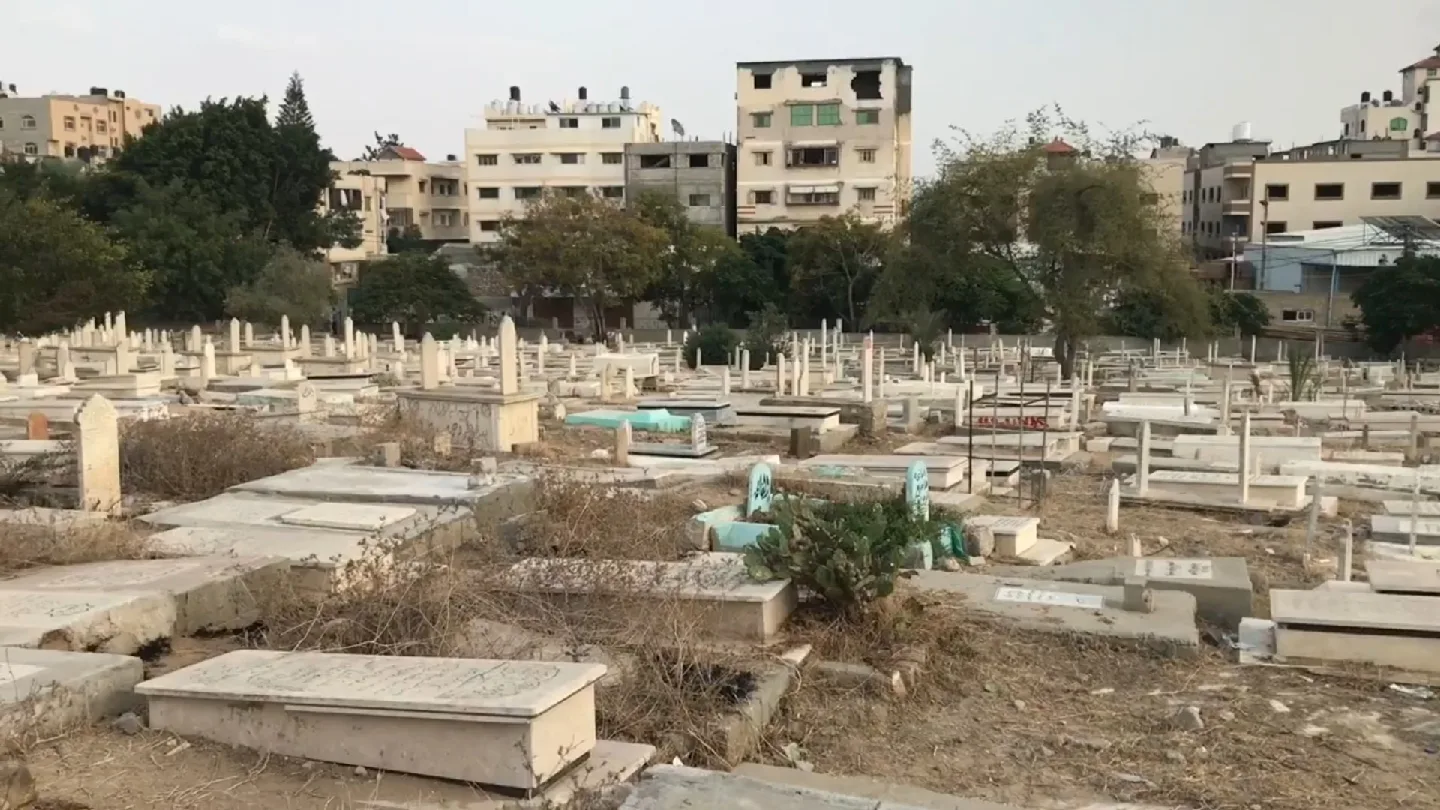
A government committee called the Body Management Committee oversees these efforts; it includes representatives from the Health Ministry, Civil Defense, criminal evidence, forensic medicine in the police apparatus, and the Ministry of Endowments.
Despite these efforts, the graves that the Israeli military bulldozed and exhumed could not be repaired, nor could the bodies they contained be recovered. In areas where cemeteries were completely bulldozed, bones and remains were scattered among rubble and dirt, making it impossible to determine which body each piece of remains belonged to.