













On a pitch-black night in Rafah, the stillness was swiftly shattered by the whistling of missiles and Israeli shell fragments. Safaa Al-Omassi’s ears rang from the deafening blasts that forced her and her family to flee for their lives leaving behind the home that had sheltered them throughout the war. What they didn’t expect was for Israeli soldiers to return and loot even the rubble of their destroyed home.
Safaa opens up with a flood of pain, her face etched with fury, her voice heavy with anguish: “The lifelong home built by my father, the martyr Khaled Al-Omassi, thirty years ago filled with the laughter of my siblings was reduced to ruins by Israel’s war of extermination.
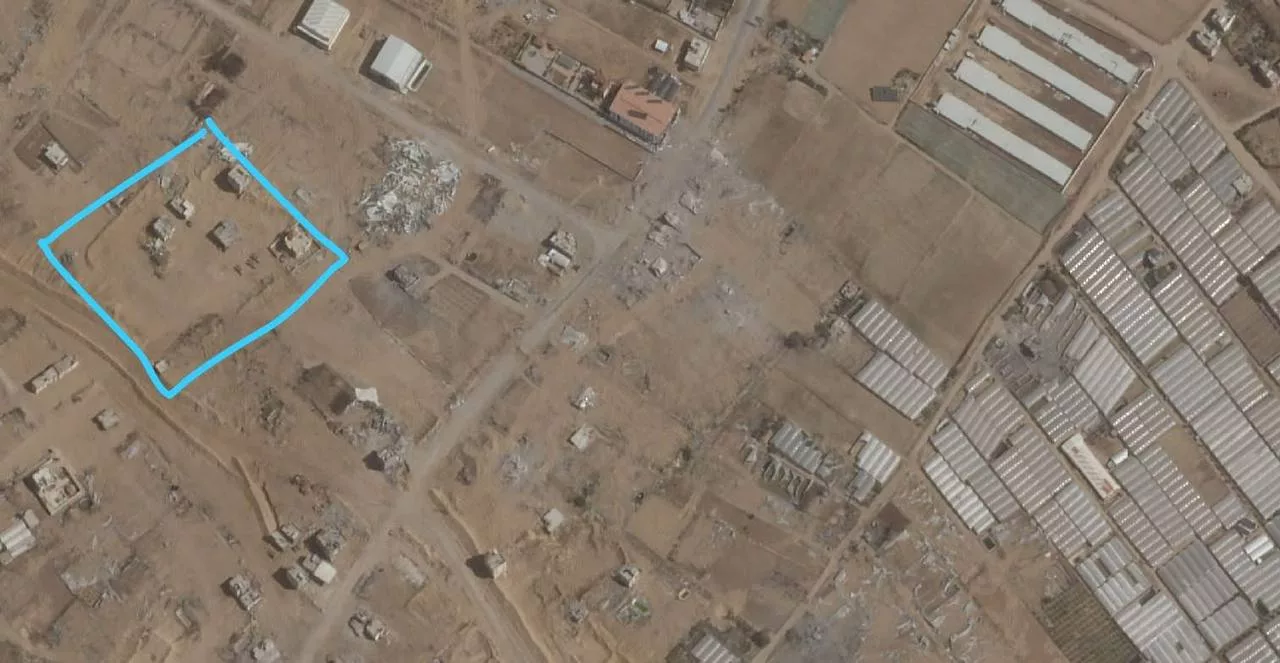
That same war also stole the life of my eldest brother, Mohammad, a lawyer and the father of four little girls.” She pauses briefly, sighs deeply, and adds, “As if killing us and destroying our home weren’t enough, Israel had the audacity to steal even the rubble our stone, our cement, our steel.”
Since the onset of Israel’s genocidal war, the Gaza Strip particularly its eastern, northern, and southern regions has witnessed a massive demolition campaign carried out by Israeli forces. The army enlisted heavy machinery companies and contractors to take part in what became one of the most extensive destruction operations ever documented, widely shared on social media.
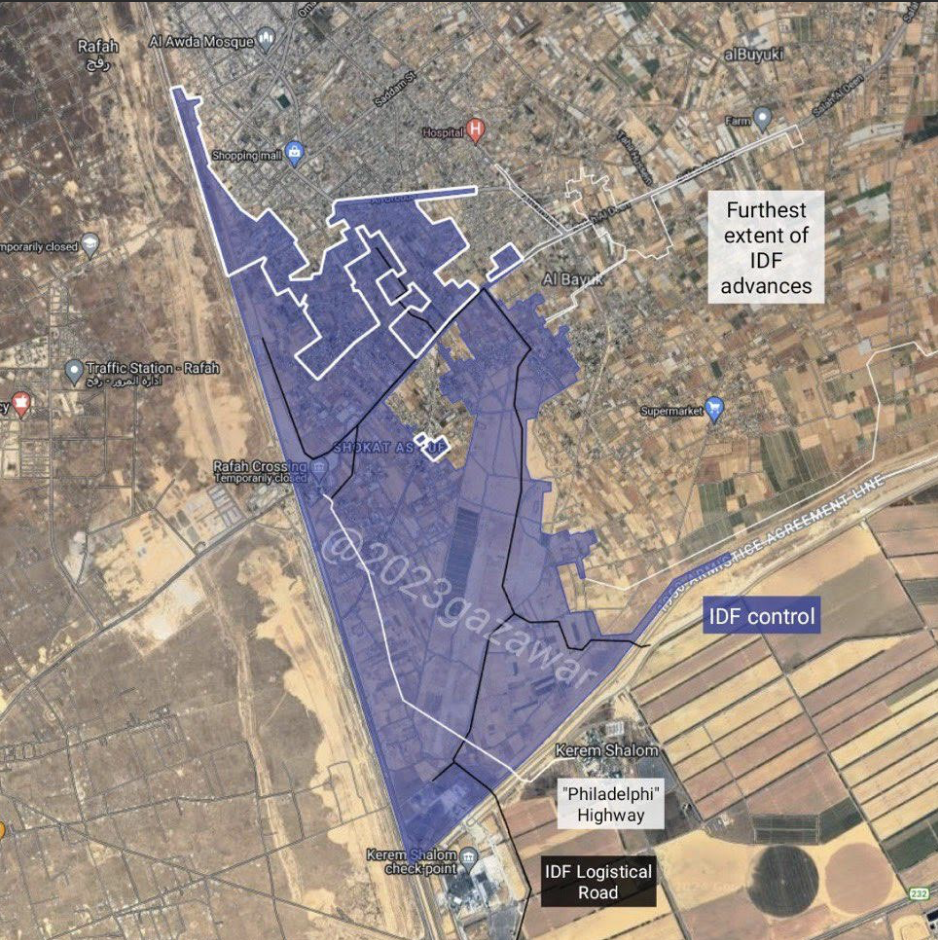
The mother of three recalls, her eyes darting between her children: “Our home is located in northern Rafah, behind it ten dunams of fertile farmland planted with eggplants, tomatoes, cucumbers, and ancient olive, guava, and orange trees. The house had a strategic location just 1.5 kilometers from the Egyptian border and two kilometers from the Morag military axis making it a prime target for the Israeli ground invasion.”
Safaa reflects on their first displacement: “We fled in a panic, under the roar of Israeli shelling that rained down on our homes and farmlands. Our tent in Deir al-Balah became our only shelter for months. After the first ceasefire came into effect, we returned to Rafah—only to find our three-story home reduced to a pile of rubble. We pitched a tent next to the ruins.”
Tears welled in Safaa’s eyes, but her voice remained steady as she told Noon Post: “I always followed the news on Telegram. Even though we haven’t returned to Rafah since fleeing, a few months ago I came across aerial photos of the city shared by an activist. I was stunned our neighborhood, our houses, our farmland were gone. All I saw was a barren desert, coated in yellow sand. Even the rubble had been stolen.”
According to a 2025 World Bank report, the Israeli military turned Gaza into towering mounds of rubble, estimated to weigh between 41 and 47 million tons piled up in a tiny, besieged geography. That figure dwarfs the estimated 11 million tons of rubble left behind in Mosul, Iraq (2016–2017), and the 13–15 million tons generated by the 2010 Haiti earthquake.
Safaa untwines her fingers and wipes away a tear. “After zooming in on the photo and realizing the location, I was shocked to find no trace of our neighborhood. Even the debris was gone! I saw videos on X and TikTok of Israeli soldiers boasting about leveling our homes, killing our loved ones, and destroying the lives we built with decades of hard work.”
Palestinians interviewed by Noon Post reported witnessing the destruction firsthand from locations near the Israeli border in northern Gaza. They saw Israeli bulldozers and trucks enter and leave the Strip loaded with rubble from the destroyed homes, particularly in Beit Hanoun and Beit Lahia.
This was confirmed by the Israeli newspaper Haaretz, which reported that the Israeli military had hired private contractors and companies to carry out the demolition. Each contractor was paid 5,000 shekels (approximately $1,474) per home destroyed in Gaza. One soldier interviewed by the paper explained, “Every contractor using engineering equipment was paid 5,000 shekels for each house demolished. They’re making a fortune.”
The soldier added in the report that “any time not spent demolishing homes was seen as a financial loss. The military protected their operations.” Demolition, in this context, was no longer merely a military strategy it had become a lucrative industry. Israeli media even glorified the contractors, labeling them “heroes” and “national symbols.”
According to Article 33 of the Fourth Geneva Convention (1949) and Article 47 of the Hague Regulations (1907), looting is strictly prohibited whether public or private property is involved. Article 8(2)(b)(xvi) of the Rome Statute of the International Criminal Court classifies pillaging as a war crime.
Dr. Salah Abdel Ati, head of the International Commission to Support Palestinian Rights (ICSPR), told Noon Post that the Israeli military’s theft of rubble from tens of thousands of demolished homes and buildings in Rafah and northern Gaza and its transfer into Israel for use in construction or industry constitutes a grave, multifaceted crime with legal, humanitarian, and environmental dimensions.
“This is not merely the theft of physical material,” Abdel Ati explained. “It is a continuation of Israel’s systematic destruction and appropriation of Palestinian property—even after leveling it to the ground. It reflects a settler-colonial model aimed at erasing both the physical and symbolic presence of Palestinians.”
He emphasized that removing the rubble from Gaza violates Palestinian sovereignty and denies the population the ability to rebuild using local materials. “This debris is a vital resource for future reconstruction,” he added.
Moreover, Abdel Ati warned that Israel may be systematically removing debris to eliminate forensic evidence of war crimes and genocide undermining international justice efforts and obstructing cooperation with UN investigation teams.
He held the Israeli occupation authorities fully responsible under international law, as the occupying power is obligated to protect civilian property and infrastructure.
In response to Noon Post‘s question about potential prosecution, the legal expert affirmed: “Israeli army commanders and the companies involved in transporting and exploiting this material can be prosecuted before the International Criminal Court for unlawfully profiting from occupied property.”
He concluded, “The theft of rubble is not a minor detail it is a new chapter in the occupation’s project to strip Palestinians of land, memory, and place. This demands urgent legal and diplomatic action to hold Israel accountable and to prevent Gaza’s ashes from becoming the building blocks of future settlements.”