










هذا التقرير متاح أيضًا بـ العربية
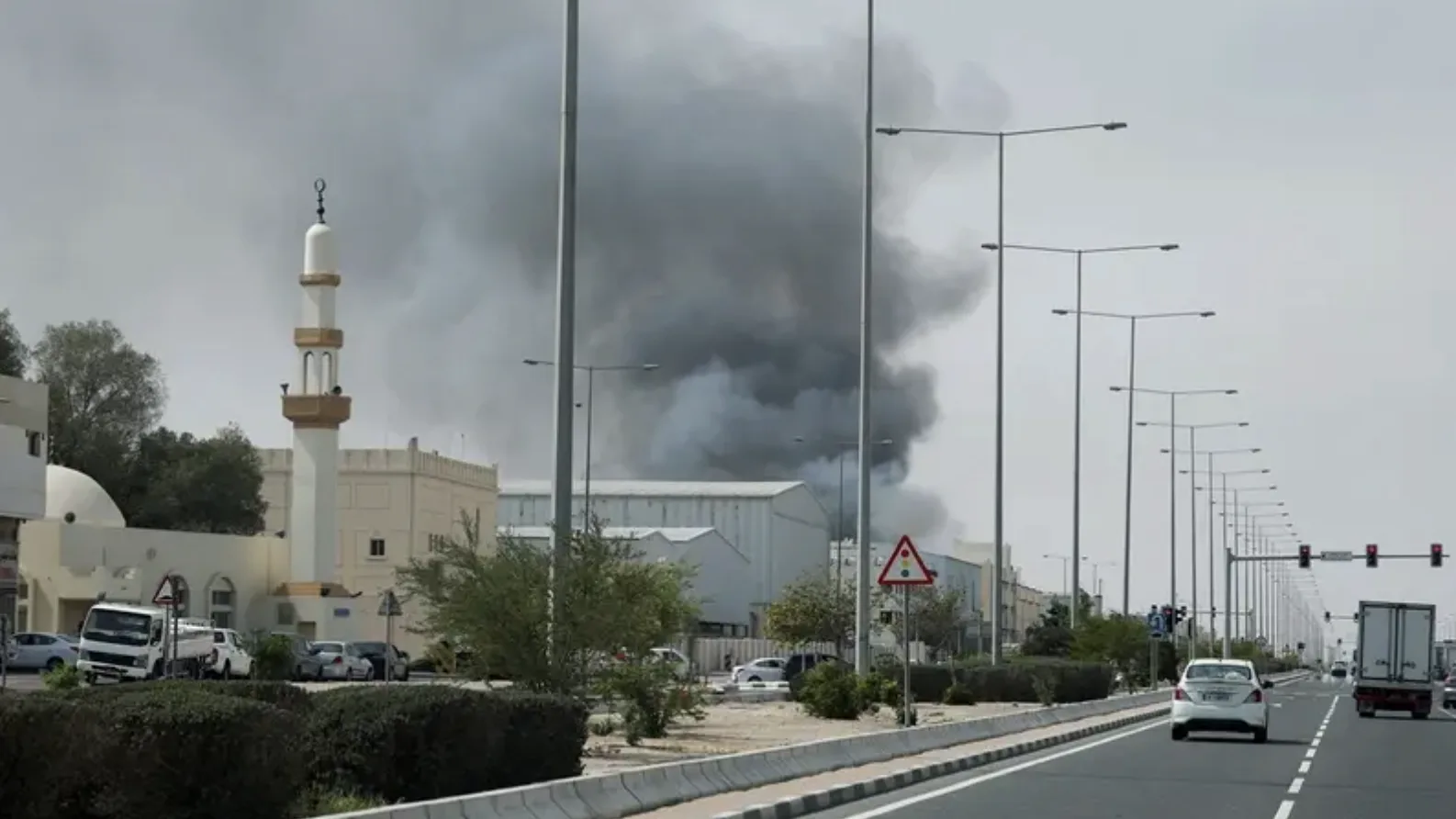
The explosion at the Barzan gas facility inside Ras Laffan Industrial City in June 2026 refocused attention on one of the most sensitive industrial infrastructures in Qatar and the global gas market.
The incident was caused by a technical malfunction during operations and left 13 people dead and 66 injured. Saad al-Kaabi, Qatar’s minister of state for energy affairs and president and CEO of QatarEnergy, said what happened was an accidental incident, not an act of sabotage, and that LNG facilities, Ras Laffan Port, and logistics operations were unaffected.
The Barzan incident came months after broader disruption in the sector, when QatarEnergy announced in March 2026 that it was halting production of LNG and related products following Iranian attacks on operational facilities in Ras Laffan and Mesaieed, before declaring force majeure on some commitments.
So what is Ras Laffan, and how does this city operate? What does it produce and export? And how do accidents, attacks, and the risks surrounding the Strait of Hormuz affect Qatar’s production and exports?
Ras Laffan: The Heart of Qatari Gas
Ras Laffan Industrial City is an energy city located on Qatar’s northeastern coast, about 50 miles from Doha. QatarEnergy describes it as the onshore base for processing gas and hydrocarbons coming from the North Field.
The city covers an area of 295 square kilometers, while Ras Laffan Port lies about 67 kilometers from the North Field, which explains why this site was chosen to serve as the hub for receiving, processing, liquefying, storing, and shipping.
Ras Laffan began operations in 1996, providing land, infrastructure, and a port for the Qatargas 1 project, before gradually evolving into a vast complex that includes liquefaction trains, gas-processing facilities for the domestic market, gas-to-liquids plants, a condensate refinery, helium facilities, power and water plants, and a specialized port for exporting LNG, liquid products, and sulfur.
The city is managed within QatarEnergy’s industrial cities system, while specialized operating companies run the major facilities inside it, foremost among them QatarEnergy LNG, which became the unified name for operating LNG trains after Qatargas was renamed in 2023.
Ras Laffan’s importance is evident in its place within Qatar’s energy economy: Doha was the world’s second-largest exporter of LNG in 2024, with a share of about 20 percent of global LNG exports, according to the US Energy Information Administration information.
And operates QatarEnergy LNG in Ras Laffan runs 14 gas liquefaction trains with a nameplate capacity of 77 million tons per year, while Qatar aims to raise capacity to 126 million tons annually and then to 142 million tons annually before the end of 2030 through North Field expansions.
The journey of gas inside Ras Laffan
The Ras Laffan cycle begins at the offshore North Field, the world’s largest non-associated natural gas field, meaning the gas there is the primary resource rather than gas associated with oil production.
The field produces wet gas through offshore platforms and wells, which is then transported to shore via subsea pipelines to receiving facilities in Ras Laffan.
QatarEnergy LNG says in its operational materials that its offshore operations include platforms, complexes, and wells, and that the gas reaches the city before entering reception and primary processing facilities, where streams are separated, impurities are removed, and associated liquids are extracted.
After primary processing, the gas splits into more than one route. Part of it goes to the domestic market as sales gas used in power generation, desalination, and industry, as in the Barzan and Al Khaleej Gas facilities.
Another portion enters the liquefaction trains, where the gas is cooled gradually to about minus 162 degrees Celsius, turning it into an energy-dense liquid suitable for maritime shipping.
In industry terminology, a liquefaction train is an integrated production unit that includes the stages of processing, cooling, and liquefaction within a single operating line. In Ras Laffan, train capacities vary between older generations with capacities of 3.3 million and 4.7 million tons annually, and giant trains with capacities of 7.8 million to 8 million tons annually per train.
The city also operates through a third route that converts gas into liquid products — the GTL, or gas-to-liquids, route — in which plants such as Pearl GTL, operated by Shell, and Oryx GTL use natural gas to produce diesel, naphtha, kerosene, base oils, and paraffins (waxy or liquid hydrocarbon materials produced from oil or gas after processing).
At the same time, processing facilities extract high-value byproducts such as condensates, liquefied petroleum gas, ethane, sulfur, and helium.
The products are then transferred to storage tanks and loading berths, where Ras Laffan terminal operations belongs to QatarEnergy LNG, handle the storage and loading of liquid products except liquefied natural gas, in addition to bulk sulfur, while LNG cargoes are loaded through specialized berths at Ras Laffan Port.
Ras Laffan’s products and exports
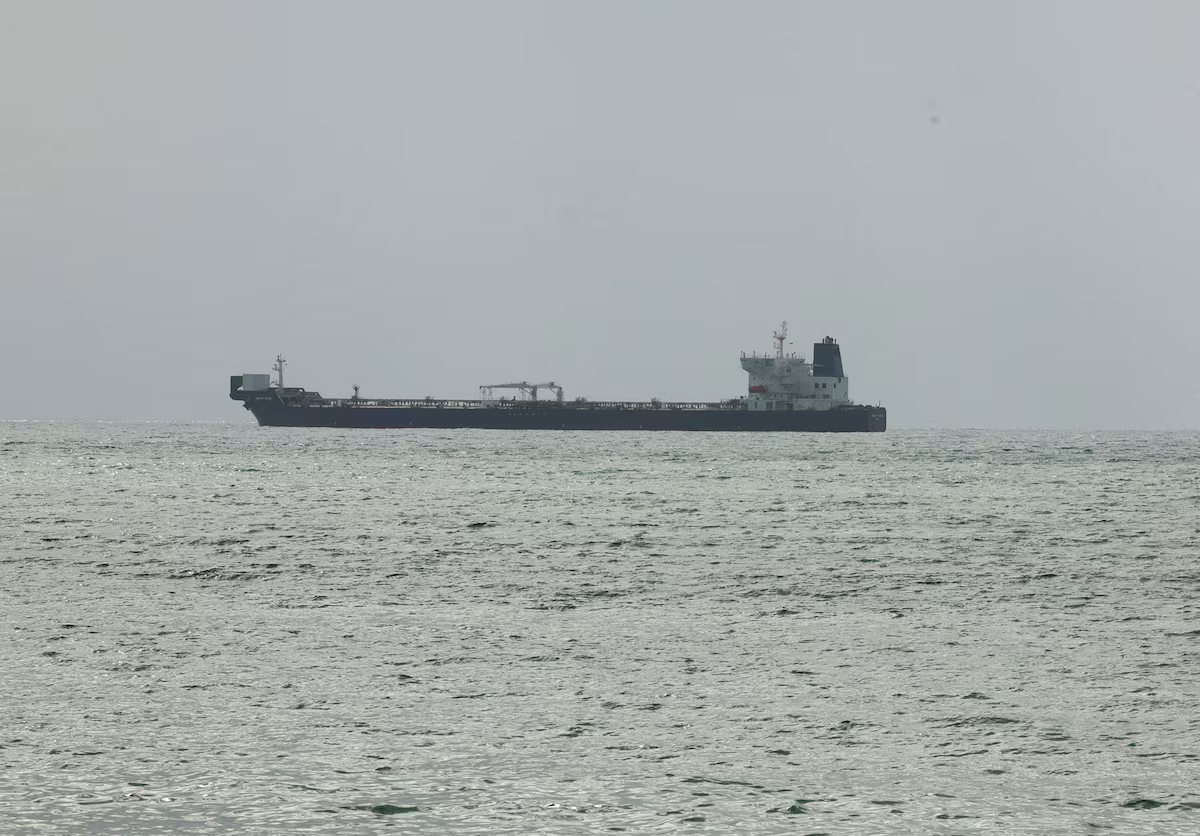
Liquefied natural gas is the best-known product in Ras Laffan, and Qatar exports it via specialized tankers to global markets, especially Asia and Europe.
According to dataReuters and the Oxford Institute for Energy Studies indicate that Qatar’s LNG exports reached about 80.9 million tons in 2025.
Vessel-tracking data reviewed by Reuters, Bloomberg, and the Financial Times also show that Asia accounts for more than 80 percent of Qatari shipments, with China and India ranking among the largest buyers in 2025.
In addition to LNG, producesRas Laffan also supplies gas dedicated to the domestic market, with Barzan standing out along this track. QatarEnergy and QatarEnergy LNG say the facility is intended to meet local demand with a capacity of 1.4 billion standard cubic feet per day of sales gas, while also producing ethane, liquefied petroleum gas, condensates and sulfur.
This gas goes to power generation, desalination and industry within Qatar, while some byproducts may be marketed or exported depending on operational chains.
There is also Project Dolphin Energy, which processes gas in Qatar and then transports it by pipeline to the UAE and Oman, also produces condensates, liquefied petroleum gas, ethane and sulfur.
The city produces condensates — light hydrocarbon liquids separated from raw gas — some of which then go to the Laffan Refinery to produce naphtha, Jet A-1 fuel, low-sulfur diesel, propane and butane.
Ras Laffan also produces liquefied petroleum gas, particularly propane and butane, which is used domestically, industrially and as a petrochemical feedstock, while ethane is extracted as feedstock for the petrochemicals industry.
Sulfur, meanwhile, comes from units that remove sulfur compounds from gas and is used in fertilizers and chemicals. Ras Laffan’s helium facilities produce liquid, high-purity helium used in medicine, MRI machines, semiconductors, optical fibers and research.
The GTL route adds another layer to the diversity of output: the Pearl GTL project converts gas into liquids on a massive scale, producing gasoil, kerosene, base oils, naphtha and paraffins, along with products associated with natural gas liquids, according to Shell.
Oryx GTL, meanwhile, produces GTL diesel, naphtha and liquefied petroleum gas. As a result, Ras Laffan operates as an integrated product system, meaning any disruption at a specific facility can ripple across different products depending on that facility’s place in the chain.
The port plays the role of the critical gateway for these products. QatarEnergy Industrial Cities says Ras Laffan Port has 33 berths and describes it as the world’s largest liquefied natural gas export facility, while the port’s page on QatarEnergy’s website confirms that the company owns, regulates and operates the port.
The most significant impacts on production and exports
The two latest developments reveal the difference between an incident affecting a local processing facility and a strike hitting the heart of exports. The Barzan incident occurred inside a facility primarily intended to supply the domestic market with gas, not within the liquefaction trains, and therefore its direct impact was confined to the Barzan facility and the domestic gas and byproducts associated with it.
AndconfirmedSaad al-Kaabi said that the LNG facilities, Ras Laffan Port, and logistics operations were unaffected, and that LNG production and exports continued as normal.
As of June 23, no official announcement had been issued specifying the scale of any actual reduction in domestic gas supplies or explaining how it would be offset by other facilities, while it remained certain that the Barzan facility would undergo a damage assessment before full operations resumed.
As for the Iranian strikes in March, they hit a completely different level of the chain. On the second of that month, announcedQatarEnergy halted production of liquefied natural gas and related products after attacks on its facilities in Ras Laffan and Mesaieed, then declared force majeure two days later.
After the March 18 and 19 strikes, the company said the damage had disrupted two of its 14 trains, reducing export capacity by about 17 percent. Al-Kaabi explained that the strikes had knocked out two of the 14 gas liquefaction trains, cutting export capacity by about 17 percent, and that repairing the damage could take between three and five years.
According to S&P Global Commodity Insights, the firm specializing in energy data and pricing, the two trainsThe affected units were Train 4 and Train 6, with a combined capacity of 12.8 million tons annually.
Based on the scale of the disrupted capacity, available nameplate capacity fell from 77 million tons per year to about 64.2 million tons after 12.8 million tons went offline as a result of the two trains’ outage.
The damage also extended to other products. In March, QatarEnergy projected a 24 percent drop in condensate exports, a 13 percent decline in liquefied petroleum gas, and a 14 percent decrease in helium, in addition to smaller declines in naphtha and sulfur.
These figures show that Ras Laffan does not operate as an isolated LNG chain; disruption to a liquefaction train, a GTL facility, or a processing plant is reflected in byproducts and multiple sales chains. That is why the impact of the March strikes was significant: they hit export capacity, associated products, and market confidence in the continuity of shipments.
This was quickly reflected in prices. On March 3, benchmark LNG prices in Asia rose by about 40 percent at the day’s peak, while benchmark European gas prices closed up between 35 percent and 40 percent.
In the following days, the halt in Qatar’s exports pushed gas prices in Europe and Asia to levels about 50 percent higher year over year. After the Barzan incident in June, however, the market reaction remained more subdued, because Qatari statements quickly made clear that LNG exports and Ras Laffan Port had not been affected.
There is also the Strait of Hormuz chokepoint, the greatest geographic vulnerability for Ras Laffan’s exports. And According to the U.S. Energy Information Administration, about 20 percent of global LNG trade passed through the strait in 2024, most of it from Qatar, which shipped about 9.3 billion cubic feet per day of liquefied natural gas through it that year.
For its part, the International Energy Agency says that 93 percent of Qatari LNG exports passed through the Strait of Hormuz in 2025, with no practical alternative routes capable of moving those volumes to market if the strait were disrupted.
As a result, even intact liquefaction trains can face a maritime constraint beyond the facilities themselves when tankers’ return to Ras Laffan or their departure through Hormuz becomes risky.
By mid-June 2026, the problem had become a mix of technical damage and a maritime bottleneck, as Reuters reported citing sources that QatarEnergy was ready to resume LNG production from undamaged facilities, and that reaching full capacity at the intact facilities could take about a month, excluding the two damaged trains.
But ships’ return to Ras Laffan through the Strait of Hormuz, the safety of transit, and mine-clearing operations remained factors weighing on shipments. Shipping data cited by Bloomberg showed that Qatar loaded just over 300,000 tons in the week ending June 19, its best performance since early March, but still close to one-fifth of prewar levels.
In this sense, Ras Laffan appears to be an energy nexus where industry, geography and security converge in one place. The Barzan incident demonstrated the vulnerability of domestic gas and its byproducts, the March strikes revealed the impact of hits on liquefaction trains and GTL facilities on export capacity, and the Strait of Hormuz placed maritime shipping at the center of the equation.
That is why Ras Laffan matters globally: Any major shock there extends beyond the boundaries of the industrial city to shipping contracts, gas prices and the calculations of importers in Asia and Europe.