







After the ship Madeleine jolted the world’s conscience during its brief yet powerful mission, drawing attention to the plight of over two million people living under Israeli occupation, a new overland initiative has emerged. The “Steadfastness Convoy” has departed from Tunisia in a historic bid to challenge the blockade on Gaza, heading toward the Egyptian-Palestinian border.
This comes as hopes for meaningful international intervention to halt Israel’s 18-month-long military assault have all but faded.
The land convoy is a clear expression of the Arab peoples’ rejection of the ongoing apathy toward Gaza and a reminder that official Arab silence does not reflect the will of the people.
This convoy marks the first of many initiatives within a broad international civilian movement involving more than 30 countries. It is organized in partnership with the Freedom Flotilla Coalition, the Global March to Gaza, and the Coordinating Committee for Joint Action for Palestine, representing a serious effort to end Gaza’s years-long isolation.
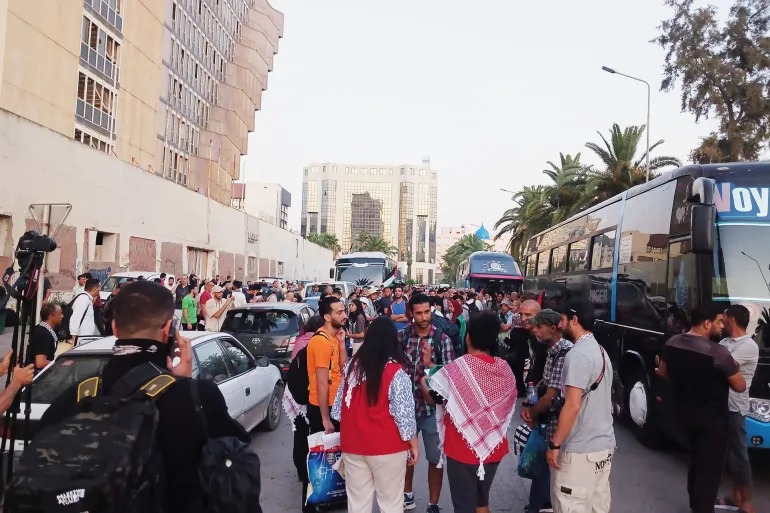
What is the “Steadfastness Convoy”?
Launched from Tunisia in June, this North African convoy includes activists, doctors, journalists, and representatives of civil society organizations from Algeria, Tunisia, Morocco, Libya, and Mauritania. Their goal: to break the Gaza blockade and demonstrate practical solidarity with the people of the besieged enclave.
Unlike typical aid missions, the convoy does not carry relief supplies. Instead, it delivers a political and civil resistance message—emphasizing that government silence does not equate to public consent.
The convoy plans to hold its ground for several days at the Rafah border crossing, demanding an end to the blockade and the entry of thousands of tons of food and medical aid currently stuck at the crossing.
It comprises 12 large buses and 100 vehicles and forms part of a broader civil movement across more than 30 countries, in partnership with the Freedom Flotilla Coalition, the Global March to Gaza, and the Coordinating Committee for Joint Action for Palestine.
What is its route?
The convoy is set to travel overland from Tunisia through Libya and into Egypt, where it will be joined by other convoys arriving by air from various European countries.
Its path runs along the Mediterranean coast, passing through Tripoli, Misrata, Sirte, Benghazi, and Tobruk before entering Egypt via the Salloum border crossing on June 12. It will then proceed to Cairo and aims to reach the Rafah crossing by June 15.
Who is participating?
Over 200 individuals—including independent activists, parliamentarians, lawyers, and human rights advocates—are part of the convoy, supported by the Tunisian General Labor Union, the Red Crescent, and the Tunisian Medical Council.
In total, around 1,300 civilians with all necessary travel documents have joined.
Wael Nawar, one of the convoy’s official spokespersons, explained that the initial list of participants included 7,000 people. However, thousands of young applicants under the age of 35 were unable to secure parental permission, reducing the final number.
Nawar emphasized, “The Steadfastness Convoy is not the end, but the beginning of a sustained campaign to reconnect Gaza with the outside world through a permanent human bridge, with Tunisia as one of its key pillars.”
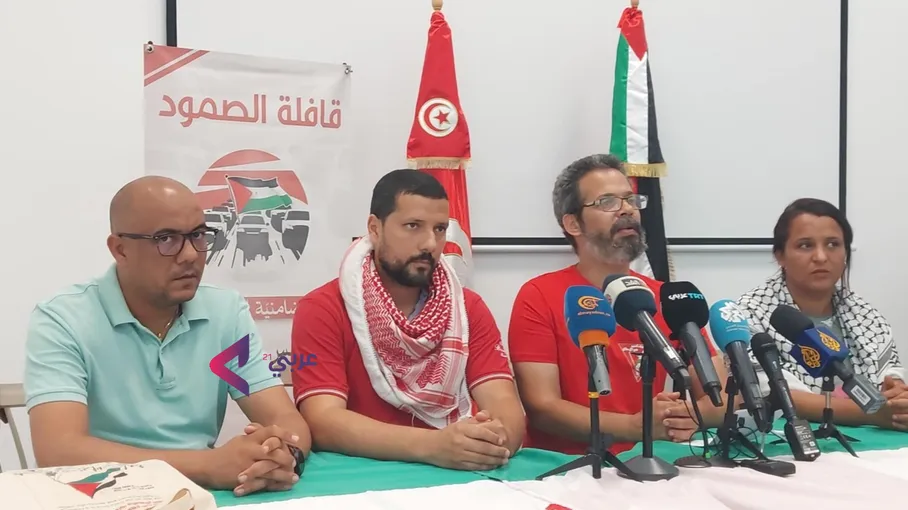
International positions and diplomatic coordination
International organizations, including the United Nations, have voiced support for civilian initiatives along Gaza’s borders. Some have called for high-level diplomatic delegations to accompany the convoys through Rafah.
Groups like the International Federation for Human Rights have proposed organizing a “diplomatic-humanitarian convoy” to accompany the mission with official representatives from multiple governments, aiming to facilitate aid delivery and increase pressure on Israel to lift the blockade.
Dr. Mohamed Amine Ben Nour, head of the convoy’s medical committee, reported a positive official response from authorities in Tunisia, Libya, and Egypt. He described a constructive meeting with the Egyptian ambassador in Tunis and said Egyptian officials had acknowledged the humanitarian and peaceful nature of the convoy.
Preparations and early coordination
Convoy organizers have been in contact with the Egyptian embassy in Tunisia, though no official decision has yet been issued regarding entry into Egyptian territory.
The Tunisian Journalists Syndicate has urged Libyan and Egyptian authorities to facilitate the convoy’s passage, underscoring the importance of the initiative. It also called on the Tunisian government to provide the necessary logistical support and pledged to work with partners to ensure the convoy’s success in breaking the siege and supporting Palestinian resistance.
The parliamentary bloc “Let the People Triumph” also declared full support for the convoy, describing it as part of the broader struggle for dignity and sovereignty. It urged the Tunisian authorities to offer administrative and logistical assistance and called on lawmakers to fast-track legislation criminalizing normalization with Israel.
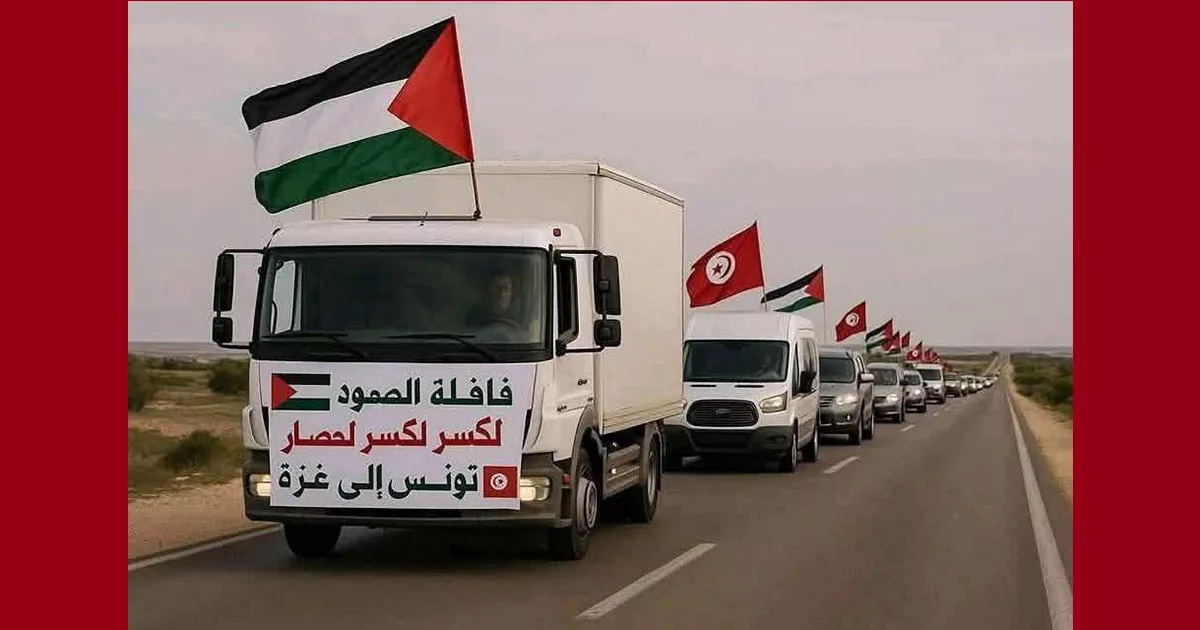
Yahya Sari, the convoy’s administrative officer, told the German Press Agency that symbolic acts of solidarity—like social media activism or street protests—are no longer enough.
“It’s time to move to field-based solidarity through peaceful and humanitarian convoys that seriously aim to break the siege on Gaza and reflect global public support for the Palestinian cause,” he said.
The “Steadfastness Convoy” and the Madeleine vessel are both part of the same international civilian campaign, involving over 30 countries and supported by the Freedom Flotilla Coalition, the Global March to Gaza, and the Coordinating Committee for Joint Action for Palestine.
This initiative continues despite Israeli attempts to suppress such actions, including the interception of the Madeleine by Israeli naval commandos on the morning of Monday, June 9. The vessel, carrying 12 international activists, was en route to Gaza’s shores when it was seized—another sign of Israel’s determination to block all grassroots Arab and international efforts to support Gaza.


