











Since the outbreak of war on April 15, 2023, displacement from the city of El Fasher has not ceased. Rapid Support Forces (RSF) tightened their grip on the eastern part of the city early in the conflict and gradually seized control over scattered areas until they encircled El Fasher completely for over a year and a half. On October 26, the city fell entirely under RSF control.
Throughout this period, civilians fled in waves under relentless artillery shelling that struck residential homes, government facilities, hospitals and even mosques. The RSF attacks did not spare displacement camps; camps like Abu Shouk were repeatedly shelled and stormed by RSF forces, violating all humanitarian norms and international laws.
“I Lost Contact with My Brothers”
Noon Post spoke with several displaced women in the Tawila camp to document their harrowing escape stories and the perilous journeys that brought them to safety journeys fraught with danger and laced with death.
Rashida Taj Eddin Ibrahim, who fled El Fasher for the locality of Tawila, says she lost several relatives and her son to RSF artillery fire. “When the shelling intensified after the city fell, a shell hit our house. I decided to flee despite our exhaustion and hunger. I left on foot with my children until we reached the Qarni area.
The journey took over five hours. My children were exhausted, dehydrated, and scorched by the sun.”
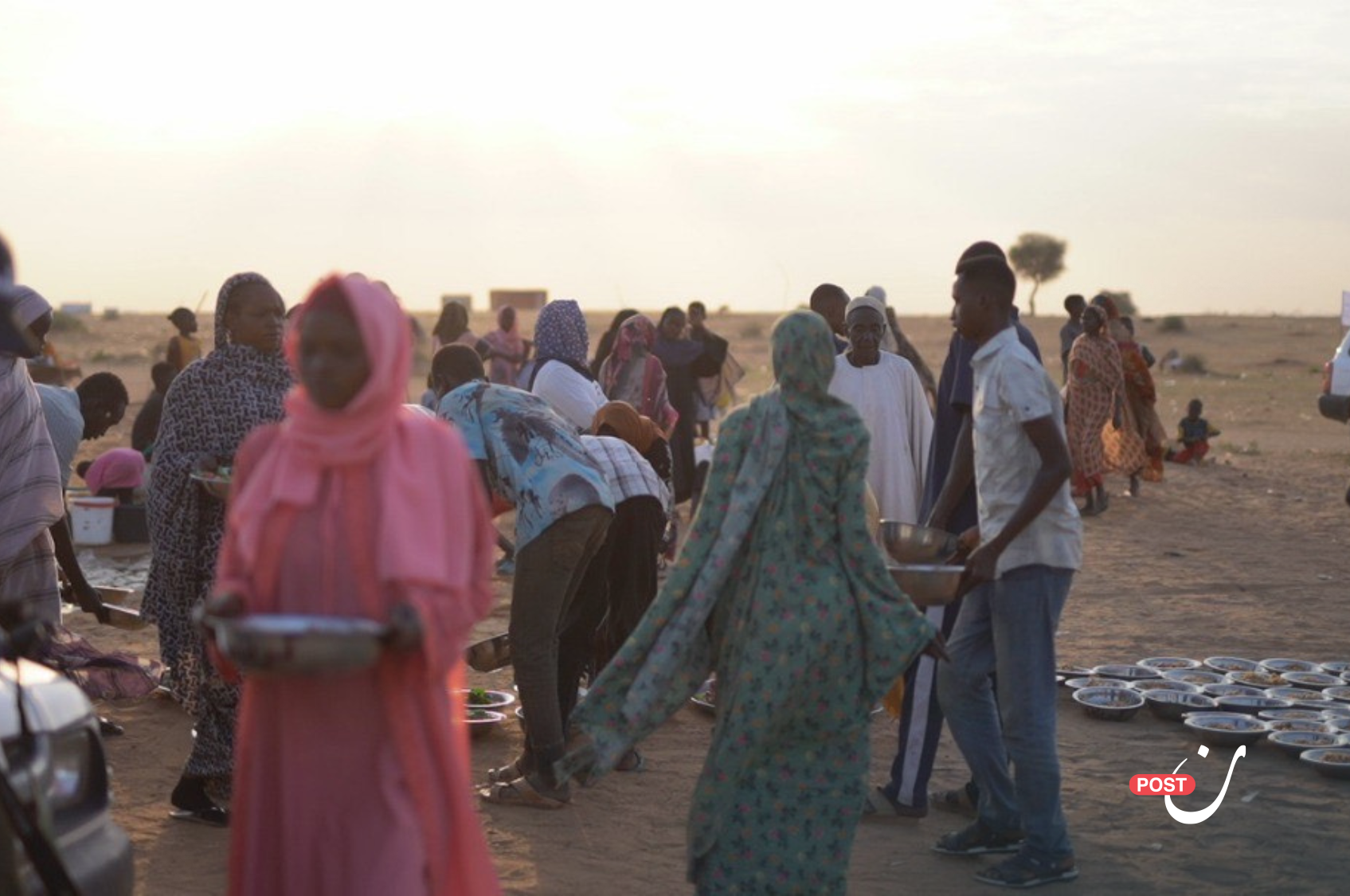
Qarni is located around 30 kilometers west of El Fasher a trek that takes displaced people five to seven hours on foot. Some RSF fighters transport civilians over that same distance for as much as 500,000 Sudanese pounds per person about $150 USD.
Rashida has lost contact with her three brothers Faisal, Mohammed, and Ibrahim since leaving the city. “They are missing. I ask about them every day. I follow the newly arriving groups into the camp, but nothing. One person told me he saw Mohammed on the road days ago, but he hasn’t arrived. As for Faisal and Ibrahim, no one has seen them.”
She stressed that her brothers had no affiliation with any armed forces neither the Sudanese army nor allied factions. She believes the RSF continues to detain men fleeing El Fasher, accusing them of military ties and demanding ransoms of up to $3,000 for their release.
A report by the Mishad Human Rights Observatory documented the detention of nearly 68,000 civilians by the RSF in El Fasher. Over 2,000 young men and women were subjected to physical and psychological torture in clandestine detention centers. More than 3,000 remain missing.
Rashida now worries about the cold affecting her children. “We left with only the clothes on our backs. No blankets. Nothing.”
“They Searched Even Our Underwear”
Fatima Mohammed recounts how she and her family suffered in the final month before El Fasher’s fall. Water prices soared, and umbaz a crucial food source became unavailable. With dwindling supplies, intensifying shelling, and mounting fear, they moved constantly, seeking refuge.
On the day El Fasher fell, they fled on foot. After walking for hours, they neared the city’s defensive trench and paused to rest. But the shelling resumed. “We were forced to run, crawl, and eventually return. Exhausted, we took shelter in the frame of a nearby building.”
Within half an hour, RSF troops raided the structure. “They ordered us to hand over everything money, phones, anything. Then they told us to leave immediately.”
She continued, “Soon after, six RSF vehicles intercepted us. They searched us in a degrading manner even checking our underwear to make sure we weren’t hiding anything.”
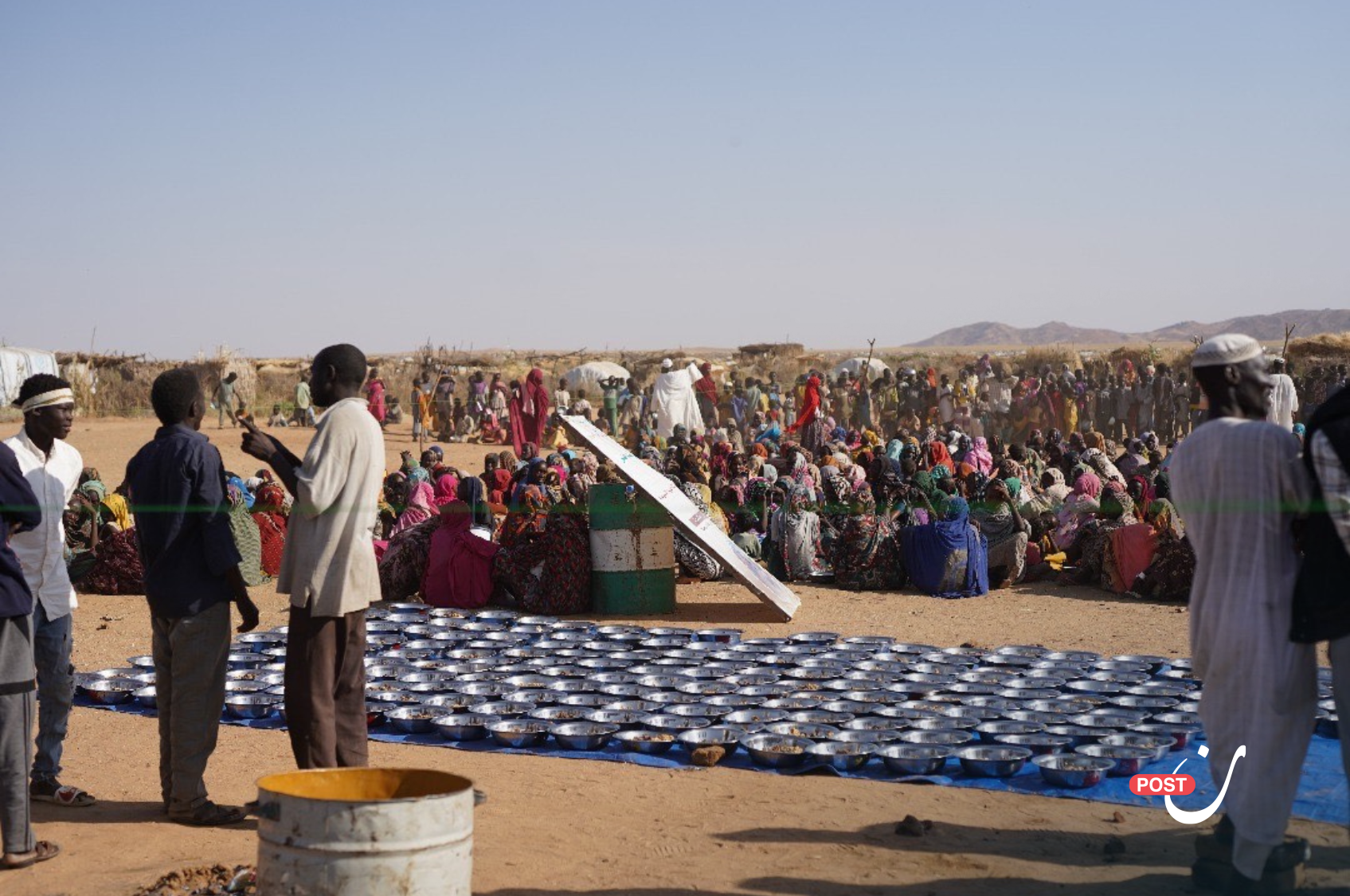
Further along the route, they encountered a group of civilians mixing flour with water to feed the displaced. RSF fighters showed up again, beating and humiliating the men and arresting them, while letting the women and children continue toward Qarni. “After resting for an hour, RSF trucks began transporting us to Tawila.
That ride was worse than the walk humiliation, exhaustion, and death. Some died in the truck. Children had broken bones. So many were injured. It was pure suffering.”
Fatima says she saw at least fifty dead or wounded on her way to Tawila. Still, she concludes with hope: “What’s past is gone. Now we start again. God willing, we’ll manage.”
The distance between El Fasher and Tawila is roughly 68 kilometers.
“We Were Displaced Twice”
“We lost our daughter in the shelling that struck our home,” recalls Naeema Musa. “After RSF took our neighborhood, I left with my parents and headed to the Saudi hospital where my sister works. We stayed there for about fifteen days, then moved to Abu Shouk.”
Naeema’s family, including her elderly parents and siblings, stayed in Abu Shouk for nearly a year. “Getting my parents into the trenches was incredibly difficult. They can barely walk. The artillery forced us underground often, and it was pure torment for them.”
Residents had dug trenches inside their homes to protect themselves from shelling during the siege.
Her brother abroad insisted they leave the city. “But our parents’ health, our hunger, and the rising cost of umbaz -up to 80,000 pounds- kept us from moving.”
Eventually, the shelling became unbearable. RSF forces stormed their neighborhood. Naeema and her family fled. Unable to walk far, her parents had to stop frequently. She hired a donkey cart to transport them to Halat Al-Sheikh, while she and her siblings walked alongside it.
When they reached the RSF trench around the city, RSF fighters intercepted them, searched them, and robbed them.
“I begged them, saying our situation was dire, especially my parents’ condition. They told me to shut up and keep moving.”
They continued on foot, passed through several RSF checkpoints, and eventually reached Qarni. From there, they were transported to Tawila.
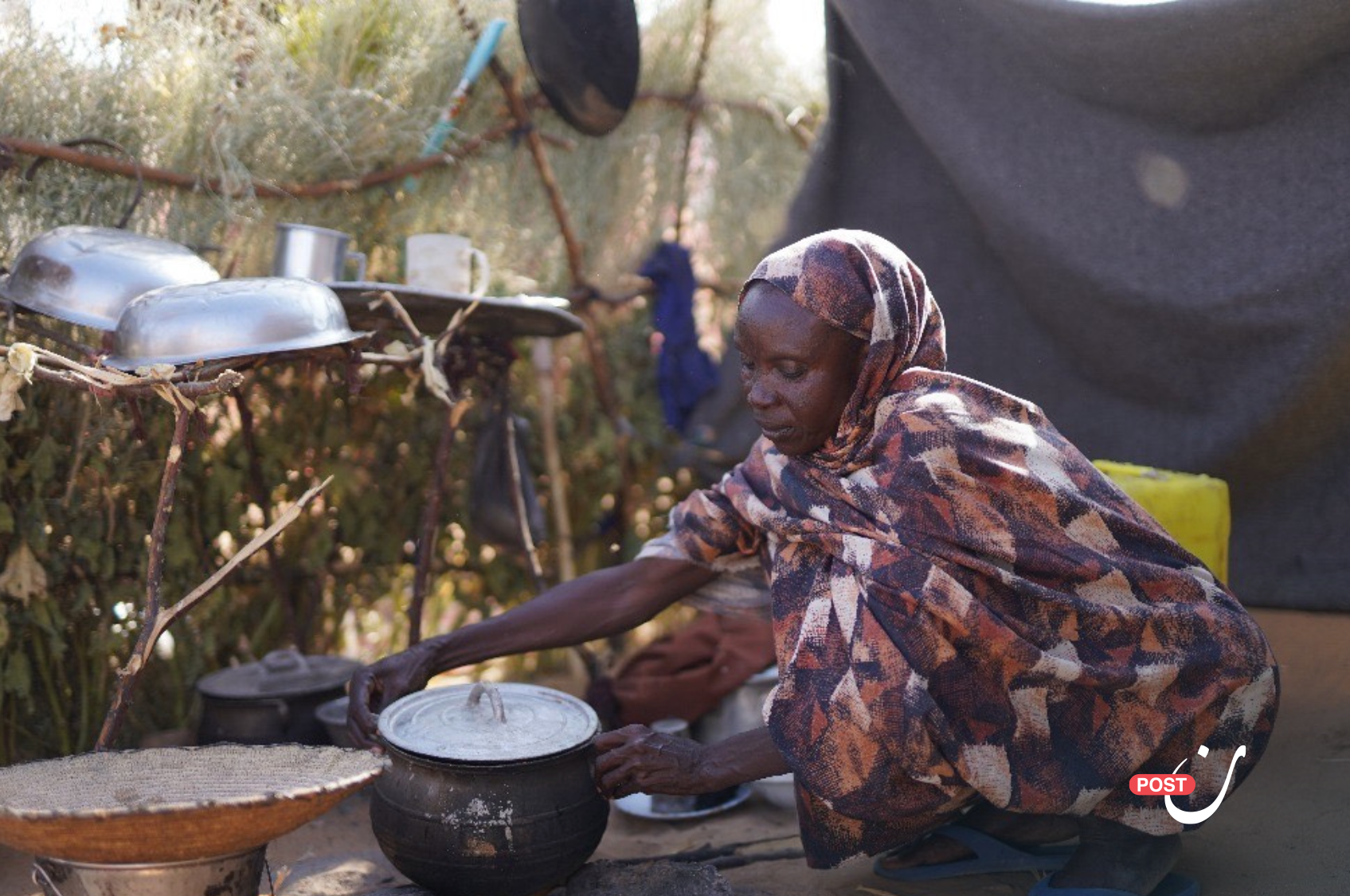
Today, Naeema and her family face immense hardship in the camp especially accessing restrooms due to her parents’ condition. The arduous journey left them physically worn out, with painful sores from lack of movement and exposure to the desert sun.
The RSF’s assault on El Fasher triggered a mass exodus some heading to Tawila 68 kilometers west, others to Al-Dabba in Northern State, nearly 779 kilometers away. The journey through the desert can take over ten days.
Despite the efforts of local and international humanitarian organizations, the needs of the displaced far outstrip the available resources and those needs grow by the day.
On October 26, after more than 15 months of siege, the RSF finally seized El Fasher. Residents had been starved and cut off from all humanitarian aid. The RSF used indiscriminate shelling and drone strikes to target civilian gatherings, homes, hospitals, and public infrastructure.
Reports by international organizations allege that RSF forces committed mass killings, ethnic cleansing, sexual violence, and abductions. Satellite imagery from Yale’s Humanitarian Research Lab revealed streets of El Fasher stained with blood visible even from space.
According to field reports, over 11,700 civilians have been killed, including 2,366 children under 18. Another 32,000 were wounded, and tens of thousands displaced many still fleeing to this day.