








هذا التقرير متاح أيضًا بـ العربية
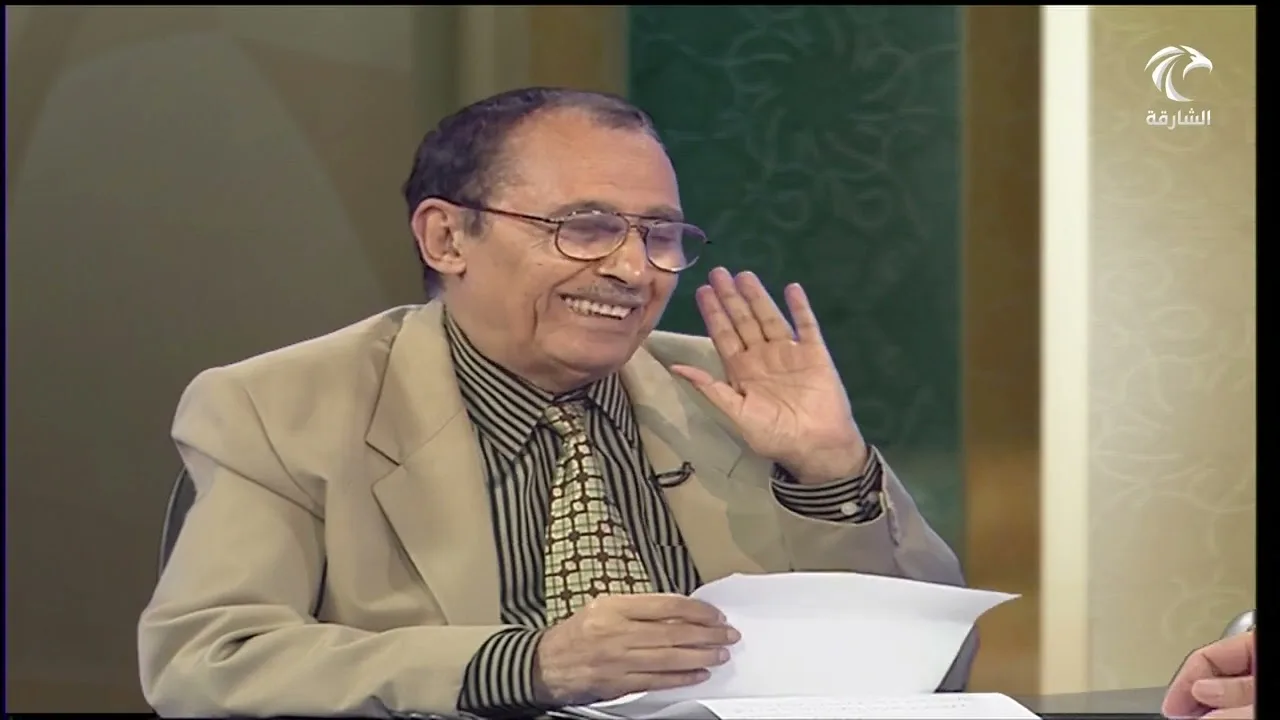
Before social media entered our lives, millions of Arabs from the Atlantic to the Gulf would gather around the television once a week to watch the program “Lamasat Bayaniya” on Sharjah TV, where an Iraqi linguist named Fadel al-Samarrai would appear.
He was slender and soft-spoken, wore glasses, and spoke in a dignified tone about the eloquence of Arabic, explaining verses of the Quran to viewers in a different way, blending the authenticity of the source with the language of the age, and revealing the loci of beauty and inimitability in its letters and words.
Over time, Dr. al-Samarrai gained wide popularity across the Arab world, inspiring many to see the Arabic language and its sciences as accessible and meaningful, fostering admiration and a desire to learn.
Through his years-long program, al-Samarrai cemented the idea that grammar is more than dry rules and tables; for him, it was a ‘living being’ that illuminated the Quran’s rhetorical inimitability, deepened understanding of Quranic eloquence, and inspired appreciation for its linguistic beauty.
Samarra: Where It All Began
In Samarra, north of Baghdad, Fadel Saleh Mahdi al-Badri was born in 1933, in an ancient city that remained the capital of the Abbasid state for nearly six decades and still preserves a large share of the Abbasids’ آثار, palaces, and buildings in Iraq.
After that imperial era faded, the city lost much of its political importance, and its population declined. Yet scholarly gatherings endured, and study circles in mosques and religious schools remained vibrant with poetry, hadith, exegesis, and literature — an environment that helped shape the first contours of al-Samarrai’s character.
The kuttabs and mosques of Samarra were the first incubators of his talent, and from boyhood he was marked by calmness and deep attentiveness, as those who knew him described — a trait that stayed with him throughout his career and made him a good listener to language before he became a speaker of it.
Al-Samarrai later moved to Baghdad, where his structured academic journey began. He enrolled at the Higher Teachers Institute, which later became the College of Education at the University of Baghdad. At the time, it included an elite group of Iraq’s scholars and men of letters, and he graduated from it in 1953 with a bachelor’s degree in Arabic language.
He continued his postgraduate studies at the University of Baghdad, earning a master’s degree in Arabic language in 1961. He then moved to Cairo, where he received a doctorate in Arabic grammar from Ain Shams University in 1968.
Throughout these stages, al-Samarrai studied under a generation of leading scholars in Iraq and Egypt, combining the rigor of the Baghdadi method in verification and precision with the breadth of the Egyptian school in analysis and exposition.
He then returned to Baghdad as a professor at its university, moving among several of its colleges before teaching at Arab universities, including institutions in Kuwait and the UAE, and helping graduate generations of researchers. He was also a member of the Iraqi Scientific Academy before retiring from university work in 1998, after nearly four decades of teaching. After that, another phase of his academic giving began at universities in the UAE.
Grammar as a guide to beauty
To understand Dr. Fadel al-Samarrai’s legacy, one must first pause at his philosophy of Arabic grammar. For decades, students and intellectuals commonly viewed grammar as a dry science, weighed down by complex inflectional disputes between the Basrans and the Kufans, with its purpose confined to correct pronunciation and avoiding grammatical error.
Al-Samarrai’s vision of grammar as a path to meaning, following Imam Abd al-Qahir al-Jurjani’s theory of ‘nazm’, invites readers to appreciate the depth and beauty of Arabic expression and inspires respect for its intricacies.
In his view, fronting and delaying elements in a sentence carry deliberate meanings, just as choosing one particle over another reveals subtle differences in meaning. The same applies to mention and omission, definiteness and indefiniteness, which he treated as rhetorical tools that reveal the subtleties of Quranic expression and the varying significations among its structures.
This approach made al-Samarrai’s lessons and writings more accessible, transforming Arabic grammar from a complex discipline into a tool for aesthetic and intellectual appreciation, thereby shaping modern Arabic linguistics and educational practices.
His program, “Lamasat Bayaniya,” helped bring about what might be called a “popular reconciliation” between Arabs and their classical language. Grammar shifted from a discipline people associated with complexity to compelling discourse audiences eagerly awaited, as al-Samarrai simplified the most intricate rhetorical issues in a smooth style that preserved the science’s rigor while making it accessible to specialists and laypeople alike.
Al-Samarrai Between Basra and Kufa
In Iraq, where the great schools of grammar arose in Basra and Kufa and later Baghdad, al-Samarrai drew on the foundations of grammar and the principles of analogy and causation for which the Basran school was known, giving the disciplined rule significant weight in explaining linguistic phenomena.
In matters of disagreement, he sometimes adopted Kufan views when he found in them greater semantic breadth or a stronger capacity to accommodate poetic evidence that the Basrans had narrowed the scope of acceptable citation for, benefiting from the Kufan school’s flexibility and the breadth of its transmitted material.
From this perspective, his method falls within the “eclectic” or “selective” tendency, which chooses from the grammatical schools what it sees as closer to meaning and textual evidence. This makes his method akin to the “Baghdad school”, which flourished during the third and fourth Islamic centuries and was based on drawing from both the Basran and Kufan schools while allowing room for independent reasoning.
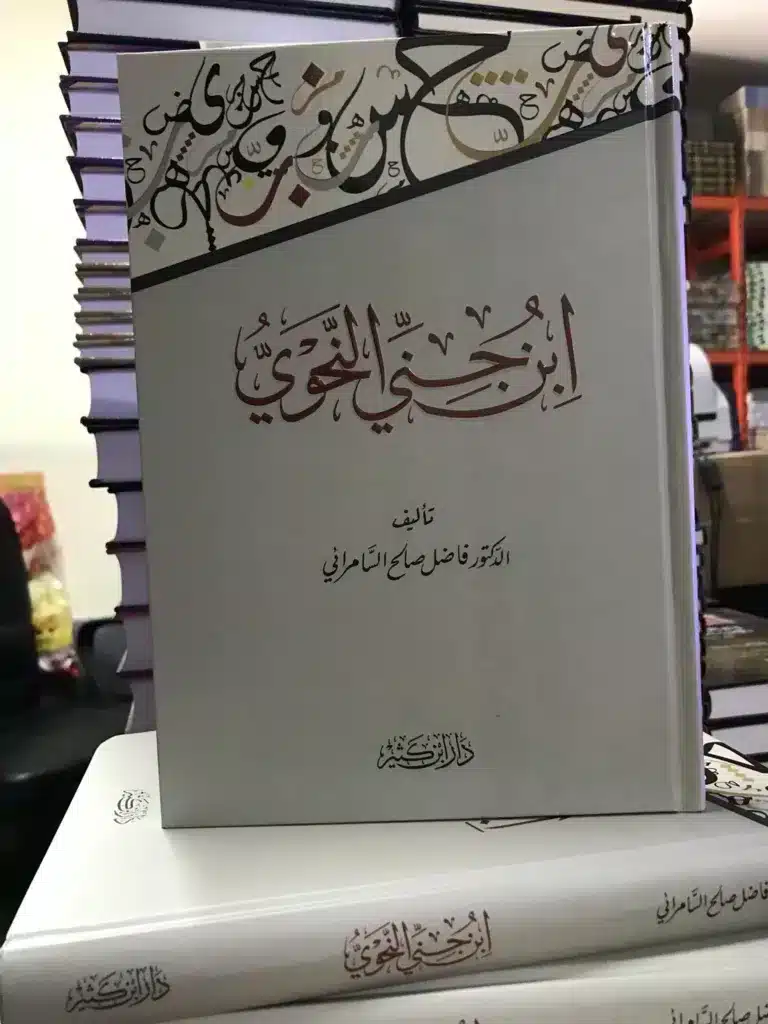
That school was founded on selection and synthesis among the grammarians’ methods. Its scholars—such as Ibn Kaysan, Ibn Jinni, Abu al-Qasim al-Zajjaji, Abu al-Barakat al-Anbari, and Saeed ibn al-Dahhan—built on the Basran school’s foundations of analogy and causation, drew on the Kufans’ breadth of transmission and flexibility, and added their own reasoning and views.
This tendency was distinguished by its concern with causation and the philosophy of language, as seen clearly in Ibn Jinni’s book “Al-Khasa’is”, where inquiry goes beyond the bounds of inflection to the secrets of signification and the wisdom of linguistic usage. This space intersects with a central aspect of al-Samarrai’s project, which seeks the underlying reason behind a word choice and the fronting and delaying of elements, making grammar an entryway to appreciating eloquence and understanding meaning.
From this angle, al-Samarrai’s method appears closer to the spirit of the Baghdad school — with its selection, independent reasoning, and concern for meaning — than to a literal adherence to any single grammatical doctrine.
His interpretive method and the difficult made easy
Dr. Fadel al-Samarrai’s project goes beyond linguistic explanation to probe the subtleties of Quranic composition, viewing the word as a “brick in a wall” whose meaning and function are determined by its position and its relationship to what surrounds it. In this, he relies on an inductive method that compares different Quranic passages and traces the word and its form to uncover subtle differences between expressions that appear outwardly similar.
In this way, al-Samarrai combined the precision of classical grammatical study with modern literary sensibility, giving the grammatical rule a semantic dimension that goes beyond the limits of inflection, so that vowel, form, and word order became keys to understanding rhetorical differences within the Quranic text.
An important aspect of his method rests on what he calls the “rhetorical touch” — that is, searching for the reason one word is chosen over another, or one word is advanced and another delayed, or why the form of expression differs from one passage to another. Through these comparisons, he reveals the precision of the Quranic structure and the interconnectedness of its elements, seeing every linguistic choice as having its own distinct effect on meaning.
His style is marked by ease and calm analysis, guiding the reader through precise comparisons between similar verses in different surahs, drawing on evidence from the language of the Arabs and on a refined linguistic sensibility to reveal distinctions that may escape the reader at first glance, and presenting the Quran as a tightly constructed linguistic edifice whose words and structures work together to produce meaning.
A Rich Body of Work
Dr. al-Samarrai enriched the Arabic library with dozens of works on grammar and Quranic studies. His books were marked by depth, precision, and thoroughness. Among the most prominent is “Ma’ani al-Nahw,” in four volumes, one of his broadest and best-known works, in which he rereads the chapters and issues of grammar from an angle that links the rule to meaning and signification.
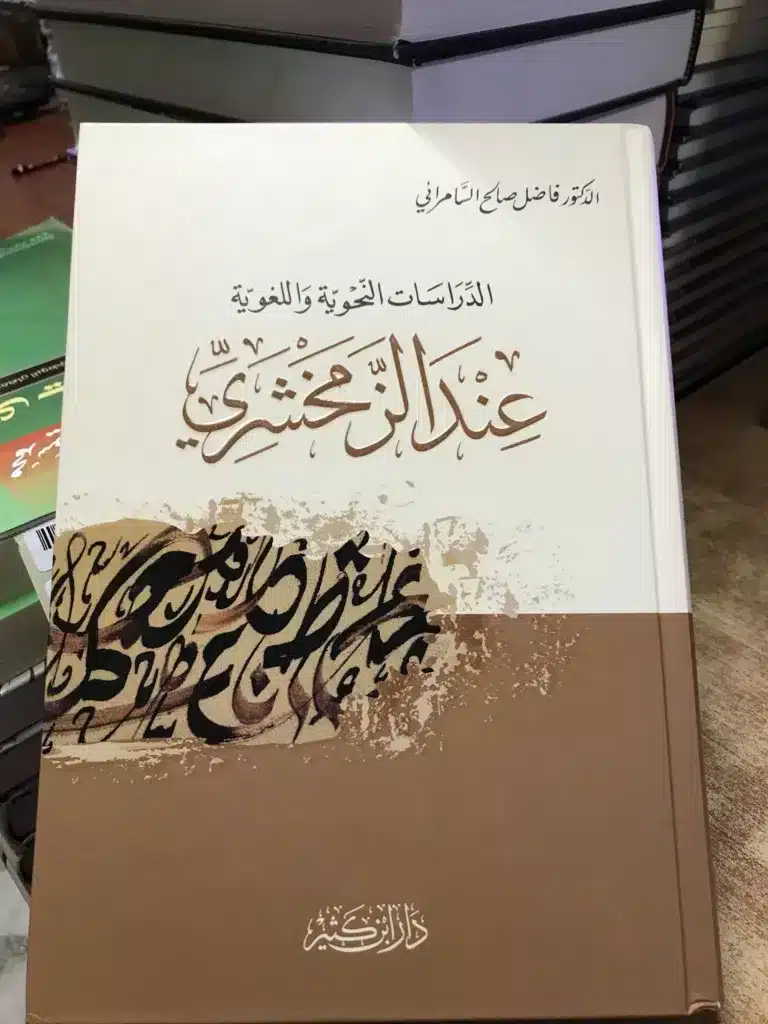
In his book “Al-Ta’bir al-Qurani,” al-Samarrai traces the precision of the choice of vocabulary and structures in the Holy Quran, examining the reasons forms differ from one passage to another, such as singular and plural, or the choice of one word over its synonym, and the semantic and rhetorical distinctions each choice carries.
As for his book “The Arabic Sentence and Meaning,” it deals with the structure of the Arabic sentence and the relationships linking its elements, and examines how meaning is formed through word order, functions, and the interaction of its grammatical components.
In his work “Rhetorical touches in texts from revelation,” he applies his method to compare verses and structures, revealing subtle differences in Quranic expression.
Beyond Grammar: A Life of Humanity and Principle
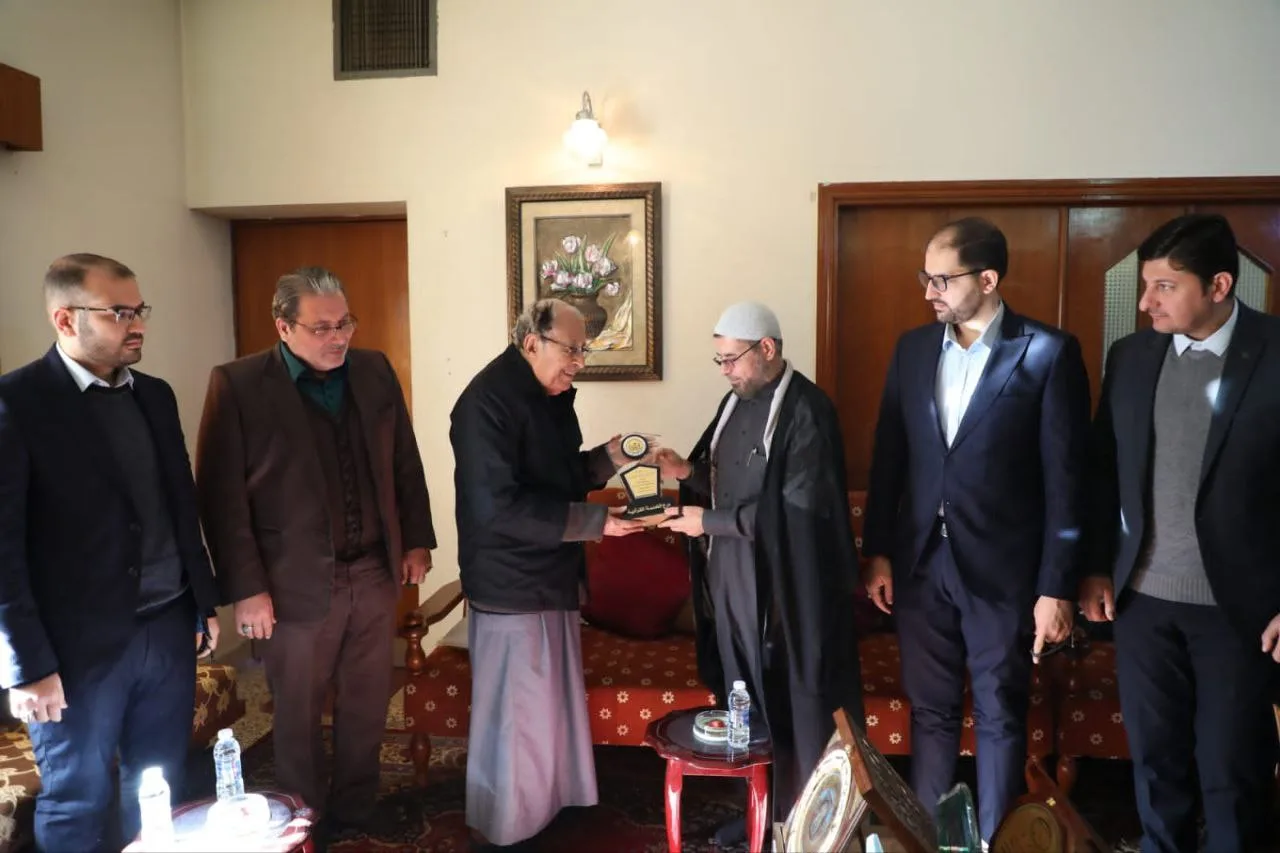
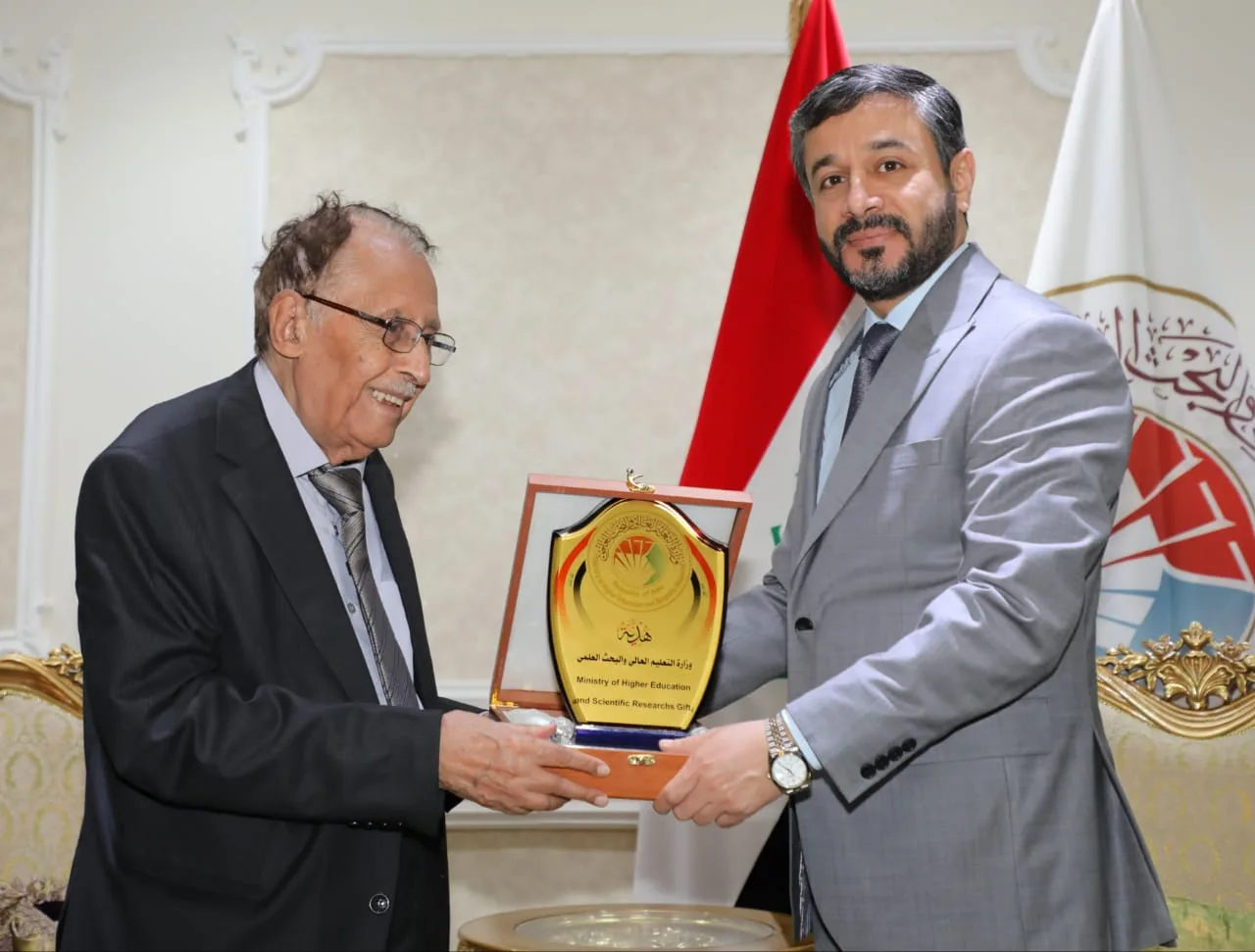
Al-Samarrai’s scholarly output was tied to a calm personality known for humility and for keeping away from the spotlight of fame. Those who knew him closely describe him as a professor gentle with his students, little occupied with disputes and wrangling, and devoted to study, research, and teaching.
This dignity, coupled with his easy yet profound way of presenting ideas, gave him a broad public presence, transforming him from a specialized university professor into a well-known cultural name in the Arab world and one of the most prominent Iraqi figures associated in contemporary memory with the Arabic language and Quranic eloquence.
Throughout his career, Fadel al-Samarrai remained faithful to the idea on which his experience was built: that grammar is a key to meaning, and that the subtleties of Arabic carry behind them layers of signification and beauty. From university halls to the screen of “Lamasat Bayaniya,” this Iraqi scholar brought the sciences of language closer to a wide audience, leaving behind books and lessons that will remain a testament to a project that made asking about the letter, the word, and the vowel a path to discovering the beauty of Arabic.
